The Used EV Tax Credit: A Quick Primer for 2026 Buyers
Buying a pre-owned electric vehicle is one of the smartest ways to enter the EV market in 2026. Not only do used EVs sidestep the steepest depreciation that hits new cars in years one and two, but the federal previously owned clean vehicle credit — established under the Inflation Reduction Act and codified in IRS §25E — can knock up to $4,000 off your tax bill (or, as of 2024 onward, be transferred to the dealer as a point-of-sale price reduction). Unlike the new-vehicle §30D credit, which tops out at $7,500 but comes with a labyrinth of battery-sourcing and critical-mineral requirements, the used-EV credit has simpler rules — but they're still strict enough to trip up unwary shoppers.
This guide walks through exactly who qualifies, what vehicles are eligible, and how the total cost of owning a used EV compares to a gas car over five years, with real numbers.
Do You Qualify? IRS Income and Price Caps Explained
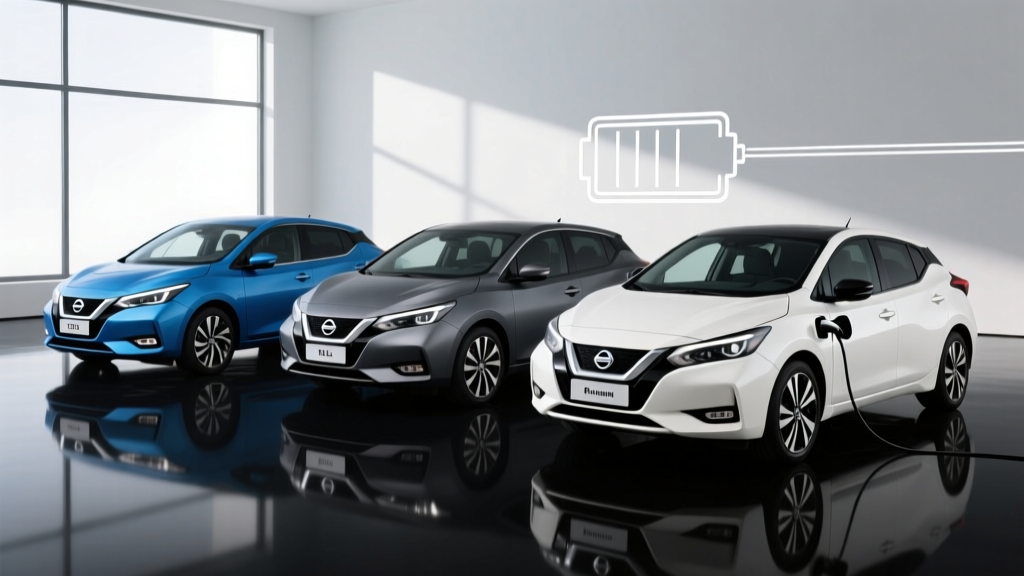
The used-EV credit is not a flat $4,000 for everyone. The credit equals 30% of the sale price, capped at $4,000. That means you need to pay at least ~$13,334 to max out the credit. Buy a $7,000 Nissan Leaf, and the credit is $2,100, not $4,000.
Beyond the math, you must clear these hurdles:
- Income caps (modified AGI): $75,000 single filers / $112,500 head of household / $150,000 joint filers. These thresholds apply to the tax year you take the credit or the prior year — whichever is lower.
- Vehicle sale price cap: The used EV must sell for $25,000 or less. A $25,500 listing disqualifies the entire credit — no partial amount.
- Vehicle age: The model year must be at least two years older than the calendar year of purchase (so in 2026, model year 2024 or earlier).
- Vehicle type: Must be a battery electric vehicle (BEV) or fuel cell vehicle with at least 4 kWh of battery capacity. Most PHEVs qualify too, provided they meet the battery threshold.
- Dealer requirement: The vehicle must be purchased through a licensed dealer (private-party sales don't qualify) and the dealer must report the sale to the IRS via the IRS Energy Credits Online portal.
- One-time use per vehicle: The VIN can only claim this credit once. If a previous owner already used it, you're out of luck — always verify VIN history.
- Buyer frequency limit: You cannot claim the used-EV credit more than once every three years.
A crucial 2026 nuance: unlike the new-car §30D credit, the used-EV credit does not have battery-sourcing or critical-mineral requirements. That makes it far more predictable — you don't need to research whether the cathode minerals came from a free-trade partner. However, the $25,000 price cap means you're shopping in a specific segment: typically 2-to-5-year-old mainstream EVs like the Chevrolet Bolt EV/EUV, Nissan Leaf, older Tesla Model 3 Standard Range, Hyundai Kona Electric, and Volkswagen ID.4.
5-Year Total Cost of Ownership: Used EV vs. Gas Car
Let's model a realistic comparison. On the EV side: a 2023 Chevrolet Bolt EV (2LT) purchased in early 2026 for $18,500 (within the $25K cap), claiming the full $4,000 credit, bringing the net cost to $14,500. EPA-rated 259 miles of range, 65 kWh usable battery (NMC chemistry), and 128 MPGe combined. On the gas side: a comparably equipped 2023 Honda Civic EX at roughly $21,000 used, EPA-rated 33 MPG combined.
Assumptions: 12,000 miles/year, $0.14/kWh home charging (national average per EIA data), $3.40/gallon regular unleaded, and 85% home / 15% public DC fast charging mix.
| Category | Used Bolt EV | Used Civic EX (Gas) |
|---|---|---|
| Net purchase price (after credit) | $14,500 | $21,000 |
| Fuel / electricity (5 yrs) | $3,780 | $6,182 |
| Maintenance (5 yrs) | $1,800 | $3,900 |
| Insurance (5 yrs) | $9,600 | $7,500 |
| Estimated depreciation | $5,200 | $6,300 |
| Total 5-year cost | $34,880 | $44,882 |
| Cost per mile | $0.58 | $0.75 |
The used EV wins by roughly $10,000 over five years, but the savings aren't evenly distributed. Fuel and maintenance are dramatically cheaper; insurance and depreciation partially claw that back. Let's break each line down.
Fuel Savings: The $/Mile Math That Actually Matters
Generic claims that "EVs are cheaper to fuel" are useless without the arithmetic. Here's how it works for the Bolt EV:
Bolt EV: Averages about 28 kWh/100 miles in mixed driving (EPA combined is 27 kWh/100mi; expect 30-32 kWh/100mi at sustained 75 mph highway speeds). At $0.14/kWh home charging and $0.40/kWh average DC fast charging (with 85/15 split), the blended electricity cost is ~$0.176/kWh. That yields $0.05/mile for electricity.
Civic EX: At 33 MPG combined and $3.40/gallon, fuel costs $0.103/mile. In city-heavy driving where the Civic hits its 40 MPG highway rating less often, real-world cost climbs to ~$0.12/mile.
Savings: ~$0.05-$0.07 per mile, or $2,400-$4,200 over 60,000 miles depending on your driving mix and local electricity rates.
Important caveat: if you rely entirely on public DC fast charging at $0.40-$0.55/kWh (common on Electrify America and EVgo networks in 2026), your cost per mile jumps to $0.11-$0.15 — essentially matching or exceeding gasoline. Home charging access is the single biggest variable in EV operating cost. If you can't charge at home or work, the fuel savings shrink dramatically.
Maintenance Savings: Fewer Parts, Real Dollars
EVs eliminate the entire internal-combustion maintenance calendar. No oil changes, no spark plugs, no timing belts, no transmission fluid, no exhaust system. Regenerative braking dramatically extends pad and rotor life — many EV owners report original brake pads at 80,000+ miles.
| Service Item | Bolt EV Cost | Civic EX Cost |
|---|---|---|
| Oil changes (6-8 over 5 yrs) | $0 | $480 |
| Brake pads/rotors | $200 (pads only, if needed) | $900 |
| Transmission fluid | $0 | $250 |
| Engine air filter / cabin filter | $150 (cabin only) | $300 |
| Coolant flush | $0 (sealed loop) | $200 |
| Tire rotation/replacement | $1,050 (EVs wear tires ~15% faster) | $900 |
| Spark plugs | $0 | $320 |
| Misc. (wipers, 12V battery) | $200 | $250 |
| Total | $1,800 | $3,900 |
The maintenance gap is real — approximately $2,100 saved over five years. The one area where EVs cost more is tires: instant torque and heavier curb weight (the Bolt EV weighs 3,563 lbs vs. the Civic at ~2,950 lbs) accelerate tread wear. Budget for one extra tire set over 60K miles.
Insurance: The Cost EV Owners Often Overlook
EV insurance premiums run 15-30% higher than equivalent gas vehicles, and this is the line item that erodes EV savings more than any other. Why?
- Higher repair costs: Battery packs are expensive to replace if damaged. Even minor collision damage near the battery enclosure can trigger a total-loss assessment. Repair shops need specialized EV training and high-voltage safety certification.
- Parts scarcity: EV-specific body panels, charge ports, and thermal management components have longer lead times and fewer aftermarket alternatives than a Civic's ubiquitous parts supply.
- Total-loss frequency: Insurers are more likely to total a damaged EV because battery integrity assessments are conservative — a dented battery case often means full replacement at $10,000-$18,000.
For the Bolt EV, expect annual premiums around $1,800-$2,100 (national average, varying heavily by state, zip code, and driving record) vs. $1,400-$1,600 for the Civic. Over five years, that's an additional $1,500-$2,500 in insurance costs. Always pull personalized quotes before buying — insurers like Geico, Progressive, and State Farm now offer specific EV policies, and some (like Tesla Insurance, where available) use real-time driving data to adjust premiums.
Depreciation: EVs Have Stabilized — But Know the Curve
Used-EV depreciation was brutal in the early 2020s, driven by rapid battery-cost declines, aggressive Tesla price cuts, and range-technology leapfrogging. By 2026, the market has matured. According to iSeeCars and Kelley Blue Book data, 3-year-old mainstream EVs now retain roughly 50-58% of original MSRP — comparable to compact gas sedans.
For a $14,500 used Bolt EV, expect a resale value around $9,000-$9,500 after five years of ownership (8 years old, ~90,000 miles), representing $5,000-$5,500 in depreciation. The Civic depreciates slightly more in absolute dollars (~$6,300) because its starting price is higher, but the percentage is similar.
Key depreciation factors for used EVs:
- Battery state of health (SoH): A verified SoH above 90% preserves resale value. Request a battery diagnostic report before buying. Most 2023-era NMC batteries show 5-8% degradation at 40,000 miles — well within the 8-year/100,000-mile federal battery warranty (which mandates ≥70% capacity retention).
- Charging standard: Vehicles with native NACS (Tesla's connector, now adopted by Ford, GM, Rivian, Hyundai, and others) hold value slightly better in 2026 than CCS-only vehicles, as the Supercharger network remains the most reliable public DC infrastructure.
- Range relevance: Sub-150-mile range EVs (older Nissan Leafs, early Fiat 500e) depreciate faster because they've fallen below what buyers consider practical. The Bolt's 259-mile EPA range remains competitive.
State, Local, and Utility Incentives: Stack the Savings
Important: State and local incentives vary dramatically by jurisdiction and change frequently. Always verify current programs through your state energy office, DOE's AFDC database, and your local utility before counting on specific dollar amounts.
Beyond the federal $4,000 used-EV credit, many buyers can stack additional incentives:
- State rebates: California's Clean Cars 4 All program offers up to $9,500 for low-income buyers scrapping older gas cars; Colorado offers a $3,500 used-EV tax credit (income-capped); Massachusetts has a $1,000 used-EV rebate via MOR-EV. Many states have no additional used-EV incentives.
- Utility rebates: Hundreds of utilities offer $250-$1,000 rebates for home Level 2 charger installation, and some provide reduced overnight electricity rates (as low as $0.06-$0.08/kWh) for EV owners on time-of-use plans. Check with your provider — PG&E, Con Edison, Xcel Energy, and Duke Energy all have active EV programs in 2026.
- HOV lane access: Several states (California, Colorado, Virginia, Maryland, Utah) grant solo HOV lane access to EVs — a benefit worth thousands in commute-time savings for urban drivers, though some programs have begun phasing out as EV adoption grows.
- Registration fees: Counterbalance alert — many states now charge EVs higher annual registration fees ($50-$225) to offset lost gas-tax revenue. Factor this into your cost model.
Decision Framework: Is the Used EV Tax Credit Right for You?
Buy a used EV and claim the credit if:
- Your modified AGI is under the IRS caps ($75K/$112.5K/$150K)
- You have reliable home or workplace Level 2 charging access
- You can find an eligible vehicle under $25,000 from a licensed dealer
- Your annual mileage is above 10,000 miles (fuel savings scale with distance)
- You've compared insurance quotes and the premium gap is under ~$500/year
Consider a gas car or PHEV instead if:
- You rely exclusively on public charging (fuel savings evaporate)
- Your income exceeds the credit caps (you lose $4,000 in savings)
- You live in a state with high EV registration fees and no additional incentives
- Your insurance quotes come back more than 35% higher than your current gas car
Frequently Asked Questions
Can I get the $4,000 used EV credit as a point-of-sale discount?
Yes. Starting in 2024, the IRS allows buyers to transfer the used-EV credit to the dealer at the point of sale, effectively reducing the purchase price by up to $4,000 on the spot. The dealer must be registered with the IRS Energy Credits Online system. This works identically to the new-vehicle credit transfer — you don't need to wait until tax season to benefit. However, if your actual tax liability turns out to be less than the credit transferred, you do not have to pay the difference back (unlike some refundable credits).
What if I buy a used Tesla — does the credit still apply?
Yes, provided the Tesla meets all requirements: model year at least two years old, sale price at or below $25,000, purchased from a licensed dealer (not a private party), and buyer income within caps. In 2026, qualifying models include the 2021-2023 Model 3 Standard Range Plus / RWD, which has dipped below $25,000 at many franchised and independent dealers. Higher-trim Model Ys and Long Range variants typically exceed the $25,000 cap.
How do I verify a used EV's battery health before buying?
Request a battery state-of-health (SoH) report. Tesla owners can check this via the car's service menu or third-party apps like Recurrent. For GM/Hyundai/VW vehicles, ask the dealer to run a manufacturer battery diagnostic. Independent services like Recurrent provide battery health reports based on telematics data. Look for SoH above 90% on a 2-to-3-year-old vehicle. Anything below 85% at low mileage may indicate a defective cell module — still covered under the 8-year/100,000-mile federal battery warranty, but a hassle to service.
Does the used EV credit apply to plug-in hybrids (PHEVs)?
Yes, as long as the PHEV has a battery capacity of at least 4 kWh and meets all other requirements (price cap, income cap, dealer sale, model year). Qualifying used PHEVs in 2026 include the Toyota RAV4 Prime (though most still exceed $25,000), Chrysler Pacifica Hybrid, Hyundai Tucson PHEV, and Kia Sorento PHEV from the 2022-2023 model years. The Toyota Prius Prime is another strong candidate if you can find one under the cap.
What happens if my income is just slightly over the cap?
The IRS income limits are hard cutoffs — $1 over $150,000 MAGI for joint filers disqualifies you entirely. However, you can sometimes manage your modified AGI through timing of capital gains, retirement contributions, or HSA deductions. Consult a tax professional before year-end if you're near the threshold. There is no phase-out range; it's a cliff.