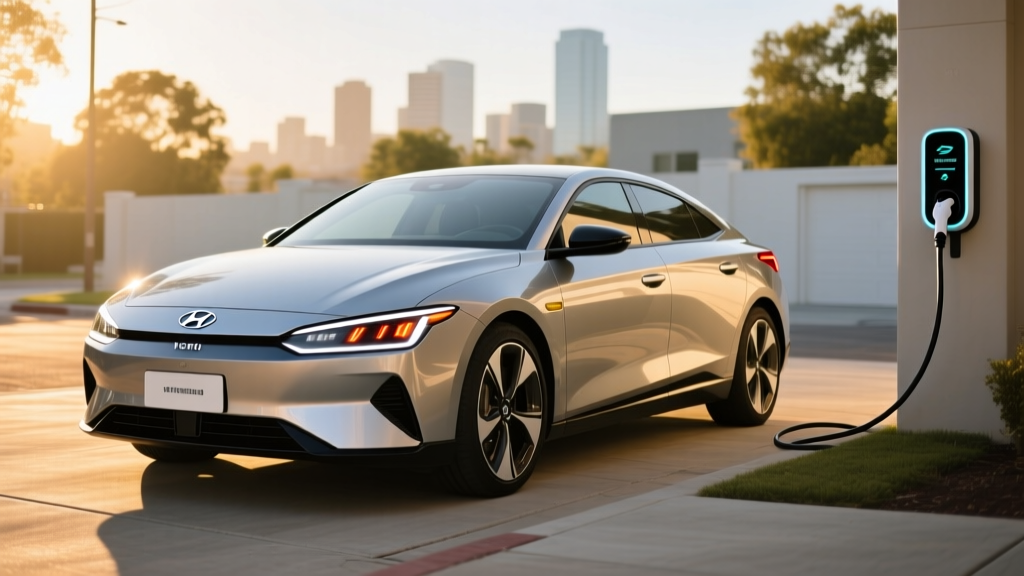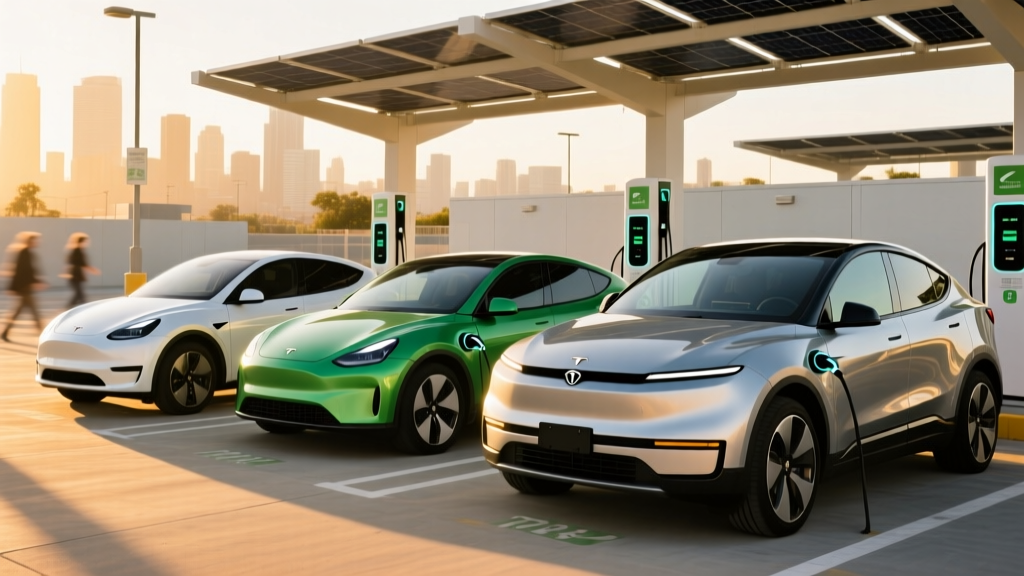
The moment the IRS tightened battery-sourcing requirements under §30D, something unexpected happened: instead of killing EV demand, the headlines sent millions of shoppers down a research rabbit hole. They compared MSRP caps against their AGI, calculated kWh costs versus gallons of gas, and discovered that total cost of ownership — not the sticker price or the credit alone — decides whether an EV actually saves money. That feedback loop is what analysts now call the EV tax credit Streisand Effect: the harder policymakers and media tried to highlight restrictions, the more buyers educated themselves, ultimately accelerating informed purchases rather than suppressing them.
If you're shopping in 2026, you're the beneficiary of that effect. Below is the unvarnished math — federal credit eligibility, state incentives, charging versus gas, insurance premiums, depreciation, and a five-year ownership breakdown — so you can decide whether an EV fits your budget, not just your values.
What the EV Tax Credit Streisand Effect Actually Means for Buyers
The Streisand Effect describes what happens when attempts to suppress information only amplify it. Applied to the EV tax credit, it captures a 2024–2026 dynamic: every news cycle about vehicles losing §30D eligibility (due to battery-component or critical-mineral sourcing rules) drove a spike in searches for "do I qualify," "point-of-sale transfer," and "EV total cost of ownership."
The practical result? Buyers stopped treating the credit as a guaranteed $7,500 discount and started modeling ownership like an analyst. That's exactly the right approach, because the credit has more moving parts than a window sticker suggests.
Federal §30D Credit: 2026 Eligibility Checklist
The federal clean vehicle credit under IRS §30D remains up to $7,500 for new qualifying EVs and up to $4,000 for qualifying used EVs — but only if every box below is checked. Miss one, and the credit drops or disappears entirely.
- MSRP caps: Vans, SUVs, and pickup trucks must have an MSRP ≤ $80,000; sedans and other passenger cars ≤ $55,000.
- Buyer income limits (modified AGI): $300,000 joint / surviving spouse, $225,000 head of household, $150,000 all other filers. The lower of your current-year or prior-year MAGI applies.
- Battery components: Must be manufactured or assembled in North America, with the required percentage rising annually through 2029.
- Critical minerals: A specified percentage of the battery's critical minerals must be sourced from the U.S. or a free-trade-agreement country (or recycled domestically).
- Foreign Entity of Concern (FEOC) exclusion: Vehicles with battery components from a FEOC after 2023, or critical minerals from a FEOC after 2024, are disqualified.
- Point-of-sale transfer: Since 2024, you can transfer the credit to the dealer at purchase, turning it into an immediate down-payment reduction rather than a tax-time refund — but you must still meet income limits, and you'll reconcile on your tax return.
- VIN verification: The dealer must report the VIN to the IRS via the IRS Energy Credits Online portal at the time of sale.
The DOE/EPA fueleconomy.gov site maintains a running list of currently qualifying models. Always verify on the day of purchase — eligibility can change with a single supply-chain adjustment.
State, Local, and Utility Incentives: Stack What You Can
Region-dependent: State rebates, utility charger credits, and HOV-lane access vary dramatically by ZIP code. California's CVRP, Colorado's innovative motor vehicle credit, and New York's Drive Clean rebate each have distinct income and MSRP rules. Always confirm current amounts with your state energy office and local utility before budgeting them into your purchase.
Utility rebates are the most underused. Many co-ops and IOUs will refund $300–$1,000 of a Level 2 home charger purchase, and some offer off-peak charging rates as low as $0.06–$0.09/kWh — a number that reshapes the fuel-cost math below.
Charging vs. Gas: The Per-Mile Cost Reality
The single biggest ownership variable is where and when you charge. Home Level 2 charging on an off-peak utility rate is dirt-cheap; exclusive reliance on DC fast charging on road trips can rival or exceed gasoline.
| Scenario | Energy Cost | Vehicle Efficiency | Cost per Mile |
|---|---|---|---|
| Home Level 2 (off-peak utility) | $0.10/kWh | 3.0 mi/kWh (≈100 MPGe) | $0.033 |
| Home Level 2 (national avg residential) | $0.17/kWh | 3.0 mi/kWh | $0.057 |
| Public DC fast charger (typical) | $0.45/kWh | 3.0 mi/kWh | $0.150 |
| Gasoline car (30 MPG combined) | $3.30/gal | 30 MPG | $0.110 |
| Gasoline car (22 MPG combined, truck/SUV) | $3.30/gal | 22 MPG | $0.150 |
At 12,000 miles per year, a home-charged EV costs roughly $400–$680 annually in electricity versus $1,320+ for a 30-MPG gas car. But if you cannot charge at home and rely entirely on public DC fast chargers, your "fuel" cost roughly triples — and may equal a gasoline vehicle. Home charging access is the single largest predictor of EV operating savings.
Maintenance Savings: Fewer Parts, Real Dollars
EVs eliminate oil changes, spark plugs, timing belts, and exhaust-system repairs. Regenerative braking extends pad life dramatically — many owners report original brake pads at 80,000+ miles.
| Item | Gas Car (5 yr) | EV (5 yr) |
|---|---|---|
| Oil changes | $600–$1,200 | $0 |
| Brake pads/rotors | $600–$1,400 | $0–$300 |
| Transmission fluid / service | $200–$500 | $0–$150 |
| Coolant, filters, belts | $400–$800 | $100–$250 |
| Tire rotation/replacement | $1,200–$2,000 | $1,400–$2,400 (heavier vehicle + instant torque) |
| Total (typical) | $3,000–$5,900 | $1,500–$3,100 |
The tire caveat matters: EVs are 10–20% heavier than equivalent ICE vehicles and deliver instant torque, which accelerates tread wear. Budget for one extra tire set over five years compared to a gas car.
Insurance: The Cost EV Owners Often Underestimate
EV insurance premiums run 15–30% higher than comparable gas vehicles. The reasons are structural, not conspiratorial:
- Higher repair costs: Battery-pack damage, even minor, often triggers total-loss thresholds because shops lack the tooling to safely open and reseal high-voltage enclosures.
- Specialized labor: High-voltage-certified technicians command higher shop rates.
- Parts pricing: OEM replacement body panels, sensors, and camera modules for newer EV platforms carry premium costs.
- Total-loss frequency: Insurers write off EVs more readily after collision or flood, driving claim severity.
Expect a $150–$400/year premium uplift versus a similarly priced gas car, though the gap is narrowing as the EV fleet matures and more shops earn HV certifications. Always quote three carriers — some insurers now offer explicit EV discounts of 5–10%.
Depreciation and Resale Value: The 2026 Landscape
EV depreciation has been volatile. Tesla's aggressive 2023–2024 price cuts reset used values across the category, and early-lease returns flooded the market. In 2026, the trend has stabilized but remains model-dependent:
- Strongest retention: Trucks and SUVs with proven range (300+ mi EPA) and NACS access, plus PHEVs with meaningful electric-only range (35–50 mi).
- Steepest drops: Sub-200-mi range compacts, discontinued nameplates, and models reliant on CHAdeMO as the network shifts to NACS.
- Battery health factor: Vehicles with verifiable State of Health (SoH) reports command a premium; those without face buyer skepticism.
Plan for 45–55% depreciation over five years on a mainstream EV, versus roughly 40–50% on an equivalent gas vehicle. The gap narrows or reverses when you factor in fuel and maintenance savings.
Five-Year Total Cost of Ownership: The Full Breakdown
Below is a representative 5-year / 60,000-mile TCO comparing a mainstream EV (e.g., Hyundai Ioniq 5 or Tesla Model Y) against a comparably priced gas crossover. Assumes $7,500 federal credit applied at point of sale, primarily home charging, and national-average insurance.
| Category | EV (after $7,500 credit) | Gas Crossover |
|---|---|---|
| Purchase price (net) | $40,000 | $38,000 |
| Fuel / electricity (60k mi) | $2,800 | $6,600 |
| Insurance (5 yr) | $9,500 | $7,800 |
| Maintenance (5 yr) | $2,200 | $4,400 |
| Home charger install | $1,200 | $0 |
| Depreciation (5 yr) | $22,000 | $17,100 |
| Total 5-Year Cost | $77,700 | $73,900 |
| Cost per mile | $1.30 | $1.23 |
The EV wins on operating costs by roughly $5,000 over five years but gives back some of that edge to higher insurance, depreciation, and the home-charger install. If you lack home charging, the EV's TCO rises by $3,000–$5,000. If you drive 20,000+ miles per year, the EV's per-mile advantage compounds and it pulls ahead.
Decision Framework: When the Math Favors an EV
Choose the EV if:
- You can install Level 2 charging at home or have reliable workplace charging.
- You qualify for the full §30D credit and stack at least one state/utility rebate.
- You drive 12,000+ miles per year (the fuel savings compound faster).
- You plan to own the vehicle 5+ years, absorbing the depreciation hit.
Choose a PHEV or gas vehicle if:
- You live in an apartment or street-park with no charging access.
- Your MAGI exceeds the §30D income caps and your state offers no offsetting incentive.
- You regularly tow heavy loads or drive in extreme cold where range loss of 25–40% is unacceptable.
- You change vehicles every 2–3 years, where depreciation dominates TCO.
Frequently Asked Questions
How much does it really cost to own an EV over 5 years?
For a mainstream EV priced around $47,500 (before credits), expect a 5-year TCO of roughly $75,000–$82,000 depending on insurance, mileage, and charging mix. The federal credit, when eligible, shaves $7,500 off the front end, and fuel/maintenance savings add another ~$5,000 over five years versus a gas equivalent.
Do I qualify for the federal EV tax credit?
You qualify only if your modified AGI is under $150k/$225k/$300k (by filing status), the vehicle's MSRP is under $55k (cars) or $80k (SUVs/trucks/vans), and the battery meets current-year critical-mineral and component-sourcing thresholds. Verify on fueleconomy.gov and with your tax professional — the rules tighten annually.
How much do I save on fuel and maintenance?
Home-charged EV owners typically save $800–$1,100 per year on fuel versus a 28-MPG gas car at $3.30/gal, plus $400–$700 per year on maintenance. Over five years, combined savings of $5,000–$8,000 are realistic.
Are EVs more expensive to insure?
Yes — typically 15–30% higher premiums due to higher repair costs, specialized labor, and total-loss frequency. Budget an extra $150–$400 per year and shop at least three carriers.
How well do EVs hold their value?
Expect 45–55% depreciation over five years on a mainstream EV, slightly worse than a gas equivalent. Long-range models with NACS access and verifiable battery SoH hold value best. The gap is closing as the used-EV market matures and the §30D used-vehicle credit (up to $4,000) supports demand.
What is the EV tax credit Streisand Effect?
It's the phenomenon where media coverage of tightening §30D eligibility rules — instead of discouraging buyers — drove a surge of research into actual qualification criteria, TCO math, and charging logistics, ultimately producing more informed and committed EV purchasers.