If you're shopping for an electric vehicle in 2026, the single most impactful financial question is whether the model you want qualifies for the federal EV tax credit. Under IRS §30D, eligible buyers can receive up to $7,500 — now transferable to the dealer at the point of sale, effectively reducing your purchase price on the spot. But qualification is far from universal. The rules governing income caps, MSRP limits, and battery-component sourcing are strict, and they shift as supply chains evolve.
This guide maps out which vehicles qualify for the credit in 2026, exactly what it takes for you to qualify, and what the true five-year ownership math looks like — including the costs that often surprise first-time EV buyers, like insurance premiums and depreciation curves.
How the 2026 Federal EV Tax Credit Actually Works
The §30D Clean Vehicle Credit, as updated by the Inflation Reduction Act and subsequent Treasury guidance, offers up to $7,500 for qualifying new battery-electric and plug-in hybrid vehicles. The credit is split into two halves:
- $3,750 for meeting battery-component manufacturing requirements (components must be manufactured or assembled in North America, with percentages increasing annually)
- $3,750 for meeting critical-minerals sourcing requirements (minerals must be extracted or processed in the U.S. or a free-trade-agreement country, or recycled domestically)
Many popular EVs now meet both thresholds for the full $7,500, but some only qualify for $3,750 — and others qualify for nothing at all due to battery sourcing that hasn't shifted to compliant supply chains. Always verify current eligibility at the IRS qualified vehicles list, which the Treasury updates periodically throughout the year.
§30D Eligibility Checklist for 2026 Buyers
- Income caps: Modified AGI must not exceed $300,000 (married filing jointly), $225,000 (head of household), or $150,000 (all other filers). Checked against current or prior tax year — whichever benefits you.
- MSRP caps: Vans, SUVs, and pickup trucks must have an MSRP at or below $80,000. All other vehicles (sedans, coupes, wagons) must be at or below $55,000. Options and destination charges count toward the cap.
- Battery sourcing: Must meet the critical-minerals and battery-component thresholds outlined above. The vehicle's VIN can be checked on the IRS list for its specific credit amount.
- Point-of-sale transfer: Since 2024, you can transfer the credit to the dealer at purchase, reducing your out-of-pocket cost immediately — you don't need to wait until tax filing. You still must meet income requirements, and if your actual tax liability is below the credit amount at filing, you do not have to repay the transferred credit.
- Vehicle assembly: Final assembly must occur in North America (U.S., Canada, or Mexico). Verify via the VIN on the DOE's assembly-location lookup.
- One credit per vehicle, per buyer: You can claim the credit for multiple vehicles in a year (one per eligible vehicle), but the vehicle itself can only receive the credit once — it doesn't transfer to a second owner for a new purchase.
Cars That Qualify for the EV Tax Credit in 2026
The list below reflects models expected to qualify for at least a partial §30D credit as of early 2026, based on current IRS listings and manufacturer sourcing disclosures. Always confirm with your dealer and the IRS VIN lookup before signing paperwork — sourcing compliance can change mid-year as manufacturers shift battery suppliers.
| Vehicle | Body Class | MSRP (Base) | Max Credit | Battery (kWh / Chemistry) | EPA Range |
|---|---|---|---|---|---|
| Tesla Model Y (Long Range AWD) | SUV | ~$46,990 | $7,500 | ~75 kWh / NMC | 330 mi |
| Tesla Model 3 (Long Range AWD) | Sedan | ~$42,490 | $7,500 | ~75 kWh / NMC | 341 mi |
| Ford F-150 Lightning (XLT) | Pickup | ~$54,995 | $7,500 | 98 kWh (usable) / NMC | 240 mi |
| Cadillac Lyriq (Luxury) | SUV | ~$58,595 | $7,500 | 102 kWh / NMC | 314 mi |
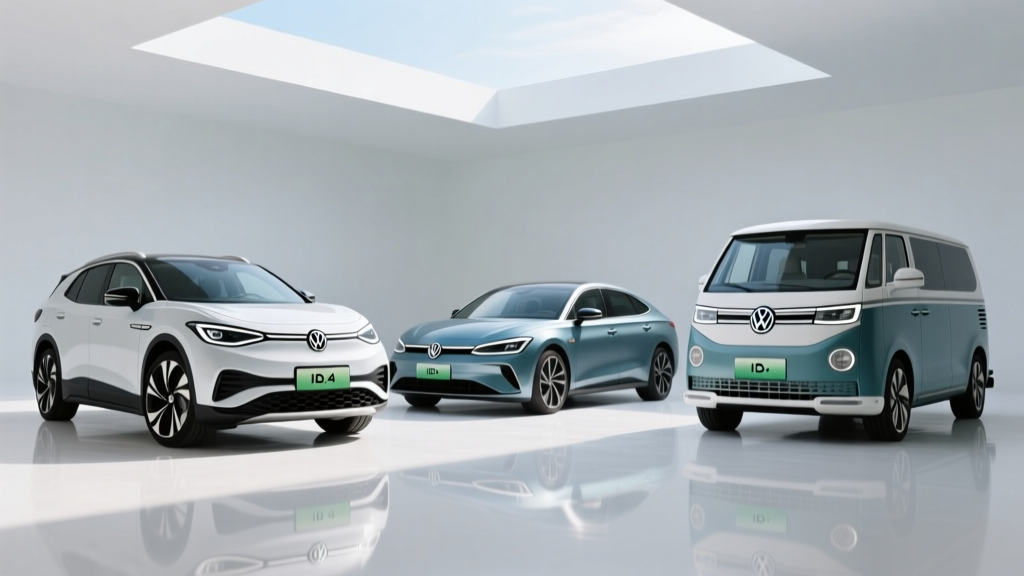
| VW ID.4 (Pro S) | SUV | ~$46,290 | $7,500 | 77 kWh (usable) / NMC | 291 mi |
| Chevrolet Equinox EV (LT) | SUV | ~$34,995 | $7,500 | 85 kWh / NMC | 319 mi |
| Chevrolet Blazer EV (2LT) | SUV | ~$47,595 | $7,500 | 102 kWh / NMC | 324 mi |
| Rivian R1S (Dual-Motor Standard) | SUV | ~$75,900 | $7,500 | 95 kWh / NMC | 270 mi |
| Chrysler Pacifica PHEV | Minivan | ~$51,095 | $7,500 | 16 kWh / NMC | 32 mi EV-only |
| Jeep Wrangler 4xe | SUV (PHEV) | ~$50,695 | $7,500 | 17.3 kWh / NMC | 22 mi EV-only |
Notable non-qualifiers (as of early 2026): Most Hyundai and Kia EVs (Ioniq 5, EV6, EV9) remain ineligible for the new-vehicle credit due to final assembly outside North America, though the upcoming Hyundai Metaplant in Georgia is expected to bring some models into compliance. The Toyota bZ4X, Nissan Ariya, and Subaru Solterra also do not currently qualify. The used-EV credit (§25E) may apply to some of these — up to $4,000 for qualifying pre-owned EVs under $25,000.
Five-Year Total Cost of Ownership: EV vs. Gas Baseline
The sticker price is just the entry fee. The real comparison happens over 60 months of fuel, insurance, maintenance, and depreciation. Here's a realistic five-year TCO comparison for a mid-range EV (modeled on a Chevrolet Equinox EV LT at ~$35,000 MSRP) versus a comparably equipped gas crossover (modeled on a Chevrolet Equinox AWD at ~$30,000 MSRP), assuming 12,000 miles per year (60,000 total).
| Cost Category | EV (Equinox EV LT) | Gas (Equinox AWD) | EV Advantage |
|---|---|---|---|
| Purchase price (after credit) | $27,500 (after $7,500 POS) | $30,000 | +$2,500 |
| Fuel / electricity (60k mi) | $3,240 (home charging) | $7,500 (gas at $3.50/gal, 28 MPG avg) | +$4,260 |
| Insurance (5 years) | $9,750 (~$1,950/yr avg) | $7,500 (~$1,500/yr avg) | −$2,250 |
| Maintenance (5 years) | $1,500 | $4,200 | +$2,700 |
| Depreciation (est. 5-yr) | $14,500 (~53% of net cost) | $13,500 (~45%) | −$1,000 |
| Total 5-Year Cost | $56,490 | $62,700 | +$6,210 savings |
Assumptions: Electricity at $0.15/kWh, vehicle efficiency 3.0 mi/kWh (EV) and 28 MPG combined (gas). Insurance averages from industry data. Depreciation percentages are estimates based on current EV resale trends and may vary by model. Your actual results will depend on local electricity rates, driving patterns, and model-specific depreciation. Consult fueleconomy.gov for EPA-rated efficiency figures by model.
Fuel Savings: Charging Cost per Mile vs. Gas
This is where EVs consistently win — and the math is straightforward once you know your electricity rate.
| Scenario | EV Cost/Mile | Gas Cost/Mile (28 MPG) |
|---|---|---|
| Home charging at $0.12/kWh (national avg off-peak) | $0.040 | $0.125 (at $3.50/gal) |
| Home charging at $0.18/kWh (higher-cost states like CA, MA) | $0.060 | $0.125 |
| Public DC fast charging at $0.35/kWh (road trips) | $0.117 | $0.125 |
| Public DC fast charging at $0.48/kWh (premium networks) | $0.160 | $0.125 |
The takeaway: home charging almost always beats gas on cost per mile, often by a factor of 2–3x. Public DC fast charging narrows the gap significantly — and at premium network pricing, it can actually exceed the cost of gas. This is why home Level 2 charging access is the single most important economic variable in EV ownership. If you can charge at home, your per-mile fuel cost drops to roughly $0.04–$0.06. If you rely entirely on public fast charging, the savings shrink or disappear.
For a driver covering 12,000 miles per year with predominantly home charging at $0.15/kWh, annual electricity cost runs approximately $600–$650 versus $1,500 in gasoline at 28 MPG and $3.50/gal — a savings of roughly $850–$900 per year, or $4,250–$4,500 over five years.
Maintenance Savings: What You Actually Skip
EVs eliminate many of the recurring service items that define gas-car ownership. The savings are real but not infinite — EVs still need tires, cabin air filters, brake fluid checks, and occasional suspension work.
| Service Item | Gas Car (5-yr cost est.) | EV (5-yr cost est.) |
|---|---|---|
| Oil changes (every 5k–7.5k mi) | $600–$900 | $0 |
| Transmission fluid service | $200–$400 | $0 (most EVs use single-speed reducers) |
| Brake pad replacement | $400–$800 | $0–$200 (regen braking extends pad life to 100k+ mi) |
| Spark plugs / ignition | $200–$400 | $0 |
| Tire rotation & replacement | $2,000–$2,800 | $2,200–$3,200 (EVs are heavier and deliver instant torque — tires wear ~20% faster) |
| Cabin air filter | $150–$250 | $150–$250 |
| Coolant / brake fluid service | $200–$400 | $150–$300 |
| Total estimated 5-yr maintenance | $3,750–$5,950 | $2,500–$3,950 |
Net maintenance savings over five years typically range from $1,200 to $2,500, depending on the vehicle and your driving patterns. The biggest single offset is tire cost — EV weight and torque accelerate wear, and EV-optimized tires (like the Michelin e·Primacy or Hankook iON) carry a price premium.
The Insurance Reality: Higher Premiums Are the Norm
Here's the ownership cost that catches most first-time EV buyers off guard. EV insurance premiums run 15–30% higher than comparable gas vehicles, on average. The reasons are structural, not arbitrary:
- Higher repair costs: EV battery packs are expensive to replace if damaged, and even minor collision damage near the battery enclosure can trigger a total-loss determination by insurers. Tesla's structural battery packs, while reducing weight, make post-collision assessment more complex.
- Specialized labor: High-voltage system repair requires certified technicians, and the labor pool is still smaller than for conventional powertrains.
- Vehicle cost basis: EVs generally carry higher MSRPs than comparable gas models (before incentives), which sets a higher baseline for comprehensive and collision coverage.
- Parts availability: Some EV-specific body panels and structural components have longer lead times, increasing rental-car and storage costs during claims.
Average annual EV insurance costs in 2026 range from approximately $1,800 to $2,400, depending on the model, driver profile, and state. Teslas tend to sit at the higher end due to repair-cost data; mainstream models like the Equinox EV and ID.4 cluster closer to $1,700–$2,000. Always get a quote from your insurer before purchasing — the premium differential can erase a meaningful chunk of your fuel savings if you're not careful.
Depreciation and Resale Value: The Wildcard
EV depreciation has been volatile. In 2023–2024, aggressive price cuts by Tesla and an influx of new models caused used EV values to plummet — some models lost 50%+ of their value in the first two years. By 2025–2026, the market has stabilized somewhat, but EVs still generally depreciate faster than gas vehicles on a percentage basis.
Key factors affecting your EV's resale value:
- Battery health: Buyers scrutinize State of Health (SoH). A vehicle showing 90%+ capacity retention at 60,000 miles commands a premium. Most modern LFP and NMC packs lose roughly 1–2% per year under normal use.
- Charging standard: Vehicles with NACS (Tesla connector) or native Supercharger access hold value better as the industry has consolidated around NACS for 2025+ models. CCS-only vehicles from 2022–2024 may face a resale headwind.
- Range competitiveness: As new models push past 300+ miles EPA, older 200–250 mile EVs face steeper depreciation. The Equinox EV's 319-mile range, for instance, should hold value better than a 230-mile competitor from the same era.
- Tax credit effect: Because the point-of-sale credit lowers your effective purchase price, your depreciation in dollar terms is often lower than it appears on paper — you're depreciating from a lower basis.
Current five-year depreciation estimates for mainstream EVs cluster around 45–55% of purchase price (after credit), compared to roughly 40–45% for popular gas crossovers. Premium EVs (Lucid, high-trim Rivian) can see steeper drops. The best depreciation performers tend to be high-demand, lower-volume models like the Ford F-150 Lightning and well-equipped Tesla Model Y.
State, Local, and Utility Incentives: Stacking Savings
The federal §30D credit is just the first layer. Depending on where you live, additional incentives can significantly reduce your net cost:
Incentive Layers Beyond Federal
- State rebates: California's Clean Fuel Rebate (~$1,000–$2,000 depending on income), Colorado's innovative tax credit (up to $5,000 for EVs under certain price thresholds), Massachusetts' MOR-EV program (up to $3,500), and New York's Drive Clean Rebate (up to $2,000). Rules, income tiers, and funding availability vary — check your state energy office for current programs.
- Utility rebates: Many electric utilities offer $250–$1,500 rebates for EV purchase or home charger installation. Examples include PG&E's EV rebate in California, Xcel Energy's programs in Colorado and Minnesota, and ConEdison's SmartCharge program in New York. Contact your local utility directly.
- HOV lane access: States including California, Colorado, Virginia, and Maryland offer single-occupant HOV lane access for qualifying EVs — a significant commute-time benefit with real economic value.
- Property tax exemptions: Several states exempt EVs from personal property tax or vehicle registration surcharges, saving $100–$300+ annually.
- Home charger incentives: Federal §30C offers up to $1,000 (30% of cost) for home charging equipment installation in eligible census tracts. Many utilities stack additional rebates on top.
State and local incentive amounts change frequently and may have income, residency, or vehicle-price requirements. Consult your state energy office, utility provider, and a tax professional for current eligibility. The fueleconomy.gov tax center maintains links to federal and state incentive resources.
Frequently Asked Questions
How much does it really cost to own an EV over 5 years?
For a mainstream EV like the Chevrolet Equinox EV (base ~$35,000, $27,500 after federal credit), total five-year cost including purchase, electricity, insurance, maintenance, and depreciation comes to approximately $55,000–$58,000 for 60,000 miles of driving. That's typically $4,000–$8,000 less than a comparably equipped gas crossover over the same period, with the savings driven primarily by lower fuel and maintenance costs that partially offset higher insurance and depreciation.
Do I qualify for the federal EV tax credit?
Three criteria must all be met: (1) Your modified adjusted gross income falls under $300,000 (joint), $225,000 (head of household), or $150,000 (individual). (2) The vehicle's MSRP is at or below $80,000 for SUVs/trucks/vans or $55,000 for sedans. (3) The vehicle meets battery-component and critical-minerals sourcing requirements — check the specific VIN on the IRS qualified vehicles list. If all three are satisfied, you can take up to $7,500 as a point-of-sale reduction at the dealer.
How much do I save on fuel and maintenance?
With home charging at typical residential rates ($0.12–$0.18/kWh), expect to save roughly $800–$1,000 per year on fuel versus a 28 MPG gas vehicle at $3.50/gallon — that's $4,000–$5,000 over five years. Maintenance savings add another $1,200–$2,500 over the same period, primarily from eliminating oil changes, transmission service, and extending brake pad life through regenerative braking. Combined, fuel and maintenance savings typically total $5,200–$7,500 over five years for a driver covering 12,000 miles annually.
Are EVs more expensive to insure?
Yes, typically by 15–30%. Average EV insurance runs $1,800–$2,400 per year versus $1,400–$1,800 for a comparable gas vehicle. The gap is driven by higher repair costs (especially around battery damage), specialized labor requirements, and higher vehicle MSRPs. The premium difference costs you roughly $300–$600 more per year — $1,500–$3,000 over five years. Always obtain a specific insurance quote before purchasing to understand the real impact on your budget.
How well do EVs hold their value?
EV depreciation has stabilized since the steep drops of 2023–2024 but still runs higher than gas vehicles on average. Expect a mainstream EV to retain roughly 45–55% of its value after five years (measured from your net purchase price after tax credits). Models with strong demand, competitive range (300+ miles), and NACS charging compatibility tend to depreciate less. Battery State of Health at resale time is increasingly a factor — maintaining good charging habits (avoiding frequent 100% charges on NMC batteries, keeping the pack cool) helps preserve resale value.
Can I claim the credit if I lease instead of buy?
Leased vehicles fall under a different section of the tax code (§45W commercial clean vehicle credit). The leasing company claims the credit and may pass savings to you as a reduced monthly payment — but they are not required to do so. Ask the dealer explicitly whether the lease rate reflects the passed-through credit before signing. The advantage: lease credits have no MSRP cap, no income cap, and no battery-sourcing requirement, making some otherwise ineligible vehicles (like certain Hyundai and Kia EVs) financially attractive through leasing.
Disclaimer: Federal and state tax incentive rules are subject to change. This article reflects rules as understood in early 2026. Consult a qualified tax professional and verify current eligibility on irs.gov before making a purchase decision.