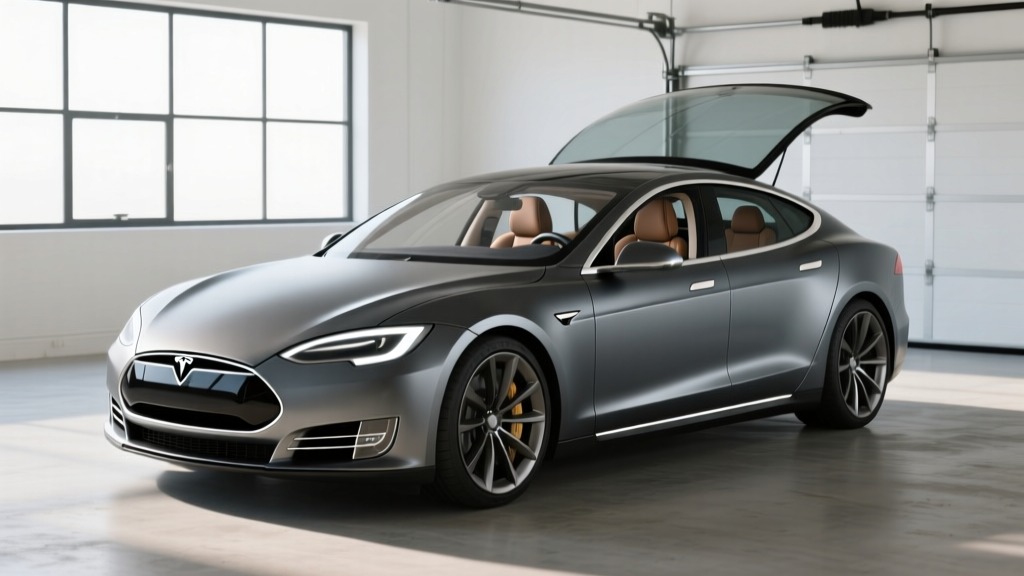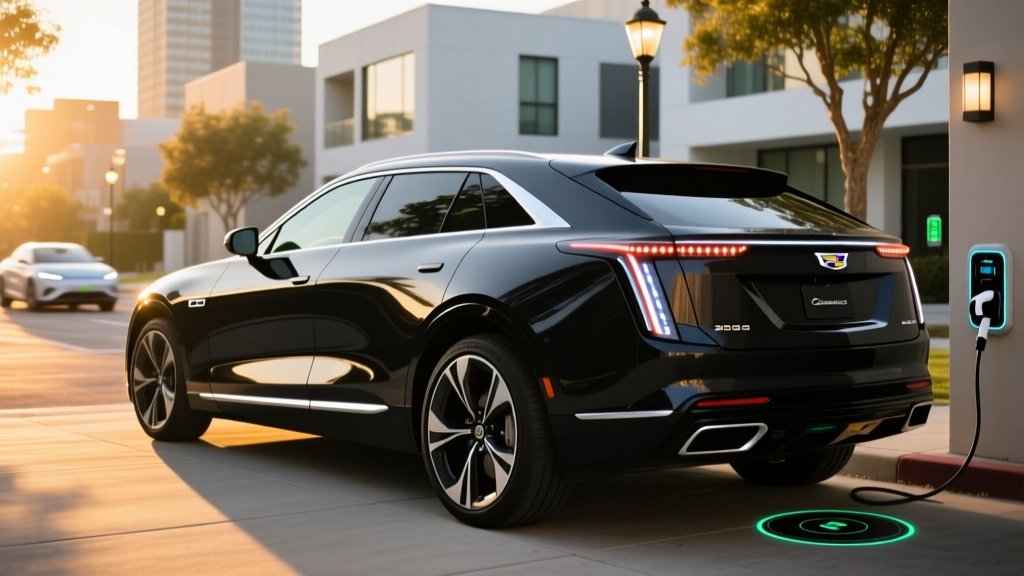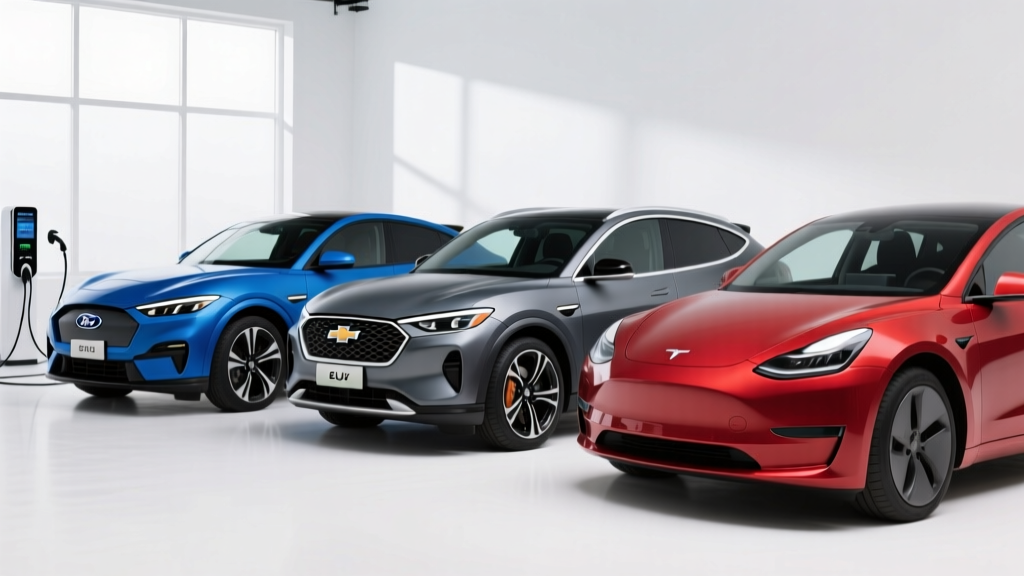
The Inflation Reduction Act reshaped EV incentives with strict battery-sourcing, MSRP, and income caps — and as of 2026, those rules continue to evolve. For shoppers eyeing a Ford Mustang Mach-E, F-150 Lightning, Chevrolet Equinox EV, or Cadillac Lyriq, the question isn't just "do I get $7,500?" It's whether the full ownership math — charging, insurance, maintenance, and resale — actually beats a comparable gas vehicle over five years.
This guide walks through current IRS §30D eligibility for Ford and GM's 2026 EV lineup, then layers in a data-driven 5-year total cost of ownership (TCO) breakdown so you can see where EVs save money and where they quietly cost more.
Federal EV Tax Credit in 2026: What Ford and GM Buyers Need to Know
The §30D Clean Vehicle Credit still offers up to $7,500 for qualifying new EVs, but the path to the full amount is narrower than most buyers assume. The credit is split into two $3,750 halves: one tied to critical-mineral sourcing, the other to battery-component manufacturing. If a vehicle meets only one requirement, you get $3,750 — not $7,500.
§30D Eligibility Checklist (2026 Tax Year)
- Vehicle MSRP cap: Vans, SUVs, and pickup trucks ≤ $80,000; sedans and other body styles ≤ $55,000
- Buyer AGI limits: $300,000 joint / $225,000 head of household / $150,000 single filers
- Battery sourcing: Critical minerals and battery components must meet escalating domestic/free-trade-partner thresholds (phased annually through 2032)
- FEOC exclusion: Vehicles with battery components from a Foreign Entity of Concern (primarily China/Russia) are disqualified entirely
- Point-of-sale transfer: Buyers can transfer the credit to the dealer at purchase, reducing the sale price immediately — even if tax liability is below $7,500
- Final assembly: Vehicle must be assembled in North America (VIN check required)
Ford's 2026 Credit-Eligible Lineup
The Mustang Mach-E (MSRP ~$42,995–$59,995) and F-150 Lightning (~$54,995–$96,875 for trims under the $80K SUV/truck cap) have historically qualified for at least $3,750, with full $7,500 eligibility depending on the model year's battery-sourcing compliance. Ford shifted some battery production to U.S. plants via its BlueOval SK joint venture with SK On, improving component sourcing. However, critical-mineral compliance can vary by trim and battery pack size — always verify the specific VIN on the DOE's fueleconomy.gov database before signing.
GM's 2026 Credit-Eligible Lineup
GM's Ultium-platform EVs — the Chevrolet Equinox EV (~$33,600–$43,400), Blazer EV (~$44,600–$56,600), Silverado EV (select trims under $80K), and Cadillac Lyriq (~$58,595–$67,095) — have broadly qualified for the credit as GM uses Ultium cells from its Ultium Cells LLC plants in Ohio and Tennessee. The Equinox EV 2LT, in particular, has been one of the most accessible credit-qualifying EVs on the market. The Cadillac Optiq (starting ~$53,900) also falls under the SUV cap. Verify current-year battery-sourcing compliance on the IRS clean vehicle list, as critical-mineral rules tighten annually.
Don't Forget State, Local, and Utility Incentives
Federal credit is only one layer. States like California, Colorado, Massachusetts, and New York offer additional rebates ($1,000–$7,500 depending on income and vehicle price). Many utilities (PG&E, ConEdison, Xcel Energy, etc.) offer $300–$1,500 rebates for home Level 2 charger installation or off-peak charging credits. These vary heavily by ZIP code — check your state energy office and local utility for current programs. They stack with §30D and can meaningfully reduce net cost.
5-Year Total Cost of Ownership: EV vs. Gas Baseline
To ground the math, we'll compare a representative 2026 Ford Mustang Mach-E Premium RWD (extended-range, ~$48,000 MSRP after $7,500 point-of-sale credit = ~$40,500 net) against a comparably equipped 2026 Ford Edge ST-Line AWD gas SUV (~$43,000 MSRP). Both are midsize crossover SUVs in the same buyer cross-shop.
| Cost Category | 2026 Mach-E Premium (EV) | 2026 Edge ST-Line (Gas) |
|---|---|---|
| Purchase price (after incentives) | $40,500 | $43,000 |
| Fuel / electricity (60K mi) | $4,320 | $8,100 |
| Maintenance | $1,800 | $3,600 |
| Insurance (5-yr total) | $10,500 | $8,750 |
| Depreciation (est. 5-yr) | $20,250 | $17,200 |
| Total 5-Year Cost | $77,370 | $80,650 |
Assumptions: 12,000 mi/year; electricity at $0.16/kWh national avg; gas at $3.50/gal; Edge at 24 MPG combined (EPA); Mach-E at 3.0 mi/kWh (100 MPGe). Insurance based on national EV avg premium surcharge of ~20%. Depreciation based on 50% retention for EV, 60% for gas at 5 years. Actual figures vary by region, driving profile, and market conditions.
The EV comes out roughly $3,280 cheaper over five years in this scenario — but the savings are front-loaded by the tax credit and back-loaded by fuel and maintenance. Without the $7,500 credit, the Mach-E's 5-year cost rises to ~$84,870, flipping the comparison. This is why credit eligibility is the single biggest swing factor in EV economics.
Charging vs. Gas: The Per-Mile Cost Reality
The fuel-cost advantage of an EV depends almost entirely on where and how you charge.
| Scenario | Rate | Cost/Mile (Mach-E at 3.0 mi/kWh) | Cost/Mile (Edge at 24 MPG) |
|---|---|---|---|
| Home Level 2 (national avg) | $0.16/kWh | $0.053 | — |
| Home Level 2 (off-peak TOU rate) | $0.09/kWh | $0.030 | — |
| Home Level 2 (high-cost state: CA avg) | $0.30/kWh | $0.100 | — |
| Public DC fast charging (avg) | $0.48/kWh | $0.160 | — |
| Gasoline (national avg) | $3.50/gal | — | $0.146 |
At home on a national-average rate, the Mach-E costs about $0.05/mile to "fuel" — roughly one-third the cost of gas. But if you rely heavily on public DC fast chargers at $0.48/kWh, your cost per mile jumps to $0.16, which is actually more than the gas Edge at $0.146/mile. This is the number-one ownership surprise for apartment dwellers and road-trippers who can't install a home Level 2 charger.
Over 60,000 miles, home-charging saves roughly $3,780 versus gas. Public-charging-only erases that advantage entirely. Plan your charging access before you buy.
Maintenance Savings: Fewer Parts, Real Dollars Saved
EVs eliminate oil changes, transmission fluid, spark plugs, timing belts, and exhaust system maintenance. Regenerative braking also dramatically reduces brake pad wear — many EV owners report original brake pads lasting 80,000–100,000+ miles.
| Service Item | EV Cost | Gas Vehicle Cost |
|---|---|---|
| Oil changes (6 @ $50–$80) | $0 | $300–$480 |
| Brake pads (1–2 sets @ $250–$400) | $0–$300 | $500–$800 |
| Transmission fluid | $0 | $150–$250 |
| Air filters, spark plugs | $0–$60 | $200–$400 |
| Tire rotation / replacement | $800–$1,200 | $600–$1,000 |
| Cabin air filter, wipers, misc. | $300–$500 | $300–$500 |
| Total Estimated | $1,100–$2,060 | $2,050–$3,430 |
The one maintenance area where EVs can cost more is tires. EVs are heavier (the Mach-E weighs ~4,700 lbs vs. the Edge at ~4,100 lbs) and deliver instant torque, which accelerates tire wear. Budget for tire replacement at ~40,000 miles rather than the 55,000–65,000 typical for gas crossovers. EV-specific tires (like Michelin Pilot Sport EV or Hankook iON) cost $200–$350 per corner.
The Insurance Reality: Why EVs Cost More to Insure
EV insurance premiums run 15–25% higher than comparable gas vehicles, and this is the ownership cost most buyers overlook. The reasons are structural:
- Higher repair costs: Battery packs, power electronics, and specialized body structures require EV-certified technicians and OEM parts. A minor rear-end collision that totals a battery enclosure can push repair costs above the vehicle's value.
- Higher vehicle values: Even after the tax credit, EVs tend to carry higher MSRPs than gas equivalents, increasing comprehensive and collision premiums.
- Repair network limitations: Fewer body shops are certified for high-voltage system repairs, which can extend rental-car reimbursement periods and drive up claim costs.
For the Mach-E vs. Edge comparison, expect to pay roughly $350–$500 more per year in insurance — or $1,750–$2,500 over five years. Always get a quote from your insurer before purchasing. Some companies (Geico, Progressive, State Farm) offer EV-specific discounts, and bundling with home insurance can narrow the gap. Tesla's own insurance product (where available) uses real-time driving data and can be competitive, though it's not available for Ford or GM vehicles.
Depreciation and Resale Value: The Wildcard
EV depreciation has been volatile. From 2020–2022, strong demand and limited supply kept EV resale values high. In 2023–2024, aggressive price cuts by Tesla and a wave of new models compressed used EV values significantly — some models lost 40–50% of value in two years. By 2026, the market has stabilized somewhat, but EVs still depreciate faster on average than gas vehicles:
- Typical 5-year EV retention: 40–50% of MSRP (varies heavily by brand and model)
- Typical 5-year gas vehicle retention: 50–60% of MSRP
Several factors drive this gap:
- Battery health uncertainty: Used buyers worry about degradation and replacement cost ($8,000–$20,000 depending on pack size), even though most batteries outlast the vehicle. The 8-year/100,000-mile federal battery warranty (mandated minimum) helps but doesn't transfer confidence perfectly to second owners.
- Rapid tech obsolescence: Newer EVs charge faster, have more range, and offer better ADAS — making 3-year-old models feel dated faster than gas equivalents.
- Price-cut contagion: When manufacturers cut new-vehicle prices, used values follow immediately.
For our Mach-E scenario, assuming 50% retention at 5 years means ~$24,000 residual value on a $48,000 MSRP — a $24,000 depreciation hit. The Edge at 60% retention on $43,000 loses ~$17,200. That's a $6,800 depreciation gap that partially offsets the EV's fuel and maintenance savings.
Models with strong brand loyalty (like the F-150 Lightning) or limited competition tend to hold value better. Leasing can be a smart hedge — you capture the tax credit (via the lessor's point-of-sale transfer or lease pass-through under §45W commercial credit) without absorbing resale risk.
Decision Framework: When the Math Works
Choose an EV (Ford/GM) If:
- You qualify for the full $7,500 §30D credit and can apply it at point of sale
- You can install a home Level 2 charger (the single biggest cost-savings enabler)
- Your daily commute is under 200 miles and you road-trip fewer than 5 times per year
- You plan to keep the vehicle 5–8 years, amortizing the higher upfront cost and depreciation
- Your state offers additional rebates that stack with federal credit
Consider a Hybrid or Gas Vehicle If:
- You don't qualify for the credit (income above caps, MSRP above caps, or battery-sourcing disqualification)
- You rent or live in a condo without charging access and would rely on public DC fast charging
- You drive more than 25,000 miles per year in rural areas with sparse charging infrastructure
- Insurance quotes for the EV exceed 30% above your current gas vehicle
- You trade vehicles every 2–3 years and can't absorb steeper EV depreciation
Frequently Asked Questions
How much does it really cost to own an EV over 5 years?
For a midsize EV crossover like the Mustang Mach-E (after $7,500 federal credit), expect roughly $75,000–$80,000 total over 5 years / 60,000 miles, including purchase, fuel, maintenance, insurance, and depreciation. This is typically $2,000–$5,000 less than a comparable gas vehicle if you charge at home — but can be more if you rely on public fast charging, face high insurance premiums, or sell early during a depreciation dip.
Do I qualify for the federal EV tax credit?
You qualify for up to $7,500 under §30D if your modified adjusted gross income is below $300K (joint), $225K (head of household), or $150K (single), the vehicle MSRP is under $80K for SUVs/trucks or $55K for sedans, the vehicle meets battery-sourcing and FEOC requirements, and it was assembled in North America. As of 2026, you can transfer the credit to the dealer at point of sale, reducing your purchase price immediately regardless of your tax liability. Check the specific VIN on fueleconomy.gov or the IRS clean vehicle page before purchasing.
How much do I save on fuel and maintenance?
Home-charging an EV at $0.16/kWh saves roughly $3,500–$4,000 in fuel over 60,000 miles versus a 24 MPG gas SUV at $3.50/gallon. Maintenance savings add another $1,500–$2,000 over 5 years from eliminated oil changes, reduced brake wear, and fewer fluid services. Combined, that's approximately $5,000–$6,000 in operating savings — but only if you charge at home at reasonable electricity rates.
Are EVs more expensive to insure?
Yes — typically 15–25% more than an equivalent gas vehicle. For a ~$45,000 EV, expect to pay $2,000–$2,500 per year in insurance versus $1,600–$2,000 for a gas equivalent. The gap comes from higher repair costs (battery and power electronics), higher vehicle values, and a smaller certified repair network. Always get a personalized quote before buying.
How well do EVs hold their value?
EVs currently retain about 40–50% of MSRP after 5 years, versus 50–60% for comparable gas vehicles. Factors include battery health uncertainty for used buyers, rapid technology advancement making older models feel dated, and manufacturer price cuts compressing used values. The gap has narrowed since 2023–2024 but persists. Leasing can mitigate resale risk while still capturing incentive benefits.
Does the EV tax credit expire or get extended?
Under current law, the §30D credit is authorized through 2032, with battery-sourcing requirements that tighten annually. Congressional proposals to modify or accelerate the phaseout surface regularly, making the policy landscape uncertain beyond the current year. If you're considering an EV purchase and qualify now, the credit is available — but don't bank on the same terms holding indefinitely. Consult a tax professional for your specific situation.