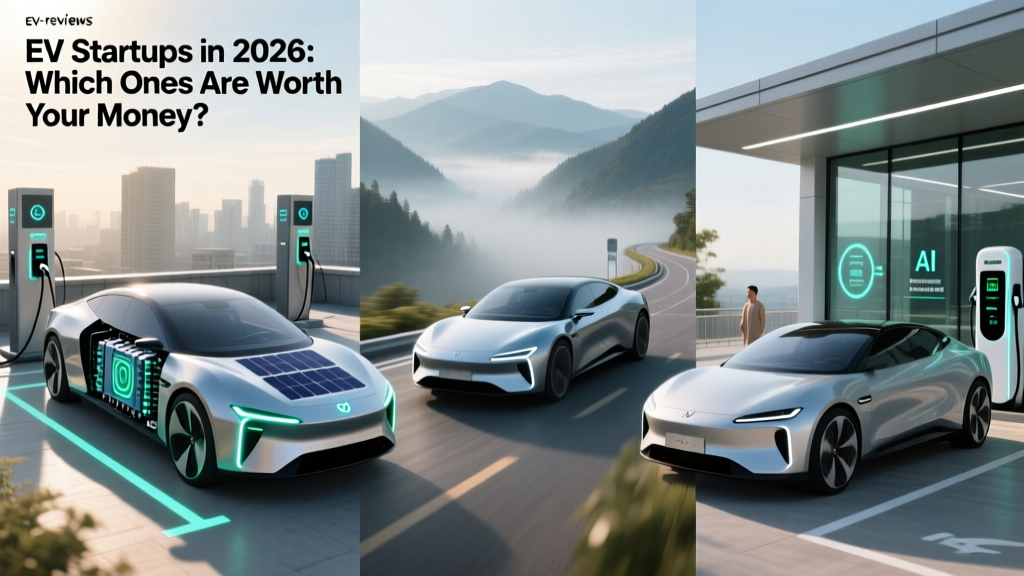
The Quick Answer: Which EV Startups Survived and Should You Buy One?
As of 2026, only a handful of EV startups have survived the brutal shakeout that began in 2023. The two most viable for US buyers are Rivian (R1S SUV and R1T truck) and Lucid Motors (Air sedan and Gravity SUV). Fisker collapsed in 2024 after filing for bankruptcy. Canoo, Lordstown, and Faraday Future never achieved meaningful production. Buying from a surviving startup means accepting higher risk than purchasing from Tesla, Hyundai, or Ford — but the survivors now offer competitive range, improving service networks, and unique capabilities that mainstream brands still can't match. If you want a rugged electric adventure vehicle or a luxury sedan with class-leading efficiency, Rivian and Lucid are legitimate choices. If you need guaranteed long-term service access and low depreciation risk, stick with established automakers.
The Startup Graveyard: What Happened to the EV Wave of 2020-2023
Between 2020 and 2022, SPAC mergers and zero-interest-rate capital flooded the EV startup space with over $50 billion. By 2026, most of those companies are gone. Here's what the data tells us about the carnage:
- Fisker Inc. — Filed Chapter 11 bankruptcy in June 2024. The Ocean SUV suffered from software failures, build quality issues, and a collapsed dealer/service network. Owners were left with orphaned vehicles and no warranty support.
- Lordstown Motors — Bankrupt by 2023 after its Endurance pickup never reached meaningful production. Foxconn acquired the Ohio factory.
- Canoo — Pivoted repeatedly between consumer vans, delivery vehicles, and government contracts. Never delivered a production vehicle to retail customers.
- Faraday Future — The FF 91 finally entered limited production in 2024 at a $200,000+ price point with negligible sales volume. Essentially defunct as a mass-market player.
- Arrival — UK-based electric van startup that burned through capital and entered administration in early 2024.
The pattern is clear: startups that couldn't achieve production scale of at least 20,000-30,000 units annually within three years of launch ran out of cash. Manufacturing vehicles at scale is exponentially harder than designing prototypes.
The Survivors: Rivian and Lucid in Detail
Rivian (R1S and R1T) — 2026 Model Year
Rivian has emerged as the most successful EV startup by production volume. The company delivered approximately 57,000 vehicles in 2024 and has scaled its Normal, Illinois factory toward a 150,000 annual capacity. The second-generation R1 platform (introduced for 2025) brought significant improvements in powertrain efficiency, charging speed, and interior quality.
| Spec | 2026 Rivian R1S Dual-Motor | 2026 Rivian R1T Dual-Motor |
|---|---|---|
| EPA Range | 330 mi (Max Pack) | 328 mi (Max Pack) |
| Battery (usable) | 141 kWh (NMC, Max Pack) | 141 kWh (NMC, Max Pack) |
| Peak DC Fast Charge | 220 kW | 220 kW |
| 10-80% DC Charge Time | ~30 minutes | ~30 minutes |
| Level 2 Charge Rate | 11.5 kW | 11.5 kW |
| Horsepower | 533 hp (Dual) / 1,025 hp (Tri) | 533 hp (Dual) / 1,025 hp (Tri) |
| 0-60 mph | 4.5s (Dual) / 2.9s (Tri) | 4.5s (Dual) / 2.9s (Tri) |
| Towing Capacity | 7,700 lbs | 11,000 lbs |
| Base MSRP | $79,900 (Adventure Dual Standard) | $73,000 (Adventure Dual Standard) |
| Battery Warranty | 8 yr / 175,000 mi | 8 yr / 175,000 mi |
Real-World Range Note: The 330-mile EPA figure for the R1S Max Pack holds up well in mild weather highway driving (expect ~290-310 mi at 70 mph). In sub-30°F conditions, expect a 20-25% reduction, bringing real range to roughly 250-265 miles. Towing a 5,000-lb trailer cuts range approximately in half regardless of weather. Rivian's heat pump (standard on Gen 2) helps mitigate cold-weather losses compared to the first-generation models.
Lucid Motors (Air and Gravity) — 2026 Model Year
Lucid has carved a niche in the luxury EV sedan segment with class-leading efficiency. The Air sedan achieves an EPA-estimated 516 miles on the Grand Touring trim — the highest of any production EV sold in the US. The Gravity SUV launched for the 2025 model year and has been Lucid's volume play, with the company targeting 30,000+ combined deliveries in 2026. Saudi Arabia's Public Investment Fund remains Lucid's majority backer, providing financial stability that most startups lacked.
| Spec | 2026 Lucid Air Pure | 2026 Lucid Air Grand Touring | 2026 Lucid Gravity Grand Touring |
|---|---|---|---|
| EPA Range | 419 mi | 516 mi | 440 mi |
| Battery (usable) | 88 kWh (NMC) | 112 kWh (NMC) | 112 kWh (NMC) |
| Peak DC Fast Charge | 200 kW | 300 kW | 300 kW |
| 10-80% DC Charge Time | ~33 min | ~20 min | ~22 min |
| Horsepower | 430 hp | 819 hp | 828 hp |
| 0-60 mph | 5.0s | 3.0s | 3.5s |
| Base MSRP | $69,900 | $125,600 | $94,900 |
| Battery Warranty | 8 yr / 100,000 mi | 8 yr / 100,000 mi | 8 yr / 100,000 mi |
Source: fueleconomy.gov and Lucid Motors official specs.
Cost Comparison: Startup EV vs. Established Brand EV vs. Gas Car
Buying from an EV startup means paying a premium — and accepting different ownership economics than a mainstream EV or gas vehicle. Here's how a 5-year ownership scenario breaks down for a Rivian R1S vs. a comparable BMW X5 xDrive40 (gas) and a Tesla Model X:
| Cost Factor (5 Years) | 2026 Rivian R1S Dual Standard | 2026 Tesla Model X AWD | 2026 BMW X5 xDrive40 (Gas) |
|---|---|---|---|
| Purchase Price (MSRP) | $79,900 | $81,630 | $68,200 |
| Federal Tax Credit (§30D) | $0 (above MSRP cap)* | $0 (above MSRP cap)* | N/A |
| Estimated Insurance (5 yr) | $14,500 | $13,800 | $10,200 |
| Energy Cost (5 yr, 75k mi) | $5,600 (home L2 avg) | $5,400 (home L2 avg) | $11,250 (gas @ $3.75/gal, 24 MPG) |
| Maintenance (5 yr) | $2,100 | $1,900 | $5,400 |
| Estimated Depreciation | $38,000 (48%) | $34,000 (42%) | $28,000 (41%) |
| Total 5-Year Cost | ~$140,100 | ~$134,730 | ~$123,050 |
*The §30D federal EV tax credit has an MSRP cap of $80,000 for SUVs and $55,000 for sedans per current IRS guidelines. Most Rivian and Lucid trims exceed these caps. The Tesla Model X also exceeds the SUV cap. Always verify eligibility with a tax professional before purchase, as rules are subject to legislative change.
The Startup Depreciation Risk: EV startups carry higher depreciation risk than established brands. A Fisker Ocean that sold for $68,000 new in 2023 was worth under $25,000 by late 2024 after the company's bankruptcy. Rivian and Lucid have stabilized somewhat, but their residual values still trail Tesla and legacy brands by 5-10 percentage points over 5 years. Lease or factor in steeper depreciation when buying.
What First-Time EV Buyers Should Know About Startup Ownership
Owning a vehicle from an EV startup involves logistical realities that differ from buying a Ford or Toyota. Here's what the data and owner reports show:
Service and Parts Access
Rivian operated approximately 55 service centers and 35 mobile service vans across the US as of early 2026. Lucid had roughly 25 service centers. Compare this to Tesla's 250+ service locations or Ford's 3,000+ dealerships. If you live more than 100 miles from a service center, expect longer repair timelines and potential loaner-vehicle shortages. Both Rivian and Lucid offer mobile service for minor repairs, but collision and major drivetrain work requires a physical center.
Charging Network Realities
Both Rivian and Lucid now use the NACS (North American Charging Standard) connector, granting access to Tesla's Supercharger network — over 20,000 stalls in North America. This was a critical advantage that early Rivian owners (using CCS adapters) lacked. On a road trip, you can expect 200-220 kW peak charging at V3/V4 Superchargers, adding roughly 150-180 miles in 15 minutes for the Rivian R1S and up to 250+ miles for the Lucid Air Grand Touring at its 300 kW peak on compatible chargers.
Software and OTA Updates
EV startups lean heavily on over-the-air (OTA) updates to improve vehicles post-sale. Rivian has delivered meaningful updates including improved route planning, regenerative braking profiles, and camp mode features. However, software bugs are more frequent than with established automakers. Expect occasional glitches with new firmware releases — a trade-off for faster feature iteration.
| Common Misconception | Reality (With Data) |
|---|---|
| "Startup EVs are unreliable" | Rivian's Gen 2 platform (2025+) has shown significant reliability improvement over Gen 1. Consumer Reports removed the R1T from its "not recommended" list in 2025. Early-production risk is real but decreasing. |
| "You can't road-trip a startup EV" | With NACS access to Tesla Superchargers, Rivian and Lucid owners can road-trip as easily as Tesla owners. The charging network gap that plagued early startups has closed. |
| "Startup EVs qualify for the $7,500 tax credit" | Most don't. The §30D credit's MSRP cap ($80K SUVs, $55K sedans) and battery-sourcing requirements disqualify most Rivian and all Lucid trims. Check IRS eligibility rules before assuming. |
| "Battery replacement will bankrupt me" | Both Rivian and Lucid provide 8-year battery warranties covering degradation below 70% capacity. A full R1S Max Pack replacement would cost approximately $22,000-$28,000 out of warranty — expensive but covered for the first 175,000 miles. |
Decision Framework: Should You Buy From an EV Startup?
Buy a Rivian R1S/R1T if:
- You need a genuine off-road-capable electric SUV or truck (no mainstream EV matches Rivian's 14.9 inches of ground clearance and 800+ lb-ft of torque for trail use)
- You tow regularly and need 7,700-11,000 lbs of electric towing capacity
- You live within 100 miles of a Rivian service center or are comfortable with mobile-service-first maintenance
- You can absorb higher depreciation risk or plan to lease
- Your budget is $75,000-$110,000 and you value adventure capability over luxury refinement
Buy a Lucid Air or Gravity if:
- Maximum range is your top priority (516 mi EPA on the Air Grand Touring is unmatched)
- You want a luxury sedan that outperforms the Mercedes EQS and BMW i7 on efficiency (the Air achieves 146 MPGe combined vs. the EQS 450's 97 MPGe per fueleconomy.gov)
- You're in a major metro area with Lucid service access (primarily California, New York, Miami, Houston, and select other cities)
- Your budget is $70,000-$140,000 and you prioritize efficiency and interior space over brand cachet
Skip startups and buy an established-brand EV if:
- You live in a rural area far from any startup service center
- You need the federal §30D tax credit to make the math work (most startup vehicles don't qualify)
- You plan to keep the vehicle 8+ years and want guaranteed parts availability
- You want predictable resale value (Tesla, Hyundai, and BMW EVs have more established depreciation curves)
- Your budget is under $60,000 — startups simply don't compete in the affordable EV segment
The Bottom Line: Startups Are a Calculated Risk
The EV startup era of 2020-2023 produced more failures than successes, but the survivors — Rivian and Lucid — have earned their place in the market through genuine engineering differentiation. Rivian owns the electric adventure-vehicle category. Lucid leads in EV efficiency and sedan range. Neither is a safe, conservative purchase the way a Hyundai Ioniq 5 or Tesla Model Y is. But for buyers whose needs align with what these companies do best, the risk-reward calculation has shifted favorably as production scales and service networks expand.
Frequently Asked Questions
Is Rivian going to go bankrupt like Fisker?
Rivian's financial position is materially stronger than Fisker's was. Rivian has a manufacturing facility producing 50,000+ vehicles annually, a joint-development partnership with Volkswagen (which invested up to $5.8 billion), and an Amazon delivery-van contract providing steady revenue. The company still operates at a loss per vehicle, but its cash runway and backing make near-term bankruptcy unlikely as of 2026. That said, no startup carries zero risk.
Can I get a Rivian or Lucid serviced in a small town?
Realistically, no — not easily. Rivian's service network covers major metros and select secondary markets. Lucid's is even more concentrated. If you live in rural Montana or small-town Mississippi, you'll face 200+ mile drives for anything beyond mobile-service-eligible repairs. This is the single biggest ownership friction point for startup EVs outside coastal markets.
Do Rivian and Lucid vehicles qualify for any tax incentives?
Under current §30D rules, most trims exceed the MSRP cap. However, some buyers may qualify for state-level incentives (California's CVRP, Colorado's state credit, etc.), which have different income and price thresholds. Additionally, the used-EV credit (up to $4,000 under §25E) may apply if you purchase a qualifying pre-owned Rivian or Lucid under $25,000 — though as of 2026, few have depreciated to that level. Always consult a tax professional and check IRS.gov for current rules.
How does startup EV insurance compare to mainstream EVs?
Expect to pay 15-30% more for insurance on a Rivian or Lucid compared to a similarly priced Tesla or legacy-brand EV. Insurers price in higher repair costs, limited parts availability, and less actuarial data. Average annual premiums for a Rivian R1S run $2,700-$3,200 depending on state and driver profile, vs. $2,200-$2,600 for a Tesla Model Y. Get quotes before purchasing — insurance is a significant ownership cost that buyers often overlook.
What happens to my startup EV if the company goes under?
The Fisker Ocean provides a cautionary tale: when Fisker collapsed, owners faced orphaned vehicles with no warranty support, OTA updates that ceased, and resale values that plummeted 60%+ overnight. Third-party parts sourcing became necessary for basic repairs. If you buy from a startup, understand that this tail risk exists. Leasing transfers residual-value risk to the lessor. If buying outright, factor in the possibility that resale value could be severely impacted by company distress.