Quick Answer: Are EV Sport Cars Worth It in 2026?
If you want instant torque, sub-4-second 0-60 times, and lower per-mile fueling costs, today's EV sport cars deliver. But expect higher upfront prices ($55,000–$130,000+), steeper insurance premiums (15–30% above gas equivalents), and real-world highway range that falls 10–20% below EPA stickers when you drive them hard. The total cost of ownership can beat a comparable gas sports car over five years — but only if you can charge at home on Level 2 and your daily driving stays under ~250 miles.
Top 2026 EV Sport Cars: Spec-by-Spec Breakdown
The electric performance segment has matured past early adopter pricing into genuine alternatives to the BMW M3, Porsche 911, and Chevrolet Corvette. Here is how the leading 2026 models stack up on the numbers that matter.
| Model | EPA Range | Battery (kWh / Chemistry) | Peak DC Charge (kW) | 10–80% Time | 0–60 mph | HP | Base MSRP |
|---|---|---|---|---|---|---|---|
| Tesla Model 3 Performance | 315 mi | 79 kWh / NMC | 250 kW | ~22 min | 2.9 s | 510 | $54,990 |
| Porsche Taycan GTS | 283 mi | 97 kWh (usable) / NMC | 320 kW | ~18 min | 3.5 s | 590 | $113,900 |
| BMW i4 M50 | 270 mi | 81.5 kWh / NMC | 205 kW | ~28 min | 3.7 s | 536 | $69,700 |
| Hyundai Ioniq 5 N | 221 mi | 84 kWh / NMC | 240 kW | ~18 min | 3.2 s | 641 | $67,500 |
| Lucid Air Pure RWD | 419 mi | 88 kWh / NMC | 200 kW | ~30 min | 3.8 s | 430 | $74,900 |
Real-World Range Reality Check: EPA estimates assume mixed driving at moderate speeds. When you drive an EV sport car the way it was designed — aggressive acceleration, sustained 75–85 mph highway runs, or cold-weather commutes below 40°F — expect to lose 15–25% from the sticker. The Ioniq 5 N's 221-mile EPA rating, for instance, realistically yields 170–185 miles on a spirited canyon run or winter road trip. The Model 3 Performance holds up better at ~260–275 real-world highway miles thanks to strong efficiency (27 kWh/100mi).
EV Sport Cars vs. Gas Sports Cars: The Numbers
Performance parity is no longer the question — the Tesla Model 3 Performance hits 60 mph faster than a 2026 BMW M3 Competition (2.9s vs. 3.4s). The real comparison comes down to cost structure, driving experience, and practicality.
| Metric | Tesla Model 3 Perf. ($54,990) | BMW M3 Comp. (~$78,000) |
|---|---|---|
| 0–60 mph | 2.9 s | 3.4 s |
| Fuel / Energy Cost per Mile | $0.045 (home L2, $0.13/kWh) | $0.19 (premium, 20 mpg, $3.80/gal) |
| Annual Fuel/Energy (12,000 mi) | $540 | $2,280 |
| Annual Maintenance Est. | $350 (tires, cabin filter, fluid top-off) | $1,100 (oil, brakes, filters, plugs) |
| Insurance (avg annual) | $2,800 | $2,200 |
| 5-Year Total Fuel + Maint. | $4,450 | $16,900 |
The EV sport car wins on operating cost by a wide margin — roughly $12,450 saved over five years in fuel and maintenance alone. But insurance erodes that advantage by ~$3,000 over the same period, and the M3 benefits from stronger long-term resale value in the collector-adjacent segment. Depreciation on EV sport cars remains steeper: the Taycan, for example, has historically lost 45–55% of its value in three years, compared to roughly 30–35% for a gas 911 (IIHS safety data can also influence insurance premiums).
Real Ownership Costs: The Full 5-Year Picture
Let's model a realistic five-year ownership scenario for the Tesla Model 3 Performance against the BMW M3 Competition, assuming 12,000 miles per year, home Level 2 charging, and no major battery issues.
| Cost Category | Model 3 Performance | BMW M3 Competition |
|---|---|---|
| Purchase Price (MSRP) | $54,990 | $78,000 |
| Federal Tax Credit (§30D) | –$3,750 (partial, sourcing-dependent) | $0 |
| Net Purchase | $51,240 | $78,000 |
| 5-Yr Fuel / Energy | $2,700 | $11,400 |
| 5-Yr Maintenance | $1,750 | $5,500 |
| 5-Yr Insurance | $14,000 | $11,000 |
| Est. Depreciation (5 yr) | $25,600 (~50%) | $27,300 (~35%) |
| 5-Yr Total Cost of Ownership | $69,690 | $105,900 |
The Model 3 Performance comes out approximately $36,000 cheaper over five years — even after accounting for higher insurance and steeper EV depreciation. The gap narrows if you cannot charge at home and must rely on DC fast charging at $0.35–$0.50/kWh, which roughly triples your per-mile energy cost.
§30D Federal Tax Credit — 2026 Rules for Sport EVs
- MSRP Cap: Sedans must be under $55,000; SUVs/trucks under $80,000 (this eliminates the Taycan, i4 M50, and Lucid Air from new-vehicle credit eligibility)
- Income Cap: AGI ≤ $150,000 single / $300,000 joint
- Battery Sourcing: Critical minerals and battery components must meet phased-in domestic/free-trade thresholds — many 2026 models qualify for partial credit ($3,750) rather than the full $7,500
- Point-of-Sale Transfer: Eligible buyers can apply the credit as a purchase-price reduction at the dealer (IRS §30D details)
Note: Tax credit rules shift annually. Consult a tax professional and check fueleconomy.gov for current vehicle eligibility before purchasing.
Charging at Home vs. Public: What Sport EV Owners Actually Do
Sport EVs consume energy faster than commuter models — aggressive driving pushes consumption to 35–45 kWh/100mi versus the EPA-rated 25–30. That makes charging infrastructure critical.
| Level | Power (kW) | Miles Added per Hour | Use Case |
|---|---|---|---|
| Level 1 (120V) | 1.4 kW | 3–5 mi/hr | Emergency/overnight trickle — not viable for sport EV daily use |
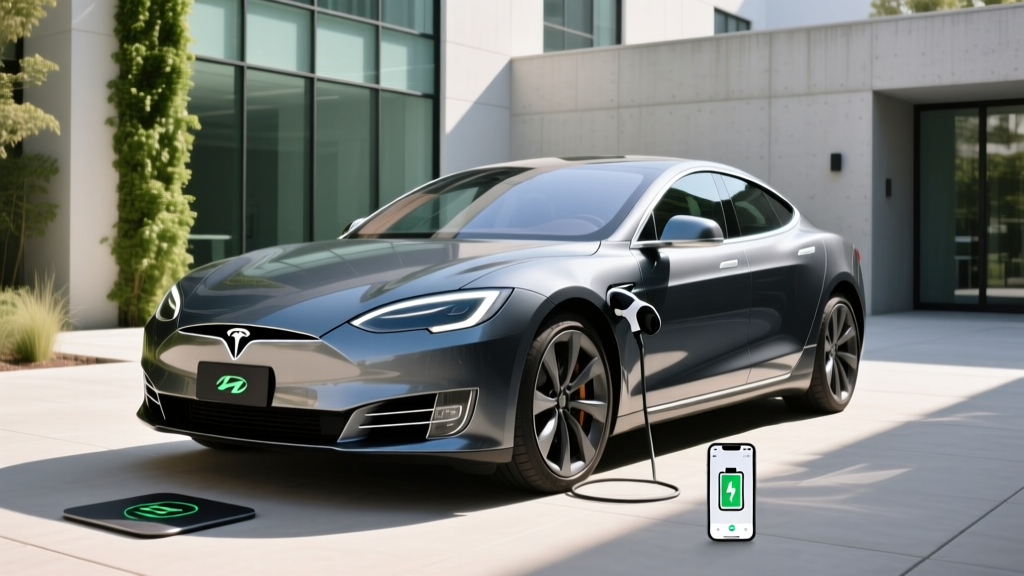
| Level 2 (240V, 48A) | 11.5 kW | 30–40 mi/hr | Home daily charging — full overnight replenishment |
| DC Fast Charge | 150–320 kW | 200–600 mi/hr (peak) | Road trips — expect taper above 80% SoC |
Home charging is non-negotiable for sport EV ownership unless you have a reliable DC fast charger within 5 minutes of your home. A Level 2 home install (240V, 48A hardwired) typically costs $1,200–$2,800 including equipment and electrician labor, assuming your panel has capacity. If you need a 200A panel upgrade, add $1,500–$3,000.
Charging curve reality: The Taycan's 320 kW peak is impressive, but sustained charging averages closer to 200–220 kW across the 10–80% window. Porsche's 800V architecture keeps the curve flatter than most competitors. The Ioniq 5 N also uses an 800V system, sustaining strong rates through 70% SoC before tapering. Expect your actual road-trip charging stop to take 20–30 minutes, not the "18 minutes" marketing headlines suggest — because you'll also walk to the restroom and grab a coffee.
Common Misconceptions About EV Sport Cars
| Myth | Fact |
|---|---|
| "EVs can't handle like gas sports cars" | The Taycan GTS and Ioniq 5 N have matched or beaten gas counterparts on tracks like the Nürburgring. Low center of gravity from floor-mounted batteries reduces body roll. Weight (4,500–5,300 lbs) is higher, but torque vectoring compensates in real-world cornering. |
| "The battery will need replacing in 5 years" | NMC batteries in 2026 sport EVs are warrantied for 8 years/100,000 miles at 70% capacity retention. Real-world degradation data from Tesla and Porsche fleets shows 8–12% loss over 100,000 miles. Replacement, if ever needed, runs $12,000–$22,000 out of warranty. |
| "You can't take an EV sport car on road trips" | With DC fast charging at 200–320 kW, you add 150–200 miles in a 20-minute stop. The Model 3 Performance can cover LA-to-Vegas (270 mi) on a single charge. The Supercharger and Electrify America networks now cover most major US corridors. |
| "EVs are cheaper to insure" | Not for sport models. Higher repair costs, specialized parts, and expensive battery packs push insurance premiums 15–30% above gas equivalents. Get quotes before buying. |
| "All EVs qualify for the $7,500 tax credit" | Most sport EVs exceed the $55,000 sedan MSRP cap. Only the Model 3 Performance currently sits near the threshold, and partial sourcing credits ($3,750) are more common than the full amount in 2026. |
First-Time EV Sport Car Buyer: What You Need to Know
If this is your first electric vehicle and you're coming from a gas sports car, prepare for these ownership differences:
- Regenerative braking changes your driving. Most sport EVs offer adjustable regen. The Ioniq 5 N simulates 8-speed gear shifts and engine braking feel via software — it's gimmicky but effective at reducing the "EV numbness" some drivers report. Expect a 1–2 week adaptation period.
- Tires wear faster. Instant torque and heavy curb weight (4,500+ lbs) chew through rubber. Budget $1,200–$2,000 for a set of performance tires every 20,000–30,000 miles. Michelin Pilot Sport EV and Pirelli P Zero Elect are common OEM choices.
- Cold weather cuts range hard. Below 32°F, expect 20–30% range loss. Preconditioning your battery while plugged in (a feature all models above support) mitigates this and preserves fast-charging speed in winter.
- Track driving drains batteries fast. A 20-minute track session in the Ioniq 5 N can consume 40–50% of the battery. Plan for cooling and charging downtime. Hyundai includes an N-specific thermal management mode to prepare the battery for hard use.
- Software updates change your car. Tesla and Hyundai regularly push OTA updates that alter throttle response, regen behavior, and even add features. Your car may drive differently six months after purchase — sometimes better, sometimes controversially different.
Decision Framework: Which EV Sport Car Fits You?
Choose the Tesla Model 3 Performance if: You want the best value-to-performance ratio, access to the Supercharger network, and a usable daily driver under $55K that still qualifies for partial tax credits. Best for: budget-conscious performance buyers with home charging.
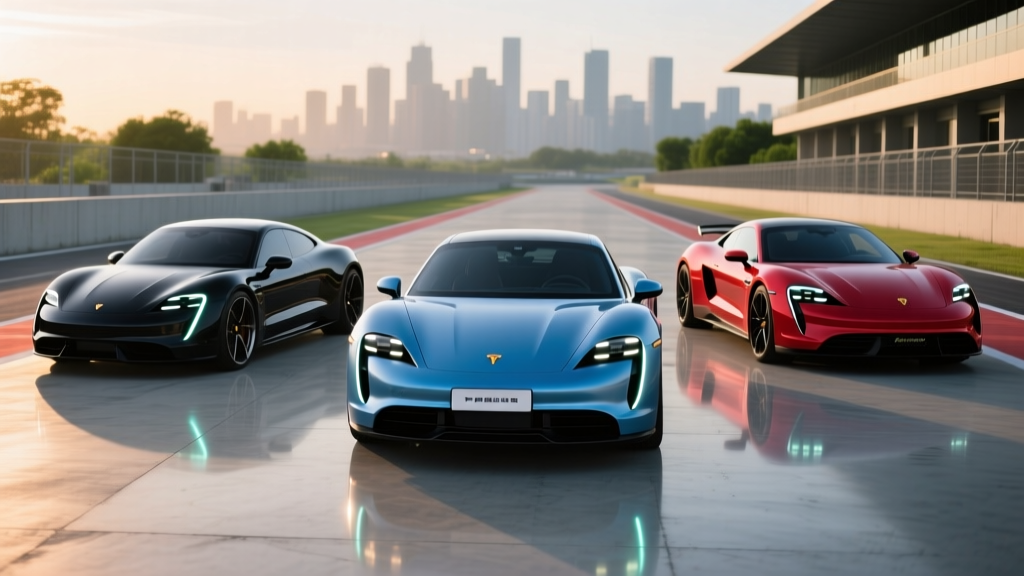
Choose the Porsche Taycan GTS if: Build quality, steering feel, and brand prestige matter as much as straight-line speed, and budget is flexible. The 800V architecture delivers the most consistent fast-charging experience in the segment. Best for: driving enthusiasts who prioritize handling nuance over range.
Choose the Hyundai Ioniq 5 N if: You want a track-capable EV with personality — simulated shifts, N e-Shift software, and aggressive thermal management make it the most "analog-feeling" electric sports car available. Best for: weekend track-day drivers who want an EV that doesn't feel like an appliance.
Choose the BMW i4 M50 if: You prefer a traditional luxury sport sedan interior and want BMW's driving dynamics in an electric package. The iDrive 8.5 system is among the best in the segment. Best for: luxury sedan buyers transitioning from an M3 or M4.
Choose the Lucid Air Pure if: Range is your priority above all else — 419 EPA miles is unmatched in the sport-sedan segment, and the 3.8s 0–60 is hardly slow. Best for: long-distance commuters and road-trippers who refuse to sacrifice performance.
Do EV sport cars hold their value?
Generally, no — EV sport cars depreciate faster than gas equivalents. The Taycan has seen 45–55% depreciation over three years, versus ~30–35% for a gas 911. Tesla's frequent price cuts on new vehicles also suppress used values. However, the operating-cost savings can offset this if you keep the car 5+ years.
Can I daily-drive an EV sport car in winter?
Yes, with caveats. All models above have heat pumps and battery preconditioning. Expect 20–30% range loss below freezing. The AWD variants (Model 3 Performance, i4 M50, Taycan GTS, Ioniq 5 N) handle snow and ice well thanks to instant torque control. Precondition while plugged in to minimize range impact.
What happens if the battery fails out of warranty?
Full battery replacement runs $12,000–$22,000 depending on the model. However, catastrophic failure is rare — most degradation is gradual. Federal warranty requirements mandate 8 years/100,000 miles at 70% capacity retention. Some states (California and CARB-adopting states) require 10 years/150,000 miles. Module-level repairs (replacing individual cells or modules) can reduce out-of-pocket costs to $3,000–$7,000.
Is a used EV sport car a better deal?
A 2–3-year-old Taycan or Model 3 Performance can be 35–50% cheaper than new. Check the battery State of Health (SoH) via the car's diagnostics or a third-party scan tool. The used EV tax credit (§25E) offers up to $4,000 on vehicles under $25,000 — though few sport EVs qualify at that price point in 2026.
How does EV sport car insurance compare?
Expect premiums 15–30% higher than a gas equivalent. A Model 3 Performance averages $2,600–$3,200/year nationally; a Taycan GTS can exceed $4,000/year. Factors include higher repair costs, battery replacement risk, and the performance-driver demographic. Always get quotes from GEICO, Progressive, and specialty insurers before committing.