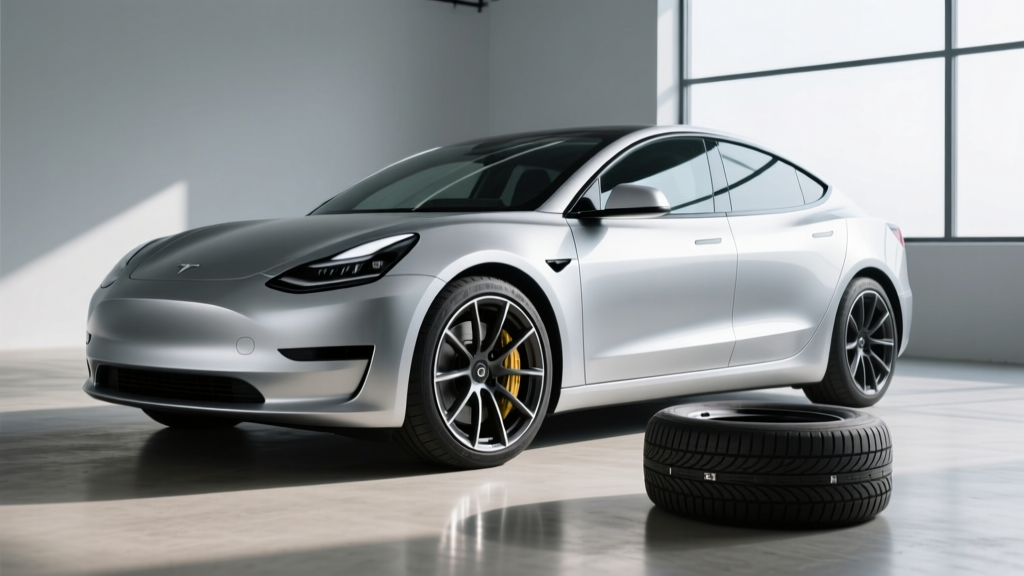
If you own an electric vehicle — or you're about to take delivery of one — you'll eventually face a tire replacement decision that gas-car owners never worry about. Here's the direct answer: EV specific tires are worth it for most owners, but not for the reasons marketing departments claim. They address three physical realities of electric vehicles that standard tires handle poorly: the 15–25% higher curb weight (from the battery pack), the instant torque that shreds tread, and the need for low rolling resistance to preserve EPA-rated range. A set of four EV-optimized tires typically costs $800–$1,600 more than comparable all-season tires for a gas vehicle, but they can recover 3–7% of range that you'd otherwise lose to higher rolling resistance. For a vehicle like the Tesla Model Y Long Range (EPA 320 miles), that's roughly 10–22 miles of range preserved per charge.
Quick Answer: Do You Need EV Specific Tires?
Yes, if: you want to maintain your EPA-rated range, you drive a heavy EV (over 4,500 lbs), or you've noticed rapid tread wear on your factory tires.
Maybe not, if: you drive a lighter EV (like a Chevy Bolt EV at 3,563 lbs), you prioritize aggressive grip over range, or you're on a tight budget and can accept a 5–7% range penalty.
Never skip: matching the OEM load rating (XL or HL) — underspec'd tires on an EV are a safety hazard.
Why EVs Destroy Tires Faster Than Gas Cars
The numbers tell the story. A 2025 Hyundai Ioniq 5 AWD weighs 4,619 lbs. A comparably equipped 2025 Toyota RAV4 Hybrid weighs 3,855 lbs — a 764-lb difference, or about 20% more mass. That extra weight, concentrated in the battery pack mounted low in the chassis, increases tire contact patch pressure and accelerates wear.
But weight is only part of the equation. Electric motors deliver peak torque from 0 RPM. When you launch an Ioniq 5 (0–60 in 5.1 seconds, 320 hp), that 446 lb-ft of torque hits the tires instantly, with no torque-converter slip or gear-shift interruption to soften the blow. On a gas car, torque builds progressively with RPM, giving tires time to manage the load.
The result? Many EV owners report burning through their factory tires in 20,000–30,000 miles, compared to 40,000–60,000 miles on a comparable gas or hybrid vehicle. Tesla's factory Michelin Pilot Sport EV tires, for instance, carry a 30,000-mile treadwear warranty — roughly half what you'd expect from a touring all-season tire on a Camry.
EV Specific Tires vs. Standard Tires: What's Actually Different?
EV-optimized tires aren't just rebranded standard tires with a "for EVs" badge. The engineering differences are measurable across four categories:
| Feature | EV Specific Tire | Standard All-Season Tire | Why It Matters for EVs |
|---|---|---|---|
| Load Rating | XL (Extra Load) or HL (High Load) | SL (Standard Load) common | EVs weigh 15–25% more; SL tires flex excessively and overheat |
| Rolling Resistance | Low (optimized compound + tread pattern) | Standard to moderate | Directly impacts range — lower resistance = more miles per kWh |
| Tread Compound | Reinforced for instant-torque wear | Optimized for progressive torque delivery | EV torque from 0 RPM accelerates center-tread wear |
| Noise Reduction | Foam inserts or sound-dampening layers | Rare | No engine noise to mask tire roar above 50 mph |
| Typical Cost (per tire) | $225–$400 | $130–$250 | EV tires command a 40–75% premium |
| Treadwear Warranty | 30,000–50,000 miles | 50,000–80,000 miles | Softer compounds for grip + EV weight = shorter life |
The load rating is non-negotiable. Check your EV's door jamb sticker — it specifies the required load index and speed rating. A 2025 Ford F-150 Lightning, for example, weighs over 6,000 lbs in some trims and requires HL-rated tires. Putting standard-load tires on it risks sidewall failure under full battery weight.
The Range Impact: Real Numbers From Testing
Rolling resistance accounts for roughly 20–30% of an EV's energy consumption at highway speeds (the rest goes to aerodynamic drag, drivetrain losses, and accessories). Tire choice directly changes your miles per kWh.
In controlled testing by multiple independent reviewers, swapping from low-rolling-resistance EV tires to standard all-season tires of the same size resulted in a 5–7% range reduction. Here's what that looks like in real-world terms:
| Vehicle | EPA Range | With EV Tires (Real-World Highway) | With Standard Tires (Real-World Highway) | Range Lost |
|---|---|---|---|---|
| Tesla Model Y LR (2025) | 320 mi | ~280 mi | ~261 mi | ~19 mi (6.8%) |
| Hyundai Ioniq 5 RWD (2025) | 303 mi | ~265 mi | ~248 mi | ~17 mi (6.4%) |
| Chevy Equinox EV RS (2025) | 319 mi | ~275 mi | ~257 mi | ~18 mi (6.5%) |
| Ford F-150 Lightning Ext. (2025) | 320 mi | ~260 mi | ~243 mi | ~17 mi (6.5%) |
On paper, 17–19 miles might not seem like much. But on a road trip where you're planning DC fast-charging stops around a 280-mile real-world range, losing 17 miles means you're charging more frequently — and DC fast charging above 80% SoC is painfully slow due to the charge-curve taper. That 17-mile gap could mean an extra 20-minute stop on a 600-mile trip.
In cold weather (below 32°F), where battery chemistry already reduces range by 20–30%, the added penalty of high-rolling-resistance tires compounds the problem. A Model Y that gets ~230 miles in winter with EV tires might drop to ~215 miles with standard tires — pushing you uncomfortably close to your next charger.
Cost Breakdown: EV Tires vs. Standard Tires Over 5 Years
The premium for EV-specific tires is real, but the total-cost picture is more nuanced than the sticker price suggests.
| Cost Factor | EV Specific Tires (Set of 4) | Standard All-Season Tires (Set of 4) |
|---|---|---|
| Upfront tire cost | $1,000–$1,600 | $520–$1,000 |
| Mounting, balancing, alignment | $120–$200 | $120–$200 |
| Expected tread life on an EV | 25,000–40,000 mi | 20,000–30,000 mi |
| Replacement sets over 100,000 mi | 2.5–4 sets | 3.3–5 sets |
| Total tire cost over 100k mi | $2,800–$6,800 | $2,120–$5,400 |
| Range preserved (extra miles/kWh) | Yes — 3–7% more range | No — higher rolling resistance |
| Estimated electricity savings (3–7% more range over 100k mi) | $90–$210 | $0 (baseline) |
| Noise comfort | Significantly better (foam inserts) | Standard road noise |
A few things stand out. First, EV-specific tires often last longer on an EV than standard tires do, because they're engineered for the weight and torque. That partially offsets the higher per-tire price. Second, the electricity savings from better rolling resistance are modest — roughly $90–$210 over 100,000 miles at the national average electricity rate of ~$0.16/kWh (per EIA data). The real value is in preserved range and reduced charging stops, not raw dollar savings on electricity.
The noise reduction factor is where many owners say EV tires justify their premium. Without an internal combustion engine, tire noise becomes the dominant sound in the cabin above 45 mph. Tires with polyurethane foam sound-dampening liners (like the Michelin Pilot Sport EV or Hankook iON evo) measurably reduce cabin noise by 2–4 dB, which the human ear perceives as roughly a 25–40% reduction in loudness.
Top EV Tire Picks by Vehicle Category (2025–2026 Models)
Tire selection depends on your specific EV, your climate, and your priorities. Here's a decision framework based on real ownership patterns:
Which EV Tire Should You Buy?
If you drive a Tesla Model 3/Y and prioritize range: Michelin Pilot Sport EV or Continental EcoContact 6 Q — both designed for Tesla's weight and low-rolling-resistance targets.
If you drive a Hyundai/Kia E-GMP vehicle (Ioniq 5, EV6): Hankook iON evo — OEM partner, excellent wet grip, foam-lined for noise.
If you drive a heavy electric truck (F-150 Lightning, Rivian R1T): Michelin CrossClimate 2 SUV or Bridgestone Alenza AS Ultra — both available in HL load ratings for 6,000+ lb vehicles.
If you live in a cold/snowy climate: Nokian Hakkapeliitta R5 EV or Michelin X-Ice Snow — winter-specific compounds that maintain flexibility below 20°F, with EV-appropriate load ratings.
If you're on a tight budget: Kumho Majesty EV or General AltiMAX Arctic EV — lower-cost options that still meet XL load requirements for most EVs.
Always verify the exact tire size, load index, and speed rating from your vehicle's door jamb placard before ordering. A 2025 Tesla Model Y Long Range, for example, uses 255/45R19 tires with a 104W XL rating. Substituting a lower load index (like 100) to save $30 per tire is a safety risk you should not take.
Common Misconceptions About EV Tires
| Myth | Fact |
|---|---|
| "Any tire that fits will work on my EV." | Incorrect. The tire must meet the OEM load index (XL or HL). Standard-load tires on a 5,000-lb EV flex excessively, overheat, and risk blowout. |
| "EV tires are a marketing gimmick — same rubber, different label." | Partly false. While some budget "EV" tires are relabeled standard tires, major brands (Michelin, Hankook, Continental) use distinct compounds, reinforced sidewalls, and foam noise liners specifically for EV applications. |
| "I can just rotate my EV tires less often." | Wrong. EVs need more frequent rotation — every 5,000–6,000 miles — because the instant torque and heavy weight accelerate wear unevenly, especially on the drive axle. |
| "EV tires will give me back my full EPA range." | Not exactly. EPA range is tested under specific conditions with OEM tires. Aftermarket EV tires can get you close, but real-world highway driving at 75+ mph will still reduce range by 10–15% regardless of tire choice. |
| "I don't need winter tires — EVs have traction control and AWD." | AWD and traction control help you accelerate, not stop or corner on ice. Winter tires use compounds that stay pliable below 40°F. On an EV with regenerative braking, winter tires also improve regen efficiency on cold, wet roads. |
Real-World Ownership Considerations
Your tire decision should account for how you actually use your EV, not just spec-sheet comparisons.
Home charging access: If you charge at home (Level 2, 7–11.4 kW), the 3–7% range penalty from non-EV tires is less painful — you wake up to a full battery every morning and can absorb the loss. If you rely on public DC fast charging, every mile of range matters, and the efficiency advantage of EV-optimized tires compounds over time.
Driving patterns: City drivers who rarely exceed 45 mph see less benefit from low-rolling-resistance tires (aerodynamic drag dominates at highway speeds, rolling resistance dominates at low speeds — but city regen braking recovers energy). Highway commuters covering 60+ miles daily see the most measurable range benefit from EV-specific tires.
Climate: In hot climates (Arizona, Texas), tire pressure increases with ambient heat, and the extra weight of an EV accelerates center-tread wear. EV-specific tires with reinforced tread compounds handle this better. In cold climates, dedicated winter EV tires outperform all-seasons dramatically — and you should factor in the cost of a second set of wheels and tires ($800–$1,400 for a winter setup).
Tire pressure monitoring: EVs are sensitive to underinflation. A tire that's 5 PSI below spec can increase rolling resistance by 10% or more, costing you range. Check pressures monthly — your EV's TPMS (Tire Pressure Monitoring System) only alerts you when pressure drops 25% below recommended, which is already a significant efficiency and safety problem.
Frequently Asked Questions
Can I put regular tires on my Tesla or other EV?
Physically, yes — as long as the size and load rating match. But you'll likely lose 5–7% of your real-world range, experience more road noise (since there's no engine to mask it), and potentially see faster tread wear due to the EV's weight and torque. The upfront savings of $200–$400 on a set of four tires is usually offset within one tire's lifespan by the range loss and earlier replacement.
How often should I rotate EV tires?
Every 5,000–6,000 miles. EVs wear tires faster than gas cars due to higher weight and instant torque, and the wear pattern is often uneven between the drive and non-drive axles. Some owners of rear-wheel-drive EVs (like the Ioniq 5 RWD or Tesla Model 3 RWD) see the rear tires wear 30–40% faster than the fronts.
Do EV tires affect regenerative braking performance?
Yes. Regenerative braking relies on tire grip to transfer deceleration force to the road. A tire with poor wet-weather grip will cause the regen system to reduce its braking force to prevent wheel slip, which means you recover less energy and rely more on friction brakes. EV-specific tires are tuned for strong wet grip to maximize regen efficiency.
Are foam-lined EV tires repairable if I get a puncture?
It depends on the tire and the repair shop. Some tire shops won't plug or patch foam-lined tires because the foam layer complicates the repair. Michelin and Hankook say minor tread-area punctures can be repaired by trained technicians using specific procedures, but sidewall damage is never repairable. Check with your tire retailer before buying if puncture repairability is a priority in your area.
What tire pressure should I run in my EV?
Always follow the door jamb placard, not the max pressure printed on the tire sidewall. Most EVs run 38–45 PSI — higher than typical gas cars — to support the extra weight and reduce rolling resistance. Running 2–3 PSI above the placard recommendation can slightly improve range but will reduce ride comfort and may cause uneven center-tread wear.
For more on maximizing your EV's real-world efficiency, see the U.S. Department of Energy's EV technology guide on fueleconomy.gov, and always check your vehicle manufacturer's tire specification page for OEM-approved sizes and load ratings.