The Short Answer on EV Service Truck Conversions
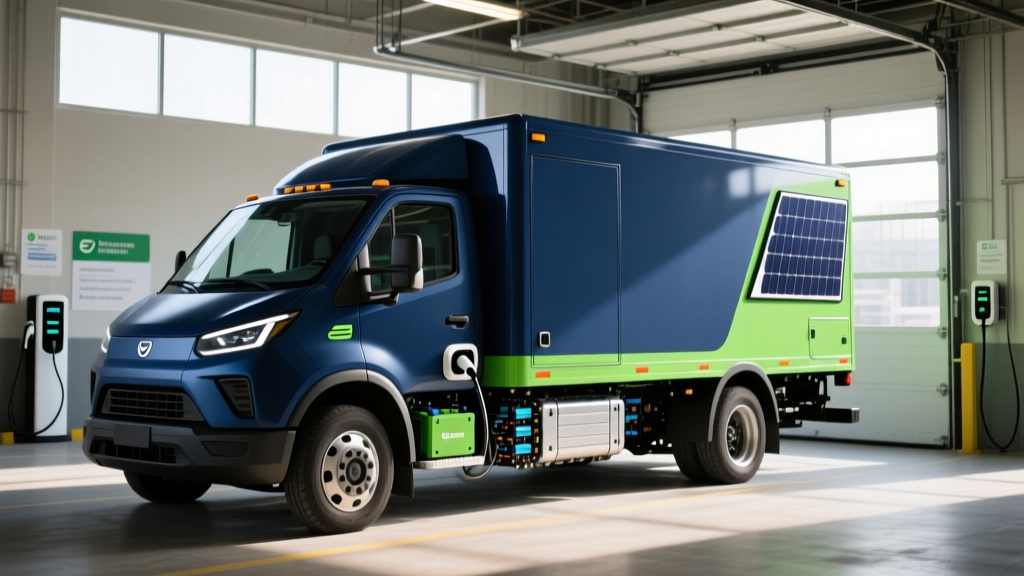
Converting a medium-duty service truck to electric drivetrain costs between $50,000 and $130,000 on top of the donor chassis, yielding a usable range of 120–200 miles depending on payload, battery capacity, and duty cycle. Payback typically occurs within 4–7 years for trucks traveling 25–60 miles daily with access to overnight depot charging. Conversions make economic sense when daily routes are predictable, speeds are low, and idling/PTO demands are high — conditions where diesel and gasoline trucks burn fuel without moving.
Why Fleets Are Considering EV Service Truck Conversions
For vocational fleets — utilities, municipal works, telecom, HVAC, and last-mile delivery — the service truck is a rolling workshop. These vehicles idle extensively to power cranes, lifts, compressors, and lighting. A conventional diesel service truck can consume 0.5–1.0 gallons per hour while idling under PTO (power take-off) load, translating to thousands of dollars in wasted fuel annually.
Electric drivetrains eliminate idling losses. An EV service truck draws from its high-voltage battery only when performing work, and electric motors produce zero emissions at the tailpipe — a growing requirement for fleets operating in urban clean-air zones or under state-level Advanced Clean Fleets mandates like California's.
The conversion path appeals to fleets that:
- Already own well-maintained chassis with years of structural life remaining
- Operate specialized upfits (cranes, aerial lifts, cable reel carriers) that are expensive to replicate on new platforms
- Face long lead times for OEM electric truck orders (18–36 months in some segments)
- Want to pilot electrification on 2–5 trucks before committing to full fleet replacement
How EV Service Truck Conversions Compare to New EV Trucks and Gas Alternatives
| Attribute | Converted EV Service Truck | New OEM Electric Truck (Class 4–6) | Conventional Diesel Service Truck |
|---|---|---|---|
| Vehicle Acquisition Cost | $100K–$220K total (donor + conversion) | $180K–$350K+ | $80K–$150K |
| Typical Usable Range | 120–200 mi (loaded) | 150–250 mi (EPA-rated varies) | 400–600 mi |
| Fuel/Energy Cost per Mile | $0.18–$0.35 (electricity) | $0.18–$0.35 (electricity) | $0.55–$0.85 (diesel at $4.20/gal) |
| Annual Maintenance | $2,000–$4,500 | $2,500–$5,000 | $5,500–$9,000 |
| PTO / Idle Cost per Hour | $1.50–$3.50 (electric) | $1.50–$3.50 (electric) | $3.00–$5.50 (diesel idle) |
| Lead Time | 3–6 months (converter dependent) | 12–36 months | 3–8 months |
| Federal Tax Credit (§30D / 45W) | Eligibility varies — commercial credit (IRC §45W) may apply up to $40K | Up to $40K under IRC §45W for commercial vehicles | None |
According to the U.S. Department of Energy's Alternative Fuels Data Center, total cost of ownership for electric medium-duty trucks can undercut diesel equivalents within five years when annual mileage stays below 30,000 and depot charging is available — a profile that matches most service truck operations.
Conversion Cost Breakdown: What You Actually Pay
| Component | Cost Range | Notes |
|---|---|---|
| Donor Chassis (used Class 4–6, viable condition) | $25,000–$65,000 | Lower miles, newer frames command premium |
| Electric Motor + Inverter Package | $12,000–$30,000 | Typically 150–300 kW permanent-magnet or AC induction |
| Battery Pack (LFP, 80–200 kWh usable) | $18,000–$55,000 | LFP chemistry preferred for cycle life and thermal stability |
| BMS, Thermal Management, Wiring | $6,000–$14,000 | Liquid cooling essential for sustained PTO loads |
| Charging Hardware (onboard charger + DC inlet) | $3,000–$8,000 | CCS1 or NACS; 20–50 kW onboard AC typical |
| Engineering, Integration, Testing, Certification | $15,000–$35,000 | EPA certification, FMVSS compliance, state titling |
| Total Conversion (excl. donor) | $54,000–$142,000 | Varies by battery size, PTO complexity, volume |
Fleet buyers converting 5+ identical units often see per-unit costs drop 15–25% due to engineering amortization and bulk battery procurement.
Range, Payload, and Battery Chemistry: The Real Numbers
Most EV service truck conversions use LFP (lithium iron phosphate) battery packs rather than the NMC (nickel manganese cobalt) chemistry common in passenger EVs. The trade-off is deliberate:
- LFP advantages: 3,000–5,000+ full charge cycles before 80% capacity retention; superior thermal stability (lower fire risk); no cobalt supply-chain concerns; tolerates daily 100% state-of-charge without accelerated degradation.
- LFP disadvantages: Lower energy density (~160 Wh/kg cell-level vs ~250 Wh/kg for NMC), meaning heavier packs for the same kWh; reduced cold-weather performance — expect 20–35% range loss at 20°F without active battery heating.
For a Class 5 service truck (GVWR ~19,500 lbs) with a 150 kWh usable LFP pack:
- Energy consumption: 1.8–2.5 kWh/mile (loaded, mixed driving with PTO use)
- Realistic range: 130–170 miles (summer), 90–130 miles (winter, northern climates)
- Added battery weight: 2,500–4,000 lbs, reducing available payload accordingly
- DC fast charging: Peak 60–80 kW, 20–80% in approximately 60–90 minutes (LFP charge curves are flatter but peak rates are lower than NMC passenger EVs)
This range profile works for depot-based service trucks that return nightly. It does not work for long-haul or remote-site operations without en-route charging infrastructure.
Charging Infrastructure: The Hidden Line Item
A converted EV service truck typically needs Level 2 depot charging at minimum, with DC fast charging as a complement for mid-day top-ups.
| Charging Setup | Power | Miles Added per Hour | Installed Cost per Port |
|---|---|---|---|
| Level 2 (AC, depot overnight) | 19.2 kW (80A/240V) | ~8–12 mi/hr | $4,000–$12,000 (incl. electrical work) |
| Level 2 (AC, dual-port pedestal) | 19.2 kW shared | ~4–6 mi/hr per truck | $6,000–$16,000 |
| DC Fast Charger (60 kW) | 60 kW | ~30–40 mi/hr | $35,000–$75,000 (incl. utility upgrade) |
| DC Fast Charger (150 kW+) | 150 kW | ~60–80 mi/hr | $80,000–$180,000 (transformer + switchgear) |
Most fleet conversions rely on overnight Level 2 charging — 8–10 hours at 19.2 kW replenishes 100–150 miles of range, sufficient for next-day duty. A 150 kWh battery at 19.2 kW requires approximately 8 hours for a full charge (accounting for charging losses).
Depot electrical upgrades are the variable that breaks budgets. A 5-truck fleet adding five 19.2 kW Level 2 ports needs roughly 100 kW of additional panel capacity — many commercial depots require a utility service upgrade ($15,000–$80,000) or a dedicated transformer. Consult a licensed electrician and your utility's make-ready program before committing to conversions. Federal and state incentives (such as utility EV infrastructure rebates) can offset 50–100% of make-ready costs in some jurisdictions — check the AFDC state incentive database for current programs.
Tax Credits and Incentives for Commercial EV Conversions
The federal tax landscape for commercial electric trucks differs from consumer vehicles. Key provisions for 2026:
- IRC §45W (Commercial Clean Vehicle Credit): Up to $40,000 for qualified commercial electric trucks (GVWR over 14,000 lbs). The vehicle must be manufactured by a qualified manufacturer — and here is where conversions face a hurdle. The IRS requires the vehicle to meet specific certification requirements. Some conversion companies have achieved EPA and CARB certification that enables credit eligibility; others have not. Verify with the converter and your tax professional before projecting this credit into your ROI model.
- IRC §30C (Alternative Fuel Infrastructure Credit): Up to 30% of charging equipment and installation costs, capped at $100,000 per item of property, available through 2032 for commercial installations in eligible census tracts.
- State and utility incentives: Vary widely. California's HVIP (Hybrid and Zero-Emission Truck and Bus Voucher Incentive Project) has historically offered $45,000–$120,000 per vehicle. Other states offer smaller vouchers or utility rebates. Confirm current availability — these programs exhaust funding unpredictably.
Always verify current rules directly with the IRS Commercial Clean Vehicle Credit page and consult a tax professional. Incentive eligibility depends on vehicle certification, battery sourcing, and your specific tax situation.
Decision Framework: Should You Convert or Buy New?
Choose EV Conversion If:
- Your trucks run under 80 miles/day and return to a fixed depot nightly
- You own late-model chassis with specialized upfits (cranes, lifts, reel carriers) that would cost $40K–$100K+ to replicate
- OEM electric truck lead times exceed your compliance or operational deadlines
- You want to pilot 2–5 units before scaling to a full fleet order
- You have depot electrical capacity (or can economically upgrade it)
- Your operation involves significant idle/PTO time — the fuel savings compound
Choose a New OEM Electric Truck If:
- You need full manufacturer warranty support and dealer service networks
- Your routes exceed 150 miles/day or require en-route DC fast charging
- You require the latest integrated telematics, ADAS (advanced driver-assistance systems), and fleet-management software
- Your fleet size (10+ units) justifies negotiating volume pricing with OEMs like Ford (E-Transit), BrightDrop, or legacy truck makers entering the space
- Credit eligibility and certification certainty are non-negotiable for your financial model
Stick With Diesel/Gas (For Now) If:
- Trucks operate in regions with no public DC fast charging and depot charging is impractical
- Daily routes exceed 200 miles with no predictable stop pattern
- Ambient temperatures regularly drop below 0°F and battery-heating infrastructure is unavailable
- Your fleet is 1–2 trucks and the infrastructure investment per vehicle is unjustifiable
Common Misconceptions About EV Service Truck Conversions
| Myth | Fact |
|---|---|
| "Conversions are just hobbyist projects — not road-legal for fleets." | Professional converters produce FMVSS-compliant, EPA-certified, state-titled commercial vehicles. Several firms hold CARB executive orders enabling legal operation in all 50 states. |
| "The batteries won't last and replacement will bankrupt us." | LFP packs in commercial service are rated for 3,000–5,000 cycles at 80% SoH retention. At one cycle per day, that's 8–14 years. Replacement cost for a 150 kWh LFP pack in 2026 is approximately $25,000–$45,000 — significant, but predictable and declining. |
| "EV trucks can't handle PTO loads like cranes and compressors." | Electric PTO (ePTO) draws directly from the high-voltage battery, eliminating the diesel engine idle. Electric motors deliver instant torque and precise speed control — many operators report superior performance for hydraulic crane and aerial-lift applications. |
| "We'll save money immediately." | Upfront cost is higher. Payback requires 4–7 years depending on mileage, fuel costs, PTO hours, and available incentives. Fleets that model only fuel savings without accounting for infrastructure and insurance may overestimate returns. |
| "Cold weather makes EV trucks useless." | Range drops 20–35% in sub-freezing conditions — real and significant. But for depot-based trucks with 60-mile daily routes and 150-mile summer range, winter range still covers the duty cycle. Battery preconditioning and active thermal management mitigate losses. |
Real-World Ownership Considerations
Insurance
Converted EV service trucks carry insurance premiums 10–25% higher than equivalent diesel trucks, primarily due to limited actuarial data on conversion-specific claims and higher repair costs for high-voltage components. Fleet insurers with EV experience (a growing but still limited pool) offer better rates. Budget accordingly.
Maintenance
The maintenance story favors EV heavily. No engine oil, no diesel particulate filters, no DEF fluid, no transmission fluid changes, no exhaust system repairs. Brake wear drops 50–70% thanks to regenerative braking. Expect annual maintenance costs of $2,000–$4,500 versus $5,500–$9,000 for diesel. However, tire wear may increase 10–15% due to higher vehicle weight and instant torque delivery — spec load-range-appropriate tires.
Driver Training
Service truck drivers need orientation on regenerative braking behavior (one-pedal driving is adjustable on most conversions), state-of-charge management, and pre-conditioning protocols for cold-weather operation. Training takes 2–4 hours and reduces range-anxiety incidents significantly.
Resale and Lifecycle
The used-EV-truck market is immature. Residual values for conversions are harder to project than for OEM trucks with established dealer remarketing channels. Plan to run converted trucks to end-of-life (10–15 years) rather than counting on strong trade-in values.
5-Year Total Cost of Ownership: Conversion vs. Diesel
| Cost Category | Converted EV Service Truck | Diesel Service Truck (New) |
|---|---|---|
| Vehicle Acquisition | $160,000 (avg donor + conversion) | $115,000 |
| Federal/State Incentives | –$40,000 (estimated §45W + state) | $0 |
| Charging Infrastructure (amortized) | $12,000 | $0 |
| Fuel/Energy (5 yrs, 12K mi/yr) | $16,200 ($0.27/mi × 60,000 mi) | $42,000 ($0.70/mi × 60,000 mi) |
| Maintenance (5 yrs) | $16,000 | $36,000 |
| Insurance (5 yrs) | $32,000 | $25,000 |
| 5-Year Net Cost | $196,200 | $218,000 |
| Cost per Mile | $3.27 | $3.63 |
This model assumes 12,000 miles/year, $4.20/gallon diesel, $0.135/kWh commercial electricity, and $40K in combined incentives. Your actual figures will vary by duty cycle, local fuel and electricity rates, and incentive availability. The crossover point — where EV savings overtake higher acquisition — typically arrives in year 4 or 5 under these assumptions.
Frequently Asked Questions
How long does an EV service truck conversion take?
Typical lead times are 3–6 months from chassis delivery to road-ready vehicle, depending on converter backlog, battery availability, and upfit complexity. Custom PTO integrations (crane hydraulics, aerial lifts) add 4–8 weeks.
Can any service truck chassis be converted?
Most Class 4–6 trucks (Ford F-550/F-650, Ram 4500/5500, International CV, Freightliner M2) are viable candidates. The chassis must be structurally sound, with adequate frame rail space for battery enclosures and a compatible transmission adapter plate. Converters evaluate each donor chassis individually.
What happens if the battery degrades before the truck's useful life ends?
LFP batteries in commercial service typically retain 80%+ capacity after 3,000–5,000 cycles. If degradation does reduce range below operational requirements, individual modules can often be replaced rather than the entire pack — reducing replacement cost to $8,000–$20,000 depending on the architecture.
Do converted EV trucks qualify for HOV lane access or local zero-emission zone entry?
Yes, in most jurisdictions. Once titled and registered as a zero-emission vehicle, converted trucks receive the same access privileges as OEM EVs — including HOV stickers (where applicable), ZEZ entry, and compliance with fleet electrification mandates.
What is the warranty on a converted EV service truck?
Professional converters typically offer 3–5 years / 50,000–100,000 miles on the electric drivetrain and battery pack. This is shorter than OEM warranties on new electric trucks (often 5 years / unlimited miles on battery). Confirm warranty terms, service network availability, and parts stocking before signing.
Can I charge a converted EV service truck at public DC fast chargers?
Yes, provided the conversion includes a CCS1 or NACS DC fast-charge inlet and the battery management system supports the charging protocol. However, public DC chargers designed for passenger vehicles may have cable lengths and stall configurations that don't accommodate medium-duty trucks. Depot charging remains the primary strategy.