Quick Answer: Are EV School Buses Worth It in 2026?
An electric school bus costs between $230,000 and $380,000 upfront — roughly 2 to 3 times the price of a comparable diesel Type C bus ($100,000–$130,000). However, fleet operators typically recover that premium through fuel savings (diesel at ~$4.00/gal vs electricity at $0.12–$0.18/kWh) and drastically lower maintenance costs over a 12- to 15-year service life. Most current-production electric school buses deliver 100–150 miles of real-world range on a single charge, which covers the vast majority of daily routes under 100 miles. The decision hinges on route length, depot charging access, available grant funding (EPA Clean School Bus Program), and local utility rate structures.
The Electric School Bus Landscape in 2026
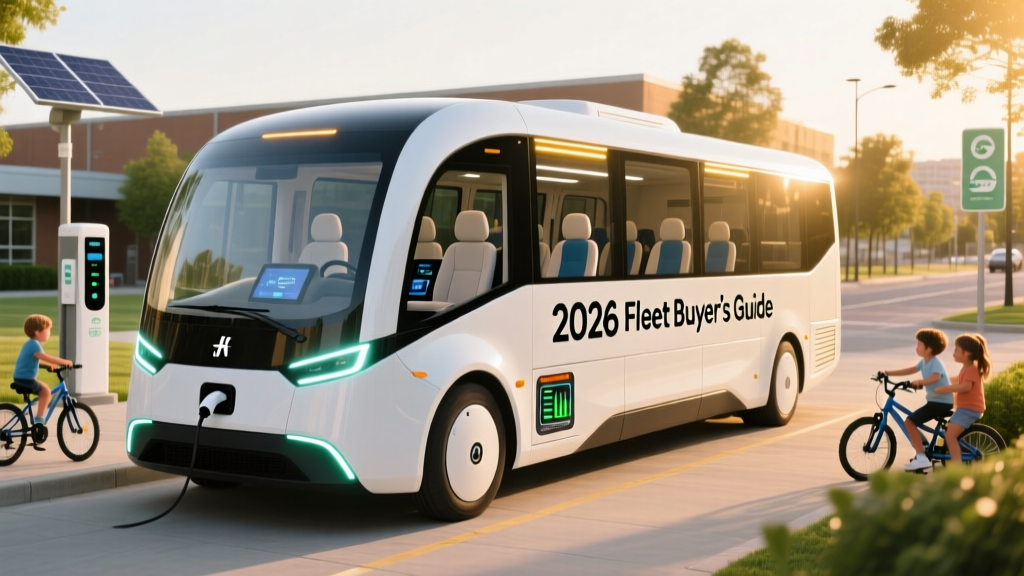
Electric school buses have moved well past pilot programs. As of the 2025–2026 school year, thousands of battery-electric school buses are in revenue service across North America, with manufacturers like Blue Bird, IC Bus (Navista/International), Thomas Built Buses, and Lion Electric delivering production units at scale. The EPA's Clean School Bus Program, funded through the Bipartisan Infrastructure Law, continues to award rebates of up to $345,000 per zero-emission bus plus up to $20,000 for charging infrastructure — substantially narrowing the cost gap with diesel.
Unlike consumer EVs, school buses operate under predictable, repeatable duty cycles: fixed routes, known daily mileage, extended midday layovers, and a single depot. That makes them one of the strongest use cases for fleet electrification, even as cold-weather range loss and charging infrastructure remain genuine challenges for some districts.
Current-Production Electric School Bus Specs
Here are the key specifications for the major electric school bus platforms available or in delivery for the 2026 model year. All figures represent manufacturer-published data and EPA or CARB certifications where applicable.
| Specification | Blue Bird Vision Electric | IC Bus CE Series Electric | Thomas Saf-T-Liner C2 Jouley | Lion School Bus (Type C) |
|---|---|---|---|---|
| Battery Capacity (usable) | 155 kWh (NMC) | 210 kWh (NMC) | 226 kWh (NMC) | 168 kWh (NMC) |
| EPA / Advertised Range | ~130 mi | ~150 mi | ~135 mi | ~120 mi |
| Real-World Range (mixed, mild climate) | 100–120 mi | 120–140 mi | 105–125 mi | 95–115 mi |
| DC Fast Charge (peak kW) | 80 kW (CCS1) | 120 kW (CCS1) | 120 kW (CCS1) | 80 kW (CCS1) |
| 10–80% Charge Time (DC) | ~90 min | ~75 min | ~80 min | ~95 min |
| Level 2 Charge Rate | 19.2 kW | 19.2 kW | 19.2 kW | 19.2 kW |
| Full Level 2 Charge Time | ~9–10 hrs | ~11–12 hrs | ~12 hrs | ~9–10 hrs |
| Electric Motor Output | ~200 kW (268 hp) | ~250 kW (335 hp) | ~220 kW (295 hp) | ~185 kW (248 hp) |
| GVWR | 33,000 lbs | 33,000 lbs | 33,000 lbs | 29,000 lbs |
| Base MSRP (approx.) | ~$250,000 | ~$310,000 | ~$330,000 | ~$280,000 |
| Battery Warranty | 10 yr / unlimited mi | 10 yr / unlimited mi | 10 yr / unlimited mi | 10 yr / unlimited mi |
Real-World Range Reality Check
EPA range figures for medium-duty vehicles are less standardized than for passenger cars. Manufacturer-quoted ranges assume moderate temperatures, flat terrain, and steady speeds. In practice, fleet operators report 15–30% range reduction in cold weather (below 32°F / 0°C) due to cabin heating demands and reduced battery efficiency. Hilly routes, frequent stop-and-go, and full passenger loads also consume more energy. A bus rated at 130 miles should be planned around 90–100 miles of usable range in winter conditions to maintain an operational buffer.
Electric vs. Diesel School Bus: Total Cost of Ownership
The purchase price of an electric school bus is significantly higher than diesel, but total cost of ownership (TCO) tells a different story over a 12- to 15-year lifecycle. Below is a 12-year TCO comparison for a single Type C bus running 12,000 miles per year — typical for a standard two-route daily schedule.
| Cost Category (12-Year Life) | Electric School Bus | Diesel School Bus |
|---|---|---|
| Vehicle Purchase Price | $280,000 | $115,000 |
| EPA Clean School Bus Rebate (applied) | –$285,000 | $0 |
| Charging Infrastructure (per bus share) | $35,000 | $0 |
| Fuel / Electricity (12 yrs, 12K mi/yr) | $29,000 ($0.14/kWh avg, 2.2 kWh/mi) | $82,000 ($4.00/gal, 6 mi/gal) |
| Maintenance (12 yrs) | $18,000 | $52,000 |
| DEF, Oil Changes, DPF, Filters | $0 | $14,000 |
| Battery Replacement (if needed, yr 10+) | $45,000–$70,000 (if out of warranty) | N/A (engine rebuild: $20,000–$30,000) |
| Estimated 12-Year Net Cost | $32,000–$77,000 | $263,000 |
Note: Rebate amounts vary by EPA funding round and district eligibility. The figures above reflect a typical award from a recent Clean School Bus Program funding cycle. Districts in priority communities (low-income, rural, tribal) may qualify for higher awards. Always verify current-year program rules at epa.gov/cleanschoolbus.
The maintenance gap is where electric buses shine. There are no oil changes, no diesel particulate filter (DPF) regenerations, no diesel exhaust fluid (DEF) top-offs, no transmission fluid, and far fewer moving parts in the drivetrain. Regenerative braking also dramatically extends brake pad life — many fleets report brake service intervals 2–3 times longer than diesel equivalents.
Charging Infrastructure: What Fleets Actually Need
Depot charging is the backbone of school bus electrification. Unlike consumer EVs that rely on public charging networks, school buses return to a single location every afternoon and sit for 12–16 hours — ideal for overnight Level 2 charging. Here's what a typical depot installation looks like.
| Component | Per-Stall Cost Range | Notes |
|---|---|---|
| Level 2 Charger (19.2 kW, CCS1) | $7,000–$12,000 | Networked units with fleet management software |
| DC Fast Charger (60–120 kW, shared) | $60,000–$120,000 | One unit shared across 4–8 buses for midday top-ups |
| Electrical Service Upgrade | $15,000–$80,000 | Depends on existing panel capacity; may require utility transformer upgrade |
| Wiring, Conduit, Trenching | $5,000–$25,000 | Varies with depot layout and distance from service panel |
| Permits & Utility Interconnection | $3,000–$15,000 | Utility demand-charge study often required |
| Software / Fleet Management Platform | $2,000–$5,000/yr | Charge scheduling, load management, telematics |
| Total Per-Stall (Level 2) | $25,000–$55,000 | Including electrical upgrades and infrastructure |
Utility engagement is critical and should begin 12–18 months before bus delivery. Many utilities offer make-ready programs that cover the cost of wiring and infrastructure on the utility side of the meter, which can reduce depot installation costs by 30–50%. Some utilities also offer off-peak time-of-use (TOU) rates specifically designed for fleet charging, bringing electricity costs as low as $0.06–$0.08/kWh during overnight hours.
Common Misconceptions About Electric School Buses
Fleet directors and school boards encounter significant misinformation during the procurement process. Here are the most persistent myths and what the data actually shows.
| Myth | Fact |
|---|---|
| "Electric buses can't handle cold weather." | Range drops 15–30% in sub-freezing temperatures, primarily from cabin heating. Districts in Minnesota, Michigan, and Canada operate electric buses year-round by spec'ing routes conservatively and using battery thermal preconditioning. Some manufacturers offer diesel-fired or heat-pump cabin heaters to reduce battery draw. |
| "The batteries won't last and replacements are unaffordable." | All major manufacturers warranty batteries for 10 years. Real-world degradation data from early deployments (2018–2020 buses) shows 80–85% capacity retention at year 7–8. NMC chemistry in heavy-duty applications degrades more slowly than in passenger cars due to lower C-rates and shallower daily cycles (most buses use 60–70% of pack capacity daily). |
| "Electric buses are slower and can't keep up with traffic." | Electric drivetrains deliver peak torque from 0 RPM. A loaded electric school bus accelerates more briskly than a diesel equivalent in the 0–35 mph range, which is where school buses spend most of their time. Top speed is typically governed to 65 mph, same as diesel. |
| "The grid can't handle charging a whole fleet." | A fleet of 20 buses charging at 19.2 kW each draws ~384 kW total — roughly equivalent to a small commercial building. With managed charging software that staggers start times and limits peak draw, most depot sites can accommodate this on existing medium-voltage utility service. Utility coordination is the key bottleneck, not grid capacity in aggregate. |
| "Electric buses produce zero emissions." | Tailpipe emissions are zero. Lifecycle emissions depend on the local electricity generation mix. On a grid powered largely by natural gas and renewables, an electric school bus produces 50–70% fewer greenhouse gas emissions than a diesel bus over its lifetime. On a coal-heavy grid, the advantage narrows but rarely disappears entirely due to electric drivetrain efficiency. |
Who Should Buy Electric — and Who Should Wait
Not every district is ready for full electrification today. Here's a practical decision framework based on real-world deployment data.
Decision Framework: Is an EV School Bus Right for Your Fleet?
Choose an electric school bus if:
- Your daily routes are under 100 miles (round-trip, including deadhead to/from depot)
- You have a centralized depot where buses park for 10+ hours overnight
- Your utility offers make-ready programs or fleet TOU rates
- You qualify for EPA Clean School Bus rebates or state-level incentives (e.g., California's HVIP, New York's Truck Voucher Incentive Program)
- You operate in an area with moderate winters or can spec cold-weather packages
- You plan to hold buses for 10–15 years (amortizing the higher upfront cost)
Stick with diesel or consider a propane/CNG alternative if:
- Your routes regularly exceed 130 miles per day, especially in cold climates
- Your fleet operates from dispersed street-parking locations without depot charging access
- Your utility cannot support the electrical load upgrade within your procurement timeline
- You lack grant or rebate funding and the 2–3x purchase premium is prohibitive for your budget cycle
- You run significant activity/charter routes (field trips, athletics) that require 200+ mile range flexibility
First-Time Fleet Buyer Essentials
If your district is considering its first electric school bus, here are the operational realities that pilot-program districts wish they'd known earlier:
Start with a pilot, not a full conversion. Order 1–3 buses first, assign them to your shortest and most predictable routes, and use the first year to validate range assumptions, train drivers on regenerative braking behavior, and refine your charging schedule. Most manufacturers and the EPA program encourage phased deployments.
Driver training matters more than you think. Electric school buses drive differently from diesel. Regenerative braking is aggressive — some buses offer adjustable regen levels. Drivers accustomed to coasting in diesel buses need to learn one-pedal-style driving to maximize energy recapture and extend range. A 30-minute training session typically pays for itself in efficiency gains within weeks.
Plan for utility lead times. Electrical service upgrades for a multi-bus depot can take 6–18 months from application to energization, depending on your utility's backlog and whether a new transformer is needed. Engage your utility before you submit your bus order, not after.
V2G (Vehicle-to-Grid) is emerging but not yet standard. Some electric school bus platforms support bidirectional charging, allowing buses to export power back to the grid during peak demand events or serve as backup power for school buildings. As of 2026, V2G programs are operational in limited utility partnerships (e.g., Dominion Energy in Virginia, Nuvve deployments in California) but are not universally available. If V2G revenue is part of your financial model, confirm utility participation before committing.
Maintenance shifts, not disappears. You'll eliminate diesel-specific maintenance (oil, fuel filters, DPF, DEF, emissions system), but you'll add new requirements: battery thermal management system checks, high-voltage safety inspections, coolant loop service, and charger maintenance. Budget for specialized technician training and high-voltage PPE. Many districts partner with the manufacturer for extended service agreements in the first 5 years.
Frequently Asked Questions
How long does it take to fully charge an electric school bus?
On a 19.2 kW Level 2 depot charger, a full charge from empty takes 8–12 hours depending on battery size (155–226 kWh). This aligns with overnight parking schedules. DC fast charging at 80–120 kW can bring a bus from 10% to 80% in 75–95 minutes, useful for midday top-ups on longer routes or activity runs. Note that kW is the charge power rate, while kWh is the total energy capacity of the battery — a 200 kWh bus charging at 100 kW won't fill in 2 hours because the charge rate tapers significantly above 80% state of charge to protect battery health.
What happens if a bus runs out of charge mid-route?
Range planning software and telematics dashboards give fleet managers real-time state-of-charge data and projected range. In practice, mid-route depletion is extremely rare when routes are properly spec'd. Most electric school bus fleets build in a 20–30% range buffer above the route requirement. If a bus does deplete, it requires a mobile charger or flatbed tow — the same contingency planning diesel fleets use for fuel-outs.
Are electric school buses safe in a crash?
Electric school buses must meet the same FMVSS (Federal Motor Vehicle Safety Standards) crashworthiness requirements as diesel buses, including roof crush, side impact, and rollover standards. Battery packs are mounted low in the chassis within reinforced enclosures and are designed to meet NHTSA electrical safety standards for isolation, overcurrent protection, and electrolyte containment. Several manufacturers also include automatic high-voltage disconnect upon airbag deployment.
Can we get federal tax credits for electric school buses?
The §30D federal tax credit that applies to consumer EVs does not apply to school buses purchased by tax-exempt entities (most public school districts). Instead, the EPA Clean School Bus Program provides direct rebates. Additionally, the §45W Commercial Clean Vehicle Credit may apply to private fleet operators or contractors who purchase electric buses, offering up to $40,000 per vehicle. Consult the IRS and a tax professional to determine eligibility for your organizational structure.
What is the expected battery lifespan before replacement?
Current NMC battery packs in school bus applications are engineered for 3,000–5,000 full charge cycles before reaching 80% state of health. At one cycle per day over a typical school year (180–200 operating days), that translates to 15–25 years of service before the pack degrades below 80% capacity. All major manufacturers warranty their packs for at least 10 years. If replacement is needed after warranty, expect costs of $45,000–$70,000 depending on pack size — though battery prices continue to decline year over year.
Do electric school buses work in extreme heat?
Yes, but with considerations. Battery thermal management systems actively cool the pack during charging and operation. In extreme heat (above 100°F / 38°C), the cooling system draws additional energy, which can reduce range by 5–10%. Cabin air conditioning is a larger energy draw than in a diesel bus (where A/C runs off the engine's mechanical output). Districts in Arizona, Texas, and the Southeast report satisfactory performance with proper route planning and pre-conditioning while still plugged in at the depot.