Quick Answer: The State of EV Sales in the US
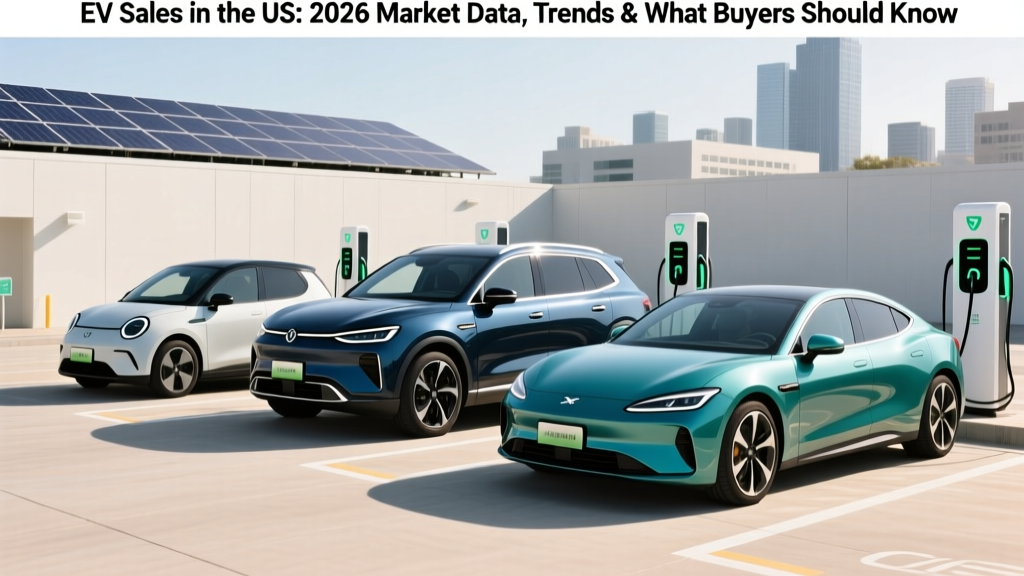
US new-vehicle EV sales surpassed 1.2 million units in 2024 and are projected to reach approximately 1.5–1.7 million for full-year 2025, representing roughly 9–10% of all new car sales, according to Kelley Blue Book estimates. Plug-in hybrids added another ~500,000 units. Growth has slowed from the 50%+ year-over-year surges of 2022–2023 to a more moderate 15–25% pace, reflecting market maturation, inventory normalization, and shifting federal incentive landscapes. For buyers in 2026, that means more model choices, better dealer inventory, and competitive pricing — but also a more complex decision around tax credits, charging access, and total cost of ownership.
US EV Sales by the Numbers: 2020–2025
Understanding where EV sales in the US are headed requires looking at the trajectory. Battery-electric vehicle (BEV) adoption has grown every year, but the rate of that growth tells a more nuanced story than headlines suggest.
| Year | BEV Sales (approx.) | Market Share | YoY Growth |
|---|---|---|---|
| 2020 | ~231,000 | ~1.7% | — |
| 2021 | ~328,000 | ~2.3% | +42% |
| 2022 | ~608,000 | ~4.6% | +85% |
| 2023 | ~1,100,000 | ~7.2% | +81% |
| 2024 | ~1,300,000 | ~8.5% | +18% |
| 2025 (est.) | ~1,500,000–1,700,000 | ~9–10% | +15–25% |
Sources: Kelley Blue Book, Edmunds, manufacturer reports. Figures are approximate and may vary by reporting methodology.
Several dynamics define the current landscape:
- Tesla's share is declining — from ~65% of US BEV sales in 2021 to roughly 40–45% by late 2024, as competitors like Hyundai/Kia, Ford, GM, BMW, and Rivian captured more buyers.
- PHEVs are surging — plug-in hybrid sales grew faster than BEVs in 2024, driven by models like the Toyota RAV4 Prime, Jeep Wrangler 4xe, and Chrysler Pacifica Hybrid, appealing to buyers not ready for full-electric.
- Affordable models are arriving — the Chevrolet Equinox EV (~$33,000 base MSRP), Hyundai Kona Electric (~$32,975), and refreshed Nissan Leaf are expanding the addressable market below $40,000.
- Leasing dominates for premium EVs — over 50% of luxury EVs (BMW iX, Mercedes EQS, Cadillac Lyriq) are leased, partly because the §30D credit can pass through as a lease credit regardless of the buyer's income or the vehicle's sourcing requirements.
What's Driving EV Adoption — and What's Holding It Back
The growth in EV sales in the US reflects a push-pull between compelling ownership advantages and persistent practical barriers.
Accelerators
- Federal tax credit (§30D): Up to $7,500 for qualifying new EVs, now available as a point-of-sale rebate that reduces your purchase price at the dealer. However, eligibility depends on battery sourcing, critical mineral content, MSRP caps ($55,000 for sedans, $80,000 for SUVs/trucks/vans), and buyer income limits ($150,000 single / $300,000 joint AGI). See the IRS §30D page for current-year rules.
- Used EV credit: Up to $4,000 (30% of sale price) for qualifying pre-owned EVs under $25,000, with lower income caps ($75,000 single / $150,000 joint).
- Expanding charging infrastructure: The NACS (Tesla) connector has been adopted by Ford, GM, Rivian, Hyundai/Kia, BMW, and others, opening access to 20,000+ Tesla Supercharger stalls with an adapter. Electrify America, EVgo, and ChargePoint continue to expand CCS networks.
- Lower operating costs: Electricity costs $0.04–$0.16 per mile equivalent vs. $0.12–$0.18 for gasoline, depending on local utility rates and gas prices.
- Model diversity: Over 60 BEV models are now available across segments — compact crossovers, full-size trucks (Ford F-150 Lightning, Rivian R1T, Chevy Silverado EV), luxury sedans, and three-row SUVs.
Barriers
- Upfront cost premium: The average new EV transaction price remains around $53,000–$56,000 vs. ~$47,000 for the overall new-vehicle market (KBB data), though the gap is narrowing.
- Home charging access: Roughly 25–30% of US households lack access to dedicated off-street parking or a garage where Level 2 charging can be installed. Apartment dwellers and street-parkers face real obstacles.
- Cold-weather range loss: In sub-freezing temperatures (below 32°F), expect 15–30% range reduction due to battery chemistry limitations and cabin heating demands. An EPA-rated 300-mile EV may deliver 210–255 real-world miles in a Minnesota January.
- Insurance premiums: EV insurance costs average 15–25% higher than comparable gas vehicles due to repair complexity, battery replacement costs, and specialized labor requirements.
- Charging deserts: Rural corridors in the Mountain West, Great Plains, and parts of the South still have sparse DC fast-charging coverage, making road trips require more planning.
EV vs Gas vs Hybrid: Real Cost Comparison
For buyers evaluating whether to join the growing EV sales trend in the US, the total cost of ownership (TCO) matters more than the sticker price. Here's a data-driven comparison across a typical 5-year, 60,000-mile ownership period.
| Cost Factor | BEV (e.g., Hyundai Ioniq 5 SEL, ~$46,000 MSRP) | Gas Car (e.g., Toyota RAV4 XLE, ~$32,000 MSRP) | PHEV (e.g., Toyota RAV4 Prime, ~$44,000 MSRP) |
|---|---|---|---|
| Purchase Price (after incentives) | ~$38,500 (with $7,500 §30D credit) | $32,000 | ~$36,500 (with $7,500 §30D credit) |
| Fuel/Energy (5 yr, 60k mi) | $2,400–$4,800 (home + public charging) | $7,200–$10,800 (gas at $3.50–$5.00/gal, 30 MPG) | $3,600–$5,400 (mix of electricity + gas) |
| Maintenance (5 yr) | $1,200–$1,800 (no oil changes, fewer brake replacements due to regen) | $3,000–$4,500 (oil, filters, brakes, spark plugs) | $2,400–$3,600 (gas engine maintenance + EV system) |
| Insurance (5 yr) | $7,500–$10,000 | $5,500–$7,500 | $6,500–$9,000 |
| Estimated Depreciation | $16,000–$20,000 | $12,000–$15,000 | $15,000–$18,000 |
| Approx. 5-Year TCO | $65,600–$75,100 | $59,700–$69,800 | $64,000–$72,500 |
Note: TCO varies significantly by state (electricity rates, gas prices, registration fees), driving patterns, and individual tax credit eligibility. The BEV TCO advantage grows substantially if you charge primarily at home on off-peak utility rates ($0.08–$0.12/kWh) and drive 15,000+ miles per year.
Where the BEV wins on cost
- Fuel savings of $3,000–$7,000 over five years (more if gas prices rise)
- Maintenance savings of $1,200–$2,700 (no oil changes, transmission fluid, or exhaust system repairs; regenerative braking extends pad life to 80,000–100,000+ miles)
- Point-of-sale tax credit reduces effective purchase price
Where the gas car or PHEV still wins
- Lower upfront cost without incentives (or if you don't qualify for §30D)
- Lower insurance premiums
- Slower depreciation (EV resale values remain volatile, though stabilizing as the market matures)
- No charging infrastructure dependency
EV Sales Leaders: Which Models Are Americans Actually Buying?
The best-selling EVs in the US reveal what buyers prioritize: range, price, and practicality over performance specs.
| Model | EPA Range | Battery (kWh) | Peak DC Charge | 10–80% Time | Base MSRP | §30D Eligible? |
|---|---|---|---|---|---|---|
| Tesla Model Y (Long Range AWD) | 320 mi | ~78 kWh (NMC) | 250 kW | ~25 min | $44,990 | Partial (varies by sourcing) |
| Tesla Model 3 (Long Range) | 363 mi | ~78 kWh (NMC) | 250 kW | ~25 min | $42,490 | Partial (varies by sourcing) |
| Ford Mustang Mach-E (ER RWD) | 320 mi | 91 kWh usable (NMC) | 150 kW | ~35 min | $42,995 | Yes (select trims) |
| Hyundai Ioniq 5 (SEL AWD) | 290 mi | 77.4 kWh (NMC) | 235 kW | ~18 min | $46,700 | No (Korea-built) |
| Chevrolet Equinox EV (3RS) | 319 mi | ~85 kWh (NMC) | 150 kW | ~30 min | $33,000 | Yes |
| Rivian R1T (Dual Motor, Max Pack) | 420 mi | 141 kWh (NMC) | 220 kW | ~40 min | $87,600 | Yes |
| Ford F-150 Lightning (XLT, Std Range) | 240 mi | 98 kWh usable (NMC) | 150 kW | ~36 min | $54,995 | Yes |
Key takeaway: the sub-$40,000 segment (Equinox EV, Kona Electric, Nissan Leaf) is growing fastest as a percentage of EV sales in the US, while the $60,000+ luxury segment is increasingly lease-driven.
Real-World Range Reality Check
EPA range estimates assume a mix of city and highway driving at moderate temperatures. In practice:
- Highway-only driving (75 mph): Expect 85–92% of EPA range (e.g., a 320-mi EPA rating yields ~270–295 mi)
- Cold weather (below 32°F): Expect 70–85% of EPA range, depending on whether the vehicle has a heat pump (Hyundai/Kia/Tesla do; some older models do not)
- DC fast charging taper: Peak charge rates (e.g., 235 kW on the Ioniq 5) only apply between roughly 10–55% SoC. Above 80%, charging slows dramatically to protect battery health — the last 20% can take as long as the first 60%.
First-Time EV Buyer: What You Actually Need to Know
If you're considering joining the millions of Americans driving electric, here's the unvarnished ownership picture.
Home charging is the make-or-break factor
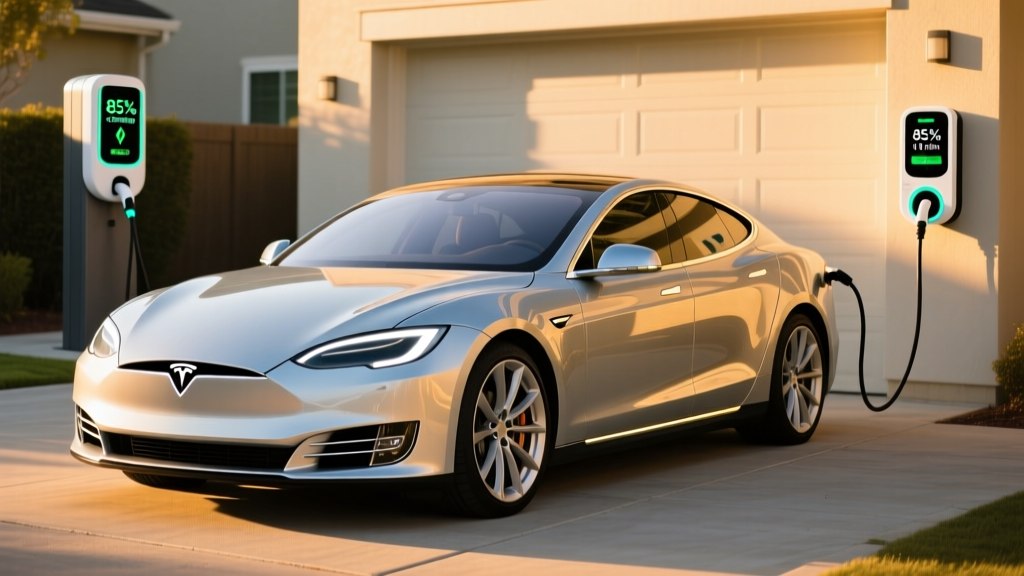
Over 80% of EV charging happens at home. A Level 2 home charger (240V, 32–48 amps, 7.7–11.5 kW) adds roughly 25–40 miles of range per hour of charging and costs $500–$2,000 for equipment plus $800–$3,000 for professional installation by a licensed electrician, depending on whether your electrical panel needs an upgrade. If you can charge at home overnight, daily "refueling" becomes effortless and costs $0.03–$0.06 per mile on most utility rates. If you cannot charge at home, public DC fast charging costs $0.30–$0.55/kWh (equivalent to $0.09–$0.18 per mile), significantly reducing the cost advantage and adding time to your routine.
Battery longevity is better than most buyers fear
Modern lithium-ion EV batteries (NMC or LFP chemistry) are engineered for 1,000–2,000+ charge cycles before reaching 70–80% of original capacity. In practical terms, that's 150,000–300,000+ miles. Federal law mandates a minimum battery warranty of 8 years / 100,000 miles (10 years / 150,000 miles in California and states that follow CARB standards), covering capacity loss below 70%. Real-world data from Tesla fleet reports and independent studies show average degradation of approximately 10–12% over the first 150,000 miles for liquid-cooled battery packs.
Public charging is improving — but verify your routes
The US now has over 190,000 public charging ports (Level 2 and DC fast combined), with DC fast chargers numbering roughly 45,000+ ports. Tesla's Supercharger network — now opening to NACS-equipped non-Tesla vehicles — remains the most reliable, with uptime rates above 95%. CCS networks (Electrify America, EVgo) have improved but still report occasional connector or payment-system failures. Before buying, map your most common road trips on PlugShare or A Better Routeplanner to confirm adequate DC fast-charging coverage.
| Common Misconception | Fact (with Data) |
|---|---|
| "EV batteries need replacing every 5–7 years" | Most EV batteries outlast the vehicle. Degradation averages 1–2% per year. Warranty covers 8 yr/100k mi minimum. Full replacement (rare) costs $5,000–$20,000 depending on pack size. |
| "EVs are worse for the environment because of electricity from fossil fuels" | Even on a coal-heavy grid, an EV produces 50–60% fewer lifecycle emissions than a comparable gas car (Union of Concerned Scientists). On the US average grid, the break-even point is ~15,000–20,000 miles of driving. |
| "There aren't enough chargers for road trips" | The US has 45,000+ DC fast ports. Most interstate corridors have chargers every 50–100 miles. However, rural routes in MT, WY, ND, SD, and parts of TX/NM still require advance planning. |
| "The $7,500 tax credit applies to every EV" | The §30D credit has strict requirements: MSRP caps, buyer income limits, battery sourcing rules, and final assembly in North America. Many popular EVs (e.g., Hyundai Ioniq 5, Kia EV6) do not qualify for the new-vehicle credit due to overseas assembly. Always verify at fueleconomy.gov. |
| "EVs can't handle cold weather" | EVs operate in Norwegian winters (-20°F) routinely. Range drops 15–30%, but preconditioning (warming the battery while plugged in) and heat pumps mitigate the loss. Block heaters and garage parking help further. |
Decision Framework: Is an EV Right for You in 2026?
Use this if-then guide to narrow your choice
Choose a BEV (full electric) if:
- You have access to home Level 2 charging (garage, driveway, or workplace charger)
- Your daily driving is under 250 miles round-trip (covers 95%+ of American commutes)
- You qualify for the §30D tax credit (check income and vehicle eligibility)
- You drive 12,000+ miles per year (fuel savings offset higher purchase price faster)
- You want the lowest maintenance burden and are comfortable planning road-trip charging stops
Choose a PHEV (plug-in hybrid) if:
- You lack reliable home charging but want some electric-only daily driving (most PHEVs offer 25–45 miles of electric range)
- You frequently drive long distances in areas with sparse charging infrastructure
- You want EV-like around-town driving with gas-car road-trip convenience and zero range anxiety
- Models like the Toyota RAV4 Prime (42 mi electric, 38 MPG combined) or Jeep Wrangler 4xe (21 mi electric) fit your needs
Stick with a hybrid (HEV) or gas vehicle if:
- You have no access to any charging (no home, no workplace, limited public infrastructure in your area)
- You regularly tow heavy loads over long distances (EV towing range drops 40–55%)
- Your budget is under $28,000 and you're buying new (the most affordable new EVs start around $30,000 before credits)
- You drive in extreme cold (-20°F or below) for extended periods where range loss compounds with safety margins
What the EV Sales Trend Means for Your Purchase Timing
The slowing growth rate in EV sales in the US actually benefits buyers. Here's why:
- Dealer inventory is normalizing. In 2022–2023, popular EVs had 3–6 month wait times. By late 2024–2025, most models have 30–60 day supply on lots, giving you negotiating leverage.
- Price competition is intensifying. Tesla's price cuts in 2023–2024 forced competitors to respond. Lease deals on EVs (often $299–$499/month with $2,000–$3,500 due at signing) are among the most aggressive in the industry.
- Model choices are expanding. 2025–2026 brings new entries: refreshed Tesla Model Y (Juniper), Honda Prologue (GM Ultium platform), VW ID.7, updated Rivian R1S/R1T (Gen 2), and affordable offerings from Chinese-market brands exploring US entry.
- Charging infrastructure is catching up. The NEVI (National Electric Vehicle Infrastructure) program is funding 500,000 new public chargers by 2030, with deployments accelerating in 2025–2026 along designated Alternative Fuel Corridors.
Frequently Asked Questions
Are EV sales in the US still growing in 2025–2026?
Yes, but at a slower pace. After explosive 50–85% annual growth in 2021–2023, EV sales in the US are growing at roughly 15–25% year-over-year in 2024–2025. This is typical market maturation — early adopters have already bought in, and the market is now reaching mainstream buyers who weigh practical concerns more carefully.
Which EV has the best range for the price?
The Chevrolet Equinox EV (3RS, ~$33,000 MSRP, 319 mi EPA) offers the best range-per-dollar ratio in 2025. The Tesla Model 3 Long Range (363 mi, ~$42,490) leads for sedans. For maximum range regardless of price, the Lucid Air Grand Touring achieves 516 mi EPA at ~$125,600.
Do I qualify for the $7,500 federal EV tax credit?
Eligibility depends on multiple factors per IRS §30D rules: your modified adjusted gross income must be below $150,000 (single) or $300,000 (joint); the vehicle MSRP must be under $55,000 (sedans) or $80,000 (SUVs/trucks/vans); the vehicle must undergo final assembly in North America; and the battery must meet critical mineral and component sourcing thresholds that tighten each year. Always verify eligibility at fueleconomy.gov and consult a tax professional for your specific situation.
How much does home EV charger installation cost?
A Level 2 home charger (240V, 32–48A) typically costs $500–$800 for the unit plus $800–$3,000 for professional installation, depending on the distance from your electrical panel and whether a panel upgrade (from 100A to 200A service) is needed. Total cost ranges from $1,300 to $3,800. Some utilities offer rebates of $200–$500 for charger installation.
Will my EV battery need to be replaced?
Statistically, very unlikely during typical ownership. Modern liquid-cooled EV batteries degrade approximately 1–2% per year. After 10 years and 150,000 miles, most retain 80–88% of original capacity. Federal warranty mandates cover batteries for 8 years/100,000 miles (minimum 70% capacity retention). Full battery replacement, while rare, costs $5,000–$20,000 depending on pack size and chemistry.
Are PHEVs a better choice than full EVs for most buyers?
For buyers who lack home charging, regularly drive 300+ miles in a day, or live in areas with limited charging infrastructure, a PHEV offers a practical middle ground. You get 25–45 miles of electric-only range for daily commuting plus a gas engine for longer trips. However, PHEVs carry the maintenance burden of both a gas engine and an electric powertrain, and their smaller batteries (typically 15–25 kWh) offer less fuel savings than a full BEV if you can charge at home.