Quick Answer: Are EV Sales Actually Declining?
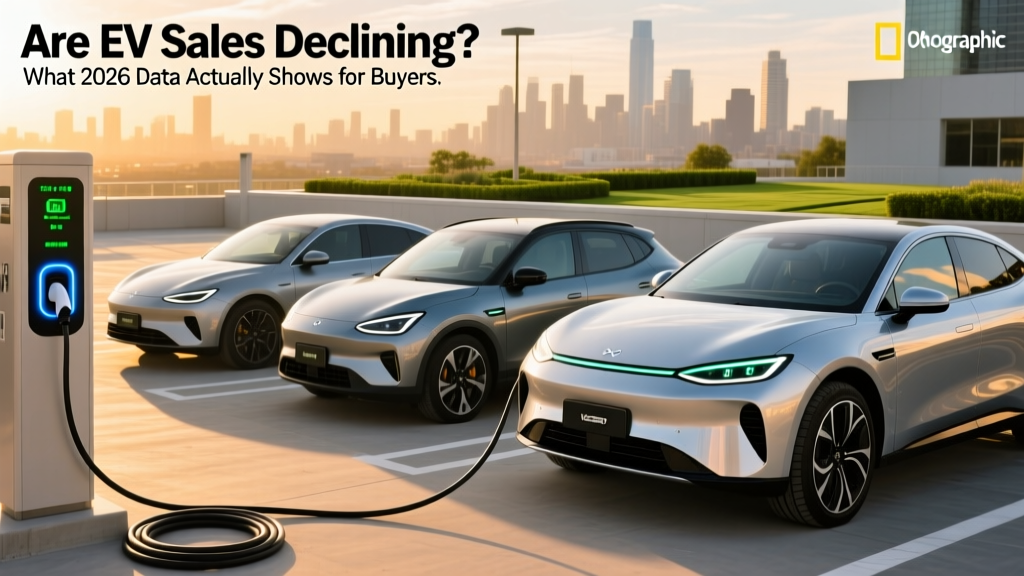
No — U.S. EV sales are not declining in absolute terms. Through early 2026, battery-electric vehicle (BEV) sales continue to grow year-over-year, though the rate of growth has slowed compared to the 2021–2023 surge. Plug-in hybrid (PHEV) sales have actually accelerated as buyers seek a bridge option. What's changing is market composition: early adopters are saturated, mainstream buyers demand lower prices, better public charging, and more body styles. Several automakers have delayed or scaled back EV targets, which fuels the "declining" narrative — but showroom data tells a more nuanced story. For buyers, this cooling means more incentives, steeper discounts, and better lease deals than at any point since 2022.
What the Sales Numbers Actually Say
The headline "EV sales are tanking" falls apart when you examine the data. According to Kelley Blue Book estimates, U.S. new EV sales reached approximately 1.3 million units in 2025, representing roughly 8.5% of total new vehicle sales — up from 7.6% in 2024. Q1 2026 data from the Alliance for Automotive Innovation shows continued single-digit percentage growth in BEV volume.
So where does the "declining" narrative come from? Three factors:
- Growth rate deceleration: After 65% YoY growth in 2022 and 49% in 2023, the 2024–2025 growth rate dropped to roughly 15–18%. That's still growth, but it reads as a slowdown in press coverage.
- Inventory buildup: Days' supply for some EV models stretched to 60–90+ days in late 2025 (compared to 30–40 days for comparable gas vehicles), leading to visible dealer lot stockpiles and aggressive discounting.
- Automaker pullbacks: Ford, GM, and others redirected capital from BEV programs toward hybrids and PHEVs, generating headlines about "retreating" from electric vehicles.
For the buyer, this is actually good news: oversupply means leverage. Tesla, Hyundai, Ford, and others have been stacking federal incentives, lease cash, and dealer discounts in ways rarely seen in the EV market.
EV vs. Gas vs. Hybrid: A Cost Reality Check
If you're weighing an EV against a hybrid or gas vehicle, total cost of ownership (TCO) is where the decision crystallizes. Below is a 5-year cost comparison using representative 2026 models driven 15,000 miles/year.
| Category | 2026 Tesla Model 3 RWD (BEV) | 2026 Toyota Camry Hybrid (HEV) | 2026 Honda Civic 2.0 (Gas) |
|---|---|---|---|
| Base MSRP | $38,990 | $29,495 | $25,345 |
| Federal Tax Credit (§30D) | −$7,500* | $0 | $0 |
| Effective Purchase Price | $31,490 | $29,495 | $25,345 |
| Fuel/Energy (5 yr) | $3,150 (home L2) | $5,850 (48 MPG) | $9,750 (33 MPG) |
| Maintenance (5 yr) | $1,800 | $3,200 | $3,800 |
| Insurance (5 yr avg) | $9,500 | $7,200 | $6,800 |
| Estimated Depreciation | $14,200 | $10,500 | $9,800 |
| 5-Year TCO | $30,640 | $26,745 | $30,345 |
| Cost Per Mile | $0.41 | $0.36 | $0.40 |
*§30D credit eligibility requires meeting income caps ($150K single / $300K joint), MSRP caps ($55K sedans / $80K SUVs/trucks), battery sourcing rules, and is subject to change. Verify at IRS.gov. Point-of-sale transfer available at participating dealers.
Key takeaways from this data:
- The BEV wins on fuel savings — roughly $6,600 less than gas over 5 years when charging at home on a national-average electricity rate of $0.16/kWh.
- Insurance is the BEV's Achilles heel. EV insurance premiums run 15–25% higher on average due to repair complexity and battery replacement costs. Always get quotes before purchasing.
- Depreciation remains the wildcard. Used EV values have been volatile. The Model 3 has held value better than most, but brands like Ford (Mach-E) and Volkswagen (ID.4) saw 30–40% one-year depreciation in 2024–2025. Leasing transfers this risk to the automaker.
- Hybrids offer the lowest-risk TCO for buyers without reliable home charging access.
Real-World Ownership: What Showrooms Don't Tell You
Sales headlines ignore the daily ownership experience. Here's what actually determines whether an EV works for you:
Home Charging Access Is the Make-or-Break Factor
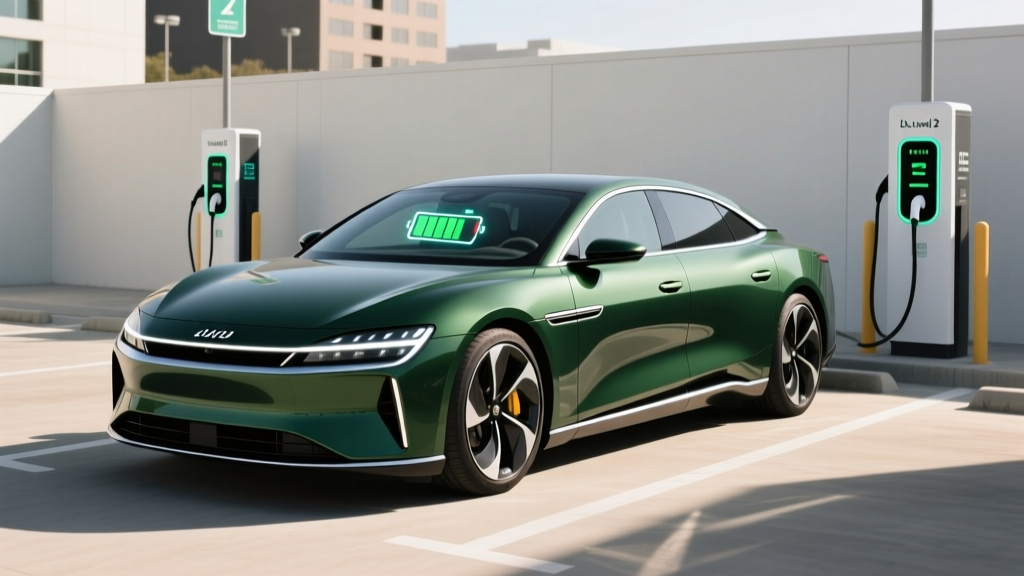
Roughly 75% of EV charging happens at home. If you can install a Level 2 (240V) charger — typically a 48-amp hardwired unit delivering ~11.5 kW — you'll wake up to 35–44 miles of range added per hour of charging. A full overnight charge easily covers any daily commute.
Installation costs vary widely:
- Best case: $500–$1,200 if your panel has capacity and the charger is near the electrical service.
- Typical: $1,200–$2,500 including permit, 50-amp circuit, and a ChargePoint Home Flex or Wallbox Pulsar Plus.
- Worst case: $3,000–$5,000+ if you need a 200-amp panel upgrade (common in older homes with 100-amp service).
If you live in an apartment, rely on street parking, or your HOA prohibits charger installation, a PHEV or HEV is the more pragmatic choice. Public DC fast charging costs $0.35–$0.55/kWh on networks like Electrify America and EVgo — often more expensive per mile than a fuel-efficient hybrid.
Cold Climate Range Loss Is Real — and Quantifiable
EV batteries lose efficiency in cold weather. In AAA testing and real-world data from Recurrent Auto, expect:
- Mild cold (30–40°F): 10–15% range reduction
- Deep cold (0–15°F): 25–40% range reduction, especially without a heat pump
A 2026 Hyundai Ioniq 5 with its 84 kWh battery and 317-mile EPA range will realistically deliver ~250 miles on a 75°F highway day, and potentially only 190–210 miles at 10°F. Models equipped with heat pumps (standard on most 2026 Hyundai, Kia, Tesla, and BMW EVs) mitigate this by 5–10 percentage points. If you live in Minnesota or Maine, spec a vehicle with at least 300 miles of EPA range and a heat pump — or seriously consider a PHEV.
Public Charging Reliability: Improving but Uneven
Tesla's Supercharger network remains the gold standard at ~97% uptime. Non-Tesla networks (Electrify America, EVgo, ChargePoint) have improved since 2024 — J.D. Power's 2025 EV Experience Index showed satisfaction gains — but 15–20% of public charging sessions still encounter errors, broken stalls, or slower-than-advertised speeds. The expanding NACS (North American Charging Standard) adoption means most 2026 EVs from Ford, GM, Rivian, Volvo, and others now access Tesla Superchargers with a native NACS port, dramatically expanding reliable fast-charging access.
Common Misconceptions About the EV Market in 2026
| Myth | Fact |
|---|---|
| "EV sales are collapsing." | U.S. BEV sales grew ~15–18% YoY in 2025. Growth is slower than 2022–2023, but volume is still rising. PHEV sales grew even faster. |
| "EV batteries need replacing every few years." | Federal law mandates 8-year/100,000-mile battery warranties. Real-world degradation data from Recurrent Auto shows most EVs retain 90–95% of original capacity after 5 years and 80,000+ miles. LFP chemistry batteries (Tesla Model 3 RWD, Ford Mustang Mach-E Select) show even slower degradation. |
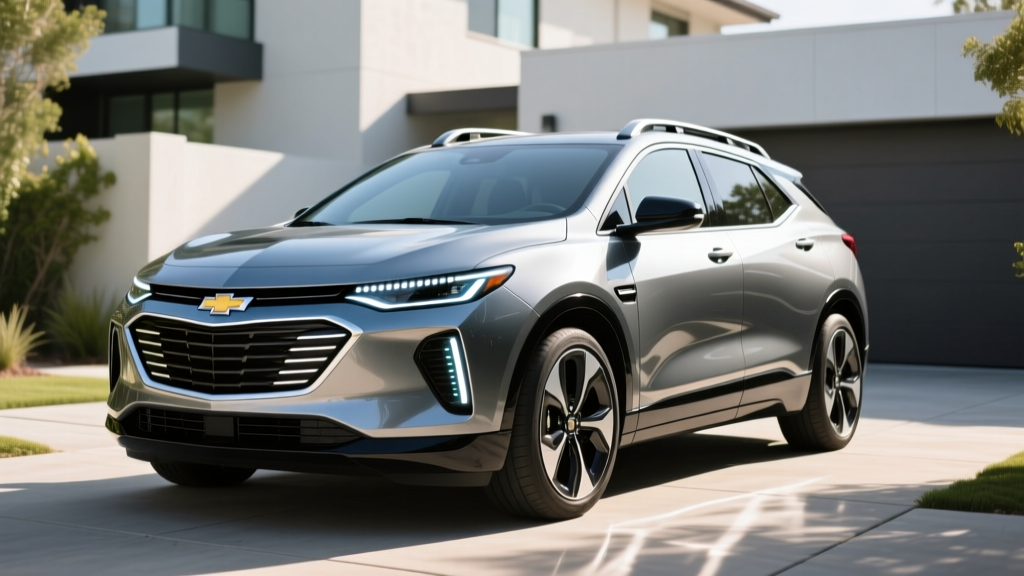
| "You can't take an EV on a road trip." | A 2026 Chevrolet Equinox EV (319 mi EPA, peak 150 kW DC charging) can add ~150 miles in 20 minutes. Coast-to-coast trips are routine on the Supercharger network, adding 30–45 minutes of charging per 250 miles of driving. |
| "EVs are worse for the environment because of battery mining." | Lifecycle analyses from Argonne National Laboratory and the ICCT show EVs produce 50–70% fewer lifetime greenhouse gas emissions than comparable gas vehicles in the U.S., even accounting for battery manufacturing and current grid mix. The grid is getting cleaner every year; a gas car never does. |
| "The tax credit is gone." | The §30D credit of up to $7,500 remains available in 2026 for qualifying vehicles and buyers. Several models — including the Tesla Model 3 Long Range, Ford F-150 Lightning, and VW ID.4 — currently qualify. Point-of-sale transfer lets you apply it as a down payment reduction. Rules are strict; check fueleconomy.gov for the latest eligible list. |
Decision Framework: Should You Buy an EV, Hybrid, or Gas Car in 2026?
Use this to find your best powertrain:
- Choose a BEV if: You have home Level 2 charging (or can install it), drive under 250 miles/day, your household has a second vehicle for rare long trips, and you want to minimize fuel and maintenance costs. Best for: suburban commuters, two-car households, solar-panel owners.
- Choose a PHEV if: You want electric-only commuting (typically 30–45 miles on battery) but need gas-engine flexibility for road trips, live in a cold climate, or lack reliable public charging. Best for: one-car households, apartment dwellers with workplace charging, frequent long-distance travelers. Strong 2026 picks: Toyota RAV4 Prime (42 mi electric, 94 MPGe), Jeep Wrangler 4xe (22 mi electric).
- Choose an HEV (standard hybrid) if: You have zero charging access, want maximum fuel efficiency without plugging in, or prioritize lowest purchase price and depreciation risk. Best for: urban drivers, rideshare drivers, budget-conscious buyers. Top pick: Toyota Camry Hybrid (51 city / 49 hwy / 50 combined MPG).
- Choose a gas vehicle if: You drive very low annual miles (under 8,000/year), tow heavy loads regularly, or live in a rural area with no charging infrastructure. The fuel-cost penalty is smaller when mileage is low.
What First-Time EV Buyers Must Know Before Signing
If you've decided an EV makes sense, here's a practical pre-purchase checklist:
- Get insurance quotes first. EV premiums can be $200–$400/year higher than equivalent gas cars. Shop Geico, Progressive, State Farm, and EV-specialty carriers like Tesla Insurance (where available).
- Verify §30D eligibility before relying on it. Check your AGI, the vehicle's MSRP against caps, and battery sourcing compliance on fueleconomy.gov. The credit is non-refundable — if your tax liability is below $7,500, the point-of-sale transfer option (available through registered dealers) solves this.
- Test-charge before you buy. Visit a DC fast charger near your home or commute route. Download the network app (Tesla, Electrify America, EVgo) and understand the plug-in-and-pay workflow.
- Understand the charge curve. Peak DC charging rates (e.g., "250 kW!") are only sustained between roughly 10–50% state of charge. Above 80%, speeds taper dramatically to protect the battery. Plan road trips around 10–80% charging sessions, not 0–100%.
- Consider leasing. With EV depreciation still volatile and technology advancing, a 36-month lease with the $7,500 credit passed through as a lease incentive (structured as "lease cash" by the automaker, which sidesteps some §30D sourcing restrictions) can be the lowest-risk entry point.
- Check your electrical panel. Before committing, have a licensed electrician assess whether your home's service panel can support a 50-amp circuit. A $150 consultation can prevent a $4,000 surprise.
The Bottom Line for Buyers Watching the Headlines
The "EV sales declining" narrative is a growth-rate story, not a collapse. For buyers, the current market is the most favorable since EVs went mainstream: inventory is up, incentives are stacking, lease deals are aggressive, and the NACS charging standard is unifying the fast-charging experience across brands. If your daily driving pattern and home-charging situation align with EV ownership, 2026 is a strong year to buy — precisely because the market has cooled enough for automakers to compete on price.
Are EVs losing resale value faster than gas cars?
Yes, in most cases. Average 3-year EV depreciation sits at 45–55% compared to 35–40% for comparable gas vehicles (per iSeeCars 2025 data). Tesla and Porsche have fared better; Ford, VW, and Mercedes EVs have seen steeper drops. Leasing transfers depreciation risk to the automaker and is worth considering for this reason.
Will EV prices keep dropping?
Base MSRPs have stabilized, but effective prices (after incentives and discounts) are at multi-year lows. The arrival of sub-$35,000 models like the next-generation Tesla and Chevrolet Bolt (expected late 2026/2027) could pressure the segment further. If you need a car now, current deals are unlikely to get dramatically better.
Is it better to buy or lease an EV in 2026?
Leasing is often the smarter financial play for EVs. You avoid depreciation risk, many leases pass through the $7,500 federal incentive as lease cash (even on vehicles that don't qualify for direct purchase credits due to sourcing rules), and you can upgrade to newer battery/charging tech in 3 years. Buying makes more sense if you plan to keep the vehicle 7+ years and qualify for the full §30D credit.
Do hybrids make more sense than EVs right now?
For many buyers, yes — particularly PHEVs. Toyota's RAV4 Prime and Prius Prime, and the Hyundai Tucson PHEV offer 30–42 miles of electric-only range for daily commuting with a gas engine for longer trips. They carry lower purchase premiums, minimal depreciation risk, and no charging-infrastructure dependency. If your home-charging situation is uncertain, a PHEV is the lowest-risk electrified choice.
What happens if I buy an EV and my battery degrades?
Federal law requires 8-year/100,000-mile battery warranties covering defects and excessive capacity loss (typically defined as falling below 60–70% of original capacity). Real-world data from Recurrent Auto shows that the vast majority of EV batteries outlast their warranty periods with 85–93% capacity remaining at 100,000 miles. LFP chemistry batteries (found in the Tesla Model 3 RWD and base Mach-E) show even lower degradation rates.