The Quick Answer: What an EV Route Planner Actually Does
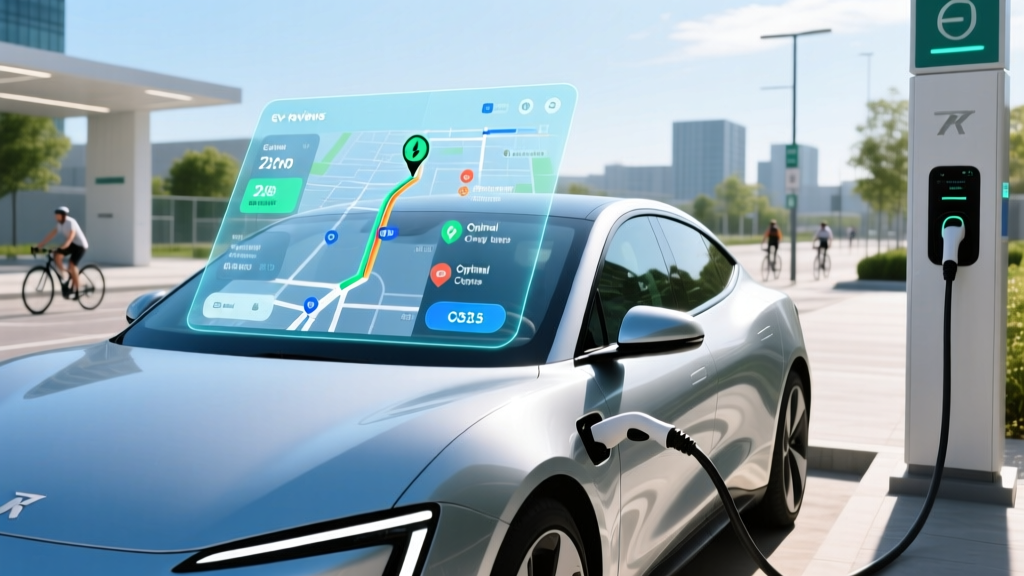
An EV route planner maps your trip by calculating energy consumption (kWh/mile), factoring in elevation, temperature, speed, and HVAC load, then identifies compatible DC fast chargers along your route with estimated charge times. Unlike a gas-car GPS that simply shows distance, an EV route planner tells you exactly how much battery you'll have at each stop, how long you'll charge (typically 15–35 minutes for a 10–80% session), and your total trip cost in electricity versus gasoline.
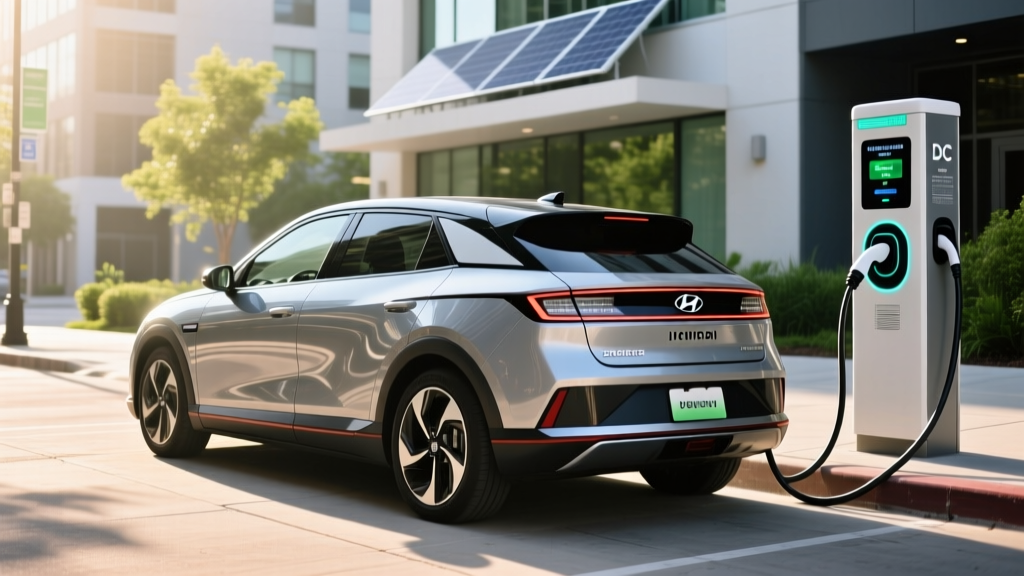
Bottom line: For a 400-mile road trip in a 2026 Hyundai Ioniq 5 (EPA 310 miles, 84 kWh battery), a good route planner will schedule one 20-minute DC fast-charge stop at a 250 kW station, adding roughly 180 miles of range for about $12–$18 in electricity — compared to ~$45–$55 in gasoline for a 30 MPG car.
Why EV Route Planners Matter More Than Standard GPS
When you punch an address into Google Maps or Apple Maps, the software calculates distance and time based on speed limits and traffic. For a gas car, that's sufficient — fuel stations are everywhere, and refueling takes 5 minutes. For an EV, distance alone is nearly useless without context.
A dedicated EV route planner layers on critical variables:
- Energy consumption rate (measured in Wh/mile or kWh/100mi) specific to your vehicle model and trim
- Real-world range adjustments for highway speeds (75+ mph cuts range 10–15%), cold temperatures (20°F can reduce range 20–30%), and elevation changes
- Charging curve physics — a 350 kW peak rate only applies between ~10–40% state of charge; above 80%, speeds taper sharply to protect the battery
- Charger compatibility — whether a station has NACS, CCS1, or CHAdeMO connectors and whether your vehicle can handshake with that network
- Charger availability and status — real-time stall occupancy, out-of-service reports, and power output (a "150 kW" station delivering only 50 kW due to shared cabinets)
The major EV route planners in 2026 include A Better Route Planner (ABRP), PlugShare's Trip Planner, built-in vehicle navigation (Tesla, Rivian, GM Ultium-based models, Hyundai/Kia), and Chargeway. Each pulls data from different charger-network APIs and uses different consumption models.
EPA Range vs. Real-World Range: What Your Route Planner Should Show
The EPA range sticker on a new EV is a laboratory-derived estimate. It's useful for comparing vehicles but frequently overstates what you'll experience on a real road trip. Here's where a quality EV route planner earns its keep — by adjusting the EPA figure to match your actual conditions.
| Vehicle | EPA Range | Highway (75 mph) | Cold Weather (20°F) | Combined Highway + Cold |
|---|---|---|---|---|
| Tesla Model Y Long Range | 320 mi | ~275 mi | ~255 mi | ~220 mi |
| Hyundai Ioniq 5 (LR RWD) | 310 mi | ~265 mi | ~245 mi | ~210 mi |
| Ford Mustang Mach-E (ER AWD) | 312 mi | ~260 mi | ~240 mi | ~205 mi |
| Chevrolet Equinox EV (RS) | 319 mi | ~270 mi | ~250 mi | ~215 mi |
| Rivian R1S (Dual Max) | 352 mi | ~295 mi | ~275 mi | ~240 mi |
A route planner that doesn't adjust for temperature and speed will leave you stranded or force an emergency detour to a slow Level 2 charger. When entering your trip, always set the outside temperature and your expected cruising speed. ABRP and Tesla's built-in navigator both do this automatically when linked to the vehicle's telematics.
How Charging Stops Are Calculated: kW, kWh, and the Charge Curve
This is where most first-time EV buyers get confused, and where route planners either shine or mislead. Understanding the math helps you verify what your planner is telling you.
kW (kilowatts) measures the rate of energy flow — think of it as the "speed" of charging. kWh (kilowatt-hours) measures total energy stored — the "size" of your battery. If your EV has an 84 kWh battery and you charge at a sustained 100 kW, it would theoretically take about 50 minutes to go from 0% to 100% (84 ÷ 100 × 60). In reality, no EV sustains its peak charge rate for the full session.
Here's how a typical DC fast-charging session works for a 2026 Hyundai Ioniq 5 at a 250 kW station:
- 10–40% SoC: Peak rate ~230–240 kW (the Ioniq 5's 800V architecture excels here)
- 40–60% SoC: Rate tapers to ~180 kW
- 60–80% SoC: Rate drops to ~120 kW
- 80–100% SoC: Rate falls below 50 kW (this is why route planners target 80% — charging past it wastes time)
Result: A 10–80% session takes approximately 18 minutes. Your route planner should display this realistic time, not the marketing claim of "up to 240 kW." If your planner shows a flat charge rate without taper, its estimates will be overly optimistic by 5–10 minutes per stop.
EV Road Trip Costs vs. Gas: A 400-Mile Comparison
Let's run the numbers on a 400-mile trip — say, Denver to Grand Junction — comparing a 2026 Tesla Model Y Long Range against a 2026 Toyota RAV4 (gas, 30 MPG combined). This is the kind of cost breakdown a good EV route planner will generate for you.
| Factor | Tesla Model Y LR (BEV) | Toyota RAV4 (Gas, 30 MPG) |
|---|---|---|
| Energy/Fuel Needed | ~120 kWh (at 300 Wh/mi highway) | ~13.3 gallons |
| Number of Stops | 1 DC fast-charge stop (~18 min) | 1 gas stop (~10 min) |
| Cost per Unit | $0.35–$0.48/kWh (EA/Supercharger) | $3.40/gallon (CO avg.) |
| Total Energy Cost | $42–$58 | $45 |
| Maintenance (tires, fluids amortized) | ~$8 | ~$14 |
| Total Trip Cost | $50–$66 | $59 |
The costs are close at highway speeds using public DC fast charging, where electricity rates run $0.35–$0.48/kWh on networks like Electrify America or Tesla Superchargers. The EV advantage widens dramatically if you charge at home before departure ($0.12–$0.18/kWh national average, or about $14–$22 for the same 120 kWh) or if you have access to free destination charging.
For daily driving, where 85%+ of charging happens at home, the savings are substantial. The U.S. Department of Energy estimates the national average cost to drive an EV is equivalent to $1.20–$1.40 per gallon of gasoline when charging primarily at residential rates.
EV vs. Gas vs. Hybrid: Which Route Planning Scenario Fits You?
Not every driver needs an EV route planner. Your driving pattern determines whether EV route planning is a convenience or a frustration.
| Driving Pattern | BEV (Full Electric) | PHEV (Plug-in Hybrid) | HEV / Gas |
|---|---|---|---|
| Mostly local, <40 mi/day, home charging | Ideal — no route planning needed, wake up "full" daily | Ideal — electric-only covers commute, no gas used | Works but misses EV cost savings |
| Mixed commute + weekly 100–200 mi trips | Minimal planning — one mid-trip charge on longer routes | Good — gas engine covers longer legs seamlessly | No planning needed, higher fuel cost |
| Frequent 300+ mi road trips | Requires active route planning, 1–2 charge stops per trip | Gas mode handles it; no EV benefit on highway | Simplest, highest per-mile cost |
| Rural/remote areas with sparse charging | Risky — charging deserts still exist in parts of MT, WY, NM, rural TX | Best of both — electric locally, gas for remote stretches | Most reliable infrastructure |
Common EV Route Planner Misconceptions
| Myth | Fact |
|---|---|
| "EV route planners always show accurate arrival SoC" | Accuracy depends on input data. If you don't enter passenger/cargo weight, headwind, or actual cruising speed, predictions can be off by 10–15%. Always add a 10% buffer on unfamiliar routes. |
| "A 350 kW charger means a 350 kW charge" | The vehicle's onboard charge controller limits the rate. A Chevy Equinox EV maxes out at ~150 kW even at a 350 kW stall. The route planner must match charger output to your vehicle's max acceptance rate. |
| "I can charge to 100% at a DC fast charger quickly" | Charging from 80–100% can take as long as 10–80%. Route planners that target 80% arrival/departure optimize total trip time. Plan to leave at 80% unless it's your final destination. |
| "All route planners include Tesla Superchargers" | As of 2026, most non-Tesla EVs with NACS adapters can access Superchargers, but some planners still don't fully integrate Tesla's real-time stall data for non-Tesla vehicles. Cross-reference with the Tesla app or PlugShare. |
| "Cold weather only affects range, not charging speed" | Cold batteries charge significantly slower. Without preconditioning (warming the battery en route to the charger), a 250 kW session might start at only 50–80 kW until the pack warms up. Quality planners like ABRP and Tesla's nav account for this. |
What First-Time EV Buyers Should Know Before Their First Road Trip
If you're transitioning from gas to electric, route planning is the single biggest behavioral shift. Here's what experienced EV owners wish they'd known:
- Preconditioning is non-negotiable in cold weather. If your EV has a "navigate to charger" feature (Tesla, Rivian, Hyundai/Kia, GM Ultium), use it. The car will warm the battery so you hit peak charge rates on arrival. Without it, expect your first 5–8 minutes of charging at severely reduced power.
- Charge at home before every trip. Starting at 100% SoC eliminates your first charging stop entirely on trips under 250 miles. Home charging on a Level 2 (240V, 7–11 kW) adds roughly 25–40 miles of range per hour, so an overnight session easily tops off any battery.
- Download multiple network apps before you leave. Electrify America, EVgo, ChargePoint, and Tesla each require their own app or RFID card for payment. A route planner can show you the charger, but it can't activate it without the right app.
- Build in a buffer. Plan to arrive at your next charger with 15–20% battery remaining, not 5%. Chargers can be out of service, occupied, or delivering reduced power. A 15% buffer gives you options to reroute.
- Understand your vehicle's connector. In 2026, NACS (Tesla's connector, now the North American standard) is adopted by Ford, GM, Rivian, Hyundai/Kia, and others via adapter or native port. CCS1 is still common on older models. CHAdeMO is essentially legacy (Nissan Leaf). Your route planner must filter by your connector type.
Decision Framework: Do You Need a Dedicated EV Route Planner?
Choose a dedicated EV route planner (ABRP, PlugShare Trip Planner) if:
- You drive a non-Tesla EV and frequently take trips over 200 miles
- You want granular control over consumption inputs (speed, temperature, cargo, elevation)
- You drive an older EV with CHAdeMO or CCS1 and need to filter chargers carefully
- You tow a trailer (which can cut range 30–50%) and need precise energy modeling
Choose your vehicle's built-in navigation if:
- You own a Tesla, Rivian, or 2025+ GM/Hyundai/Kia with integrated route planning
- You want automatic battery preconditioning when navigating to a charger
- You prefer a single integrated experience without third-party apps
- Your trips are mostly under 300 miles with predictable charging corridors
You may not need active route planning at all if:
- 90%+ of your driving is under 80 miles round-trip with home Level 2 charging
- You drive a PHEV with 30+ miles of electric range and a gas backup
- Your region has dense DC fast-charging coverage (most metro areas, I-5, I-95, I-80 corridors)
Frequently Asked Questions
What's the best free EV route planner in 2026?
A Better Route Planner (ABRP) offers the most detailed free tier, with vehicle-specific consumption models for over 300 EV models, elevation data, weather integration, and charger-network filtering. PlugShare's trip planner is also free and benefits from PlugShare's massive user-review database for charger reliability. Both are accessible via web and mobile app.
How accurate are EV route planners for estimating charge time?
Top-tier planners like ABRP and Tesla's built-in nav are typically accurate within 2–4 minutes on a 20-minute charge session when inputs (temperature, speed, battery state) are correct. The biggest source of error is charger-side: a station advertised at 150 kW may deliver less due to shared power cabinets, high ambient temperature, or concurrent use by another vehicle.
Can I use an EV route planner if I don't have home charging?
Yes, and it's even more critical. Without home charging, you'll rely on public Level 2 and DC fast chargers, making trip planning essential for daily logistics. Set your "home" location to your nearest reliable public charger and plan your weekly charging around errands. Many apartment dwellers use route planners to identify workplace charging or grocery-store Level 2 stations where they can charge while shopping.
Do EV route planners account for towing?
ABRP allows you to add a trailer with custom weight and drag coefficients, which typically reduces estimated range by 30–50% depending on trailer profile and speed. Tesla's built-in nav adjusts consumption estimates based on real-time energy use when towing mode is activated. If you tow frequently, this feature alone justifies using a dedicated planner over a generic maps app.
How does the federal EV tax credit affect the ownership cost equation?
The IRS §30D clean vehicle credit offers up to $7,500 for qualifying new EVs, subject to MSRP caps ($80,000 for SUVs/pickups, $55,000 for sedans), buyer income limits ($150K single / $300K joint AGI), and battery critical-mineral sourcing requirements. As of 2026, the credit can be transferred to the dealer at point of sale as an immediate price reduction. Eligibility varies by model and production date — check the IRS qualified vehicles list before purchasing. A route planner won't calculate this, but the savings meaningfully reduce your cost-per-mile over ownership.