The Colorado EV Incentive Stack: What You Can Actually Claim in 2026
Colorado remains one of the most EV-friendly states in the U.S., but the incentive landscape has shifted significantly since the early 2020s. For 2026 model-year buyers, the total discount stack can reach well over $10,000 when you combine federal, state, and utility-level programs — but only if you navigate the eligibility rules correctly. The keyword "ev rebates colorado" pulls together a tangled web of tax credits, point-of-sale reductions, and utility incentives that change annually. This guide cuts through the noise with exact figures, current-year rules, and a realistic five-year total cost of ownership (TCO) analysis.
Federal Tax Credit (IRS §30D): Up to $7,500 — With Strings Attached
The federal Clean Vehicle Credit under IRS §30D remains the anchor incentive for new EV buyers in 2026. The maximum credit is $7,500, but it is split into two $3,750 halves based on battery component and critical mineral sourcing requirements that tighten each year. Here is the eligibility checklist you need to verify before counting on this credit:
- MSRP caps: Vans, SUVs, and pickup trucks must have an MSRP at or below $80,000; sedans and other body styles must be at or below $55,000.
- Buyer income limits (modified AGI): $300,000 for joint filers, $225,000 for heads of household, $150,000 for all other filers.
- Battery sourcing rules (2026): 100% of critical minerals must be extracted or processed in the U.S. or a free-trade-agreement country (or recycled in North America) to qualify for the full $7,500. Battery components manufactured or assembled in North America must also meet escalating percentage thresholds.
- Point-of-sale transfer: Since 2024, buyers can transfer the credit to the dealer at purchase, receiving it as an immediate price reduction rather than waiting to claim it on their tax return. This is available regardless of tax liability.
- Final assembly: Vehicle must undergo final assembly in North America.
- Filing requirement: You must file IRS Form 8936 with your tax return even if you transferred the credit at sale.
The critical mineral and battery component rules have eliminated some previously qualifying models. Always verify a specific vehicle's eligibility on fueleconomy.gov before signing a purchase agreement, as manufacturer eligibility lists update periodically throughout the year.
Colorado State Incentives and Utility Rebates
Colorado's state-level EV incentives have evolved. The state offers a Colorado EV tax credit that has been restructured in recent legislative sessions. As of 2026, the credit structure varies by vehicle price tier, with larger credits directed toward more affordable EVs to improve accessibility. The credit applies to both new and qualifying used EV purchases and can often be stacked on top of the federal §30D credit.
Important: State and local incentive amounts vary by jurisdiction and change with legislative sessions. Colorado's Department of Revenue and the Colorado Energy Office publish current-year credit amounts and eligibility rules. Always confirm the exact dollar amount and any income or vehicle-price caps with official state sources before finalizing your purchase. Utility rebates (detailed below) are provider-specific and may have their own application deadlines and funding pools.
Utility Rebates: The Hidden Layer of Savings
Colorado's major utilities offer additional rebates that stack with state and federal incentives:
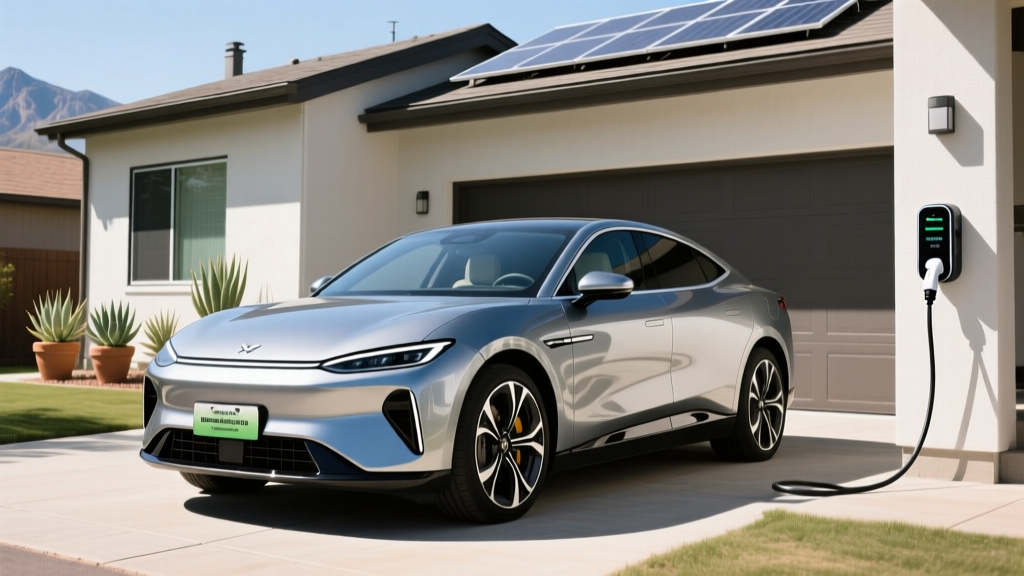
- Xcel Energy: Offers rebates for home Level 2 charging equipment installation (historically up to $1,200–$1,700 depending on program tier and income qualification) and occasionally provides EV purchase incentives or time-of-use rate discounts.
- Colorado Springs Utilities: Has offered rebates for home charging equipment and special EV charging rates.
- Fort Collins Utilities: Provides rebates for Level 2 home charger purchases and installations for residential customers.
- Black Hills Energy: Offers EV-related rebates that vary by program year.
These utility programs often have limited funding pools that can be exhausted mid-year. Apply early and confirm availability directly with your provider.
Five-Year Total Cost of Ownership: The Real Numbers
Incentives reduce the purchase price, but ownership cost is where EVs make or break the financial case. Below is a five-year TCO comparison using a representative mid-size electric SUV (similar to a Hyundai Ioniq 5 or Tesla Model Y) versus a comparable gasoline crossover. Assumptions: 15,000 miles/year, 75,000 miles total, home Level 2 charging at $0.13/kWh (Colorado average residential rate), gasoline at $3.60/gallon.
| Category | EV (Mid-Size SUV) | Gas Crossover | EV Advantage |
|---|---|---|---|
| Purchase Price (MSRP) | $47,000 | $38,000 | -$9,000 |
| Federal + State Incentives | -$10,000 (est.) | $0 | +$10,000 |
| Net Purchase Cost | $37,000 | $38,000 | +$1,000 |
| Fuel / Energy (5 yrs) | $3,650 | $9,000 | +$5,350 |
| Maintenance (5 yrs) | $1,800 | $4,200 | +$2,400 |
| Insurance (5 yrs) | $10,500 | $8,000 | -$2,500 |
| Depreciation (5 yrs) | $18,500 | $14,000 | -$4,500 |
| 5-Year TCO | $52,450 | $54,200 | +$1,750 savings |
The EV comes out slightly ahead over five years in this scenario, but the margin is thin and highly dependent on your specific incentive stack, electricity rate, driving patterns, and the vehicle you choose. Higher-mileage drivers and those with access to cheaper off-peak electricity will see significantly larger EV savings.
Charging vs. Gas: Cost Per Mile With Real Math
The fuel cost advantage is the clearest EV win, but the exact savings depend on your electricity rate and the vehicle's efficiency.
| Vehicle | Energy Source | Efficiency | Rate | Cost/Mile |
|---|---|---|---|---|
| EV (e.g., Ioniq 5 RWD) | Electricity | 30 kWh/100 mi | $0.13/kWh (home) | $0.039 |
| EV (DC fast charging) | Electricity | 30 kWh/100 mi | $0.38/kWh (public) | $0.114 |
| Gas Crossover (28 MPG) | Gasoline | 28 MPG combined | $3.60/gal | $0.129 |
| Gas Crossover (22 MPG city) | Gasoline | 22 MPG city | $3.60/gal | $0.164 |
At Colorado's average residential rate of roughly $0.13/kWh, home-charging an efficient EV costs about $0.04 per mile — roughly one-third the cost of a 28 MPG gasoline crossover. However, if you rely heavily on public DC fast charging at $0.35–$0.45/kWh, your per-mile cost approaches or even exceeds gasoline. This is why home Level 2 charging access is the single most important variable in EV ownership economics. Colorado's cold winters also reduce EV efficiency by 15–30% in sub-freezing conditions, so budget for higher winter energy costs.
Maintenance Savings: Fewer Parts, Real Dollars Saved
EVs eliminate the most common recurring maintenance items found on internal combustion vehicles. Over five years and 75,000 miles, the savings are substantial and predictable.
| Maintenance Item | Gas Vehicle (5 yrs) | EV (5 yrs) |
|---|---|---|
| Oil changes (synthetic, 7,500-mi intervals) | $600–$800 | $0 |
| Transmission fluid / service | $200–$400 | $0 (most EVs have single-speed reducers) |
| Brake pads and rotors | $600–$1,200 | $100–$300 (regen braking extends pad life 2–3x) |
| Spark plugs, ignition coils | $200–$400 | $0 |
| Engine air filter | $100–$150 | $0 |
| Coolant flush | $150–$250 | $100–$150 (EV thermal systems still require coolant service) |
| Tire rotation and replacement | $1,200–$1,600 | $1,400–$1,800 (EVs are heavier; tires may wear faster) |
| Cabin air filter | $100–$150 | $100–$150 |
| Estimated Total | $3,150–$4,950 | $1,700–$2,400 |
The biggest caveat: EV tires. The instant torque and higher curb weight of electric vehicles accelerate tire wear. Budget for tire replacement every 30,000–40,000 miles rather than the 50,000+ miles typical of lighter gas vehicles. Some owners opt for EV-specific tire compounds (like Michelin's EV-rated lines) that trade a small amount of grip for longer life and lower rolling resistance.
Insurance Costs: The Expense Most Buyers Underestimate
EV insurance premiums in Colorado typically run 15–30% higher than comparable gasoline vehicles. Several factors drive this:
- Higher repair costs: Battery packs and specialized high-voltage components are expensive to replace after collision damage. Even minor rear-end impacts can total an EV if the battery enclosure is compromised.
- Specialized labor: Fewer body shops have the certifications and equipment to safely repair high-voltage systems, which increases labor rates and repair timelines.
- Vehicle value: EVs generally carry higher MSRPs than comparable gas vehicles, and insurers price premiums partly on replacement cost.
- Claims data: As EV adoption has grown, insurers have accumulated enough claims data to price more accurately — and EVs have shown higher average claim severity.
For a mid-size electric SUV in Colorado, expect annual premiums in the $1,800–$2,400 range depending on your driving record, coverage level, and insurer. Always get quotes from at least three carriers before purchasing. Some insurers (like Tesla Insurance, where available) offer usage-based pricing that can benefit safe drivers.
Depreciation and Resale Value: The Wildcard
EV depreciation has been volatile. In 2023–2024, Tesla's aggressive price cuts triggered a cascade of resale value declines across the entire EV market. By 2026, the picture has partially stabilized, but EVs still generally depreciate faster than top-selling gasoline vehicles in the first three years.
Key factors affecting EV resale value:
- Battery health perception: Buyers of used EVs worry about degradation, even though most modern NMC and LFP batteries retain 85–92% capacity after 100,000 miles. A documented battery State of Health (SoH) report can boost resale value.
- Technology obsolescence: Rapid improvements in range, charging speed, and ADAS features make older EVs feel outdated faster than gas vehicles.
- New-vehicle price competition: When new EV prices drop (as they have with increasing competition from Chinese brands globally and more affordable models domestically), used EV values follow.
- Tax credit effect on used prices: The federal used-EV credit (up to $4,000 under §25E) supports demand for qualifying pre-owned EVs, which provides some floor under resale values.
Expect a mid-size electric SUV to retain roughly 45–55% of its incentive-adjusted purchase price after five years, compared to 55–65% for a popular gas crossover. This gap has narrowed as the EV market matures but remains a real ownership cost.
Frequently Asked Questions
How much does it really cost to own an EV over 5 years in Colorado?
For a mid-size electric SUV purchased around $47,000 MSRP with a combined $10,000 in federal and state incentives, expect a five-year total cost of ownership of approximately $50,000–$55,000 including energy, insurance, maintenance, and depreciation. This is competitive with — and often slightly lower than — a comparable gasoline crossover when incentives are fully realized. Your actual cost varies significantly based on electricity rates, annual mileage, insurance profile, and the specific model chosen.
Do I qualify for the federal EV tax credit?
You may qualify for up to $7,500 under IRS §30D if: your modified adjusted gross income is below $300,000 (joint), $225,000 (head of household), or $150,000 (other); the vehicle MSRP is at or below $80,000 for SUVs/trucks/vans or $55,000 for sedans; the vehicle meets 2026 critical mineral and battery component sourcing requirements; and final assembly occurred in North America. Since 2024, you can transfer the credit to the dealer at point of sale for an immediate price reduction. Verify specific vehicle eligibility at fueleconomy.gov before purchasing.
How much do I save on fuel and maintenance with an EV?
At Colorado's average residential electricity rate of ~$0.13/kWh, an efficient EV costs roughly $0.04 per mile to charge at home — about 70% less per mile than a 28 MPG gasoline vehicle at $3.60/gallon. Over 75,000 miles, that translates to roughly $5,000–$6,000 in fuel savings. Maintenance savings add another $1,500–$2,500 over five years from eliminated oil changes, reduced brake wear (thanks to regenerative braking), and fewer mechanical components. However, tire costs may be higher due to EV weight and torque.
Are EVs more expensive to insure in Colorado?
Yes, typically 15–30% more than comparable gasoline vehicles. For a mid-size electric SUV, expect annual premiums of $1,800–$2,400 in Colorado. Higher repair costs (especially for battery-related collision damage), specialized labor requirements, and higher vehicle values all contribute. Always obtain quotes from multiple insurers before purchasing, as rates vary significantly by carrier.
How well do EVs hold their value compared to gas cars?
EV depreciation remains higher than popular gasoline vehicles, with mid-size electric SUVs retaining approximately 45–55% of their incentive-adjusted purchase price after five years, versus 55–65% for comparable gas crossovers. Factors include rapid technology advancement, buyer concerns about battery health, and competitive new-vehicle pricing that pressures used values. The gap has narrowed as the market matures, and the federal used-EV credit (§25E, up to $4,000) provides some demand support for pre-owned EVs.
What Colorado-specific incentives stack with the federal credit?
Colorado offers a state EV tax credit that varies by vehicle price tier and is structured to favor more affordable models. Additionally, utilities like Xcel Energy, Colorado Springs Utilities, and Fort Collins Utilities offer rebates for home Level 2 charging equipment (typically $500–$1,700 depending on provider and program). These incentives can stack with the federal §30D credit, potentially reducing your net purchase cost by $10,000 or more. Confirm current amounts and eligibility with the Colorado Energy Office and your local utility before purchasing, as programs and funding levels change annually.