Texas doesn't offer a statewide EV rebate in 2026, but Lone Star State buyers can still stack federal tax credits, local utility incentives, and lower operating costs to make EV ownership financially compelling. This guide breaks down every incentive available to Texas EV shoppers, the real cost to own an EV over five years, and where the savings hold up — and where they don't.
Federal Tax Credit: Up to $7,500 Under IRS §30D
The backbone of any EV rebate Texas buyer should pursue is the federal Clean Vehicle Credit under IRS §30D. For 2026, qualifying new EVs can receive up to $7,500 — split into two $3,750 halves tied to battery-component and critical-mineral sourcing requirements. However, eligibility is far from automatic.
Federal EV Tax Credit Eligibility Checklist (2026)
- Vehicle MSRP cap: $80,000 for SUVs, pickups, and vans; $55,000 for sedans and other body styles
- Buyer income cap (modified AGI): $300,000 joint filers / $225,000 head of household / $150,000 single
- Battery sourcing: $3,750 requires qualifying critical-mineral content; another $3,750 requires North American battery-component manufacturing
- Final assembly: Vehicle must be assembled in North America
- Point-of-sale transfer: Buyers can transfer the credit to the dealer at purchase, reducing the upfront price — even if they owe less than $7,500 in federal tax liability
- Commercial vehicle loophole: Vehicles that fail §30D sourcing rules may qualify under §45W (commercial clean vehicle credit) if leased through a qualifying entity
The point-of-sale transfer option, introduced in 2024, is a game-changer for cash-flow planning: you don't need to wait until tax season to realize the savings. Just ensure the dealer is registered with the IRS Energy Credits Online system. Always verify a specific vehicle's eligibility on fueleconomy.gov before signing paperwork — sourcing rules tighten annually and models can lose eligibility mid-year.
Texas State and Local EV Incentives in 2026
Key Texas EV Incentives by Provider
State and local incentives vary by jurisdiction, utility service area, and income level. Always confirm current availability with your utility or local agency before relying on these figures.
Unlike states such as Colorado or California, Texas does not currently offer a statewide EV purchase rebate or tax credit. The Texas EV rebate landscape is primarily driven by utility companies and local programs:
- Oncor Electric Delivery: Offers rebates for residential Level 2 charger installation — historically up to $500 for qualified installations in its North/Central Texas service territory
- Entergy Texas: Has periodically offered EV charger rebates and time-of-use rate incentives; check current program status
- Austin Energy: Provides a rebate covering up to 50% of Level 2 home charger purchase and installation costs (capped at $1,200) for Austin-area residents
- CenterPoint Energy (Houston area): Has offered demand-response programs that provide bill credits for EV owners who allow managed charging during peak hours
- Local air-quality districts: Some Texas counties with air-quality non-attainment status (e.g., portions of the Dallas-Fort Worth and Houston metro areas) have offered drive-clean or vehicle-replacement programs that may include EV incentives — these are often income-targeted and fund-limited
For Texas buyers, the utility-level rebates for home charger installation are often more accessible and predictable than purchase incentives. A Level 2 home charger installation in Texas typically runs $800–$2,500 depending on panel capacity, conduit length, and permitting — so a $500–$1,200 rebate meaningfully offsets the setup cost.
5-Year Total Cost of Ownership: EV vs. Gas in Texas
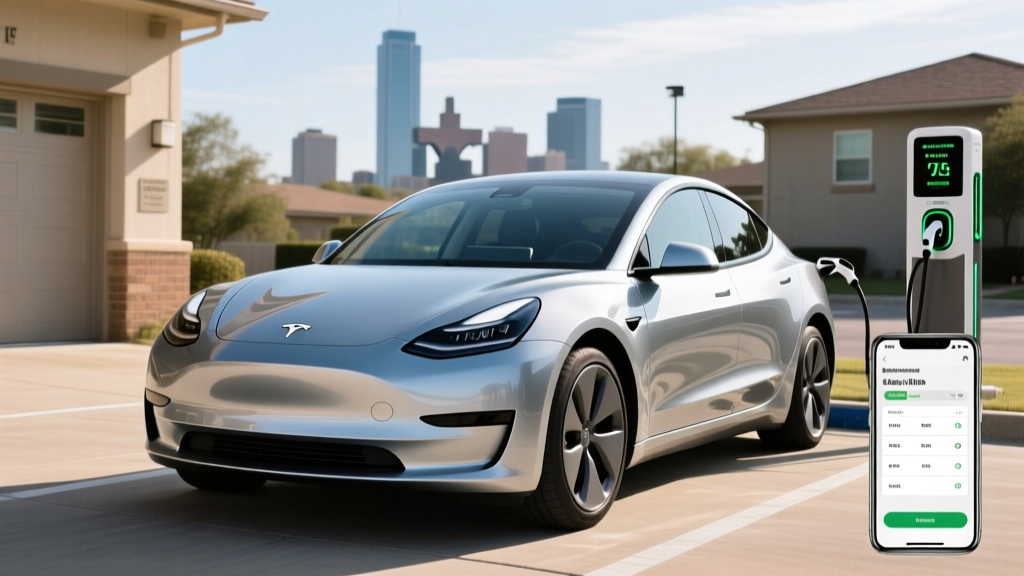
To evaluate whether an EV makes financial sense in Texas, let's model a realistic 5-year / 75,000-mile ownership scenario comparing a popular EV (the 2026 Tesla Model Y Long Range AWD, ~$47,990 MSRP before incentives) against a comparable gas SUV (2026 Toyota RAV4 AWD, ~$33,500 MSRP).
| Cost Category | Tesla Model Y LR AWD (EV) | Toyota RAV4 AWD (Gas) |
|---|---|---|
| Purchase Price (MSRP) | $47,990 | $33,500 |
| Federal Tax Credit (§30D) | −$7,500 | $0 |
| Effective Purchase Price | $40,490 | $33,500 |
| Fuel / Energy (75,000 mi) | $5,100 (home charging, TX avg $0.13/kWh) | $8,700 (gas, 28 MPG avg, $3.25/gal) |
| Maintenance (5 years) | $1,800 | $4,200 |
| Insurance (5 years) | $11,500 | $8,200 |
| Estimated Depreciation | $18,200 (45%) | $12,100 (36%) |
| Total 5-Year Cost | $77,090 | $66,700 |
| Cost Per Mile (all-in) | $1.03 | $0.89 |
Note: Depreciation estimates reflect 2025–2026 market trends where EV resale values have been pressured by aggressive new-vehicle price cuts and rapid model updates. Insurance figures are averages; individual quotes vary significantly. Gas and electricity prices fluctuate. This model uses Texas-average residential electricity rates and does not include state registration fees, which are slightly higher for EVs in Texas ($200 annual EV registration surcharge as of 2024).
Charging vs. Gas: The Per-Mile Cost Reality in Texas
Cost Per Mile — EV vs. Gas (Texas 2026)
EV (home charging): At 3.5 miles per kWh and Texas residential average of $0.13/kWh → $0.037/mile
EV (DC fast charging): At $0.35–$0.48/kWh on networks like Electrify America or Tesla Superchargers → $0.10–$0.14/mile
Gas SUV (28 MPG combined): At $3.25/gallon → $0.116/mile
The math is clear: home charging in Texas is roughly one-third the per-mile cost of gasoline. Texas has some of the lowest residential electricity rates in the country (averaging $0.12–$0.15/kWh depending on provider and plan), which makes EV ownership particularly attractive if you can charge at home.
However, if you rely primarily on DC fast charging — at $0.35–$0.48/kWh on public networks — your per-mile energy cost can actually exceed gasoline. This is why home Level 2 charging access is the single biggest financial variable in EV ownership. Apartment dwellers or those without garage access should budget accordingly.
For maximum savings, Texas EV owners should explore time-of-use (TOU) rate plans from their retail electricity provider. Off-peak overnight rates in deregulated markets (most of Texas, served by ERCOT) can drop to $0.06–$0.08/kWh, cutting charging costs nearly in half versus the blended average.
Maintenance Savings: Where EVs Genuinely Cost Less
| Service Item | EV Cost (5 yr) | Gas Car Cost (5 yr) |
|---|---|---|
| Oil Changes | $0 | $600–$900 |
| Brake Pads/Rotors | $200–$400 | $800–$1,400 |
| Transmission Fluid | $0 | $150–$300 |
| Air/Engine Filters | $50–$100 (cabin filter) | $200–$400 |
| Coolant Flush | $100–$150 | $150–$250 |
| Tires (heavier EV wear) | $1,200–$1,800 | $800–$1,400 |
| Total Estimated | $1,550–$2,450 | $2,700–$4,650 |
EVs eliminate oil changes entirely, and regenerative braking dramatically reduces brake pad wear — many EV owners report original brake pads lasting 80,000–100,000+ miles. However, EV tires tend to wear faster due to higher vehicle weight (batteries add 500–1,000+ lbs) and instant torque delivery. Budget for tire replacement every 25,000–35,000 miles rather than the 40,000–50,000 miles typical for gas cars.
Net maintenance savings over five years typically run $1,500–$2,500 — meaningful, but not enough alone to close the purchase-price gap with a comparable gas vehicle.
Insurance Costs: The EV Premium Explained
EV insurance premiums in Texas run 15–35% higher than comparable gas vehicles, according to industry data. For a Model Y vs. RAV4 comparison, expect to pay roughly $2,300/year vs. $1,640/year — a $3,300 difference over five years.
The reasons are structural, not arbitrary:
- Higher repair costs: EV battery packs, power electronics, and specialized sensors drive up collision repair bills. A minor rear-end collision that might cost $2,000 on a gas car can total an EV if the battery enclosure is compromised
- Fewer qualified body shops: Not all repair facilities are certified for high-voltage EV work, limiting competition and increasing labor rates
- Higher vehicle values: Insurance tracks replacement cost; EVs often carry higher MSRP than equivalent gas models
- Parts availability: EV-specific components (battery modules, inverters, heat-pump assemblies) can have longer lead times, increasing rental-car and storage costs during repairs
Shop multiple insurers — companies like Geico, Progressive, USAA, and Tesla Insurance (available in Texas) can quote significantly different rates for the same EV. Bundling home and auto, maintaining a clean record, and choosing higher deductibles can narrow the gap.
EV Depreciation and Resale Value Trends
Depreciation is the single largest ownership cost that EV buyers underestimate. Over the past two years, EV resale values have been under pressure from several factors:
- Aggressive new-vehicle price cuts: Tesla's repeated Model Y and Model 3 price reductions in 2023–2025 immediately devalued existing used inventory
- Rapid technology iteration: Newer models offer faster charging, longer range, and NACS connectors — making older CCS-equipped models less desirable
- Expanding new-EV supply: More affordable models entering the market (Hyundai Ioniq 5, Chevrolet Equinox EV, Nissan Ariya) increase competition at the used tier
- Battery health uncertainty: Used-EV buyers discount vehicles with unknown battery State of Health (SoH), particularly out-of-warranty models
Current 5-year depreciation for mainstream EVs averages 40–55%, compared to 30–40% for comparable gas vehicles. Premium brands and limited-production EVs can depreciate even faster. However, this trend may moderate as the market matures and EV adoption broadens.
To protect resale value: choose models with strong battery warranties (8 years/100,000 miles is standard), keep detailed service records, avoid excessive DC fast charging (which accelerates battery degradation), and consider certified pre-owned programs when selling.
Frequently Asked Questions
Is there a Texas state EV rebate in 2026?
No. Texas does not currently offer a statewide EV purchase rebate or tax credit. The primary financial incentives available to Texas EV buyers are the federal §30D tax credit (up to $7,500 with eligibility requirements) and utility-level rebates for home charger installation from providers like Austin Energy, Oncor, and CenterPoint.
How much does it really cost to own an EV over 5 years in Texas?
Based on a 75,000-mile ownership model, a Tesla Model Y Long Range costs approximately $77,000 all-in over five years in Texas — about $10,400 more than a comparable Toyota RAV4 AWD. The EV saves roughly $3,600 in fuel and $2,400 in maintenance, but those savings are offset by higher insurance (+$3,300), greater depreciation (+$6,100), and a higher effective purchase price even after the $7,500 federal credit. The EV's per-mile operating cost ($0.037/mile on home charging) is far lower, but total ownership cost depends heavily on depreciation and insurance.
Do I qualify for the federal $7,500 EV tax credit?
You may qualify if: (1) the vehicle's MSRP is at or below $80,000 for SUVs/pickups/vans or $55,000 for sedans; (2) your modified adjusted gross income is below $300,000 (joint), $225,000 (head of household), or $150,000 (single); (3) the vehicle meets battery critical-mineral and component sourcing requirements; and (4) the vehicle was assembled in North America. Check irs.gov for current rules, as sourcing requirements tighten annually. The credit can be transferred to the dealer at point of sale, reducing your purchase price immediately.
How much do I save on fuel and maintenance with an EV in Texas?
Texas EV owners charging at home at the state-average $0.13/kWh spend about $0.037/mile on electricity — roughly 68% less per mile than a 28-MPG gas SUV at $3.25/gallon ($0.116/mile). Over 75,000 miles, that's approximately $3,600 in fuel savings. Maintenance savings add another $1,500–$2,500 over five years from eliminated oil changes, reduced brake wear (thanks to regenerative braking), and fewer fluid services. Combined fuel and maintenance savings typically total $5,000–$6,000 over five years.
Are EVs more expensive to insure in Texas?
Yes. EV insurance premiums typically run 15–35% higher than comparable gas vehicles. On a Model Y vs. RAV4 comparison, expect to pay roughly $660 more per year, or $3,300 more over five years. Higher repair costs (battery and power-electronics damage), fewer qualified body shops, and higher vehicle replacement values all contribute. Shopping multiple insurers — including Tesla Insurance, which is available in Texas — can reduce the premium gap.
How well do EVs hold their value?
EVs currently depreciate faster than comparable gas vehicles — averaging 40–55% over five years versus 30–40% for gas models. Aggressive new-vehicle price cuts, rapid technology updates (charging speed, connector transitions from CCS to NACS), and used-buyer uncertainty about battery health all contribute. Choosing models with strong 8-year/100,000-mile battery warranties and maintaining careful charging habits can help preserve resale value.
Does Texas charge extra registration fees for EVs?
Yes. Texas imposes an additional $200 annual registration surcharge on electric vehicles (effective 2024), intended to offset lost gas-tax revenue that funds road maintenance. This adds $1,000 to five-year ownership costs and should be factored into your budget.
Sources: IRS Clean Vehicle Credit (§30D), fueleconomy.gov, U.S. Energy Information Administration (EIA) Texas electricity rates, Texas DMV registration fee schedules. Tax credit rules and incentive programs are subject to change — verify current eligibility with official sources before purchasing.