The Bottom Line on EV Peugeot Models
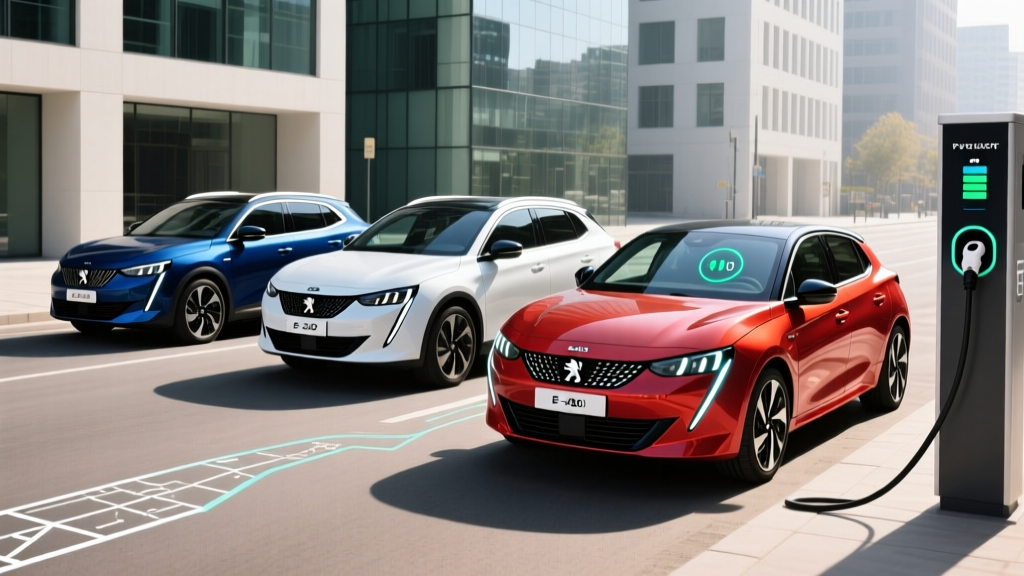
Peugeot offers a compelling European EV lineup for 2026 — the e-208 (225 mi WLTP), e-3008 (up to 435 mi WLTP with extended battery), and e-5008 (up to 418 mi WLTP). However, Peugeot does not sell vehicles in the United States, meaning no US warranty support, no EPA certification, no federal tax credit eligibility, and significant import barriers. If you're in Europe, these are strong contenders. If you're a US buyer searching for a Peugeot EV, you'll need to consider Stellantis siblings available stateside instead.
Peugeot's 2026 EV Lineup: What's Available
Peugeot, part of the Stellantis conglomerate alongside Jeep, Dodge, Chrysler, and Fiat, has been aggressively electrifying its European lineup. For the 2026 model year, the brand offers battery-electric versions across its most popular nameplates, all riding on the updated STLA Medium platform with improved energy density and charging speeds compared to the older e-CMP architecture.
| Model | Battery (kWh usable) | Range (WLTP) | Peak DC Charge | 10-80% Time | 0-62 mph | HP | EU Starting Price |
|---|---|---|---|---|---|---|---|
| e-208 | 51 kWh (NMC) | 225 mi / 362 km | 100 kW | ~28 min | 8.1 sec | 156 hp | €34,900 |
| e-3008 (Standard) | 73 kWh (NMC) | 326 mi / 525 km | 160 kW | ~25 min | 8.8 sec | 213 hp | €43,500 |
| e-3008 (Extended) | 98 kWh (NMC) | 435 mi / 700 km | 160 kW | ~30 min | 9.5 sec | 230 hp | €49,900 |
| e-5008 | 73 kWh (NMC) | 318 mi / 512 km | 160 kW | ~25 min | 9.2 sec | 213 hp | €46,200 |
Important range note: WLTP figures run 15-20% higher than US EPA estimates. A realistic EPA-equivalent range for the e-3008 Extended would be approximately 350-370 miles, and for the e-208 roughly 180-190 miles. In cold weather (below 32°F / 0°C), expect an additional 15-25% reduction on top of that.
Real-World Range vs. the Sticker: What to Expect
European WLTP testing is more generous than the EPA cycle used in the US. For buyers evaluating Peugeot EVs — whether you're in Europe or researching from abroad — understanding this gap is critical.
Real-World Range Reconciliation
e-208: WLTP 225 mi → expect ~175-185 mi real-world (mixed driving), ~140-155 mi highway at 75 mph, ~130 mi in freezing temps.
e-3008 Extended: WLTP 435 mi → expect ~350-370 mi real-world, ~290-310 mi highway at sustained speed, ~260 mi in winter conditions.
e-5008: WLTP 318 mi → expect ~255-275 mi real-world, ~215-235 mi highway, ~190 mi in cold weather.
The e-3008's 98 kWh extended-range pack uses a high-nickel NMC chemistry optimized for energy density. The trade-off is that NMC batteries experience slightly more calendar degradation than LFP (lithium iron phosphate) packs — typically 8-12% capacity loss over 8 years vs. 5-8% for LFP, based on industry data. Peugeot backs all EV batteries with an 8-year / 100,000-mile (160,000 km) warranty guaranteeing at least 70% state of health (SoH).
Charging Speed and Infrastructure
Charging speed is where the STLA Medium platform shows meaningful improvement over the older e-CMP cars. The e-3008 and e-5008 peak at 160 kW on a DC fast charger, though as with all EVs, that peak is sustained only briefly.
Peugeot EV Charging Speeds
| Level | Power | Connector | Miles Added per Hour | Typical Use Case |
|---|---|---|---|---|
| Level 1 (domestic) | 2.3 kW | Type 2 / Schuko | ~8-10 mi/hr | Emergency / overnight trickle |
| Level 2 (home/work) | 7.4-11 kW | Type 2 (AC) | ~30-45 mi/hr | Daily overnight charging |
| Level 2 (fast AC) | 22 kW | Type 2 (AC, 3-phase) | ~75-90 mi/hr | Destination / workplace |
| DC Fast Charge | 100-160 kW | CCS2 | ~400-550 mi/hr (peak) | Road trips, rapid top-ups |
Charging curve reality: The e-3008 Extended will hold close to 160 kW from roughly 10-35% SoC, then taper to ~120 kW through 55%, drop to ~80 kW by 70%, and slow significantly above 85%. The 10-80% time of ~30 minutes is realistic, but 10-100% will take closer to 45-50 minutes. Always precondition the battery (via the car's navigation-routed charging) for optimal speed in cold weather.
European Peugeot EVs use the CCS2 connector standard. If you were somehow importing one to the US, the CCS2 port is physically different from the CCS1 used by most non-Tesla EVs in North America, though adapters exist at a cost of $150-300.
The US Buyer Problem: Why You Can't Just Buy One
This is the section that matters most for American readers searching "EV Peugeot" and hoping to buy. Here are the hard facts:
- No US sales network: Peugeot withdrew from the US market in 1991 and has not returned. Stellantis has not announced any plans to bring Peugeot back to the US as of 2026.
- No EPA certification: Vehicles not sold in the US lack EPA range and emissions certification, which is required for registration in most states.
- No federal tax credit: The IRS §30D credit requires the vehicle to be on the IRS's approved list, assembled under specific battery-sourcing rules, and sold through a US dealer. Peugeot EVs qualify for none of these.
- Warranty void: Peugeot's 8-year battery warranty is only honored through authorized European dealers. A US-based owner would have zero warranty recourse.
- Parts and service scarcity: Body panels, high-voltage components, and software updates require Peugeot-specific tooling not available at US Stellantis dealers.
- Import restrictions: The NHTSA's 25-year import rule generally prohibits importing vehicles not originally certified for US sale, with narrow exceptions for show/display permits.
The practical takeaway: Unless you're a collector willing to navigate the show-or-display import process (limited to 2,500 miles/year), buying a Peugeot EV in the US is not viable.
Stellantis Alternatives Available in the US
If Peugeot's design language or European engineering appeals to you, Stellantis offers electrified alternatives through its US brands that share platform DNA and engineering resources:
| Vehicle | Type | EPA Range / MPG | Battery | Starting MSRP | Federal Credit |
|---|---|---|---|---|---|
| Jeep Wagoneer S | BEV | ~300 mi (est.) | 100 kWh (NMC) | $65,200 | Check §30D eligibility |
| Chrysler Pacifica PHEV | PHEV | 32 mi electric + 30 MPG | 16 kWh | $51,095 | Up to $7,500* |
| Alfa Romeo Tonale PHEV | PHEV | ~35 mi electric + 28 MPG | 15.5 kWh | $47,495 | Check §30D eligibility |
| Fiat 500e | BEV | 149 mi EPA | 42 kWh (NMC) | $32,500 | Up to $7,500* |
*Federal §30D credit eligibility depends on MSRP caps ($55,000 for sedans, $80,000 for SUVs/vans/pickups), buyer income limits ($150K single / $300K joint), battery critical-mineral and component sourcing requirements, and point-of-sale transfer rules. Always verify current eligibility at IRS.gov before purchasing.
Cost of Ownership: EV Peugeot vs. Gas Equivalent (European Market)
For European readers evaluating a Peugeot EV against its gasoline counterpart, here's a 5-year ownership comparison based on the e-3008 (73 kWh) vs. the 3008 Hybrid 136 (1.2L mild-hybrid), using EU-average energy and fuel prices:
| Cost Factor (5 years / 75,000 km) | e-3008 (73 kWh) | 3008 Hybrid 136 |
|---|---|---|
| Purchase price | €43,500 | €36,200 |
| Government incentive (FR bonus écologique) | -€4,000 | €0 |
| Energy / fuel cost (home charging @ €0.22/kWh; petrol @ €1.85/L) | €2,890 (15.5 kWh/100km) | €7,770 (5.6 L/100km) |
| Maintenance (no oil changes, fewer brake replacements) | €1,200 | €2,800 |
| Insurance (typical EV premium: +10-15%) | €4,950 | €4,300 |
| Estimated depreciation (5 years) | €18,500 | €14,800 |
| Total 5-year cost | €67,040 | €65,870 |
The EV edges slightly ahead on total cost in markets with strong incentives and cheap home electricity. The gap widens significantly with solar-charged home electricity or commercial fleet tax advantages. In countries without purchase subsidies, the gas hybrid retains a cost edge driven primarily by lower upfront price and depreciation.
Common Misconceptions About Peugeot EVs
| Myth | Fact |
|---|---|
| "Peugeot EVs use the same platform as the Tesla Model Y" | False. Peugeot uses Stellantis's STLA Medium platform, which is entirely different from Tesla's architecture. No shared components. |
| "The e-3008 gets 435 miles of range in real driving" | The 435 mi figure is WLTP. Real-world mixed driving yields ~350-370 mi, with highway and cold-weather figures lower still. |
| "I can import a Peugeot EV to the US and register it" | NHTSA regulations prohibit importing non-certified vehicles less than 25 years old for road use, with very narrow show/display exceptions. |
| "Peugeot batteries degrade quickly" | Industry data on NMC packs shows ~8-12% degradation over 8 years. Peugeot's warranty guarantees 70% SoH at 8 years / 160,000 km, which is in line with competitors. |
| "DC fast charging at 160 kW means the whole session" | 160 kW is the peak rate, sustained only in a narrow SoC window. Average rate over a 10-80% session is closer to 100-115 kW due to the charging curve taper. |
Decision Framework: Is a Peugeot EV Right for You?
Choose a Peugeot EV If:
- You live in Europe and have access to home Level 2 charging (7.4+ kW)
- You want European design and driving dynamics with Stellantis build quality
- Your daily driving is under 200 miles and you take occasional longer trips with DC fast-charging access
- You qualify for local purchase incentives (France's bonus écologique, Germany's Umweltbonus, etc.)
- You prefer the e-3008's bold styling over the VW ID.4 or Renault Scénic E-Tech
Look Elsewhere If:
- You live in the US or Canada — Peugeot is not sold here, and importing is not practical
- You need a 3-row SUV with genuine 300+ mile EPA range — consider the Kia EV9 or Tesla Model X
- You lack reliable home or workplace charging — the Peugeot's value proposition depends heavily on cheap home electricity
- You want LFP battery chemistry for maximum longevity — Peugeot currently uses NMC across its EV range
- You need the federal §30D tax credit — only IRS-approved vehicles qualify
First-Time EV Buyer Essentials (Peugeot or Otherwise)
If you're new to EV ownership and considering a Peugeot in Europe — or any EV for the first time — here are the non-negotiable items to sort out before signing:
- Home charging access: A dedicated Level 2 (7.4 kW) home charger is the single biggest factor in EV satisfaction. Budget €800-1,500 for a quality wallbox plus professional installation by a licensed electrician. If you live in an apartment without charging, investigate public and workplace options first.
- Electrical panel capacity: Older homes may need a panel upgrade to support a 7.4 kW or 11 kW charger, adding €500-2,000 to installation costs.
- Real-world range planning: Take the WLTP figure, subtract 20% for real-world conditions, then subtract another 15% for winter. If the resulting number doesn't cover your longest regular trip with a buffer, reconsider the model or battery size.
- Charging network apps: Download and register for your region's major networks (Ionity, Fastned, Shell Recharge, etc.) before delivery day.
- Tire costs: EVs are heavier and produce instant torque, wearing tires 20-30% faster than equivalent gas cars. Budget for premium EV-rated tires (Michelin Pilot Sport EV, Hankook iON) at €200-350 per tire.
- Insurance quotes: Get quotes before purchasing. EV premiums run 10-20% higher on average due to repair costs and battery replacement risk.
Frequently Asked Questions
Will Peugeot ever sell EVs in the United States?
As of 2026, Stellantis has made no official announcement about reintroducing Peugeot to the US market. The brand has historically focused on Europe, and Stellantis's US electrification strategy centers on Jeep, Chrysler, Dodge, Ram, and Alfa Romeo. While Stellantis CEO has occasionally mentioned the possibility, there is no confirmed timeline.
What's the difference between WLTP and EPA range estimates?
WLTP (Worldwide Harmonised Light Vehicle Test Procedure) is the European standard and tends to produce range figures 15-20% higher than the US EPA cycle, which includes more aggressive driving profiles and higher-speed segments. A 435-mile WLTP rating typically translates to approximately 350-370 EPA-equivalent miles.
How long does it take to fully charge a Peugeot e-3008 at home?
With a 7.4 kW Level 2 wallbox, the e-3008 (73 kWh battery) charges from 0-100% in approximately 10 hours. With an 11 kW three-phase connection, that drops to about 7 hours. Most owners charge from 20-80% overnight, which takes 6-7 hours at 7.4 kW.
Does the Peugeot e-3008 support vehicle-to-load (V2L)?
The 2026 e-3008 on the STLA Medium platform supports bidirectional charging capabilities, but V2L availability depends on market and trim. Confirm with your local dealer, as this feature is not universally enabled across all regions.
What battery chemistry does Peugeot use?
Peugeot's current EV lineup uses NMC (nickel manganese cobalt) lithium-ion cells supplied primarily by CATL and Samsung SDI. NMC offers higher energy density than LFP, enabling longer range in a smaller pack, but with slightly faster degradation over time. Peugeot does not currently offer LFP options.
Are Peugeot EV batteries covered under warranty?
Yes. Peugeot provides an 8-year / 160,000 km (100,000 mi) warranty on the high-voltage traction battery, guaranteeing a minimum of 70% state of health. If the battery degrades below that threshold within the warranty period, Peugeot will repair or replace it at no cost. This warranty is only valid through authorized Peugeot dealers in markets where the vehicle is officially sold.
How does the e-3008 compare to the Tesla Model Y?
The e-3008 (73 kWh) offers ~326 mi WLTP range vs. the Model Y Long Range's 320 mi EPA — but remember, those aren't directly comparable due to testing differences. The Model Y charges faster (250 kW peak vs. 160 kW), has access to Tesla's Supercharger network, and is available in the US. The e-3008 offers bolder interior design and a more car-like driving feel. In Europe, they're strong competitors; in the US, only the Model Y is an option.