What Does EV Mode on a Prius Actually Do?
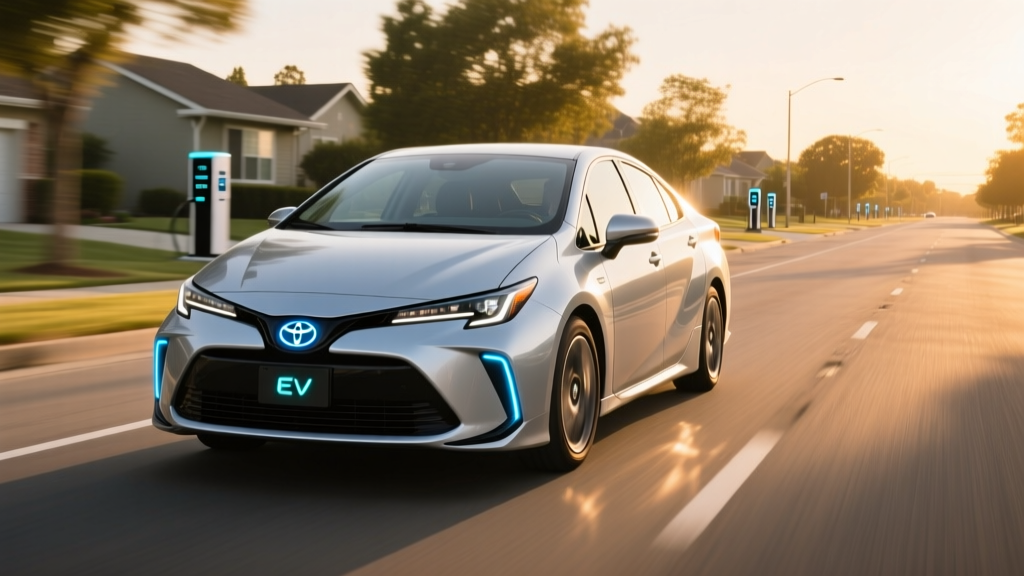
EV Mode on a standard Toyota Prius (the hybrid, not the plug-in) forces the car to run solely on its small traction battery and electric motor, shutting off the gasoline engine. In practice, this gives you roughly 0.5 to 1 mile of electric-only driving at speeds typically under 25 mph, depending on battery state of charge, temperature, and acceleration demand. It's designed for creeping through parking lots, residential streets, or garage maneuvers — not for replacing your commute with electric driving.
If you want meaningful electric-only range from a Prius, you need the Prius Prime (PHEV), which delivers an EPA-rated 44 miles of pure electric driving on a full charge in its top trims. That's a fundamentally different powertrain with a much larger battery.
Standard Prius EV Mode: How It Works and When to Use It
The current-generation Toyota Prius (2023–2026 model years) uses a 1.8-liter or 2.0-liter hybrid powertrain paired with a relatively small lithium-ion traction battery — approximately 0.9 kWh of usable capacity in the standard hybrid. That battery exists primarily to buffer energy between regenerative braking and the gas engine, not to serve as a standalone driving source.
When you press the EV Mode button on the center console, the car attempts to hold the engine off and draw exclusively from the battery. Here's what determines whether it actually stays in EV Mode:
- Battery State of Charge (SoC): If the hybrid battery is below roughly 60–70% charge, EV Mode won't engage or will cancel almost immediately.
- Speed: Above approximately 25 mph, the system typically restarts the engine because the electric motor alone can't sustain higher speeds efficiently.
- Acceleration demand: Any firm throttle input — merging, climbing a hill — will kick the engine on regardless of EV Mode status.
- Climate control: Running the heater (especially in cold weather) often requires the engine to provide waste heat, canceling EV Mode.
- Battery temperature: In extreme cold or extreme heat, the system protects the battery by engaging the engine.
The practical result: EV Mode on a standard Prius is a low-speed, short-distance maneuvering tool. Think pulling into a campground at night without engine noise, navigating a parking garage, or inching through a drive-thru. It's not a commuting mode.
Prius vs. Prius Prime: The Electric-Driving Comparison
The distinction between the standard Prius and the Prius Prime is the single most important factor for buyers researching EV Mode. Here's the side-by-side data:
| Specification | 2026 Prius (HEV) | 2026 Prius Prime (PHEV) |
|---|---|---|
| Powertrain Type | Series-Parallel Hybrid | Plug-in Hybrid (PHEV) |
| Usable Battery Capacity | ~0.9 kWh (Li-ion) | ~10.9 kWh (Li-ion) |
| EPA Electric-Only Range | N/A (EV Mode ~0.5–1 mi) | 40–44 miles (trim-dependent) |
| EV-Only Top Speed | ~25 mph | ~84 mph |
| Combined MPG (gas engine) | 57 MPG (LE FWD) | 48–52 MPG (after battery depletes) |
| MPGe (electric + gas combined) | N/A | 127 MPGe |
| Level 2 Charge Time (0–100%) | N/A (no plug) | ~4 hours at 240V / 16A (3.3 kW onboard) |
| 0–60 mph | 7.0 sec (AWD-e) | 6.6 sec (SE/SE Premium) |
| Starting MSRP | $29,445 (LE) | $34,345 (SE) |
| Federal Tax Credit (§30D) | Not eligible | Up to $3,750 (sourcing-dependent) |
| Battery Warranty | 10 yr / 150,000 mi | 10 yr / 150,000 mi |
Sources: EPA / fueleconomy.gov, Toyota.com specifications.
The Prius Prime's 44-mile EV range covers the average American's daily round-trip commute. According to FHWA data, the average US driver travels roughly 37 miles per day. With home charging, a Prius Prime owner could drive months between fill-ups, using gas only for longer road trips.
Real-World Costs: Prius Hybrid vs. Prius Prime vs. Gas Car
Understanding the economics requires looking beyond sticker price. Here's a 5-year ownership cost comparison assuming 15,000 miles/year, $3.50/gallon regular gas, and $0.14/kWh home electricity (national averages):
| Cost Category (5 Years) | 2026 Prius LE (HEV) | 2026 Prius Prime SE (PHEV) | 2026 Honda Civic (Gas Baseline) |
|---|---|---|---|
| Base MSRP | $29,445 | $34,345 | $25,345 |
| Federal Tax Credit | $0 | Up to $3,750* | $0 |
| Net Purchase Price | $29,445 | $30,595 | $25,345 |
| Fuel/Energy (75,000 mi) | $4,605 (gas only) | $1,890 (electric) + $1,080 (gas) | $7,714 (gas only) |
| Maintenance (est.) | $2,100 | $1,800 | $2,800 |
| 5-Year Total Cost | $36,150 | $35,365 | $35,859 |
* Prius Prime §30D credit eligibility depends on battery-component and critical-mineral sourcing requirements under current IRS rules. Verify at IRS.gov before purchase. Credit may be applied at point of sale.
The Prius Prime's plug-in capability delivers roughly $1,635 in fuel savings over the standard Prius across 75,000 miles, narrowing the purchase gap substantially. Against a conventional gas car, both Prius variants save thousands, with the Prime pulling ahead on total cost when the tax credit applies.
Real-World Ownership: What First-Time PHEV Buyers Should Know
If you're considering a Prius Prime for its genuine EV capability, several practical factors determine whether you'll actually capture the savings:
Home Charging Access Is the Deciding Factor
The Prius Prime comes with a Level 1 (120V) charging cable that adds roughly 4 miles of range per hour of charging. A full charge from empty takes about 11 hours on a standard outlet — fine if you park in a garage overnight and drive under 44 miles daily. For faster turnaround, a Level 2 (240V) home charger at 3.3 kW or higher completes a full charge in roughly 4 hours.
Level 2 home installation typically costs $500–$1,500 if your electrical panel has spare capacity, or $2,000–$4,000+ if a panel upgrade is needed. Without home or workplace charging, the Prime's EV advantage shrinks because you'll rely on the gas engine more often.
Cold Weather Reduces EV Range
Lithium-ion batteries lose efficiency in cold temperatures. Expect the Prius Prime's 44-mile EV range to drop to roughly 30–35 miles in freezing conditions, especially when using cabin heat. The Prius Prime uses a heat pump on some trims, which mitigates this loss compared to resistive heating, but some range reduction is unavoidable.
Driving Pattern Matters
The Prime's EV mode shines on commutes under 40 miles with moderate speeds. If your daily drive is 80+ miles of highway, you'll deplete the battery early and run on the gas engine (still at an excellent 48–52 MPG combined) for most of the trip. The PHEV premium pays off most for drivers with short-to-medium daily distances and reliable overnight charging.
Common Misconceptions About Prius EV Mode
| Myth | Fact |
|---|---|
| "EV Mode turns my Prius into an electric car." | On the standard hybrid, EV Mode gives less than 1 mile at low speed. Only the Prius Prime (PHEV) offers meaningful electric driving — up to 44 miles. |
| "I can drive on the highway in EV Mode." | The standard Prius EV Mode cancels above ~25 mph or under hard acceleration. The Prius Prime can sustain EV driving up to ~84 mph. |
| "Using EV Mode saves a lot of gas." | On the standard hybrid, the savings are negligible — you're moving energy from the battery that the engine already generated. It's a convenience feature, not an efficiency tool. |
| "The Prius Prime qualifies for the full $7,500 tax credit." | Under current §30D rules, the Prius Prime qualifies for up to $3,750 depending on battery sourcing. Eligibility also depends on buyer income caps and MSRP limits. Always verify at IRS.gov. |
| "I don't need to plug in a Prius Prime — it charges itself." | Without plugging in, the Prime operates as a slightly heavier standard hybrid. You forfeit the 44-mile EV range and most of the fuel savings. Plugging in is the whole point. |
Decision Framework: Which Prius Is Right for You?
Choose the Standard Prius (HEV) If:
- You have no access to home or workplace charging (apartment, street parking, no garage).
- Your budget is tighter and you want the lowest purchase price.
- You want excellent fuel economy (57 MPG combined) with zero behavior change — just drive and fill up normally.
- Your daily driving regularly exceeds 50+ miles of mixed highway, where the Prime's EV range would deplete quickly anyway.
Choose the Prius Prime (PHEV) If:
- You can charge at home overnight (garage, driveway with outlet, or installed Level 2).
- Your daily commute is under 40–44 miles round trip, letting you drive mostly on electricity.
- You want to minimize gas station visits — many Prime owners go weeks between fill-ups.
- You qualify for the §30D federal tax credit (check income caps: $150K single / $300K joint, and MSRP cap: $55K for sedans).
- You want a bridge vehicle — EV-like daily driving with gas-engine backup for road trips, no range anxiety.
Consider a Full BEV (Battery Electric Vehicle) Instead If:
- Your daily driving is under 40 miles and you have reliable home charging and you rarely take trips over 250 miles.
- You want zero tailpipe emissions and minimal maintenance (no oil changes, no gas engine to service).
- Vehicles like the Hyundai Ioniq 6 (361 mi EPA range) or Tesla Model 3 (341 mi) fit your budget and qualify for up to $7,500 in §30D credits.
Frequently Asked Questions
Can I force my standard Prius to stay in EV Mode for my whole commute?
No. The standard Prius hybrid's battery holds roughly 0.9 kWh of usable energy — enough for about half a mile to one mile at low speed. The system will automatically exit EV Mode when battery charge drops, speed increases, or you press the accelerator firmly. For a commute-length EV experience, you need the Prius Prime.
Does using EV Mode on a standard Prius damage the battery?
No. The hybrid system manages battery health automatically. EV Mode simply adjusts the threshold for engine engagement. Toyota's hybrid battery warranty covers 10 years or 150,000 miles, and real-world data shows Prius batteries regularly exceed 200,000 miles with minimal degradation.
How much does it cost to charge a Prius Prime at home?
The Prius Prime's usable battery capacity is approximately 10.9 kWh. At the US average residential electricity rate of ~$0.14/kWh, a full charge costs roughly $1.53. That delivers up to 44 miles of driving — equivalent to about 3.5 cents per mile, compared to roughly 10 cents per mile for the standard Prius on gas.
Does the Prius Prime still get good MPG when the battery is empty?
Yes. Once the EV range depletes, the Prime operates as a conventional hybrid, returning an EPA-rated 48–52 MPG combined depending on trim and drivetrain. That's slightly below the standard Prius's 57 MPG, because the Prime carries roughly 250 extra pounds of battery, but it's still among the most efficient gas-hybrid vehicles sold.
Is the Prius Prime eligible for the federal EV tax credit in 2026?
The Prius Prime may qualify for up to $3,750 under IRS §30D, depending on battery-component and critical-mineral sourcing compliance. Full $7,500 eligibility requires meeting both sourcing thresholds, and Toyota's supply chain has historically met only the critical-minerals requirement for a partial credit. Buyer income caps ($150K single / $225K head of household / $300K joint) and the $55,000 sedan MSRP cap also apply. The credit can be transferred to the dealer at point of sale as a purchase-price reduction. Always confirm current eligibility at IRS.gov before buying.
What's the difference between EV Mode, ECO Mode, and NORMAL Mode on a Prius?
EV Mode attempts electric-only driving (limited range/speed on the standard hybrid). ECO Mode softens throttle response and reduces climate-control power to maximize fuel economy — it doesn't force electric-only operation. NORMAL Mode (or POWER/SPORT Mode on some trims) sharpens throttle response for more responsive acceleration. You can combine ECO Mode with EV Mode on the standard Prius to stretch that short EV distance slightly.
Specifications reflect 2026 model-year data as published by Toyota and the EPA. Tax credit rules reflect current §30D guidance; consult a tax professional for personal eligibility. Real-world range and efficiency vary with temperature, terrain, driving style, and vehicle condition.