Quick Answer: An EV mini truck in 2026 typically delivers 230–320 miles of EPA range, costs $28,000–$45,000 before incentives, and can save owners $800–$1,400 per year in fuel and maintenance compared to a gas equivalent. The best fit is a buyer with home Level 2 charging access, daily drives under 150 miles, and light-to-moderate hauling needs. If you regularly tow over 5,000 lbs or drive in sub-20°F climates without garage parking, a hybrid or gas truck may still serve you better.
What Is an EV Mini Truck — and Who Is It For?
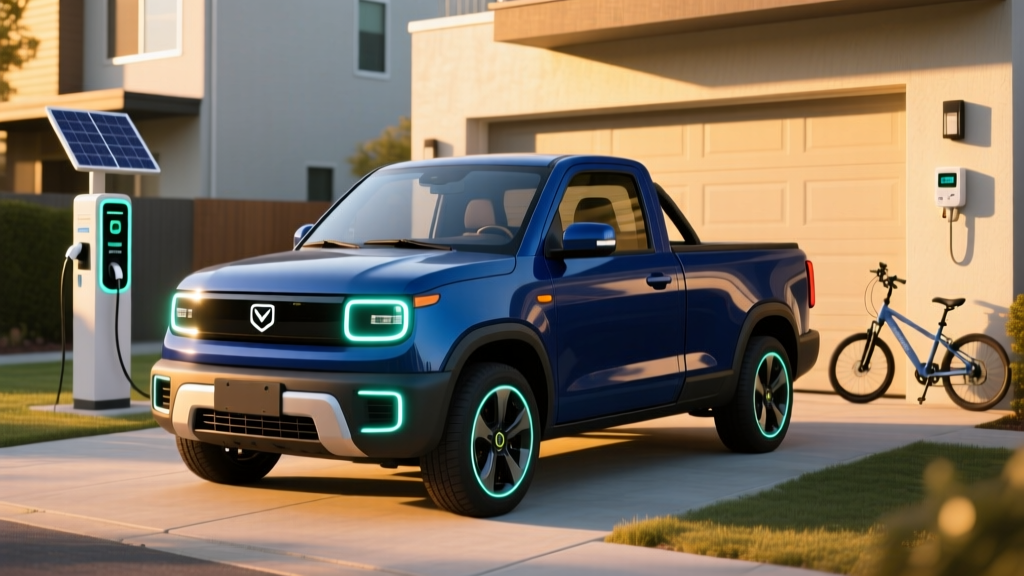
The term "EV mini truck" covers a growing category of compact and midsize electric pickups designed for urban utility, light commercial work, and daily commuting — not heavy-duty towing. These trucks typically weigh 4,500–5,500 lbs, offer 1,000–1,500 lbs of payload capacity, and prioritize efficiency over brute force. Think of them as the electric successors to the Ford Ranger and Toyota Tacoma of the early 2000s, but with instant torque and a fraction of the operating cost.
In 2026, the EV mini truck landscape includes the Ford Maverick EV (announced for late 2025 delivery, now reaching dealers), the Slate Auto Truck (the stripped-down, utility-first EV pickup from the Indiana startup), and converted/imported options like the Bollinger B2 variants aimed at fleet buyers. Larger trucks like the Rivian R1T and Chevrolet Silverado EV exist in a different weight and price class entirely.
The typical EV mini truck buyer fits one of three profiles:
- Urban commuter with weekend projects: Needs a bed for lumber, mulch, or bikes but drives 30–50 miles daily in stop-and-go traffic where regenerative braking maximizes efficiency.
- Small business/fleet operator: Last-mile delivery, landscaping, or trade work with predictable routes under 120 miles and overnight depot charging.
- Rural/suburban homeowner: Occasional hauling, property maintenance, and a desire to eliminate gas station trips — provided home charging is feasible.
2026 EV Mini Truck Models: Spec Comparison
| Spec | Ford Maverick EV (2026) | Slate Auto Truck (2026) | Bollinger B2 (Fleet) |
|---|---|---|---|
| EPA Range | ~290 mi (est.) | ~240 mi (est.) | ~200 mi |
| Battery (usable) | ~75 kWh (NMC) | ~62 kWh (LFP) | ~105 kWh (NMC) |
| Peak DC Charge Rate | ~150 kW | ~120 kW | ~125 kW |
| 10–80% DCFC Time | ~28 min | ~32 min | ~45 min |
| Level 2 Charge Rate | 11.5 kW | 7.7 kW | 10.0 kW |
| Horsepower | ~275 hp | ~201 hp | ~527 hp |
| 0–60 mph | ~6.5 sec | ~8.0 sec | ~4.5 sec |
| Payload Capacity | ~1,500 lbs | ~1,400 lbs | ~5,000 lbs |
| Towing Capacity | ~2,000 lbs | ~2,000 lbs | ~7,500 lbs |
| Starting MSRP | ~$34,995 | ~$27,900 | ~$89,000 |
| Battery Warranty | 8 yr / 100,000 mi | 8 yr / 100,000 mi | 8 yr / 100,000 mi |
Note: Maverick EV and Slate figures are based on manufacturer preliminary specifications and EPA estimates where available. Verify final specs at fueleconomy.gov before purchase.
Real-World Range Reality: The EPA sticker tells only part of the story. In highway testing at 70–75 mph, expect 15–20% less range than the EPA estimate. In cold weather (below 30°F), range can drop 20–35% depending on whether the truck has a heat pump. A Maverick EV rated at 290 miles EPA may deliver 230–245 miles on a warm highway day and as little as 190–210 miles in a 15°F winter commute with cabin heating. LFP batteries (as in the Slate) are more resilient to cold-weather degradation over the long term but still experience temporary range loss.
EV Mini Truck vs. Gas Compact Truck: The Real Cost Comparison
The decision between an EV mini truck and a gas compact truck (like the Ford Maverick Hybrid, Toyota Tacoma, or Hyundai Santa Cruz) comes down to total cost of ownership over your expected ownership period — not just the sticker price.
| Cost Factor | Ford Maverick EV (2026) | Ford Maverick Hybrid (2026) | Ford Maverick Gas (2.0L EcoBoost) |
|---|---|---|---|
| Base MSRP | $34,995 | $28,995 | $27,995 |
| Est. Federal Tax Credit (§30D) | Up to $3,750–$7,500* | $0 | $0 |
| Effective Purchase Price | ~$27,495–$31,245 | $28,995 | $27,995 |
| Fuel/Energy Cost per Mile | $0.04–$0.06 (home charging) | $0.10–$0.12 | $0.14–$0.17 |
| Annual Fuel/Energy (12,000 mi) | $480–$720 | $1,200–$1,440 | $1,680–$2,040 |
| Annual Maintenance | ~$200–$350 | ~$500–$700 | ~$550–$750 |
| 5-Year Fuel + Maintenance Total | $3,400–$5,350 | $8,500–$10,700 | $11,150–$13,950 |
| Estimated Insurance (Annual Avg) | $1,800–$2,200 | $1,400–$1,700 | $1,350–$1,650 |
*Federal §30D tax credit eligibility depends on battery sourcing, critical mineral content, MSRP caps ($80,000 for trucks), and buyer income limits ($150K single / $300K joint for new vehicles). Credit may be applied at point of sale. Verify current rules at IRS.gov. Some states offer additional rebates — check your state energy office.
The EV Maverick breaks even on operating costs within 2–3 years for most home-charging owners, even before factoring in the federal credit. The equation shifts unfavorably if you rely exclusively on public DC fast charging, where costs can reach $0.15–$0.25 per mile equivalent on networks like Electrify America or EVgo at peak rates.
Charging an EV Mini Truck: What First-Time Buyers Must Know
Charging is the single most misunderstood aspect of EV ownership. Here's the practical breakdown:
| Level | Power | Miles Added per Hour | Where | Cost |
|---|---|---|---|---|
| Level 1 (120V) | ~1.4 kW | ~4–5 mi/hr | Any standard outlet | ~$0.04/mi (varies by utility) |
| Level 2 (240V) | 7.7–11.5 kW | ~25–40 mi/hr | Home (installed), workplaces, public | ~$0.03–$0.06/mi at home |
| DC Fast Charge | 50–150+ kW | ~150–400 mi/hr (peak) | Public stations (EA, EVgo, Tesla SC) | ~$0.12–$0.25/mi equivalent |
Home charging is the key variable. If you can install a Level 2 charger at home, an EV mini truck will cover virtually all daily driving without a thought. A full overnight charge on an 11.5 kW Level 2 unit takes roughly 6.5–8 hours for a 75 kWh battery — plug in when you get home, wake up to a full "tank" every morning.
Home Level 2 installation costs typically run $800–$2,500 depending on your electrical panel. If your home has a 200-amp panel with spare capacity, expect to pay $800–$1,200 for a hardwired 48-amp charger and basic electrical work. If you need a panel upgrade (common in older homes), add $1,500–$3,000. Always get a quote from a licensed electrician before committing to the vehicle.
What if you can't charge at home? Apartment dwellers, street parkers, and those without garage access face a real challenge. Public DC fast charging is viable for occasional top-ups but becomes expensive and time-consuming as a primary strategy. A 10–80% session at a 150 kW charger takes ~28 minutes — manageable once a week, burdensome three times a week. If this is your situation, seriously consider a hybrid truck instead.
Common EV Mini Truck Myths — Busted with Data
| Myth | Fact |
|---|---|
| "EV batteries need replacing every 5 years" | Modern NMC and LFP batteries are warrantied for 8 years/100,000 miles at 70%+ capacity retention. Real-world degradation data shows most EV batteries retain 85–92% capacity after 100K miles. Replacement costs $8,000–$18,000 but is rarely needed within typical ownership. |
| "EV trucks can't tow or haul anything" | Compact EV trucks handle 1,000–1,500 lbs payload and 2,000 lbs towing — enough for a small trailer, dirt bikes, or a loaded bed of lumber. They're not Class 3 haulers, but neither are gas Rangers and Tacomas. |
| "Charging takes too long for real work" | For daily use, home Level 2 charging means zero downtime — the truck charges while you sleep. For road trips, a 10–80% DCFC stop takes 25–35 minutes, which aligns with a meal break. The charge curve tapers significantly above 80%, so plan to charge to 80% and go. |
| "EVs don't work in cold weather" | Range drops 20–35% in sub-freezing temps — a real limitation, not a myth. But preconditioning the battery (warming it while plugged in) mitigates charging-speed loss, and a heat pump (standard on most 2026 models) reduces cabin-heating energy draw by ~30%. A 290-mile truck becomes a 200-mile truck in deep cold — plan accordingly. |
| "The EV tax credit is $7,500 for everyone" | The §30D credit ranges from $0–$7,500 and depends on battery component sourcing, critical mineral origin, buyer AGI, vehicle MSRP, and final assembly location. Many 2026 EV trucks qualify for $3,750 (partial sourcing compliance) rather than the full $7,500. Always verify before purchasing. |
Real-World Ownership: The Questions That Actually Matter
How does payload and towing affect range?
Significantly. A fully loaded bed (1,200+ lbs) can reduce range by 10–15%. Towing a 2,000-lb trailer can cut range by 25–40% depending on aerodynamics and terrain. If your primary use case involves frequent heavy loads, plan routes around charging availability and expect EPA range to drop by a third or more under load.
What about insurance costs?
EV trucks typically cost 15–25% more to insure than their gas equivalents, driven by higher repair costs for battery and structural components. Expect annual premiums of $1,800–$2,200 for a Maverick EV vs. $1,350–$1,650 for the gas version. Shop quotes from GEICO, Progressive, and EV-specialty insurers before buying — the gap varies widely by state and driver profile.
Is the bed useful?
Yes, but with caveats. Most EV mini trucks offer 4.5-foot beds (shorter than the 6-foot beds on full-size trucks). The Maverick EV's bed is approximately 4.5 feet with a width between the wheel wells that accommodates standard plywood sheets flat. The Slate Auto Truck was designed around a modular bed system with integrated tie-downs and a 120V/240V outlet for job-site power — a genuine differentiator for trade workers.
What's the long-term resale outlook?
EV depreciation has been steeper than gas trucks in recent years, with some models losing 40–50% of value in three years. However, as battery confidence grows and the used-EV market matures (supported by the $4,000 used-EV tax credit under §25E), compact EV trucks with strong utility propositions are expected to hold value better than luxury EV sedans.
Decision Framework: Should You Buy an EV Mini Truck?
Buy an EV mini truck if:
- You have access to Level 2 home charging (garage, driveway, or employer-installed)
- Your daily driving is under 150 miles round-trip
- You need a bed for light hauling but don't regularly tow over 3,000 lbs
- You want to reduce operating costs and are willing to accept a higher purchase price
- You live in a moderate climate or have garage parking for cold-weather preconditioning
- You qualify for at least a partial federal or state EV incentive
Consider a hybrid or gas truck instead if:
- You lack reliable home or workplace charging access
- You regularly tow over 4,000 lbs or drive 200+ miles daily
- You frequently drive in sub-10°F conditions on routes without DCFC infrastructure
- Your budget is strictly under $28,000 and you don't qualify for incentives
- You need a full 6-foot bed for large materials (plywood, lumber, ladders)
Frequently Asked Questions
Can I charge an EV mini truck from a regular 120V outlet?
Yes, but slowly. Level 1 charging at 120V delivers roughly 4–5 miles of range per hour. A full charge from empty takes 50+ hours for a 75 kWh battery. It's viable as a supplement if you drive under 30 miles daily and can plug in for 10–12 hours overnight, but Level 2 is strongly recommended as your primary charging method.
Do EV mini trucks qualify for the $7,500 federal tax credit?
Possibly, but eligibility is model-specific and changes as manufacturers adjust battery sourcing. As of 2026, some compact EV trucks qualify for the full $7,500, others for $3,750 (meeting critical-mineral but not battery-component requirements), and some for $0. The credit is available as a point-of-sale reduction through registered dealers. Check the latest qualified vehicle list at IRS.gov and confirm with your dealer before signing.
What happens if the battery degrades significantly?
Federal law mandates that EV batteries carry a warranty of at least 8 years/100,000 miles. Most manufacturers guarantee 70% capacity retention over that period. If your battery falls below that threshold within the warranty window, the manufacturer must repair or replace it at no cost. Out-of-warranty replacement for a compact truck battery typically costs $8,000–$14,000 depending on chemistry and capacity.
Can I use an EV mini truck for off-road or farm work?
Light off-road use (dirt roads, gravel, mild trails) is fine — EVs deliver instant torque that's excellent for low-speed crawling. However, most compact EV trucks are not designed for serious rock crawling or deep mud. Ground clearance is typically 7–8.5 inches. For farm use, the instant torque and available 120V/240V bed outlets (for powering tools or electric fences) are genuine advantages over gas trucks.
How does an EV mini truck compare to a full-size EV truck like the F-150 Lightning or Silverado EV?
Full-size EV trucks offer more range (300–400+ mi), higher towing (7,500–10,000+ lbs), larger beds, and more interior space — but at significantly higher prices ($55,000–$80,000+) and weight. They also consume more energy per mile (2.0–2.5 kWh/mi vs. 1.5–1.8 kWh/mi for compact EV trucks). If you don't need full-size capability, the compact EV truck saves $20,000+ upfront and $400–$600/year in electricity.
Is an EV mini truck a good first EV?
It can be, provided you have home charging. The compact size makes it approachable, the operating costs are low, and the utility of a bed adds practical value that sedans and crossovers can't match. The main risk for first-time EV buyers is underestimating the impact of cold weather and highway driving on range — buy with a 20–30% range buffer above your longest typical trip.