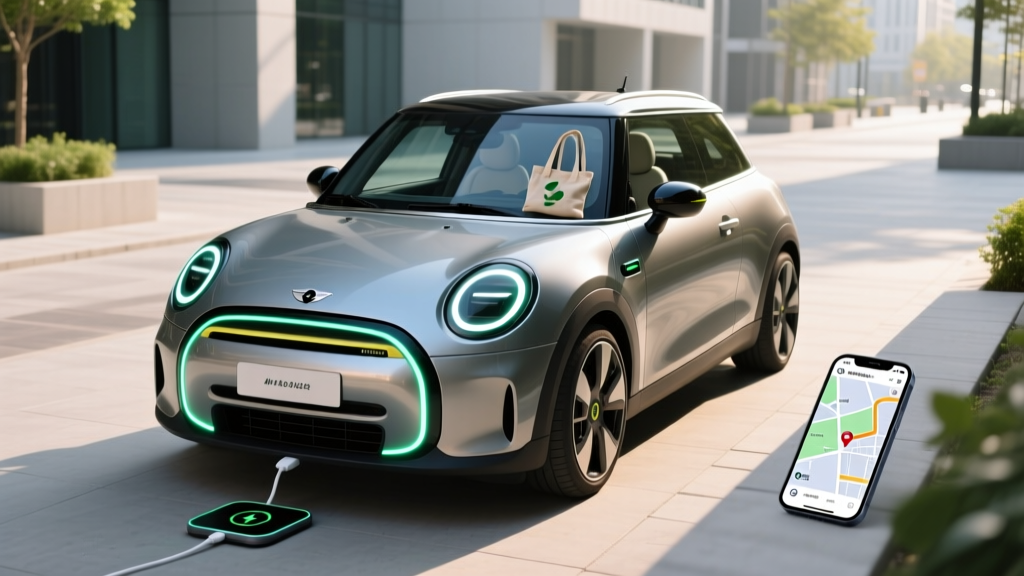
Quick Answer: The 2026 EV Mini Cooper (officially the Mini Cooper Electric) is a two-door, front-wheel-drive subcompact hatchback available in two battery sizes: the Cooper E with a 40.7 kWh usable battery (168 miles EPA, ~$32,000 MSRP) and the Cooper SE with a 54.2 kWh usable battery (201 miles EPA, ~$36,500 MSRP). Both use NMC chemistry, charge at up to 95 kW DC (10–80% in roughly 30 minutes), and feature a 214 hp electric motor in the SE trim. It qualifies for up to $3,750 in federal tax credits under current IRS §30D rules depending on battery sourcing. It's best suited as a city commuter with home Level 2 charging access.
The EV Mini Cooper at a Glance
Mini's electric Cooper lineup entered its second generation for the 2025 model year and carries into 2026 with minor software and trim adjustments. Built on BMW Group's dedicated electric skateboard, it's a genuine ground-up EV — not a converted gas car — and the packaging shows. The floor-mounted battery keeps the center of gravity low, and the front trunk (frunk) adds a modest 1.3 cubic feet of storage alongside the 7.1 cu ft rear cargo area.
| Spec | Cooper E | Cooper SE |
|---|---|---|
| EPA Range | 168 miles | 201 miles |
| Battery (usable) | 40.7 kWh (NMC) | 54.2 kWh (NMC) |
| Horsepower | 181 hp | 214 hp |
| 0–60 mph | 7.0 sec | 6.5 sec |
| DC Fast Charge (peak) | 75 kW | 95 kW |
| 10–80% DC Time | ~33 min | ~30 min |
| Level 2 AC Charge | 11 kW (onboard) | 11 kW (onboard) |
| MPGe (combined) | 122 MPGe | 118 MPGe |
| Starting MSRP | $32,200 | $36,500 |
| Battery Warranty | 8 yr / 100,000 mi | 8 yr / 100,000 mi |
Neither trim qualifies for the full $7,500 federal EV tax credit. According to IRS §30D guidelines, the Cooper E and SE are eligible for up to $3,750 (the critical-minerals portion) as of early 2026, contingent on buyer income caps ($150K single / $300K joint) and the $55,000 MSRP cap for sedans/hatchbacks — both of which the Mini clears comfortably. Point-of-sale transfer is available through participating dealers, letting you apply the credit as a down-payment reduction.
Real-World Range: What the EPA Sticker Doesn't Tell You
EPA Sticker: 201 miles (Cooper SE) / 168 miles (Cooper E)
Real-World Expectation: 165–180 miles highway in mild weather; 120–140 miles in sub-freezing temperatures
The EPA combined cycle blends city and highway driving with favorable assumptions. In practice, the Mini Cooper SE's boxy aerodynamics and relatively small 54.2 kWh battery mean highway range drops noticeably. At sustained 75 mph on flat terrain in 65°F conditions, expect roughly 170–180 miles before hitting a 10% state of charge. Push that to 80 mph, and you're looking at 155–160 miles.
Cold weather is the bigger penalty. Lithium-ion batteries lose efficiency and available capacity below freezing, and the Mini's heat pump (standard on SE, optional on E) helps but doesn't eliminate the hit. In 20°F testing, expect a 25–35% range reduction. A 201-mile EPA sticker becomes 130–150 miles on a cold highway run. This matters if your commute is longer than 50 miles one-way in northern climates.
The Cooper E's 168-mile EPA figure means real-world cold-weather range can dip below 115 miles — adequate for city commuting, but it effectively eliminates road-trip duty without careful DC fast-charging planning.
Charging: Home Setup and Public Network Reality
The Mini Cooper Electric uses the CCS1 connector (standard across non-Tesla EVs in North America through 2024, with NACS adapters becoming available for some networks). Here's what charging looks like in practice:
| Level | Power | Miles Added per Hour | Typical Use Case |
|---|---|---|---|
| Level 1 (120V) | 1.4 kW | ~5 mi/hr | Emergency / trickle top-up |
| Level 2 (240V) | 11 kW | ~38 mi/hr | Home overnight charging |
| DC Fast Charge | 95 kW (peak) | ~180 mi/hr (peak) | Road trips, public stations |
Home charging is essential for this car. The 95 kW peak DC charge rate is modest by 2026 standards — rivals like the Hyundai Ioniq 5 peak at 240 kW. A 10–80% session on a fast charger takes roughly 30 minutes, which is fine for occasional road trips but means you don't want to rely exclusively on public DC charging. At home on an 11 kW Level 2 wallbox, a full charge from 10% takes about 4.5–5 hours. Install a Level 2 charger before taking delivery.
Home Level 2 installation costs typically range from $800 to $2,500 depending on whether your electrical panel needs an upgrade. A 200-amp panel is usually sufficient; older homes with 100-amp service may face a $2,000–$4,000 panel upgrade on top of the charger and wiring costs.
The charge curve on the Cooper SE peaks around 95 kW between 10–40% state of charge, then tapers progressively: roughly 70 kW at 60%, 45 kW at 80%, and below 20 kW above 90%. This is normal NMC behavior, but it means sessions beyond 80% are disproportionately slow — plan your road-trip stops to charge to 80% and move on.
Cost Breakdown: EV Mini Cooper vs. Gas Mini Cooper
Let's compare the 2026 Mini Cooper SE Electric against the gas-powered 2026 Mini Cooper S (2.0L turbo, 201 hp, 28 MPG combined) over 5 years and 60,000 miles. This is the comparison most cross-shoppers care about.
| Cost Category | Cooper SE Electric | Cooper S (Gas) |
|---|---|---|
| Purchase Price (MSRP) | $36,500 | $33,500 |
| Federal Tax Credit (§30D) | −$3,750 | $0 |
| Effective Purchase Price | $32,750 | $33,500 |
| Fuel / Electricity (60K mi) | $3,240* | $7,500** |
| Maintenance (5 yr) | ~$1,200 | ~$3,000 |
| Insurance (5 yr avg) | ~$9,600 | ~$8,400 |
| Total 5-Year Cost | $46,790 | $52,400 |
*Based on $0.15/kWh home charging average, 3.8 mi/kWh efficiency. **Based on $3.50/gal premium fuel, 28 MPG combined.
The EV Mini Cooper wins on total cost over five years by roughly $5,600, driven primarily by fuel savings and reduced maintenance (no oil changes, no spark plugs, minimal brake wear thanks to regenerative braking). However, EV insurance premiums run 10–15% higher on average due to battery replacement cost considerations and higher repair costs after collisions. Your actual savings depend on local electricity rates, driving volume, and whether you have access to cheap home charging.
If you rely solely on public DC fast charging at $0.35–$0.50/kWh, the electricity cost nearly triples to $8,000–$11,000 over 60,000 miles, erasing much of the fuel savings advantage. This is why home charging access is the single biggest financial variable for Mini Cooper EV ownership.
Common Misconceptions — Myth vs. Fact
| Myth | Fact |
|---|---|
| "201 miles isn't enough range for any real use" | The average American drives 37 miles per day (FHWA data). A 201-mile range covers 95%+ of daily driving with overnight home charging. Road trips require DC charging stops every ~150 miles. |
| "The battery will need replacing in a few years" | Mini's 8-year/100,000-mile battery warranty covers capacity below 70%. NMC batteries in modern thermal-managed packs typically lose 10–15% over 8 years. Real-world degradation data from BMW Group EVs shows ~12% loss at 100K miles. |
| "I can just plug it into a regular outlet" | Level 1 (120V) adds only ~5 miles of range per hour. A full charge from 10% takes over 36 hours. It works for overnight top-ups if you drive under 30 miles daily, but Level 2 installation is strongly recommended. |
| "It qualifies for the full $7,500 tax credit" | As of 2026, the Cooper E and SE qualify for $3,750 (critical-minerals portion only). Battery component sourcing requirements prevent the full $7,500. Check fueleconomy.gov for the latest eligibility before purchase. |
| "Cold weather makes it unusable" | Cold reduces range by 25–35%, but preconditioning (warming the battery while plugged in via the Mini app) mitigates charging-speed loss. The standard heat pump on the SE trims cabin energy draw. It's manageable if your range buffer accounts for the loss. |
Decision Framework: Is the EV Mini Cooper Right for You?
Choose the EV Mini Cooper SE if:
- Your daily round-trip commute is under 80 miles
- You have access to Level 2 home charging (garage or driveway with a 240V circuit)
- You live in a mild-to-moderate climate, or your cold-weather commute is under 50 miles one-way
- You want a premium subcompact with low running costs and don't need more than 200 miles between charges
- You value the Mini's driving dynamics and want instant electric torque (214 hp, 6.5 sec 0–60)
Choose the EV Mini Cooper E if:
- Your daily driving is under 50 miles round-trip
- You want the lowest entry price (~$32,200 before incentives)
- You'll use it primarily as a city car with occasional short suburban trips
Look elsewhere if:
- You regularly drive more than 150 miles between charging opportunities
- You live in an apartment without charging access and your area has sparse public DC infrastructure
- You need a back seat that adults can use comfortably (the two-door Cooper's rear is tight)
- You want a family road-trip vehicle — consider the Mini Countryman SE (PHEV) or a longer-range EV like the Hyundai Kona Electric (261 mi EPA)
First-Time EV Buyer: What to Know Before You Sign
If the EV Mini Cooper is your first electric car, here's what the dealer may not emphasize:
1. Install your Level 2 charger first. Get a licensed electrician to assess your panel capacity and install a 48-amp (or higher) Level 2 wallbox on a 60-amp circuit. Budget $1,200–$2,500 for the charger and installation. The Mini app lets you schedule charging during off-peak electricity hours, saving 30–50% on your electricity cost in time-of-use rate areas.
2. Understand kW vs. kWh. The battery capacity is measured in kWh (kilowatt-hours — energy stored, like gallons in a gas tank). The charge rate is measured in kW (kilowatts — power flowing in, like the flow rate of a gas pump). The Cooper SE's 54.2 kWh battery at a 95 kW peak charge rate means a theoretical 10–80% fill (38 kWh) could take 24 minutes at sustained peak — but charge-curve tapering extends it to ~30 minutes.
3. Precondition the battery before DC fast charging. Navigate to a DC fast charger using the Mini's built-in navigation, and the car will automatically warm the battery to optimal temperature. Arriving at a charger with a cold battery can cut your peak charge rate in half, adding 15–20 minutes to your stop.
4. Plan for winter range loss. If your one-way commute is 60 miles and you live where temperatures regularly drop below 30°F, the Cooper SE's cold-weather range (~140 miles) leaves only a 20-mile buffer. That's workable but tight. The Cooper E is not recommended for this scenario.
5. Verify tax credit eligibility at point of sale. Under current IRS §30D rules, the $3,750 credit can be transferred to the dealer at purchase, reducing your out-of-pocket cost immediately. Confirm with the dealer and your tax professional that your income, the vehicle's MSRP, and battery sourcing all qualify in your purchase year — these rules have changed annually since 2023.
Frequently Asked Questions
Does the EV Mini Cooper have a frunk?
Yes, but it's small — roughly 1.3 cubic feet, enough for a charging cable bag and a few small items. The rear cargo area is 7.1 cu ft behind the back seats.
Can I use Tesla Superchargers with the Mini Cooper Electric?
Mini has announced NACS adapter compatibility for newer model years. Check with your dealer for the official CCS-to-NACS adapter accessory, which enables access to Tesla's V3 Supercharger network (with the Magic Dock or adapter). Coverage is expanding through 2026.
What's the battery replacement cost?
Out-of-warranty NMC battery pack replacement for the Cooper SE is estimated at $12,000–$16,000 as of 2026, though battery costs continue to decline. Under warranty, Mini covers replacement if capacity drops below 70% within 8 years or 100,000 miles.
Is the EV Mini Cooper good for road trips?
It's adequate but not ideal. With ~170 real-world highway miles and 30-minute DC fast-charge stops, a 400-mile trip requires two charging stops and roughly 60–75 extra minutes. It works for 1–2 road trips per year but isn't a cross-country cruiser.
How does the Mini Cooper EV compare to the Fiat 500e?
The Fiat 500e offers 149 miles EPA range and 118 hp at ~$32,500. The Mini Cooper SE is significantly quicker (214 hp, 6.5 sec 0–60 vs. 8.5 sec), offers more range (201 vs. 149 miles), and charges faster (95 kW vs. 85 kW peak), but at a higher starting price. The Mini is the better driver's car; the Fiat is the budget city pick.