Quick Answer: What Is "EV Loading" and What Does It Actually Involve?
"EV loading" refers to the full process of preparing, powering, and maintaining an electric vehicle for daily use — from understanding your battery's usable kWh capacity, to installing a Level 2 home charger, to calculating real-world range after highway driving and cold-weather losses. For a typical 2026 EV buyer, expect to spend $35,000–$55,000 on the vehicle, $500–$2,500 on home charging installation, and roughly $0.04–$0.06 per mile to charge at home versus $0.12–$0.16 per mile for gasoline in a comparable ICE car. The federal §30D tax credit can reduce your effective purchase price by up to $7,500, but eligibility depends on MSRP caps, buyer income limits, and battery-sourcing rules — not everyone qualifies.
The Real Numbers Behind EV Loading: Range, Battery, and Charging
Before you plug in anything, you need to understand two units that define every EV decision: kWh (kilowatt-hours, the energy your battery stores) and kW (kilowatts, the power rate at which you charge). Confusing them is the single most common mistake new EV buyers make.
A 2026 Hyundai Ioniq 6 SE Long Range, for example, carries a 77.4 kWh usable battery pack (NMC chemistry) and delivers an EPA-estimated 361 miles of range. But EPA range assumes a mix of city and highway driving at moderate temperatures. In real-world highway testing at 70 mph, expect 290–310 miles. In sub-freezing winter conditions, that drops to 240–270 miles due to cabin heating demands and increased battery resistance.
| Spec | 2026 Hyundai Ioniq 6 SE LR | 2026 Tesla Model 3 LR AWD |
|---|---|---|
| Usable Battery | 77.4 kWh (NMC) | 79 kWh (NMC) |
| EPA Range | 361 mi | 341 mi |
| Real-World Highway | ~290–310 mi | ~280–300 mi |
| Cold-Weather (20°F) | ~240–270 mi | ~250–280 mi |
| Peak DC Fast Charge | 240 kW | 250 kW |
| 10–80% DCFC Time | ~18 min | ~18 min |
| Level 2 Rate (kW) | 10.9 kW | 11.5 kW |
| MPGe (Combined) | 140 MPGe | 132 MPGe |
| 0–60 mph | 5.1 sec | 4.2 sec |
| Base MSRP | $42,750 | $47,740 |
DC fast charging speeds peak early in the session and taper significantly above 80% state of charge. A 240 kW peak doesn't mean you charge at 240 kW the entire time — the average rate over a 10–80% session is typically 130–160 kW. This charge-curve taper protects the battery but means the final 20% takes nearly as long as the first 80%.
Home Charging Setup: What EV Loading Looks Like in Your Garage
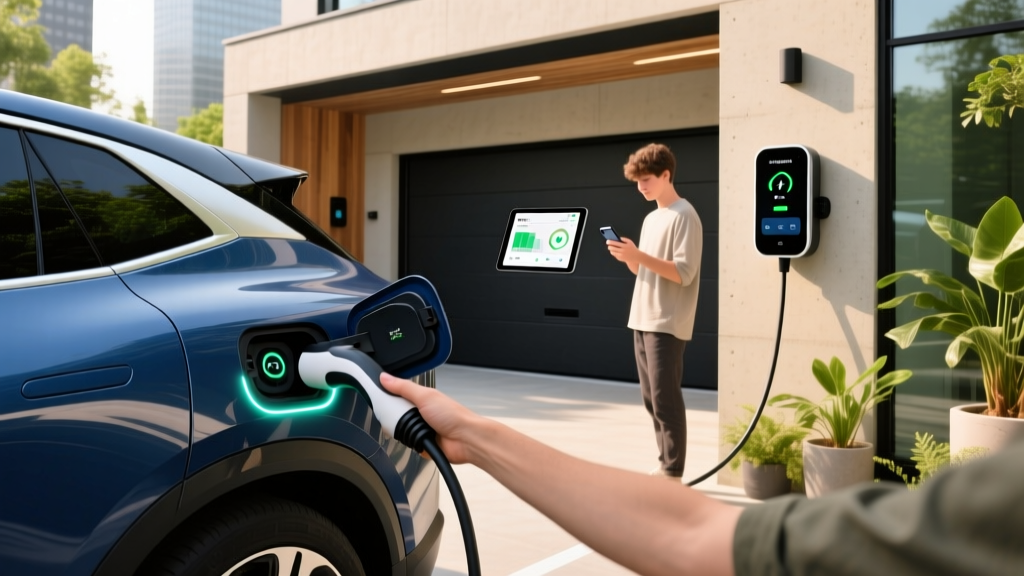
Most EV owners do 80–90% of their charging at home. If you have a garage or dedicated parking spot with access to a 240V circuit, a Level 2 home charger is the backbone of practical EV ownership.
Level 1 charging (120V standard outlet) delivers roughly 1.4 kW — adding about 4–5 miles of range per hour. That's sufficient only if you drive under 30 miles daily and can charge overnight for 10+ hours. For most buyers, Level 2 is the minimum practical setup.
| Item | Typical Cost Range | Notes |
|---|---|---|
| Level 2 Charger (Hardware) | $300–$700 | ChargePoint Home Flex, Emporia Vue, Wallbox Pulsar Plus |
| Electrician Labor (240V/50A circuit) | $500–$1,500 | Varies by panel proximity and local rates |
| Permit & Inspection | $50–$250 | Required in most jurisdictions |
| Electrical Panel Upgrade (if needed) | $1,500–$3,500 | Older homes with 100A service may need 200A upgrade |
| Total (no panel upgrade) | $850–$2,450 | Most common scenario |
| Total (with panel upgrade) | $2,350–$5,950 | Check with licensed electrician before committing |
A Level 2 charger at 48 amps / 11.5 kW adds roughly 35–44 miles of range per hour, depending on vehicle efficiency. An overnight charge of 8 hours can fully replenish most EV batteries. According to fueleconomy.gov, the average US electricity rate is approximately $0.16/kWh, meaning a full 77 kWh charge costs about $12.32 at home — versus $45–$55 to fill a gas tank on a comparable midsize sedan.
If you live in an apartment or lack dedicated parking, public charging becomes your primary fueling method. This changes the economics significantly: DC fast charging networks like Electrify America and EVgo charge $0.35–$0.55/kWh, pushing your per-mile cost to $0.09–$0.14 — closer to gasoline.
EV vs Gas vs Hybrid: The Cost-Per-Mile Reality
The decision between an EV, a conventional hybrid (HEV), and a gas car comes down to your driving pattern, home charging access, and how long you plan to keep the vehicle.
| Metric | 2026 EV (Ioniq 6) | 2026 Hybrid (Toyota Camry LE) | 2026 Gas (Honda Accord) |
|---|---|---|---|
| MSRP (Base) | $42,750 | $30,495 | $29,390 |
| Fuel/Energy Cost per Mile | $0.045 (home) | $0.085 | $0.135 |
| Annual Fuel (15k mi/yr) | $675 | $1,275 | $2,025 |
| 5-Year Fuel Cost | $3,375 | $6,375 | $10,125 |
| Maintenance (5-yr est.) | ~$2,000 | ~$3,500 | ~$4,200 |
| Federal Tax Credit | Up to $7,500* | None | None |
| 5-Year Total (purchase + fuel + maint - credit) | ~$40,625 | ~$39,870 | ~$43,715 |
*The §30D federal EV tax credit has strict eligibility requirements. Per the IRS, the vehicle must be under MSRP caps ($80,000 for SUVs/pickups/vans; $55,000 for sedans), the buyer must meet income thresholds ($150,000 single / $300,000 joint AGI), and the battery must meet critical-mineral and component-sourcing requirements that tighten annually. As of 2026, many popular models qualify for only $3,750 (partial credit) or none at all depending on battery sourcing. Always verify eligibility before purchase — point-of-sale transfer is available at participating dealers.
Common EV Loading Misconceptions — Fact-Checked
| Myth | Fact |
|---|---|
| "EV batteries need replacing every 5 years" | Modern NMC and LFP packs are warrantied for 8 years / 100,000 miles at 70%+ capacity retention. Real-world degradation averages 1–2% per year; most packs retain 85–90% after 5 years. |
| "You can't drive EVs in cold weather" | You can — but expect 15–30% range loss at 20°F due to battery resistance and cabin heating. Preconditioning while plugged in recovers 10–15% of that loss. Heat pumps (standard on most 2026 models) reduce heating energy draw by 40–50%. |
| "Public charging is unreliable everywhere" | Reliability varies. Tesla Superchargers consistently achieve 97%+ uptime. Electrify America and ChargePoint average 85–92% uptime per J.D. Power 2025 data. Plan routes with backup stations on longer trips. |
| "EVs cost more to insure" | Sometimes true. Average EV insurance premiums run 15–25% higher than comparable gas cars due to higher repair costs and battery replacement risk. Shop quotes before buying — the gap varies widely by model and insurer. |
| "Level 2 charging is too slow for daily use" | At 11.5 kW, you add ~40 miles per hour. An 8-hour overnight session adds ~320 miles — more than enough to fully recharge any EV in the current market. Most owners never visit a gas station or DC fast charger for daily driving. |
Real-World Ownership: What First-Time EV Buyers Must Know
EV loading isn't just about plugging in. It's about adapting your routine to an electric lifestyle. Here's what matters most in the first 90 days of ownership:
1. Your electrical panel is the gatekeeper. Before buying a charger, have a licensed electrician assess your panel capacity. A 200-amp service with available breaker slots handles a 50-amp EV circuit easily. A 100-amp panel in an older home may require a costly upgrade — or you may opt for a 32-amp charger on a 40-amp circuit instead.
2. Route-plan your first road trip before you need to. Use apps like A Better Route Planner (ABRP) or PlugShare to identify DC fast chargers along your route. Aim for chargers spaced 120–150 miles apart to maintain a comfortable buffer. Arrive at each stop with 15–20% SoC, charge to 80%, and move on — charging from 80–100% takes nearly as long due to the taper.
3. Learn preconditioning. Most EVs let you schedule departure times or remotely activate battery preconditioning via their app. Warming the battery to its optimal temperature window (68–86°F) before a DC fast charge session can increase peak charge rate by 30–50% in cold weather.
4. Track your State of Health. Your vehicle's battery management system monitors SoH over time. Check it quarterly via the vehicle's settings or a third-party OBD2 reader. If degradation accelerates unexpectedly, it may indicate a defective module covered under the 8-year/100,000-mile battery warranty.
5. Budget for insurance upfront. Get insurance quotes for the specific EV model and trim before signing a purchase agreement. Some models (particularly higher-performance trims) carry premiums that erase your fuel savings. According to IIHS, safety ratings also affect premiums — choose models with Top Safety Pick+ designations when possible.
Decision Framework: Is an EV the Right Load for Your Life?
Choose an EV (BEV) if:
- You have access to Level 2 home charging (garage, driveway, or workplace)
- Your daily commute is under 80 miles round-trip
- You drive 12,000–20,000 miles per year (fuel savings compound)
- You plan to keep the vehicle 5+ years (offsets higher upfront cost)
- You qualify for the §30D tax credit (reduces effective price by $3,750–$7,500)
- You live in a moderate climate or your EV has a heat pump
Choose a Plug-In Hybrid (PHEV) if:
- You lack reliable home charging but want some electric driving
- You take frequent road trips over 300 miles and don't want to plan DCFC stops
- Your daily commute is under 30 miles (PHEVs offer 25–45 mi electric-only range)
- You want lower upfront cost ($30,000–$42,000) with partial EV benefits
Choose a Hybrid (HEV) or Gas Car if:
- You live in an apartment with no charging access and no workplace charging
- You regularly tow heavy loads (towing cuts EV range by 40–60%)
- You drive in extreme cold (-10°F or below) for extended periods
- You need the lowest possible purchase price and plan to sell within 3 years
Frequently Asked Questions About EV Loading
How long does it take to fully charge an EV at home?
On a Level 2 charger at 11.5 kW, a 77 kWh battery charges from 10% to 100% in approximately 7–8 hours. Most EV owners charge overnight and wake up to a full battery every morning. Level 1 (120V) charging takes 40–55 hours for the same battery — impractical for most buyers but sufficient for low-mileage PHEVs.
What does it cost to charge an EV per month?
At the US average electricity rate of $0.16/kWh and an efficiency of 3.5 miles/kWh, driving 1,250 miles per month costs approximately $57. Compare that to $170–$190 per month in gasoline for a 30 MPG sedan at $3.50/gallon. Your actual cost varies by local utility rates — some utilities offer off-peak EV rates as low as $0.08–$0.10/kWh, cutting costs in half.
Do EV batteries degrade quickly?
Modern lithium-ion EV batteries (both NMC and LFP chemistries) degrade at roughly 1–2% of total capacity per year under normal use. After 5 years and 75,000 miles, expect 88–93% of original capacity remaining. LFP batteries (used in base-trim Tesla Model 3 and some Chinese-market vehicles) degrade even slower but offer lower energy density. All major manufacturers warrant the battery at 70% capacity retention for 8 years or 100,000 miles — whichever comes first.
Can I use any public charger with any EV?
Connector compatibility matters. As of 2026, most new EVs sold in North America use the NACS (Tesla) connector, following Ford, GM, Rivian, Hyundai, and others adopting the standard. CCS1 chargers remain widely available, and adapters (CCS-to-NACS) cost $150–$250. CHAdeMO is effectively discontinued outside older Nissan Leaf models. Verify your vehicle's connector before planning public charging routes.
Is a used EV a good way to start?
A used EV can be an excellent entry point — the federal used-EV credit (§25E) offers up to $4,000 (30% of sale price) on vehicles priced under $25,000, with buyer income caps of $75,000 single / $150,000 joint. Check the battery's State of Health before purchasing, and prioritize models with remaining factory battery warranty.