Quick Answer: What Are EV License Plates?
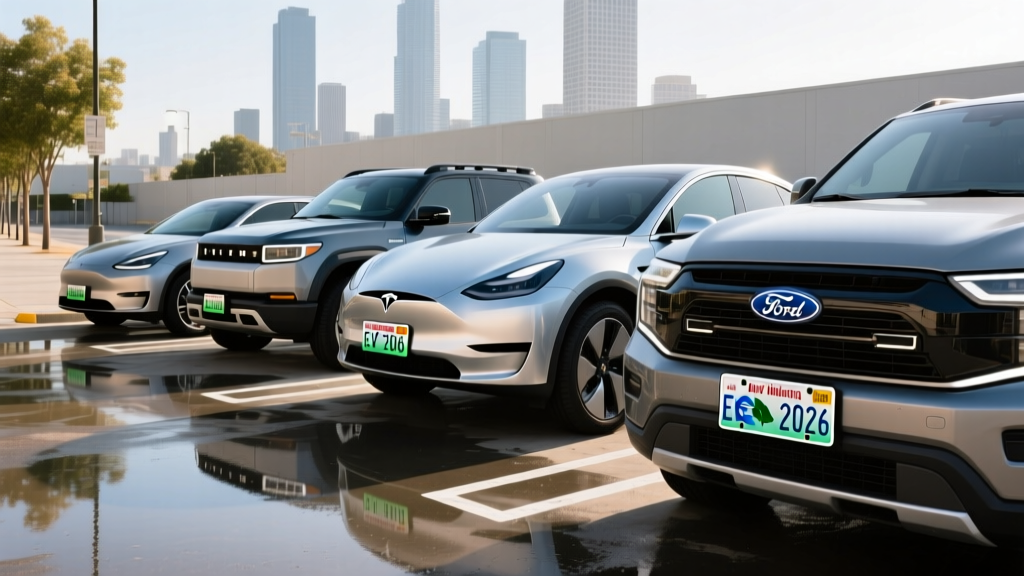
EV license plates are standard state-issued registration plates assigned to battery-electric and plug-in hybrid vehicles. Most states issue identical plates to EVs and gas cars, but over 30 states now offer optional specialty EV plates or clean-air decals that unlock perks like HOV lane access, toll discounts, or free parking. As of 2026, EV owners in most states pay higher annual registration fees — typically $50 to $225 extra — to offset lost gas tax revenue. The federal government does not issue EV-specific plates; all registration happens at the state DMV level.
Why EV License Plates Matter for Buyers and Owners
When you purchase a new EV — whether it's a Tesla Model Y (EPA 320 mi, starting at $44,990), a Hyundai Ioniq 5 (EPA 303 mi, $42,450), or a Chevrolet Equinox EV (EPA 319 mi, $33,600) — you'll register it like any other vehicle. But your state may classify it differently for fee purposes, and specialty plate programs can deliver real daily value.
The core issue: EVs don't pay gas taxes. The average American driver covers roughly 13,500 miles per year. A gas car averaging 27 MPG burning fuel taxed at the federal rate of $0.184/gallon plus a state average of ~$0.31/gallon contributes roughly $245 per year in combined fuel taxes. An EV pays $0 at the pump. To compensate, states have introduced EV-specific registration surcharges that now exist in 38 states as of 2026.
EV Registration Fees vs. Gas Cars: The Real Numbers
Here's how annual registration costs break down for EVs versus comparable gas vehicles in several high-EV-adoption states:
| State | Gas Car Base Fee | EV Surcharge | Total EV Registration | HOV Lane Access |
|---|---|---|---|---|
| California | $64 + weight fees | $100 (zero-emission fee) | ~$164–$264 | Yes (Clean Air Decal required) |
| Washington | $30 + weight/county | $225 (EV registration fee) | ~$255–$305 | Limited (select corridors) |
| Colorado | $23–$71 | $50 (EV fee) | ~$73–$121 | Yes (express lane toll credit) |
| Texas | $50.75 | $200 (EV fee, effective 2024) | ~$250.75 | No |
| Florida | $27.60 + weight | $0 (no current EV surcharge) | ~$27.60–$75 | No |
| New York | $26–$140 | $0 (proposed, not enacted) | ~$26–$140 | No (some bridge/toll E-ZPass discounts) |
| Georgia | $20 | $213.64 (EV registration fee) | ~$233.64 | No |
| Virginia | $40.75 | $0 (repealed 2024, highway use fee applies) | ~$40.75 + HWY use fee | No |
Source: State DMV fee schedules, verified against AFDC state law database. Fees vary by vehicle weight and county. Check your local DMV for exact amounts.
The takeaway: in states like Texas, Washington, and Georgia, EV owners pay $200–$225 extra annually just for the privilege of not buying gas. In Florida and New York, there's currently no surcharge. This directly affects your total cost of ownership calculation.
Specialty EV Plates and Clean Air Decals: Perks by State
Beyond standard registration, several states offer programs tied specifically to your EV's license plate or a companion decal:
California Clean Air Vehicle Decal Program
California's program is the gold standard. Eligible zero-emission vehicles receive a Clean Air Vehicle (CAV) decal — a sticker applied near the license plate — that grants single-occupant HOV lane access on freeways like the I-405, I-10, and US-101. The decal is free for vehicles purchased new, but the program has income caps and expires after a set period (currently 4 years from issuance). For commuters in LA or the Bay Area, HOV lane access can save 20–40 minutes per trip during peak hours.
HOV and Toll Benefits in Other States
- Colorado: EVs with proper registration get free or discounted express lane tolls on I-25 and I-70.
- Maryland: EVs qualify for HOV lane permits on I-270 and I-495 (program enrollment caps apply).
- Arizona: Reduced vehicle license tax (VLT) for alternative-fuel vehicles — the savings can be $200–$500/year depending on assessed value.
- Utah: Clean-air plate program offers HOV access on I-15 express lanes.
Specialty "Green" Plates
A handful of states — including Hawaii, Oregon, and Vermont — offer optional specialty license plates with EV or clean-energy branding. Revenue from these plates typically funds state environmental programs. They don't grant special driving privileges but signal your EV status and support sustainability funding.
Total Cost of Ownership: Where Registration Fits In
EV registration fees are one line item in a broader ownership picture. Here's how a typical mid-price EV compares to a gas equivalent over 5 years and 67,500 miles (13,500 mi/year):
| Cost Category | Ioniq 5 SEL (EV) | RAV4 XLE (Gas) | Difference |
|---|---|---|---|
| Purchase Price (MSRP) | $45,950 | $33,345 | +$12,605 |
| Federal Tax Credit (§30D)* | –$3,750 (sourcing-dependent) | $0 | –$3,750 |
| Home Charger Install (Level 2) | $800–$1,500 | $0 | +$800–$1,500 |
| Fuel / Electricity (5 yr) | $3,200 (home charging avg) | $7,100 (27 MPG, $3.40/gal) | –$3,900 |
| Maintenance (5 yr) | $1,800 | $3,600 | –$1,800 |
| Registration / EV Fees (5 yr, avg state) | $950 | $450 | +$500 |
| Insurance (5 yr avg) | $9,500 | $7,800 | +$1,700 |
| 5-Year Total | ~$57,450 | ~$52,295 | ~+$5,155 |
*Federal §30D credit eligibility depends on MSRP caps ($55,000 for cars, $80,000 for SUVs/trucks), buyer income limits ($150K single / $300K joint), and battery critical-mineral sourcing. Check IRS.gov §30D rules for your situation. Credit amounts vary by vehicle sourcing compliance.
Registration fees add roughly $100/year extra for the average EV owner in surcharge states — a modest amount compared to fuel savings of ~$780/year and maintenance savings of ~$360/year. The bigger cost differentials are purchase price and insurance.
Common Misconceptions About EV License Plates
| Myth | Fact |
|---|---|
| "EVs get free license plates." | No state offers free standard registration for EVs. Some offer reduced fees or specialty plates, but you always pay at least the base registration. |
| "I need a special plate to charge at public stations." | Public chargers authenticate via RFID card, app, or credit card — not your plate. Some parking garages use plate recognition for EV-spot enforcement, but no plate is required to charge. |
| "EV plates give me HOV access everywhere." | HOV perks are state-specific and often require a separate decal application beyond your plate. Federal HOV lane exemptions expired years ago; only state programs remain. |
| "My EV registration is higher because EVs are heavier." | Partly true. EVs carry heavy battery packs (the Ioniq 5's 77.4 kWh pack adds ~1,000 lbs), and many states assess weight-based fees. But the EV surcharge is a separate policy fee, not just a weight adjustment. |
| "If I move states, I keep my EV perks." | No. HOV decals, toll credits, and reduced fees are state-specific. You must re-register in your new state under its rules and lose prior-state benefits. |
How to Register Your EV: Step-by-Step
The registration process for an EV mirrors a gas car with a few added steps:
- Purchase and receive the MSO/Title: Your dealer provides the Manufacturer's Statement of Origin (MSO) for new vehicles or signs over the title for used. The vehicle's VIN is coded as electric (fuel type "E" or "EL" on the title).
- Visit your state DMV (or complete online): Bring proof of insurance, ID, purchase documents, and odometer disclosure. Some states require a VIN inspection for out-of-state vehicles.
- Pay registration fees including any EV surcharge: The DMV system will automatically apply the EV fee if your VIN is flagged as electric. In California, expect the $100 zero-emission vehicle fee on top of standard registration.
- Apply for specialty decals if eligible: In California, submit the CAV decal application separately. Processing takes 2–4 weeks. Other states have similar HOV permit applications.
- Mount your plates and decals: Standard front-and-rear plate mounting applies. If you receive an HOV decal, it typically mounts on the rear bumper near the plate — follow placement instructions exactly, as improper placement can result in citations.
Decision Framework: What EV Buyers Should Know About Registration
Choose Your Registration Strategy Based on Your Situation
If you live in California and commute on congested freeways: Apply for the Clean Air Vehicle decal immediately after purchase. HOV lane access saves significant time and is the highest-value EV plate perk in the country. Budget ~$164–$264/year for registration.
If you live in a high-surcharge state (TX, WA, GA) and drive under 10,000 miles/year: The EV registration surcharge ($200–$225) may exceed what you'd pay in gas tax. Calculate your break-even: at 27 MPG and $0.49/gal combined tax, you pay gas tax equal to the surcharge at roughly 11,000–12,000 miles/year. Below that, a hybrid may have lower total fees.
If you live in a no-surcharge state (FL, NY, VA): Your registration cost is identical or lower than a gas car. Take advantage of the fee parity while it lasts — several states have proposed EV fees in upcoming legislative sessions.
If you're buying a PHEV (plug-in hybrid): Many states treat PHEVs differently from BEVs. California's CAV decal program includes eligible PHEVs, but some state EV surcharges apply only to pure BEVs. Check your state's definition carefully — a Toyota RAV4 Prime (42 mi electric range, 94 MPGe) may avoid the EV surcharge entirely in some states while still earning HOV perks.
If you're considering specialty plates: These are optional and typically cost $20–$50 extra as a one-time or annual fee. They fund environmental programs but don't grant driving privileges. Buy them if you want to support the cause — don't expect functional benefits.
Real-World Ownership Considerations Beyond the Plate
Your license plate is the least consequential part of EV ownership. What actually determines satisfaction:
Home charging access: If you can install a Level 2 charger (240V, 32–48A, adding 25–37 miles of range per hour), your fueling cost drops to $0.10–$0.15/kWh in most regions — roughly $3.00–$4.50 per 100 miles versus $12–$15 for gas. If you rely entirely on public DC fast charging at $0.35–$0.50/kWh, your cost rises to $10–$15 per 100 miles, nearly matching gas.
Climate impact on range: An EV rated at 300 miles EPA will deliver roughly 240–260 miles in sustained highway driving at 70 mph and as low as 180–210 miles in sub-30°F winter conditions without a heat pump. Vehicles with heat pumps (Hyundai Ioniq 5, Tesla Model Y, BMW iX) lose only 15–20% in cold weather versus 30–40% for resistive-heating EVs.
Insurance premiums: EVs cost 15–25% more to insure than gas equivalents due to higher repair costs, specialized parts, and battery replacement risk. Shop quotes before purchasing — the gap varies dramatically by insurer and model.
Charging on road trips: The Tesla Supercharger network (now open to NACS-equipped non-Teslas) and Electrify America's CCS network cover most interstate corridors with 150–350 kW chargers. Expect 10–80% charges in 18–25 minutes at rated peak speeds, with tapering above 80%. Plan stops around 200–220 mile intervals for comfort.
Frequently Asked Questions
Do I need special EV license plates to use public charging stations?
No. Public charging stations identify your vehicle through your charging network account (RFID card or app), credit card, or plug-and-charge protocol via the vehicle's VIN communicated through the CCS/NACS connector. Your license plate is irrelevant to charging access. However, some parking facilities use license plate recognition to enforce EV-only parking spots — parking a gas car in an EV spot may result in a fine.
Are EV registration fees tax-deductible?
In some states, vehicle registration fees are deductible on your federal tax return as personal property taxes — but only if the fee is value-based (ad valorem), not a flat fee. The IRS distinguishes between the two. Most EV surcharges are flat fees and are not deductible. Consult a tax professional or reference IRS Publication 17 for your specific situation.
Do plug-in hybrids (PHEVs) get the same plates and perks as full EVs?
It depends on the state. California's Clean Air Vehicle decal program includes qualifying PHEVs that meet specific emissions thresholds. However, most state EV registration surcharges target pure battery-electric vehicles only — PHEVs often pay standard gas-car registration rates since they still consume gasoline and pay gas taxes. Always check your state's specific definition.
What happens if I move to a new state with my EV?
You must re-register your EV in the new state within the required timeframe (typically 10–30 days). You'll receive new plates and be subject to the new state's fee structure, including any EV surcharge. Any HOV decals or toll credits from your previous state become invalid. Some states offer a credit for registration fees already paid in the prior state, but this is uncommon.
Can I personalize or get custom EV license plates?
Yes. Most states offer vanity/personalized plates for EVs just as they do for gas cars, typically for an additional $20–$100 annual fee. Some EV owners use this to display EV-themed messages. The availability of specific character combinations and the fee structure vary by state DMV.
Do electric motorcycles or e-bikes need EV license plates?
Electric motorcycles that are street-legal and exceed specific speed/power thresholds require standard motorcycle registration and plates in most states — the same as gas motorcycles. E-bikes, electric scooters, and low-speed electric vehicles (LSVs/NEVs) follow different rules that vary significantly by jurisdiction. Check your local DMV for classification specifics.