Quick Answer: What You Need to Know About EV License Plates
An EV license plate follows the same registration process as any vehicle in your state, but electric-vehicle owners face unique fees, special plate options, and HOV-access stickers that gas-car drivers don't encounter. As of 2026, 30+ states charge EVs an additional annual registration fee (typically $50–$225) to offset lost gas-tax revenue. Some states offer dedicated EV plates or clean-air decals that grant carpool-lane access. Budget $150–$400/year total for registration depending on your state, and check whether your state offers point-of-sale tax-credit transfers under IRS §30D rules that can offset these costs at purchase.
Why EV License Plates Cost More Than Gas-Car Plates
State road budgets have historically been funded by per-gallon gasoline taxes. Because battery-electric vehicles (BEVs) pay zero gas tax, state legislatures have introduced EV-specific registration surcharges to ensure EV owners contribute to highway maintenance. According to the National Conference of State Legislatures, over 30 states now impose an annual EV fee, with amounts ranging from $50 in states like Colorado to $225 in Washington.
These fees are layered on top of standard registration costs. A typical gas vehicle might cost $60–$120/year to register; an EV in the same state could total $150–$345. Plug-in hybrids (PHEVs) often face a reduced surcharge ($25–$75) since they still burn some gasoline.
| State | Standard Gas Vehicle | BEV Surcharge | Total EV Cost | PHEV Surcharge |
|---|---|---|---|---|
| California | $60–$150 (varies by value) | $100 | $160–$250 | $100 |
| Texas | $50–$70 | $200 (first year), $190 (renewal) | $240–$260 | $50 |
| Florida | $27–$100 | $150 | $177–$250 | $50 |
| Washington | $30–$175 | $225 | $255–$400 | $75 |
| Colorado | $20–$50 | $50 | $70–$100 | $0 |
| Ohio | $35–$50 | $200 | $235–$250 | $100 |
Note: Standard registration fees vary by vehicle weight, value, and county. Check your state DMV for exact figures. These surcharges are current as of early 2026 and subject to legislative change.
Special EV Plates, HOV Lane Stickers, and Clean-Air Decals
Beyond standard registration, several states offer specialty EV license plates or clean-air vehicle decals that provide tangible daily benefits — most notably, single-occupant access to HOV (carpool) lanes.
California Clean Air Decals
California's Clean Air Vehicle (CAV) decal program has been one of the most valuable perks for EV owners. The white and green decals allow solo drivers to use carpool lanes on congested freeways like the I-405 and I-10. However, the program has undergone changes: as of 2026, new decals are available for vehicles meeting specific emissions criteria, with expiration dates tied to the year of issuance. If you buy a used EV, the decal may have already expired or may transfer with limitations. Always verify decal status through the California DMV before purchasing.
Other State Programs
- Virginia: Offers an optional "Electric Vehicle" specialty plate for a one-time $25 fee plus annual renewal.
- Arizona: Provides the "Energy Efficient" plate program (now largely expired for new applicants), which previously granted HOV access.
- Georgia: Has an optional "Electric Vehicle" tag; no HOV benefit, but signals EV status for potential future perks.
- Maryland: Allows HOV lane access for qualifying EVs with a permit decal, valid through September 2027 under current law.
The practical value of HOV lane access is significant for commuters. Studies have estimated time savings of 10–25 minutes per trip on heavily congested corridors — translating to hundreds of hours saved annually.
Real Cost of EV Ownership: Registration in Context
Registration fees are one line item in a broader ownership picture. To understand whether the EV surcharge matters, consider the total 5-year cost of ownership versus a comparable gas vehicle.
| Category | Tesla Model 3 RWD | Toyota Camry LE |
|---|---|---|
| MSRP (base) | $38,990 | $28,400 |
| Federal tax credit (§30D, if eligible) | −$7,500 | $0 |
| Effective purchase price | $31,490 | $28,400 |
| Fuel/energy (5 years, 75k mi) | $3,750 (avg $0.15/kWh) | $9,375 (avg $3.50/gal, 32 MPG) |
| Maintenance (5 years) | $1,500 | $3,500 |
| Registration (5 years, avg state) | $1,250 (w/ EV surcharge) | $500 |
| Insurance (5 years, avg) | $9,500 | $7,000 |
| Total 5-year cost | $47,490 | $48,775 |
Even with a $750 registration premium over five years, the EV saves roughly $1,285 total — driven primarily by fuel and maintenance savings. The EV registration surcharge is a real cost, but it's a small fraction of overall ownership economics. Insurance is the category that most often erodes EV savings, as EVs tend to carry premiums 15–30% higher than equivalent gas vehicles due to higher repair costs and battery replacement risk.
How to Register Your EV: Step-by-Step
The registration process for an electric vehicle is nearly identical to a gas car, with a few EV-specific considerations:
- Title and dealer paperwork: Your dealer handles the title application. If you're claiming the §30D federal tax credit, ensure the dealer provides the IRS-required seller report (Form 15400) confirming battery sourcing and MSRP eligibility. Under current 2026 rules, you can elect to transfer the credit to the dealer as a point-of-sale discount.
- Pay registration fees + EV surcharge: At the DMV, you'll pay the standard registration fee plus any state EV surcharge. Some states collect the surcharge annually at renewal; others (like Texas) collect a larger amount upfront.
- Receive plates and decals: Standard plates arrive by mail or at the counter. If your state offers HOV decals or specialty EV plates, apply separately — these often have their own application forms and wait times.
- Emissions testing exemption: Most states exempt BEVs from emissions/smog inspections, saving $20–$50 per year. PHEVs may still require testing since they have internal combustion engines.
- Annual renewal: Renew registration each year (or biennially, depending on your state). The EV surcharge applies at each renewal.
Common Misconceptions About EV Registration
| Myth | Fact |
|---|---|
| "EVs are free to register." | EVs pay standard registration fees PLUS a state surcharge in 30+ states, often totaling more than gas-car registration. |
| "I get an HOV sticker just for buying an EV." | HOV decals are state-specific, have application processes, income caps in some states, and expiration dates. They are not automatic. |
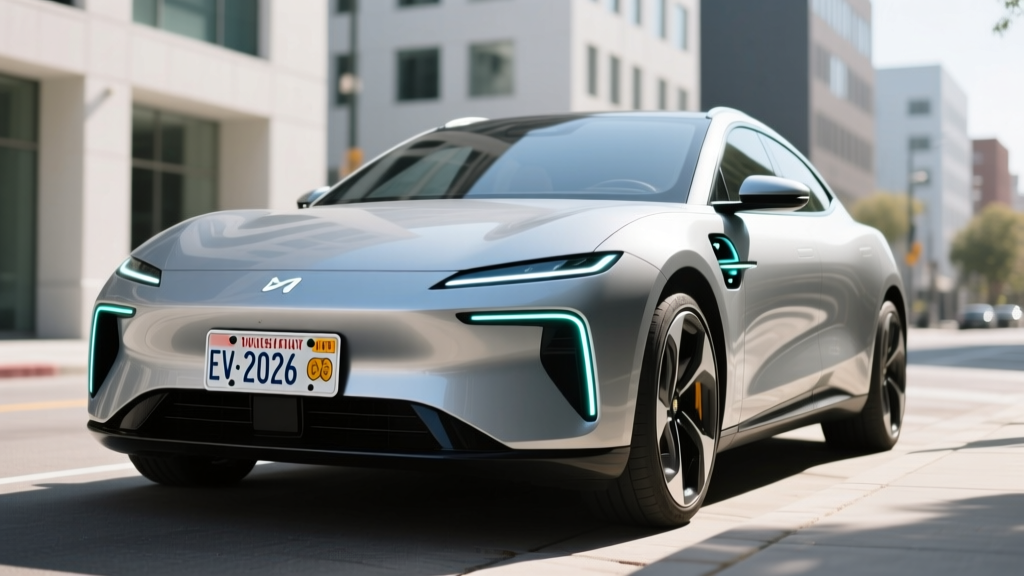
| "EV plates are a different size or format." | EV plates are standard-issue state plates in most jurisdictions. Specialty plates are optional and cosmetic in most states. |
| "I can skip emissions testing with an EV." | True for BEVs in most states — but PHEVs often still require emissions checks since they have gas engines. |
| "The EV surcharge replaces the tax credit." | State registration surcharges and the federal §30D tax credit are entirely separate. You can receive the federal credit and still pay a state EV fee. |
EV Registration in the Context of Your Purchase Decision
If you're weighing an EV against a gas car or hybrid, registration fees should factor into your decision — but they shouldn't drive it. Here's a practical framework:
Decision Framework: Does the EV Surcharge Matter for You?
- Choose an EV if: You have home charging access (Level 2, ~$500–$1,500 installed), drive 30+ miles/day, live in a state with HOV perks, and qualify for the §30D credit (income under $150K single / $300K joint; vehicle MSRP under $55K sedans / $80K SUVs/trucks). The registration surcharge ($50–$225/year) is easily offset by fuel savings (~$1,100/year vs gas at 15k miles).
- Choose a PHEV if: You want electric commuting (25–45 miles EV range) but need gas-engine flexibility for road trips, lack reliable home charging, or live in a rural area with sparse DC fast-charging infrastructure. PHEV surcharges are lower ($25–$100), and you still save on fuel for daily driving.
- Stick with gas if: You drive under 8,000 miles/year (fuel savings won't offset the EV price premium), live in an apartment without charging access, or reside in a state with high EV surcharges ($200+) and no HOV benefits.
First-Time EV Buyer Checklist: Registration and Beyond
For buyers new to electric vehicles, the registration process is the easy part. The harder questions are about charging, range, and daily practicality:
- Home charging: Do you have a garage or driveway where a Level 2 charger (240V, 32–48 amps, 7.7–11.5 kW) can be installed? Budget $500–$2,000 for the charger and electrician. If your electrical panel needs a 200-amp upgrade, add $1,500–$3,000.
- Real-world range: EPA range estimates are tested under controlled conditions. Expect 10–20% reduction at sustained highway speeds (70+ mph), and 20–40% loss in freezing temperatures. A vehicle rated at 310 miles EPA may deliver 250 miles on a winter highway trip.
- DC fast charging: For road trips, you'll use DC fast chargers (50–350 kW). Charge speed is measured in kW (power), while battery capacity is measured in kWh (energy). A 75 kWh battery charging at 150 kW peaks at roughly 2 miles per minute — but only up to ~80% State of Charge, after which the charge curve tapers significantly.
- Insurance quotes: Get quotes before purchasing. EV insurance can be 15–30% higher than equivalent gas cars. Shop multiple carriers; some now offer EV-specific policies.
- Tax credit eligibility: The §30D credit has strict requirements: buyer income caps, vehicle MSRP caps, and battery critical-mineral sourcing rules. Use the IRS's official guidance at irs.gov and consult a tax professional before assuming you qualify for the full $7,500.
Frequently Asked Questions
Do I need a special license plate for an electric vehicle?
No, in most states you receive the same standard-issue plate as any other vehicle. Some states offer optional specialty EV plates for an additional fee, but they're cosmetic — not required. The key difference is the EV registration surcharge added to your fee, not the plate itself.
Can I transfer my current plate to an EV?
In most states, yes. You can transfer existing plates to a newly purchased EV during the registration process, though you'll still owe any applicable EV surcharge at that time. Specialty or personalized plates follow the same transfer rules.
Do EV registration fees vary by vehicle weight or price?
Standard registration fees often scale with vehicle weight or value, but the EV surcharge is typically a flat annual amount regardless of the vehicle. A $55,000 Tesla Model Y and a $30,000 Chevy Equinox EV would pay the same EV surcharge in most states, though their base registration fees may differ.
Will my EV registration fee increase in the future?
Likely yes. As EV adoption grows and gas-tax revenue declines, more states are expected to raise EV surcharges or introduce mileage-based fees. Some states are already piloting per-mile road-use charges as a long-term replacement for the gas tax. Monitor your state legislature for changes.
Does a PHEV get the same surcharge as a full EV?
Usually not. Plug-in hybrids typically face a lower surcharge ($25–$100) than BEVs ($50–$225) because PHEVs still purchase gasoline and contribute to gas-tax revenue. Check your specific state's DMV fee schedule for exact PHEV rates.