Quick Answer: What Is EV Level 2 Charging and Do You Need It?
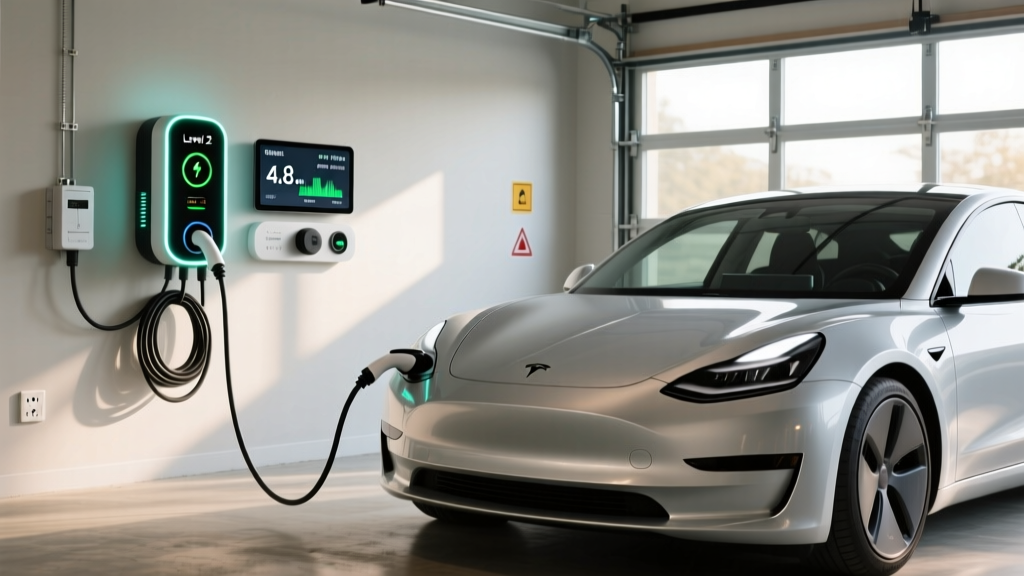
Level 2 charging uses a 240-volt circuit (the same as an electric dryer) to deliver 7–19 kW of power, adding roughly 25–60 miles of range per hour of charging. For most EV owners in 2026, a home Level 2 charger is the single most impactful ownership upgrade: it eliminates daily range stress, costs $800–$2,500 installed, and pays for itself within 12–18 months through fuel savings versus a gas car. If you have access to a garage, driveway, or dedicated parking spot with an electrical panel that can spare a 40–60 amp breaker, Level 2 is the practical default.
Level 1 vs Level 2 vs DC Fast: Understanding EV Charging Levels
Before spending money on equipment or an electrician, it helps to understand the three charging tiers and where each fits into real ownership. The single most common EV confusion is mixing up kW (power — how fast energy flows) with kWh (energy — how much your battery holds). Think of kW as the width of the pipe and kWh as the size of the tank.
| Level | Voltage | Power (kW) | Miles Added/Hour | Best For |
|---|---|---|---|---|
| Level 1 | 120V (standard outlet) | 1.0–1.4 kW | 3–5 miles | Overnight top-ups, PHEVs, low daily mileage |
| Level 2 | 240V (dryer-style) | 7.2–19.2 kW | 25–60 miles | Daily home charging, all BEVs and PHEVs |
| DC Fast | 400–900V DC | 50–350 kW | 150–1,000+ miles | Road trips, quick top-ups away from home |
For a typical EV with a 75 kWh battery (like the 2026 Tesla Model Y Long Range or Hyundai Ioniq 5), a full charge on Level 1 takes roughly 60+ hours — effectively unusable for daily driving. The same battery on a 48-amp (11.5 kW) Level 2 circuit charges from 10% to 100% in about 7 hours, meaning you plug in at night and wake up full every morning.
Real-World Cost: Equipment, Electrician, and Permit Breakdown
The sticker price of a Level 2 charger is only part of the investment. Total cost depends on your electrical panel's capacity, the distance from the panel to the charging location, and local permit requirements.
| Component | Low-End Estimate | High-End Estimate | Notes |
|---|---|---|---|
| Level 2 Charger (hardware) | $300 | $700 | Examples: Emporia Vue ($399), ChargePoint Home Flex ($699), Tesla Wall Connector ($475) |
| Electrician Labor | $400 | $1,200 | Varies by run length, conduit, and local rates ($75–$150/hr) |
| Electrical Permit | $50 | $300 | Required in most jurisdictions; some utilities rebate this |
| Panel Upgrade (if needed) | $1,500 | $3,500 | Only if your panel is maxed out or you have a 100-amp service |
| Total (no panel upgrade) | $750 | $2,200 | Typical for homes with 200-amp service and a nearby panel |
| Total (with panel upgrade) | $2,250 | $5,700 | Older homes or high-load situations |
Pro tip: Before hiring an electrician, check with your local utility. Many offer rebates of $250–$500 for Level 2 installations, and some provide free or discounted equipment. The Alternative Fuels Data Center maintains a state-by-state incentive database worth checking.
EV vs Gas: The True Annual Cost Comparison
The strongest argument for Level 2 home charging isn't convenience — it's economics. Electricity prices vary widely by state (Hawaii averages $0.43/kWh; Louisiana averages $0.10/kWh), but in most of the country, fueling an EV at home costs 40–60% less per mile than fueling a comparable gas car.
| Factor | EV (Home Level 2) | Gas Car (30 MPG Combined) |
|---|---|---|
| Fuel Cost per Mile | $0.03–$0.06 | $0.10–$0.14 |
| Annual Fuel (12,000 mi) | $360–$720 | $1,200–$1,680 |
| Annual Maintenance | $300–$500 | $800–$1,200 |
| Oil Changes | $0 | $200–$400 |
| 5-Year Total Fuel + Maint. | $3,300–$6,100 | $10,000–$14,400 |
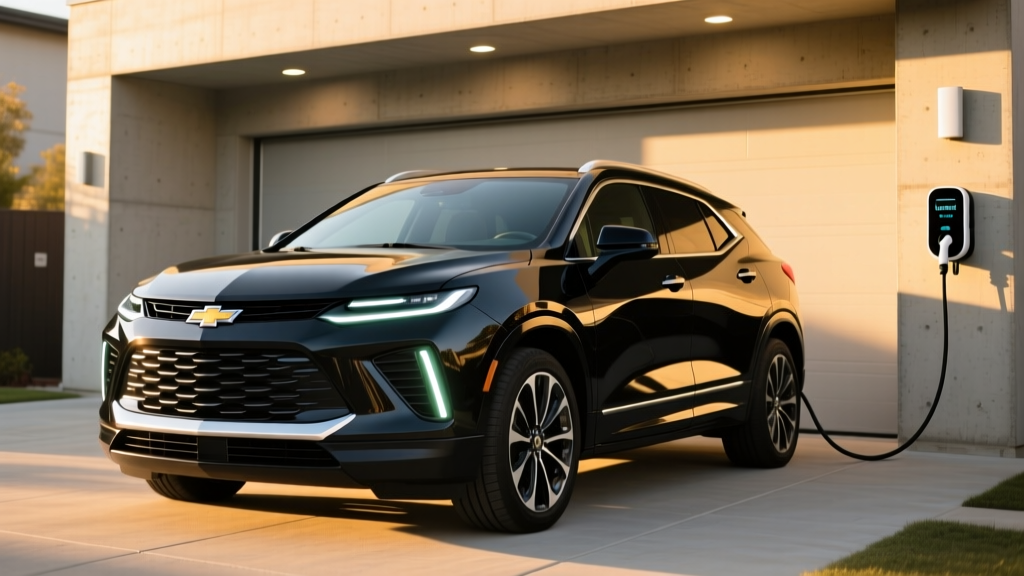
Based on EPA fuel economy data, a 2026 EV like the Chevrolet Equinox EV (319 mi EPA range, 3.5 mi/kWh efficiency) driven 12,000 miles per year at the national average electricity rate of $0.17/kWh costs roughly $581/year to fuel. A comparable gas SUV at 28 MPG combined and $3.40/gallon costs $1,457/year — a difference of $876 annually, or $4,380 over five years.
What First-Time EV Buyers Should Know Before Installing
Home Level 2 charging isn't universal. Here are the real-world considerations that determine whether it's viable for you:
Do You Have Home Charging Access?
According to the U.S. Department of Energy, roughly 65% of EV owners charge at home. If you live in a single-family home with a garage or driveway, you almost certainly can. If you're in an apartment or condo without assigned parking, Level 2 becomes harder — though workplace charging and public Level 2 networks (ChargePoint, EVgo, Blink) can fill the gap. Street-parking-only urban dwellers should consider whether their daily mileage (under 40 miles?) makes Level 1 sufficient, or whether a PHEV is a better fit.
What's Your Electrical Panel Capacity?
Most modern homes have 200-amp service, which can typically support a 48-amp (60-amp breaker) Level 2 circuit without an upgrade. Homes built before 1980 or those with significant existing loads (electric heat, hot tub, workshop) may need a panel assessment from a licensed electrician. A 100-amp panel almost always needs an upgrade to support Level 2.
How Does Climate Affect Charging?
In cold climates (below 20°F), EV batteries charge more slowly and range drops 15–30%. Level 2 charging with battery preconditioning — a feature on most 2026 EVs — mitigates this by warming the battery before and during charging. If you live in Minnesota, Maine, or Colorado, Level 2 is nearly essential; Level 1 in winter may not keep up with daily consumption plus cabin heating.
Hardwired vs NEMA 14-50 Outlet?
You have two installation options:
- Hardwired: The charger connects directly to your panel. Delivers maximum power (up to 48 amps/11.5 kW on a 60-amp breaker). More reliable, no plug to loosen. Recommended for most installations.
- NEMA 14-50 outlet: A 240V receptacle (like a dryer plug). Allows charger portability but is limited to 40 amps (9.6 kW) for continuous use per electrical code. Some jurisdictions now require GFCI breakers for 14-50 outlets, which can cause nuisance tripping with certain chargers.
Common EV Charging Misconceptions — Myth vs Fact
| Myth | Fact |
|---|---|
| "Level 2 charging damages the battery faster" | No. Modern EVs manage charge rates through thermal systems. Daily Level 2 charging at 80% State of Charge is well within battery design limits. Degradation data from Recurrent Auto shows under 10% capacity loss at 100,000 miles for most NMC and LFP packs. |
| "I need a 200-amp panel upgrade for any EV" | Most 200-amp panels handle a 48-amp charger fine. Only older or heavily loaded panels need upgrades. A 32-amp charger (40-amp breaker) works on most 100-amp panels. |
| "Public DC fast charging is better than home Level 2" | DC fast charging is for road trips. Daily use of 150+ kW DCFC can accelerate battery degradation. Home Level 2 at 7–11 kW is gentler, cheaper ($0.04/mi vs $0.12–$0.20/mi at public DCFC), and more convenient. |
| "EVs are useless in cold weather" | Range drops 15–30% in sub-freezing temps, but a Level 2 home charger with preconditioning means you leave every morning with a full "tank." Many 2026 EVs include heat pumps that cut winter energy use by 30%. |
| "I need the fastest charger money can buy" | Your car's onboard charger sets the ceiling. A 2026 Ford Mustang Mach-E accepts 10.5 kW AC max — paying for a 19.2 kW charger won't charge it any faster. Match the charger to your vehicle's AC acceptance rate. |
Federal Tax Credits and Utility Rebates for Level 2 Chargers
The federal Residential Clean Energy Credit does not cover EV chargers as of 2026 (the previous §30C Alternative Fuel Infrastructure Tax Credit expired for residential use). However, the §30D Clean Vehicle Credit still applies to the EV itself — up to $7,500 for new EVs meeting battery sourcing, MSRP caps ($55,000 cars / $80,000 SUVs and trucks), and buyer income limits ($150K single / $300K joint). Since 2024, this credit can be transferred to the dealer as a point-of-sale discount.
For the charger itself, look to state and utility incentives:
- Utility rebates: Many electric co-ops and IOUs offer $250–$500 rebates or reduced time-of-use rates for Level 2 installations
- State programs: California, New York, Massachusetts, and Colorado have active charger incentive programs — check your state energy office
- HOA protections: Over 20 states have "right to charge" laws preventing HOAs from blocking Level 2 installations in assigned parking
Decision Framework: Is Level 2 Right for You?
Choose Level 2 home charging if:
- You have a garage, carport, or driveway with electrical access
- Your daily driving exceeds 40 miles round-trip
- You own a full BEV (not just a PHEV with 30 mi electric range)
- You live in a cold climate where Level 1 can't keep up with winter energy demands
- Your electrical panel has a spare 40–60 amp breaker slot
Stick with Level 1 (for now) if:
- You drive under 30 miles per day and can charge 10+ hours overnight
- You own a PHEV with a small battery (under 20 kWh) that Level 1 can refill in 4–5 hours
- You're renting short-term and can't modify the electrical system
- Your panel is at capacity and an upgrade isn't in the budget
Rely on public charging if:
- You live in an apartment without charging access (advocate for building chargers or workplace charging)
- Your daily mileage is under 20 miles and you can top up at a grocery store or gym DCFC once a week
- You're considering a PHEV to avoid charging dependency entirely
Level 2 Charger Equipment Picks for 2026
Not all Level 2 chargers are equal. Key specs to compare: max amperage, cable length, connector type (NACS vs J1772 — note that most 2026 EVs from Ford, GM, Rivian, and others now ship with NACS ports), smart features, and UL certification.
- Tesla Wall Connector ($475): 48 amps hardwired, 24-ft cable, NACS native. Best for Tesla and NACS-equipped EVs. Includes J1772 adapter for older vehicles.
- ChargePoint Home Flex ($699): Configurable 16–50 amps, NEMA 14-50 or hardwired, J1772 connector (NACS adapter included). Strong app with scheduling and energy tracking.
- Emporia Level 2 EV Charger ($399): 48 amps hardwired, J1772, integrates with Emporia home energy monitor for solar-aware charging. Best value pick.
- Grizzl-E Smart ($549): 40 amps, NEMA 14-50 or hardwired, J1772, built in Canada with extreme cold-weather testing to -40°F. Rugged pick for harsh climates.
How long does a Level 2 charger take to fully charge an EV?
Depends on battery size and charger power. A 75 kWh battery on an 11.5 kW (48-amp) Level 2 charger takes roughly 7 hours from 10% to 100%. A larger 100 kWh battery (like the Ford F-150 Lightning Extended Range) takes about 9 hours. Most owners rarely charge from 0–100%; daily top-ups from 30–80% take 3–4 hours.
Can I install a Level 2 charger myself?
You can mount the hardware, but a licensed electrician must handle the 240V circuit wiring, breaker installation, and permit sign-off. DIY electrical work on 240V circuits is dangerous, often violates code, and can void your homeowner's insurance. Always hire a licensed professional for the electrical work.
Does Level 2 charging increase my electric bill significantly?
Yes, but less than you'd spend on gas. Adding 12,000 miles of EV driving at $0.17/kWh and 3.5 mi/kWh efficiency adds roughly $581/year to your electric bill — compared to $1,400+ in gas for a 28 MPG vehicle. Many utilities offer time-of-use plans with off-peak rates as low as $0.06–$0.08/kWh for overnight charging, cutting that cost further.
Will a Level 2 charger work with any EV?
Yes, with the right connector. Most non-Tesla EVs through 2024 used J1772. Starting in 2025, Ford, GM, Rivian, Volvo, and others adopted the NACS (Tesla-style) connector. Most Level 2 chargers ship with one or the other; adapters ($100–$200) bridge the gap. By 2026, NACS is becoming the dominant standard in North America.
What if my home only has 100-amp electrical service?
You can still install a Level 2 charger — just at a lower amperage. A 32-amp charger (requiring a 40-amp breaker) adds about 25 miles of range per hour, which covers most daily needs. If you want full 48-amp charging, expect to pay $1,500–$3,500 for a panel upgrade to 200 amps. Some smart chargers (like the Emporia) can dynamically limit draw to match your panel's capacity.
Is it worth getting a smart charger with Wi-Fi and app control?
If your utility offers time-of-use rates, yes — scheduling charges for off-peak hours (typically 11 PM – 6 AM) can cut your charging cost by 50–60%. Smart chargers also provide energy tracking, charge logging, and remote start/stop. If you're on a flat rate and just want plug-and-play simplicity, a basic non-connected charger works fine and costs $100–$200 less.