Quick Answer: Should You Buy an EV Kei Truck?
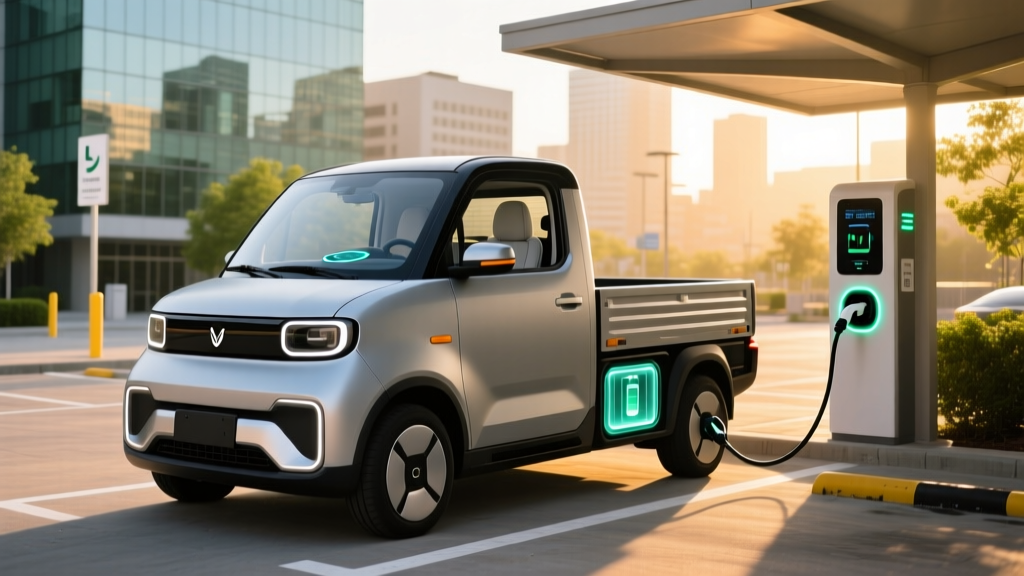
An EV kei truck is a compact, battery-electric utility vehicle based on Japan's kei car regulations — typically offering 50–90 miles of EPA-estimated range, a 10–20 kWh battery, and a price between $15,000 and $30,000 before incentives. They excel as short-range work and farm vehicles, neighborhood haulers, and last-mile delivery platforms. However, their limited range, low top speeds (often 50–65 mph), and sparse DC fast-charging capability make them unsuitable for highway commuting or long-distance use. If your daily driving stays under 40 miles round-trip and you can charge at home on a standard 120V outlet, an EV kei truck can cost pennies per mile to operate and may qualify for federal or state incentives.
What Is an EV Kei Truck — and Why Are They Gaining Attention?
Kei trucks (keitora) have been staples of Japanese agriculture, construction, and small-business logistics for decades. Built to Japan's kei car dimension regulations — roughly 134 inches long, 58 inches wide — they pack a surprisingly functional cargo bed into a footprint smaller than a Smart car. The electric variant replaces the traditional 660cc gasoline engine with a battery-electric powertrain, typically pairing a 10–20 kWh lithium-ion (often LFP) battery pack with a 15–30 kW electric motor driving the rear or all four wheels.
In the US market, several factors are driving interest in EV kei trucks as of 2026:
- Rising fuel costs make the 3–4 cents-per-mile electricity cost of a small EV far cheaper than the 15–20 cents-per-mile fuel cost of a gas kei truck getting 25–35 MPG.
- Federal and state incentives can substantially reduce purchase prices, though eligibility depends on specific IRS §30D and §25E rules.
- Import availability has expanded: Japanese-market EV kei trucks from manufacturers like Suzuki, Daihatsu, and Honda — as well as Chinese-market micro-EVs — are increasingly imported under the 25-year rule or through specialty importers.
- US-made micro-EV trucks from startups are emerging to fill the gap with purpose-built, federally compliant electric utility vehicles.
EV Kei Truck Specs: Range, Battery, and Charging by the Numbers
The most critical decision factors for any EV are range, battery capacity, and charging speed. Here's what the current EV kei truck landscape looks like with real specifications:
| Spec Category | Typical EV Kei Truck | Notes |
|---|---|---|
| Battery Capacity | 10–20 kWh (LFP common) | LFP chemistry favors longevity and safety over energy density |
| EPA-Estimated Range | 50–90 miles | Real-world highway/cold: expect 30–55 miles |
| Motor Output | 15–30 kW (20–40 HP) | Top speed typically 50–65 mph |
| Level 1 Charging (120V) | 0.8–1.4 kW / 4–8 mi/hr | Full charge overnight on a standard household outlet |
| Level 2 Charging (240V) | 3–6 kW / 15–30 mi/hr | 2–4 hours for a full charge |
| DC Fast Charging | Rare; some models offer CHAdeMO at 15–25 kW | Most imported kei trucks lack DC fast-charging capability |
| Payload Capacity | 550–770 lbs | Per kei class regulation |
| 0–30 mph | 5–8 seconds | Adequate for low-speed work environments |
Real-World Range Reality Check
An EV kei truck rated at 70 miles EPA will realistically deliver 45–55 miles on rural roads at 45–55 mph, and potentially 30–40 miles in freezing temperatures with cabin heat running. LFP batteries lose more capacity in cold weather than NMC chemistries. For farm and job-site use at low speeds (15–25 mph), range can exceed the EPA estimate because regenerative braking is more effective and aerodynamic drag is minimal.
EV Kei Truck vs. Gas Kei Truck: Cost and Efficiency Comparison
The core purchase decision comes down to operating economics. Here's a data-driven comparison between a typical EV kei truck and its gasoline counterpart (660cc, 25–35 MPG combined):
| Metric | EV Kei Truck | Gas Kei Truck (660cc) |
|---|---|---|
| Purchase Price (base) | $15,000–$30,000 | $8,000–$18,000 (imported used/new) |
| Fuel/Energy Cost per Mile | $0.03–$0.05 | $0.15–$0.22 |
| Annual Fuel/Energy (10,000 mi) | $300–$500 | $1,500–$2,200 |
| Maintenance (annual) | $100–$200 | $400–$700 |
| Oil Changes | None | 2–3 per year |
| Emissions | Zero tailpipe | ~4.6 metric tons CO₂/year |
| Range per Fill/Charge | 50–90 miles | 200–300 miles |
| Refuel/Recharge Time | 3–8 hours (Level 1/2) | 3 minutes |
The math favors the EV kei truck for users who drive less than 50 miles daily and have home charging. Over five years and 50,000 miles, the EV saves roughly $6,000–$9,000 in fuel and maintenance, which can offset the higher purchase price — especially if incentives apply.
Total Cost of Ownership: 5-Year Breakdown
| Cost Category | EV Kei Truck | Gas Kei Truck |
|---|---|---|
| Purchase Price | $22,000 (mid-range example) | $14,000 |
| Federal Tax Credit (potential) | Up to $7,500 (§30D) or $4,000 (§25E used) | $0 |
| Effective Purchase Price | $14,500–$22,000 | $14,000 |
| Home Charger (Level 2 install) | $500–$1,500 | $0 |
| Energy/Fuel (5 yrs, 50K mi) | $1,500–$2,500 | $7,500–$11,000 |
| Maintenance (5 yrs) | $500–$1,000 | $2,000–$3,500 |
| Insurance (5 yrs) | $3,000–$5,000 | $2,500–$4,500 |
| 5-Year Total | $19,500–$32,000 | $26,000–$33,000 |
Insurance for imported or specialty EV kei trucks can be higher due to limited parts availability and specialty insurer requirements. Get quotes before purchasing — some mainstream insurers may not cover Japanese-market imports at all.
Federal Tax Credits and Incentives: What Actually Applies
The federal EV tax credit landscape in 2026 is complex, and kei truck buyers need to understand which provisions may apply:
§30D New Clean Vehicle Credit (up to $7,500)
- MSRP cap: Vans, SUVs, and pickup trucks: $80,000. Whether a kei truck qualifies as a "pickup" under IRS classification depends on GVWR and bed specs — consult IRS §30D guidance.
- Income caps: $150K single / $225K head of household / $300K joint filers (modified AGI).
- Battery sourcing: Critical minerals and battery components must meet phased-in domestic/free-trade-agreement sourcing percentages — many Japanese-market kei trucks may not qualify.
- Point-of-sale transfer: Eligible buyers can transfer the credit to the dealer for an immediate price reduction.
- Manufacturer assembled in North America: Required — most Japanese-market kei trucks fail this requirement.
Bottom line: Most imported Japanese EV kei trucks will not qualify for the §30D new-vehicle credit because they are not assembled in North America and may not meet battery sourcing rules. However, if you purchase a used EV kei truck from a dealer for $25,000 or less, the §25E Previously-Owned Clean Vehicle Credit may provide up to $4,000 (30% of sale price, capped at $4,000), subject to income limits. Always verify eligibility with a tax professional and check the latest IRS §25E page.
State-level incentives vary widely. States like California, Colorado, and Oregon offer additional rebates for small electric utility vehicles. Check your state energy office or the AFDC state incentives database for specifics.
Real-World Ownership: What First-Time Buyers Need to Know
Home Charging Is Essential
Because most EV kei trucks lack DC fast-charging and have small batteries, Level 1 (120V standard outlet) charging is practical — a 15 kWh battery charges fully in roughly 10–15 hours, which works for overnight replenishment. A Level 2 (240V) setup cuts that to 3–5 hours and costs $500–$1,500 installed, depending on your electrical panel's capacity. If your panel is maxed out, a 200-amp upgrade can add $1,500–$3,000.
Street-Legality Varies by State
This is a critical gotcha. Imported Japanese-market kei trucks may not meet US DOT/FMVSS safety standards unless they are over 25 years old (exempt under the 25-year import rule). Some states register them as low-speed vehicles (LSVs) or neighborhood electric vehicles (NEVs), restricting them to roads with speed limits of 35 mph or less. Others require full compliance for registration. Verify your state's DMV rules before importing or purchasing.
Cold Weather Hits Hard
Small battery packs have less thermal mass, and LFP chemistry — common in kei trucks for its durability — loses 20–35% of usable capacity in sub-freezing temperatures. If you live in a northern climate, plan for effectively half the EPA-rated range in winter. Battery preconditioning is rare in this vehicle class.
Parts and Service Are Limited
Unlike a mainstream EV from Tesla, Ford, or Hyundai, an imported EV kei truck will not have a dealer service network in the US. Parts may need to be ordered from Japan or China with multi-week lead times. Independent mechanics may be unfamiliar with the powertrain. Factor this into your ownership plan.
Common Misconceptions About EV Kei Trucks
| Myth | Fact |
|---|---|
| "They're street-legal everywhere in the US" | Import compliance varies; many can only be registered as LSVs/NEVs on low-speed roads, and some states won't register them at all without DOT compliance. |
| "The small battery means it charges in minutes" | Small batteries often accept only low charge rates (1–6 kW). Level 1 charging still takes 10–15 hours for a full cycle. |
| "They qualify for the full $7,500 federal tax credit" | Most Japanese-market kei trucks fail the North American assembly requirement. The used-vehicle §25E credit (up to $4,000) is more realistic. |
| "EV kei trucks can tow like a regular pickup" | Payload is 550–770 lbs and towing capacity is minimal (often unlisted or under 1,000 lbs). These are light-duty utility vehicles, not work trucks. |
| "LFP batteries degrade quickly" | LFP chemistry actually offers superior cycle life (2,000–5,000+ cycles to 80% SoH) compared to NMC, making it well-suited to small, frequently cycled kei truck batteries. |
Decision Framework: Is an EV Kei Truck Right for You?
Choose an EV Kei Truck If:
- Your daily driving is under 40 miles round-trip on low-speed roads
- You have access to home charging (even a standard 120V outlet works)
- You need a compact utility vehicle for a farm, ranch, campus, or job site
- You want to minimize fuel and maintenance costs for short-haul trips
- Your state allows registration of imported or LSV-class vehicles
- You value zero tailpipe emissions for indoor or enclosed-area use (warehouses, barns)
Choose a Gas Kei Truck or a Different EV If:
- You regularly drive more than 50 miles per day or need highway-speed capability
- You live in a cold climate and cannot tolerate 30–40% winter range loss
- You need reliable, fast refueling for unpredictable work schedules
- Your state does not permit registration of the model you want
- You need to tow more than ~1,000 lbs or carry heavy payloads frequently
- You want full crash-test safety ratings and modern ADAS features (kei trucks generally lack these)
Frequently Asked Questions
Can I drive an EV kei truck on the highway?
Most EV kei trucks have top speeds of 50–65 mph, which is technically legal on some highways but impractical and unsafe in mixed traffic. Their small size, lack of crash structure, and absence of modern safety systems (airbags in some models, ABS, stability control) make highway driving inadvisable. They are best suited to rural roads, private property, and low-speed urban environments.
How long will the battery last in an EV kei truck?
LFP batteries commonly used in EV kei trucks are rated for 2,000–5,000 charge cycles before degrading to 80% of original capacity. At one full cycle per day, that translates to 5.5–13.7 years of daily use. Replacement battery packs for 15 kWh systems typically cost $3,000–$6,000, though availability depends on the manufacturer and importer.
Are there any US-made EV kei trucks?
As of 2026, a handful of US startups offer electric micro-trucks and utility vehicles that occupy the same niche, though they may not meet the strict Japanese kei dimension regulations. These vehicles often have the advantage of North American assembly (potentially qualifying for §30D credits), DOT compliance, and domestic service networks. Research brands like Arcimoto (now part of a broader EV platform) and various low-speed vehicle manufacturers for US-compliant options.
What's the cheapest way to own an EV kei truck?
The most cost-effective path is purchasing a used Japanese-market EV kei truck (25+ years old for hassle-free import, or a newer model through a registered importer) for $8,000–$15,000, then claiming the §25E used EV credit of up to $4,000 if eligible. Pair this with Level 1 home charging on an existing 120V outlet to avoid installation costs, and your all-in first-year cost can be under $10,000 with operating costs of $300–$500 annually.
Do EV kei trucks have regenerative braking?
Yes, most EV kei trucks feature regenerative braking, though the aggressiveness varies by model. Some offer adjustable regen levels or one-pedal driving modes. Regen is particularly effective in stop-and-go farm and job-site use, extending range by 10–20% compared to steady-state driving.