The Short Answer on EV Efficiency
EV efficiency measures how far a vehicle travels per unit of electrical energy, typically expressed as kWh/100 miles or MPGe. The most efficient 2026 EVs consume 24-28 kWh/100mi (120-140 MPGe), while larger trucks and SUVs use 40-50 kWh/100mi (70-85 MPGe). At the US average electricity rate of $0.17/kWh, a highly efficient EV costs $4.08-$4.76 to drive 100 miles, compared to $12-$15 for a 25-30 MPG gas car at $3.50/gallon. Efficiency directly determines your real-world range, charging speed, and operating costs—making it the single most important spec to evaluate beyond sticker price.
Understanding EV Efficiency Metrics: MPGe vs kWh/100mi
When shopping for an EV, you'll encounter two efficiency metrics on the EPA's fueleconomy.gov window sticker: MPGe and kWh/100mi. Both matter, but they serve different purposes.
MPGe (Miles Per Gallon Equivalent) translates electrical energy into a gasoline-equivalent number. One gallon of gasoline contains 33.7 kWh of energy, so MPGe tells you how many miles an EV can travel on 33.7 kWh. A 120 MPGe rating means the vehicle travels 120 miles on 33.7 kWh. This metric helps you compare EVs to gas cars at a glance, but it obscures actual electricity consumption.
kWh/100mi (Kilowatt-hours per 100 miles) is the EV equivalent of liters-per-100km used in Europe. It tells you exactly how much electrical energy the vehicle consumes to travel 100 miles. Lower numbers are better. This is the metric you need to calculate charging costs and compare efficiency between EVs.
Here's why kWh/100mi matters more: if your utility charges $0.17/kWh and your EV consumes 28 kWh/100mi, you pay $4.76 per 100 miles. If it consumes 42 kWh/100mi, you pay $7.14. That's a 50% cost difference over the same distance, even though both vehicles are "electric."
2026 EV Efficiency Benchmarks: What's Good, Average, and Poor
EV efficiency varies dramatically based on vehicle weight, aerodynamics, powertrain design, and tire choice. Here's how current models stack up:
| Vehicle Category | Example Models | kWh/100mi | MPGe | Cost per 100mi* |
|---|---|---|---|---|
| Compact Sedan/Hatch | Hyundai Ioniq 6, Tesla Model 3 RWD | 24-27 | 125-140 | $4.08-$4.59 |
| Midsize Sedan | Tesla Model 3 LR, BMW i4 eDrive40 | 26-30 | 112-130 | $4.42-$5.10 |
| Compact SUV/Crossover | Hyundai Ioniq 5, Tesla Model Y LR | 28-33 | 102-120 | $4.76-$5.61 |
| Midsize SUV | Ford Mustang Mach-E, Kia EV6 | 32-38 | 88-105 | $5.44-$6.46 |
| Full-Size Truck | Ford F-150 Lightning, Rivian R1T | 42-50 | 67-80 | $7.14-$8.50 |
| Large Luxury SUV | BMW iX, Mercedes EQS SUV | 38-45 | 75-88 | $6.46-$7.65 |
*Based on $0.17/kWh US average residential rate. Your actual rate may vary by region and time-of-use plan.
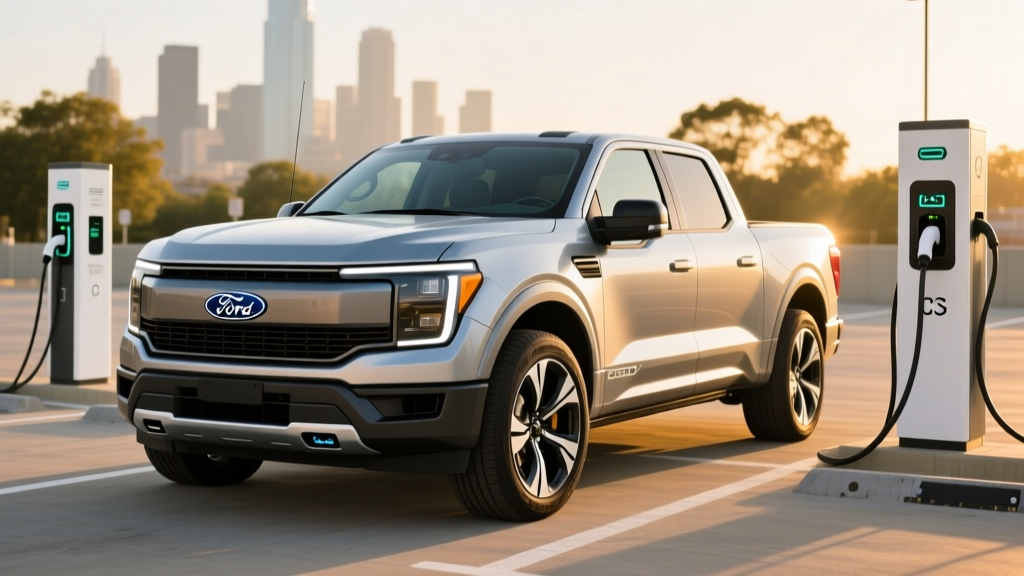
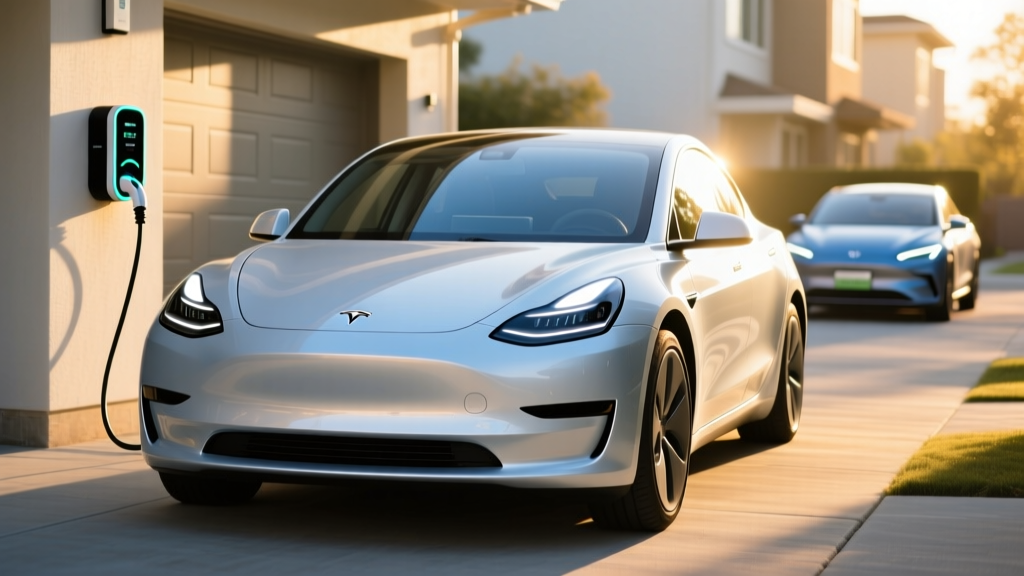
The Hyundai Ioniq 6 SE Long Range leads the pack at 24 kWh/100mi (140 MPGe combined), thanks to its 0.21 drag coefficient and heat pump standard equipment. The Tesla Model 3 Rear-Wheel Drive achieves 25 kWh/100mi (132 MPGe). At the other extreme, the Ford F-150 Lightning Platinum consumes 48 kWh/100mi (70 MPGe) due to its 6,500-pound curb weight and boxy aerodynamics.
EV vs Gas vs Hybrid: Efficiency and Cost Comparison
To put EV efficiency in context, let's compare annual fueling costs across powertrains for 12,000 miles of driving:
| Vehicle Type | Efficiency | Energy Cost | Annual Cost | 5-Year Cost |
|---|---|---|---|---|
| Efficient EV (Ioniq 6) | 24 kWh/100mi | $0.17/kWh | $490 | $2,450 |
| Average EV (Model Y) | 30 kWh/100mi | $0.17/kWh | $612 | $3,060 |
| Inefficient EV (F-150 Lightning) | 48 kWh/100mi | $0.17/kWh | $979 | $4,895 |
| Hybrid (Toyota Prius) | 57 MPG | $3.50/gal | $737 | $3,685 |
| Gas Sedan (Honda Civic) | 33 MPG | $3.50/gal | $1,273 | $6,365 |
| Gas Truck (Ford F-150 4WD) | 20 MPG | $3.50/gal | $2,100 | $10,500 |
Even the least efficient EV in this comparison (F-150 Lightning) costs less to fuel annually than a midsize gas sedan. The most efficient EV saves $783 per year versus a 33 MPG gas car—$3,915 over five years. However, these savings assume home charging at residential rates.
Public charging changes the math. DC fast charging networks like Electrify America and EVgo charge $0.35-$0.50/kWh in most markets. At $0.45/kWh, that same F-150 Lightning costs $2,592 annually to fuel—more than the gas Prius. If you rely exclusively on public charging, prioritize efficiency above all else or reconsider an EV purchase.
Real-World Factors That Destroy EPA Efficiency Numbers
The EPA's efficiency ratings assume moderate temperatures, mixed city/highway driving, and conservative acceleration. Real-world conditions frequently reduce efficiency by 15-40%:
Cold Weather Impact
Battery chemistry slows in cold temperatures, and cabin heating draws 2-5 kW continuously. In 20°F weather, expect 20-30% higher energy consumption (lower MPGe) and 15-25% reduced range. A vehicle rated at 30 kWh/100mi may consume 38-42 kWh/100mi in winter. EVs with heat pumps (standard on Hyundai/Kia, Tesla, BMW) lose 10-15% less range than those with resistive heaters.
Highway Speed
Aerodynamic drag increases with the square of speed. Driving 80 MPH instead of 65 MPH increases consumption by 25-35%. A Model 3 rated at 25 kWh/100mi combined may consume 32-34 kWh/100mi at sustained 80 MPH. If your commute is 90% highway at 75+ MPH, derate EPA efficiency by 20%.
Terrain and Towing
Mountain driving with 5,000+ feet of elevation gain can increase consumption by 40-60% on uphill segments (regenerative braking recovers some energy on descents). Towing a 3,000-pound trailer with an F-150 Lightning pushes consumption to 65-75 kWh/100mi, cutting range nearly in half.
Tire Choice
Switching from low-rolling-resistance OEM tires to aggressive all-terrain or winter tires increases consumption by 5-10%. The EPA tests vehicles with factory tires; aftermarket changes aren't reflected in the sticker numbers.
The True Cost of EV Ownership: Beyond Efficiency
Efficiency determines fueling costs, but total ownership involves purchase price, incentives, maintenance, insurance, and depreciation. Here's a realistic 5-year breakdown for a 2026 Tesla Model 3 Long Range ($42,990 MSRP) versus a 2026 Honda Accord 2.0T ($33,000 MSRP):
| Cost Category | Tesla Model 3 LR (EV) | Honda Accord 2.0T (Gas) |
|---|---|---|
| Purchase Price | $42,990 | $33,000 |
| Federal Tax Credit (§30D) | -$7,500* | $0 |
| Effective Purchase Price | $35,490 | $33,000 |
| Fuel/Energy (60,000 miles) | $3,060 | $6,365 |
| Maintenance | $1,200 | $2,800 |
| Insurance (5 years) | $9,500 | $7,200 |
| Depreciation (est. 5-year) | $18,000 | $14,500 |
| Total 5-Year Cost | $67,250 | $63,865 |
*§30D credit eligibility requires meeting income caps ($150k single/$300k joint), MSRP limits ($55k sedans), and battery sourcing requirements. Verify current-year rules at IRS.gov. Credit can be transferred to dealer at point of sale as of 2024+.
The Model 3 costs $3,385 more over five years despite $3,305 in fuel savings and $1,600 in maintenance savings. Higher insurance premiums ($2,300 more) and steeper depreciation ($3,500 more) erase the operational advantages. This pattern holds for many EVs: lower running costs don't always overcome higher purchase prices and insurance.
Maintenance savings are real but modest. EVs eliminate oil changes, transmission fluid, spark plugs, and exhaust system repairs. However, they still require tire rotations (every 6,000-8,000 miles), cabin air filters, brake fluid checks, and wiper blades. Expect $200-$300/year in routine maintenance versus $500-$700 for gas cars. Brake pad replacement is rare due to regenerative braking, but tire wear can be 10-20% faster due to instant torque and heavier vehicle weight.
Decision Framework: When EV Efficiency Matters Most
Choose a High-Efficiency EV If:
- You lack home charging and rely on public DC fast charging at $0.35-$0.50/kWh. At these rates, a 48 kWh/100mi truck costs $1,800-$2,400/year to fuel versus $960-$1,200 for a 24 kWh/100mi sedan.
- You drive 15,000+ miles annually. High mileage amplifies efficiency savings. At 20,000 miles/year, the difference between 25 and 40 kWh/100mi is $510/year at residential rates.
- You live in a cold climate. Efficient EVs with heat pumps lose less range in winter, reducing range anxiety and charging frequency.
- You frequently road-trip. Efficient vehicles charge faster (lower kWh needed to add 100 miles of range) and require fewer stops on long drives.
Efficiency Matters Less If:
- You have home solar or cheap overnight rates ($0.08-$0.12/kWh). At $0.10/kWh, even a 48 kWh/100mi truck costs only $576/year to fuel.
- You need towing or cargo capacity. The F-150 Lightning's 7,700-pound tow rating and 528 cu ft bed volume justify its 48 kWh/100mi consumption if you actually use those capabilities.
- You drive under 8,000 miles/year. Low mileage minimizes fuel cost differences. At 6,000 miles/year, the gap between 25 and 40 kWh/100mi is just $153/year.
Common EV Efficiency Myths vs Reality
| Myth | Reality |
|---|---|
| "All EVs are equally efficient since they're electric." | Efficiency varies 2x between models. An Ioniq 6 uses 24 kWh/100mi; an F-150 Lightning uses 48 kWh/100mi. That's the difference between a 50 MPG Prius and a 25 MPG Camry. |
| "MPGe tells you everything you need to know." | MPGe obscures actual electricity consumption. Use kWh/100mi to calculate costs. A 100 MPGe EV consumes 33.7 kWh/100mi; a 130 MPGe EV consumes 25.9 kWh/100mi. |
| "EVs are always cheaper to fuel than gas cars." | False if you rely on public charging at $0.45/kWh. A 40 kWh/100mi EV costs $5.40 per 100 miles; a 30 MPG gas car at $3.50/gal costs $11.67. But a 35 kWh/100mi EV on public charging costs $15.75—more than the gas car. |
| "Bigger batteries are always better." | Larger batteries add weight, reducing efficiency. A 100 kWh battery may give 320 miles of range but consume 31 kWh/100mi. A 75 kWh battery with better efficiency might deliver 300 miles at 25 kWh/100mi, charging faster and costing less. |
| "Regenerative braking makes EVs infinitely efficient in cities." | Regen recovers 15-25% of kinetic energy in stop-and-go traffic, improving city efficiency by 10-20% versus highway. But it doesn't eliminate consumption—city driving still uses 22-35 kWh/100mi depending on the vehicle. |
Frequently Asked Questions
What's a good kWh/100mi number for an EV?
Under 28 kWh/100mi is excellent (Ioniq 6, Model 3). 28-35 kWh/100mi is average for crossovers and midsize SUVs (Model Y, Ioniq 5). 35-42 kWh/100mi is typical for larger SUVs (BMW iX, Rivian R1S). Above 42 kWh/100mi is inefficient, mostly trucks and heavy luxury vehicles (F-150 Lightning, Hummer EV).
Does EV efficiency degrade over time as the battery ages?
Minimally. Battery degradation reduces total capacity (and thus range) by 10-15% over 8-10 years, but efficiency (kWh/100mi) stays nearly constant. A vehicle that consumed 28 kWh/100mi when new will still consume ~28 kWh/100mi at 150,000 miles—it just won't travel as far on a full charge.
How does efficiency affect charging speed?
Directly. If your EV consumes 25 kWh/100mi, adding 100 miles of range requires 25 kWh. At a 150 kW DC fast charger, that takes 10 minutes (25 kWh ÷ 150 kW × 60). If your EV consumes 40 kWh/100mi, adding 100 miles requires 40 kWh and takes 16 minutes at the same charger. Efficient EVs spend less time charging on road trips.
Why is my real-world efficiency worse than the EPA sticker?
Common causes: sustained highway speeds above 70 MPH (aerodynamic drag), cold weather below 40°F (battery resistance + cabin heating), aggressive acceleration (instant torque temptation), roof racks or cargo boxes (drag), and aftermarket tires (rolling resistance). Track your consumption via the vehicle's trip computer and adjust driving habits to match EPA numbers.
Are hybrids more efficient than EVs?
In terms of energy conversion, no. EVs convert 85-90% of electrical energy to motion; hybrids convert 25-35% of gasoline energy to motion. However, hybrids don't suffer cold-weather range loss, don't require charging infrastructure, and achieve 50-57 MPG (Prius, Accord Hybrid) without range anxiety. For drivers without home charging or in extreme climates, hybrids may be more practical despite lower theoretical efficiency.
Does the federal tax credit favor efficient EVs?
No. The §30D credit provides up to $7,500 for any qualifying EV regardless of efficiency, as long as it meets MSRP caps ($55k sedans, $80k SUVs/trucks), buyer income limits ($150k single/$300k joint), and battery sourcing requirements. A 48 kWh/100mi F-150 Lightning qualifies for the same credit as a 24 kWh/100mi Ioniq 6, assuming both meet sourcing rules.
Bottom Line: Efficiency Is Your Best Proxy for Real-World Costs
EV efficiency (kWh/100mi) directly determines your fueling costs, charging frequency, road-trip convenience, and cold-weather usability. Before signing a purchase agreement, check the EPA's kWh/100mi rating on fueleconomy.gov, multiply by your local electricity rate, and project annual costs based on your mileage. If you lack home charging and must rely on $0.40-$0.50/kWh public charging, prioritize efficiency above all else—or reconsider whether an EV fits your situation. For home-charging owners with moderate mileage, efficiency matters but shouldn't override cargo space, passenger comfort, or towing needs. The most efficient EV is only the best choice if it actually fits your life.