The Real Math Behind EV Depreciation and Ownership
The sticker price of an electric vehicle tells only part of the story. What you actually spend over five years — and what you recoup at trade-in or sale — determines whether going electric saves money or silently drains your wallet. EV depreciation has been one of the most volatile variables in electric ownership, swinging wildly as battery technology advances, price wars erupt, and federal incentives shift the effective purchase price.
This guide breaks down every major cost category with concrete 2026 figures: purchase price after incentives, electricity versus gasoline, maintenance savings, insurance premiums, and the depreciation curves that separate smart buys from financial pitfalls. We use a mid-size crossover benchmark — the 2026 Hyundai Ioniq 5 SEL AWD — against a comparable gas-powered SUV to show where EV ownership wins, where it costs more, and what the five-year ledger actually looks like.
Five-Year Total Cost of Ownership: EV vs. Gas Side by Side
Before examining individual line items, here's the aggregate picture. These figures assume 15,000 miles driven annually (75,000 total), home Level 2 charging at the U.S. average electricity rate, and a trade-in at year five.
| Cost Category | Ioniq 5 SEL AWD (EV) | RAV4 AWD (Gas) |
|---|---|---|
| Base MSRP | $47,650 | $34,075 |
| Federal Tax Credit (§30D) | −$7,500 (if eligible) | $0 |
| Effective Purchase Price | $40,150 | $34,075 |
| Fuel / Electricity (75k mi) | $4,125 | $9,375 |
| Maintenance (5 years) | $1,800 | $3,750 |
| Insurance (5 years) | $10,500 | $8,250 |
| Estimated Resale Value (Yr 5) | $21,000 | $19,500 |
| Depreciation (Purchase − Resale) | $19,150 | $14,575 |
| Net 5-Year Cost (all in, minus resale) | $36,575 | $35,950 |
Sources: EPA fueleconomy.gov, Hyundai USA 2026 pricing, Kelley Blue Book 5-year cost-to-own data, AAA Your Driving Costs 2025. Electricity at $0.165/kWh, gas at $3.50/gal, 27 MPG combined.
The takeaway: even with the full $7,500 federal credit, the Ioniq 5 costs roughly $625 more over five years than the RAV4 in this scenario. But the gap narrows — or reverses — depending on your state incentives, local electricity rates, annual mileage, and whether you qualify for the tax credit. Higher-mileage drivers benefit more from EV fuel savings, while low-mileage drivers may not close the depreciation gap.
EV Depreciation Trends: Why Resale Values Have Been a Rollercoaster
Depreciation is the single largest ownership cost for any vehicle, and EVs have experienced unusual volatility in this category. Here's what the data shows as of early 2026:
- Average 5-year EV depreciation: 45–55% of original MSRP, compared to 38–45% for mainstream gas vehicles.
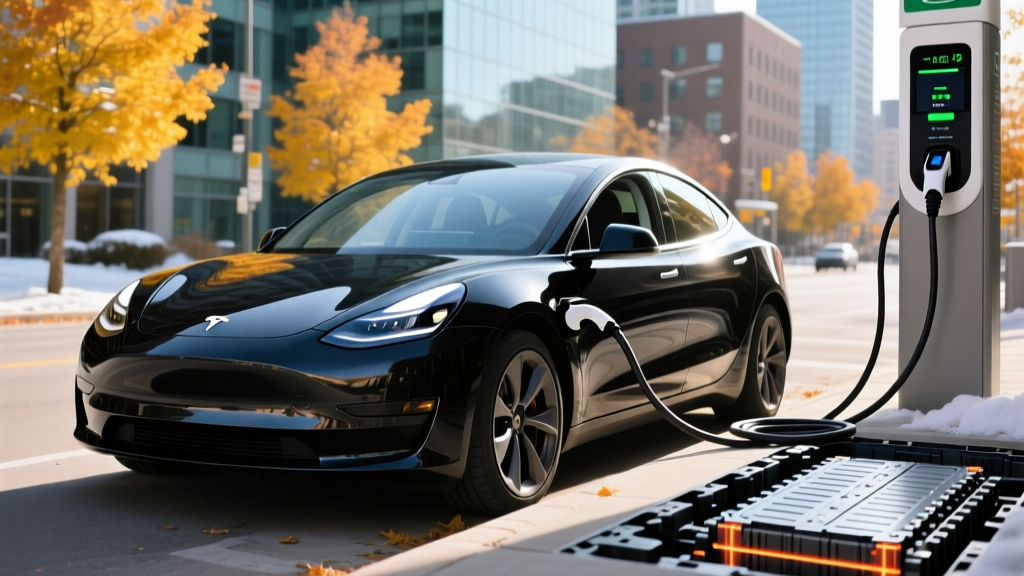
- Tesla price cuts (2023–2024) cascaded through the used market, dragging resale values for all EVs downward. A 2023 Model 3 that stickered at $43,000 traded for under $22,000 by mid-2025.
- Battery technology cycles accelerate obsolescence. When a new model year offers 20% more range at the same price, the prior generation's resale value drops.
- Used EV tax credit (§25E): Up to $4,000 on qualifying used EVs under $25,000, which supports demand and partially stabilizes resale prices for older models.
- Brand divergence is real: Porsche Taycan and Rivian R1T have held value better than mass-market sedans, while luxury EVs from Mercedes (EQS, EQE) have suffered steep drops exceeding 60% over three years.
The best hedge against EV depreciation? Buy a model with strong demand, proven battery longevity, and a competitive price that won't be undercut by the next model year. Vehicles priced near $40,000 with 300+ miles of range tend to hold value better than six-figure luxury EVs or sub-$30,000 short-range models.
Federal Tax Credit Eligibility: Do You Qualify for Up to $7,500?
The IRS §30D Clean Vehicle Credit remains the most significant purchase incentive for new EVs, but qualification depends on a web of requirements that trip up many buyers. As of 2026, these are the binding rules:
- Vehicle MSRP caps: Vans, SUVs, and pickups must not exceed $80,000 MSRP. Sedans and other body styles are capped at $55,000.
- Buyer income limits (modified AGI): $300,000 for joint filers, $225,000 for heads of household, $150,000 for single filers. Based on the current or prior tax year — whichever is lower.
- Battery component sourcing: To receive the full $7,500, the vehicle must meet both the critical-minerals requirement ($3,750 portion) and the battery-components requirement ($3,750 portion). Sourcing thresholds tighten annually. Vehicles meeting only one requirement yield $3,750.
- Final assembly: Must occur in North America (U.S., Canada, or Mexico). Verify via VIN at fueleconomy.gov.
- Point-of-sale transfer: Since 2024, you can transfer the credit to the dealer at purchase, reducing your out-of-pocket cost immediately rather than waiting to claim it on your tax return. The dealer must be IRS-registered.
- One credit per vehicle, one per taxpayer per year: You cannot stack credits across multiple EV purchases in the same year.
Source: IRS.gov — New Clean Vehicle Credit. Rules are subject to legislative change. Consult a tax professional for your specific situation.
Beyond the federal credit, many states and utilities offer additional rebates. California's CVRP has been replaced by point-of-sale rebates up to $7,000 for income-qualified buyers. Colorado offers a $5,000 state credit. Utilities like PG&E, ConEdison, and Xcel Energy provide $500–$1,500 rebates for home charger installation. These stack with federal incentives but vary by ZIP code and program funding availability. Check afdc.energy.gov for your state's current programs.
Charging vs. Gasoline: The Per-Mile Cost Reality
The most consistent EV ownership advantage is fuel cost — but only if you charge at home. Public DC fast charging at $0.35–$0.50/kWh can rival or exceed gasoline costs per mile.
| Scenario | Rate | Vehicle Efficiency | Cost/Mile |
|---|---|---|---|
| Home Level 2 (national avg) | $0.165/kWh | 3.5 mi/kWh (Ioniq 5) | $0.047 |
| Home Level 2 (California avg) | $0.28/kWh | 3.5 mi/kWh | $0.080 |
| Public DC Fast Charging | $0.42/kWh | 3.5 mi/kWh | $0.120 |
| Gasoline SUV (27 MPG combined) | $3.50/gal | 27 MPG | $0.130 |
| Gasoline Sedan (32 MPG combined) | $3.50/gal | 32 MPG | $0.109 |
At the national average electricity rate and 15,000 miles per year, home charging costs roughly $825 annually versus $1,875 for a 27 MPG gas SUV — a savings of $1,050 per year or $5,250 over five years. But in high-rate states like California or Massachusetts, the gap shrinks to $400–$600 per year. If you rely primarily on public DC fast charging, your savings may drop to near zero.
Time-of-use (TOU) rates can cut home charging costs by 30–50%. Charging overnight at off-peak rates of $0.08–$0.10/kWh drops the Ioniq 5's cost to roughly $0.025/mile — less than a quarter of gasoline.
Maintenance Savings: Where EVs Quietly Win
Electric vehicles eliminate the most frequent and annoying maintenance items on gas cars. No engine means no oil changes, no spark plugs, no timing belts, no exhaust system, and no transmission fluid. Regenerative braking dramatically reduces brake pad wear — many EV owners report original brake pads at 80,000+ miles.
| Maintenance Item | EV (Ioniq 5) | Gas SUV (RAV4) |
|---|---|---|
| Oil Changes (synthetic, ~$60 each) | $0 (none needed) | $720 (12 changes) |
| Brake Pads (front + rear) | $0–$200 (regen extends life) | $600–$900 (1–2 replacements) |
| Engine Air Filter | $0 | $150 |
| Transmission Fluid | $0 (single-speed reducer) | $200 |
| Cabin Air Filter | $150 | $150 |
| Tire Rotation & Replacement | $1,200 (heavier, more torque) | $1,000 |
| Coolant / Misc. | $250 | $300 |
| 5-Year Total | ~$1,800 | ~$3,750 |
The net maintenance savings of roughly $1,950 over five years is meaningful but not transformative. The real benefit is convenience: fewer dealer visits, fewer surprise repair bills, and no emissions testing in most states.
One caveat: tires cost more on EVs. The Ioniq 5's 4,600-lb curb weight and instant torque wear tires 15–25% faster than a comparable gas vehicle. Budget for a tire replacement at 35,000–45,000 miles rather than the 50,000–60,000 miles typical for gas crossovers. EV-specific tires (like the Hankook iON evo) cost $200–$280 per corner.
Insurance: The Cost Category Where EVs Lose
EV insurance premiums run 15–30% higher than equivalent gas vehicles, and this is the line item that erases many of the fuel and maintenance savings. The reasons are structural:
- Higher repair costs: Battery packs are expensive to replace after collision damage. Even minor undercarriage impacts can total a vehicle if the battery enclosure is compromised.
- Specialized labor: High-voltage system repairs require certified technicians, and fewer shops have this capability, driving up labor rates.
- Parts availability: EV-specific components (power electronics, thermal management systems) have longer lead times and higher costs than ubiquitous gas-engine parts.
- Higher purchase price: Insurers factor in replacement cost, and the Ioniq 5's $47,650 MSRP exceeds the RAV4's $34,075.
For the Ioniq 5 SEL AWD, expect annual premiums of $1,900–$2,300 depending on your state, driving record, and coverage level, versus $1,500–$1,800 for the RAV4. That's an additional $2,000–$2,500 over five years.
How to reduce EV insurance costs: Shop quotes from at least four carriers. Tesla Insurance (available in select states) and EV-focused insurers like Lemonade's EV tier sometimes undercut traditional carriers by 10–15%. Bundling home and auto, maintaining a clean record, and choosing higher deductibles all help. Some insurers offer discounts for vehicles with advanced ADAS features like Hyundai's Highway Driving Assist 2.
Decision Framework: When Does an EV Save You Money?
- You can charge at home (Level 2, ideally with TOU rates under $0.15/kWh)
- You drive 12,000+ miles per year (more miles = more fuel savings)
- You qualify for the full $7,500 federal credit and state incentives
- You plan to keep the vehicle 5–8 years (amortizes the higher purchase price)
- You live in a state with low electricity rates or strong solar net-metering
- You can't install a home charger (apartment, street parking, no garage)
- You drive fewer than 8,000 miles per year (fuel savings won't offset depreciation)
- You don't qualify for federal or state incentives due to income caps
- You frequently tow heavy loads or drive in extreme cold (below 10°F regularly)
- You want maximum resale value predictability over a 3-year ownership horizon
Frequently Asked Questions
How much does it really cost to own an EV over 5 years?
For a mainstream mid-size crossover like the 2026 Ioniq 5 SEL AWD, the net five-year cost (purchase + fuel + insurance + maintenance − resale value) lands around $35,000–$38,000 after the federal tax credit. That's comparable to a gas SUV at $34,000–$36,000. The EV saves on fuel and maintenance but costs more in insurance and depreciation. Your actual numbers depend heavily on electricity rates, mileage, state incentives, and whether you qualify for the §30D credit.
Do I qualify for the $7,500 federal EV tax credit?
You qualify for the full $7,500 if: (1) your modified AGI is under $150K single / $300K joint, (2) the vehicle MSRP is under $55K for sedans or $80K for SUVs/trucks/vans, (3) the vehicle meets both critical-mineral and battery-component sourcing requirements, and (4) final assembly was in North America. Many popular EVs qualify for only $3,750 (meeting one sourcing requirement) or $0 (exceeding MSRP caps or failing sourcing rules). Always verify your specific vehicle's eligibility at fueleconomy.gov and consult a tax professional before relying on the credit.
How much do I save on fuel and maintenance with an EV?
Typical savings are $1,000–$1,200 per year on fuel (home charging at national average rates vs. 27 MPG gas) and $400 per year on maintenance. Over five years, that's roughly $5,250 in fuel savings and $1,950 in maintenance savings — totaling $7,200. But these savings are partially offset by $2,000–$2,500 in additional insurance costs over the same period.
Are EVs more expensive to insure?
Yes, typically 15–30% more than comparable gas vehicles. The Ioniq 5 costs roughly $400–$500 more per year to insure than a RAV4. Higher repair costs, battery replacement expenses, specialized labor requirements, and the vehicle's higher purchase price all contribute. Shop multiple carriers and ask about EV-specific discounts or ADAS-related premium reductions.
How well do EVs hold their value compared to gas cars?
As of 2026, mainstream EVs depreciate 45–55% over five years versus 38–45% for mainstream gas vehicles. The gap has narrowed since the 2023–2024 price wars but remains meaningful. The primary drivers of EV depreciation are rapid battery technology improvements, aggressive new-vehicle pricing, and buyer concerns about long-term battery health. Leasing transfers this risk to the lessor and can be a smart strategy if you're concerned about resale value. Luxury EVs (especially German brands) tend to depreciate more steeply — often 55–65% over five years.
Does the battery warranty protect my resale value?
Federal law mandates a minimum 8-year/100,000-mile battery warranty covering capacity loss below 70% of original. Hyundai provides a 10-year/100,000-mile warranty on the Ioniq 5's 77.4 kWh NMC battery. This warranty is transferable to subsequent owners, which supports resale value. However, a 5-year-old EV with 75,000 miles and 85% battery health is within normal degradation — the warranty only activates if capacity drops below the threshold, which is uncommon in modern thermal-managed packs.
Bottom Line: The EV Ownership Equation in 2026
EV depreciation remains the elephant in the room. While fuel and maintenance savings are real and measurable — roughly $7,200 over five years for a typical driver — they are partially consumed by higher insurance premiums ($2,000–$2,500 extra) and steeper resale value loss ($4,000–$5,000 more depreciation than a gas equivalent). The federal tax credit narrows the gap substantially, and state incentives can tip the scales further.
The buyers who come out ahead financially are those who drive high annual miles, charge at home on cheap electricity, qualify for maximum incentives, and hold the vehicle long enough for fuel savings to compound. If that's you, the five-year math works — and you get the daily benefit of silent, instant-torque commuting with zero tailpipe emissions. If your profile doesn't match, a hybrid or PHEV may deliver 70% of the fuel savings with none of the depreciation risk.