Quick Answer: Is There an EV Corolla You Can Buy Right Now?
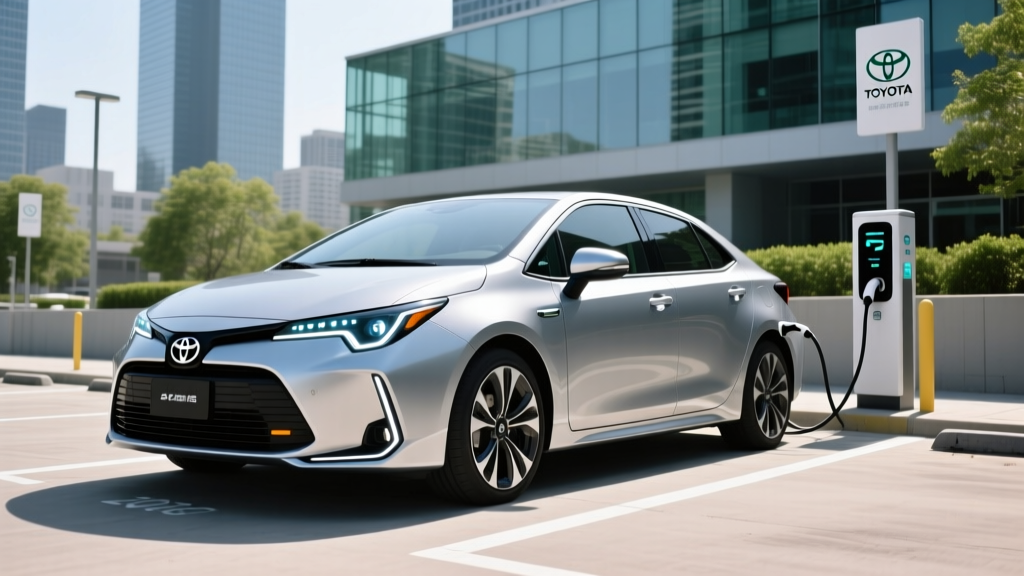
As of early 2026, Toyota does not yet sell a fully electric Corolla in the United States. The Corolla lineup currently includes the gasoline Corolla and the Corolla Hybrid (HEV), but no battery-electric (BEV) variant. Toyota has announced plans to expand its EV portfolio, and an electric Corolla-class vehicle is widely anticipated for the 2027–2028 model years, potentially built on the company's next-generation EV platform. If you're searching for an "EV Corolla" today, your best Toyota electrified option is the 2026 Corolla Hybrid, rated at an EPA-estimated 50 MPG combined, or the bZ compact SUV, Toyota's current battery-electric offering.
What We Know About a Future Electric Corolla
Toyota has been relatively cautious in the EV space compared to rivals like Hyundai and Tesla. However, the company has committed to launching 30 battery-electric models globally by 2030, and a compact electric sedan positioned below the bZ4X is a logical addition. Industry reports and Toyota's own technology roadmaps suggest a future EV Corolla would likely feature:
- Battery chemistry: Likely LFP (lithium iron phosphate) for base trims to keep costs low, with possible NMC (nickel manganese cobalt) for longer-range variants
- Estimated battery capacity: 55–65 kWh usable, targeting a competitive entry price
- Projected EPA range: 250–300 miles (preliminary estimate based on segment competitors)
- Target MSRP: $28,000–$35,000 before incentives, aiming to undercut the Hyundai Ioniq 6 and Tesla Model 3
- Platform: Toyota's next-generation EV architecture with improved energy density and faster DC charging
These are preliminary projections, not confirmed specifications. Toyota has not published official specs for an EV Corolla, and production timelines remain unconfirmed for the US market.
The Corolla Hybrid: The Electrified Corolla You Can Actually Buy
For buyers who want Corolla efficiency with electrification today, the 2026 Toyota Corolla Hybrid is the real option. It's a conventional hybrid (HEV) — not a plug-in — meaning it charges its small battery through regenerative braking and the gasoline engine. There's no plug, no electric-only range to manage, and no charging infrastructure dependency.
| Specification | Corolla Gas (LE) | Corolla Hybrid (LE) |
|---|---|---|
| Powertrain | 2.0L 4-cylinder | 1.8L 4-cyl + electric motor (HEV) |
| Horsepower | 169 hp | 138 hp (combined system) |
| EPA Fuel Economy (City/Hwy/Combined) | 32 / 41 / 35 MPG | 53 / 46 / 50 MPG |
| Annual Fuel Cost* | ~$1,540 | ~$1,080 |
| Drivetrain | FWD | FWD (AWD available) |
| 0–60 mph | ~7.3 sec | ~9.0 sec |
| Base MSRP | ~$22,725 | ~$24,225 |
| Federal Tax Credit | None | None (HEV, not PHEV/BEV) |
*Annual fuel cost based on 15,000 miles/year, $3.50/gallon, via fueleconomy.gov methodology. Actual costs vary by region and driving habits.
How the Corolla Hybrid Compares to a Hypothetical EV Corolla
If Toyota does launch an EV Corolla, buyers will face the classic electrified-vehicle decision: hybrid simplicity vs. full-electric savings. Here's how the math stacks up across the key ownership categories.
| Category | Corolla Hybrid (2026) | Projected EV Corolla (Est.) |
|---|---|---|
| Purchase Price (base) | $24,225 | ~$30,000 (est.) |
| Federal Tax Credit (§30D) | $0 | Up to $7,500 (if eligible) |
| Effective Purchase Price | $24,225 | ~$22,500 (with full credit) |
| Fuel/Energy (5 yr, 75K mi) | ~$5,400 | ~$2,625 (home charging) |
| Maintenance (5 yr) | ~$2,500 | ~$1,200 |
| Insurance (5 yr avg) | ~$7,500 | ~$8,500 |
| 5-Year Total (est.) | ~$39,625 | ~$34,825 |
EV energy cost assumes $0.14/kWh national average and 3.5 mi/kWh efficiency. Insurance estimates reflect typical EV premiums, which run 10–15% higher than comparable gas cars. Tax credit eligibility depends on income caps, MSRP limits, and battery-sourcing rules per IRS §30D guidelines.
Real-World Ownership: What First-Time EV Buyers Must Consider
If and when an EV Corolla arrives, the ownership experience will differ significantly from the hybrid Corolla you can buy today. Here are the practical realities that don't show up on a spec sheet.
Home Charging Access Is Non-Negotiable for Most Buyers
Over 80% of EV charging happens at home. If you have a garage or dedicated parking spot with access to a 240V outlet (or can install one), an EV Corolla would cost roughly $0.04–$0.06 per mile to "fuel" on residential electricity. Without home charging, you're dependent on public DC fast chargers, where costs jump to $0.12–$0.20 per mile — erasing much of the EV cost advantage and adding time to your routine.
A Level 2 home charger installation typically runs $500–$2,000 depending on your electrical panel's capacity. Homes with older 100-amp panels may need a $1,500–$3,000 panel upgrade before adding a dedicated 40-amp circuit.
Cold Weather Cuts Range — Plan for 20–30% Loss
EPA range estimates assume moderate temperatures. In sustained sub-freezing conditions, expect a future EV Corolla to lose 20–30% of its rated range due to battery chemistry limitations and cabin heating demands. A projected 280-mile EPA range becomes roughly 195–225 miles in a Midwest or Northeast winter. The Corolla Hybrid has no such penalty — its EPA MPG drops only marginally in cold weather.
Charging Time vs. Fill-Up Time
Even with DC fast charging, a typical EV Corolla-class vehicle would take roughly 25–35 minutes for a 10–80% charge at a 150 kW station, assuming a competitive charge curve. That compares to about 5 minutes at a gas station. On road trips, this adds up. For daily commuting with home charging, it's irrelevant — you start every morning with a full battery.
Common EV Misconceptions Addressed
| Myth | Fact |
|---|---|
| "EV batteries need replacing every few years." | Modern EV batteries are warranted for 8 years/100,000 miles (minimum per federal mandate). Real-world data from Tesla, Hyundai, and others shows most packs retain 85–90% capacity after 100K miles. |
| "An EV Corolla would qualify for the full $7,500 tax credit." | The §30D credit has income caps ($150K single / $300K joint), MSRP caps ($55K sedans), and battery-sourcing requirements that change annually. Not every buyer or every EV qualifies for the full amount. Check fueleconomy.gov for current eligibility. |
| "Hybrids are just as green as EVs." | A Corolla Hybrid still burns gasoline — roughly 300 gallons per year at 15K miles. An EV's upstream emissions depend on your local grid, but even on coal-heavy grids, lifetime emissions are typically lower per EPA analysis. |
| "EVs cost more to insure." | Generally true — EV premiums run 10–15% higher on average due to higher repair costs and battery replacement risk. Shop quotes before buying. |
| "I can just use a regular outlet to charge." | Level 1 (120V) charging adds roughly 3–5 miles of range per hour. For a 60 kWh battery, a full charge takes 40+ hours. It works for low-mileage drivers as a supplement, not a primary strategy. |
Decision Framework: Should You Wait for an EV Corolla or Buy Now?
Choose the Corolla Hybrid (2026) if:
- You need a car now and can't wait 1–2 years for an unconfirmed model
- You don't have reliable home charging access (apartment, street parking)
- You live in a region with extreme winters and need consistent range year-round
- Your budget is firm at $24,000–$28,000 and you want zero charging hassle
- You drive over 400 miles regularly in single trips and don't want to plan charging stops
Wait for a Future EV Corolla (or consider a competitor) if:
- You have home charging and a commute under 80 miles round-trip
- You want to eliminate gasoline costs entirely and your electricity rates are below $0.18/kWh
- You're eligible for the §30D federal tax credit and can benefit from the point-of-sale transfer
- You want lower maintenance costs (no oil changes, fewer brake replacements with regen braking)
- You're willing to consider the Hyundai Ioniq 6, Tesla Model 3, or Chevrolet Bolt EV/EUV as alternatives today
Alternatives to Consider Right Now
If you're set on an electric compact car in the Corolla's size and price class, these are available in 2026:
- Tesla Model 3: Starting ~$38,990, EPA range up to 341 miles (Long Range), NACS connector, access to Supercharger network
- Hyundai Ioniq 6: Starting ~$37,500, EPA range up to 361 miles (SE Long Range), 800V architecture for ultra-fast DC charging (10–80% in ~18 min at 350 kW)
- Chevrolet Equinox EV: Starting ~$33,000, EPA range up to 319 miles, eligible for §30D credit, practical crossover form factor
Each of these is a proven, available BEV with published EPA data and real-world ownership track records — something a future EV Corolla can't yet offer.
Frequently Asked Questions
Does Toyota make an all-electric Corolla?
Not as of the 2026 model year. Toyota sells the Corolla as a gasoline model and a conventional hybrid (HEV). The company's current battery-electric lineup in the US includes the bZ4X SUV. An electric Corolla-class sedan is anticipated but not yet announced with confirmed US specs or timing.
Does the Corolla Hybrid plug in?
No. The Corolla Hybrid is a self-charging HEV. It uses regenerative braking and the gas engine to charge its small (~1.3 kWh) battery. You never plug it in, and there is no electric-only driving range. If you want plug-in capability from Toyota, the Prius Prime (PHEV) offers up to 44 miles of electric-only range.
Would an EV Corolla qualify for the $7,500 federal tax credit?
It would depend on several factors at the time of release: the vehicle's MSRP (must be under $55,000 for sedans), your taxable income (capped at $150K single / $300K joint filers), and whether the battery meets critical-mineral and component-sourcing requirements under §30D rules. These requirements tighten annually. Always verify eligibility on irs.gov before purchasing.
How much would it cost to charge an EV Corolla at home?
Assuming a 60 kWh battery and $0.14/kWh national average electricity rate, a full charge would cost roughly $8.40 and provide an estimated 210–250 real-world miles. That translates to about $0.04 per mile — roughly one-third the per-mile fuel cost of the Corolla Hybrid.
Should I wait for the EV Corolla or buy a Corolla Hybrid now?
If you need a vehicle within the next 12 months, the Corolla Hybrid is a proven, affordable, and highly efficient choice with no charging dependencies. If you can wait 18–36 months and have home charging, an EV Corolla could offer meaningful fuel savings and tax-credit benefits — but specs, pricing, and availability remain unconfirmed.