The Short Answer on EV Convertibles in 2026
If you're searching for an EV convertible, the honest truth is that the market remains extremely limited. As of early 2026, the only fully electric convertible you can buy new in the United States is the MG Cyberster (a niche import with limited dealer presence) and the upcoming BMW i8 successor concepts that have not yet reached production. The Mercedes-Benz EQC cabriolet remains a rumor. For most buyers, the realistic path to an electric drop-top means either the Fiat 500e Cabrio (La Prima soft-top) — available in select markets with ~150 miles of EPA range — or waiting for announced models like the Polestar 6 roadster (expected late 2026/early 2027 at ~$100,000+). If you need a convertible today and want electrification, a plug-in hybrid like the discontinued-but-findable BMW i8 Roadster (used market, ~18 miles electric-only) is the closest bridge.
Why Are EV Convertibles So Rare?
Combining a convertible body style with an electric powertrain creates genuine engineering conflicts. Battery packs are heavy — typically 800 to 1,200 pounds for a 75–100 kWh pack — and that mass sits low in the chassis. Removing a fixed roof compromises structural rigidity, requiring significant reinforcement (added weight) to maintain crash safety and handling precision. Automakers have largely prioritized SUVs and crossovers for EV investment because that's where volume and profit margins exist.
There's also the efficiency penalty. Convertibles have worse aerodynamics with the top down (drag coefficients jump from ~0.25 to 0.35+), which directly reduces range. A 300-mile EPA-rated EV sedan might deliver only 220–240 miles with the top down at highway speeds. For manufacturers still fighting range-perception battles, this is a tough sell.
Every EV Convertible You Can Actually Buy or Pre-Order
| Model | Status | EPA Range | Battery (kWh) | Peak DC Charge | 10–80% Time | 0–60 mph | Base MSRP |
|---|---|---|---|---|---|---|---|
| Fiat 500e La Prima Cabrio | Available (limited US) | ~149 mi | 42 kWh (NMC) | 85 kW | ~35 min | 9.0 sec | ~$36,500 |
| MG Cyberster | Limited import | ~260 mi (est.) | 77 kWh (NMC) | ~120 kW | ~38 min | 4.9 sec (AWD) | ~$55,000 (est.) |
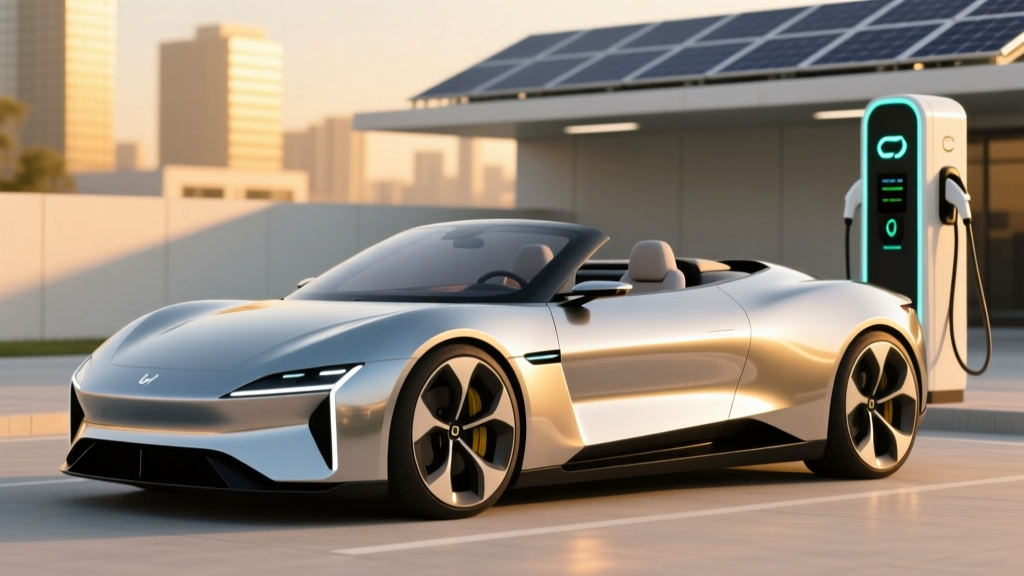
| Polestar 6 LA Concept | Pre-order/announced | ~300 mi (est.) | ~103 kWh | ~250 kW | ~20 min (est.) | 3.2 sec | ~$125,000 (est.) |
Real-world range caveat: For all convertibles, expect 15–25% range reduction when driving top-down at sustained highway speeds (65–75 mph) due to aerodynamic drag. The Fiat 500e Cabrio's 149-mile EPA figure could realistically drop to 110–125 miles on a warm-weather highway run with the top open. Cold weather (below 40°F) compounds this with an additional 20–30% loss from battery chemistry and cabin heating demands.
EV Convertible vs. Gas Convertible: Cost & Ownership Comparison
Let's compare the closest available options: the Fiat 500e Cabrio against a gas-powered Mazda MX-5 Miata (the perennial affordable roadster benchmark) and the BMW Z4 sDrive30i as a premium gas alternative.
| Cost Category | Fiat 500e Cabrio | Mazda MX-5 Miata (gas) | BMW Z4 sDrive30i |
|---|---|---|---|
| Purchase Price (MSRP) | $36,500 | $30,170 | $54,595 |
| Fed. Tax Credit (§30D)* | $0 (MSRP/sourcing) | $0 | $0 |
| Annual Fuel/Energy (15k mi) | ~$540 (home L2) | ~$1,950 (30 MPG, $3.90/gal) | ~$2,340 (27 MPG) |
| 5-Year Fuel/Energy Total | $2,700 | $9,750 | $11,700 |
| 5-Year Maintenance (est.) | ~$1,200 | ~$3,800 | ~$5,500 |
| 5-Year Insurance (avg.) | ~$7,500 | ~$6,200 | ~$9,800 |
| 5-Year Total Cost | ~$47,900 | ~$49,920 | ~$81,595 |
*The Fiat 500e Cabrio does not qualify for the §30D federal tax credit under current IRS rules due to battery component sourcing requirements and the MSRP cap structure. Always verify current eligibility before purchase.
Real-World Ownership Considerations for EV Convertibles
Home Charging Access Is Non-Negotiable
With limited public charging infrastructure optimized for niche vehicles, home Level 2 charging (240V, 7–11 kW) is essential for EV convertible ownership. The Fiat 500e Cabrio's 42 kWh battery charges from 10–100% in roughly 4.5 hours on an 11 kW home charger. A professional Level 2 installation typically costs $800–$2,500 depending on your electrical panel capacity and run distance, per DOE estimates. If your home has a 100-amp panel, a panel upgrade to 200 amps can add $1,500–$3,500.
Climate and Driving Patterns Matter More in a Convertible
EV convertibles face a double climate penalty. In cold weather (below freezing), expect 25–35% range loss due to battery internal resistance and cabin heating. With the top down, you'll use seat heaters and steering wheel heaters more aggressively, drawing additional energy. If your daily commute exceeds 80 miles round-trip in a cold climate, the Fiat 500e Cabrio's real-world range may not suffice without mid-day charging.
For warm-climate buyers in Southern California, Florida, or Arizona, an EV convertible makes more practical sense — you'll use the top down frequently, and range loss from aero drag is offset by not running A/C as heavily with open-air circulation.
The Charging Network Reality
DC fast charging an EV convertible on road trips requires planning. The Fiat 500e's 85 kW peak charge rate is modest by 2026 standards (most mainstream EVs peak at 150–350 kW). A 10–80% session takes approximately 35 minutes on a compatible charger. The NACS (Tesla Supercharger) network — now accessible to non-Tesla vehicles via adapter or native port on many 2025+ models — offers the most reliable public charging experience. Verify your chosen EV convertible's connector type: CCS1 is standard on most non-Tesla EVs, while NACS is expanding rapidly.
Common EV Convertible Misconceptions
| Myth | Fact |
|---|---|
| "There are no EV convertibles." | A few exist (Fiat 500e Cabrio, MG Cyberster), though selection is extremely limited compared to gas convertibles. |
| "The battery makes convertibles unsafe." | Modern EV convertibles are engineered with reinforced A-pillars, roll hoops, and battery structural integration. They must meet the same NHTSA rollover and crash standards as fixed-roof vehicles. |
| "EV convertibles have no range." | The Fiat 500e Cabrio offers ~149 miles EPA — adequate for city/suburban driving. The MG Cyberster targets ~260 miles. Range is use-case dependent. |
| "I'll save a fortune on fuel." | Energy savings are real (~$1,400/year vs. gas Miata), but higher purchase price, potential insurance premiums, and home charger installation costs offset some savings in the first 3–4 years. |
| "The top-down experience is the same as gas." | Nearly silent at low speeds (no engine note), instant torque for merging, but wind noise dominates above 50 mph without acoustic insulation from an engine bay. |
Decision Framework: Should You Buy an EV Convertible?
Choose an EV Convertible If:
- You have reliable home Level 2 charging access (garage or driveway with 240V outlet).
- Your daily driving is under 100 miles round-trip, primarily in moderate climates.
- You value instant torque, silent cruising, and lower per-mile energy costs over long-distance road-trip convenience.
- You're willing to accept a niche vehicle with limited dealer support and potentially higher insurance costs.
- You want a city-friendly convertible with zero tailpipe emissions for urban driving.
Choose a Gas or Hybrid Convertible Instead If:
- You regularly drive 200+ miles in a day or take frequent road trips where DC fast charging adds unwanted stops.
- You live in an apartment or lack home charging access, and public infrastructure near you is sparse.
- You want a proven, widely serviced vehicle with strong resale value and abundant dealer support (e.g., Mazda MX-5 Miata, Porsche 718 Boxster).
- Maximum range and driving dynamics matter more than fuel cost savings — gas roadsters are lighter (MX-5: ~2,400 lbs vs. 500e Cabrio: ~3,100 lbs) and handle with less mass.
- You need back-seat usability — most EV convertibles are strictly two-seaters due to battery packaging.
Consider a PHEV Convertible (Used Market) If:
- You want electric-only commuting (short range) plus gas flexibility. The BMW i8 Roadster (discontinued 2020, available used at $70,000–$100,000+) offers ~18 miles electric-only plus a gas engine for ~320 total miles. It's the only plug-in hybrid convertible ever mass-produced.
What First-Time EV Convertible Buyers Must Know
If you've never owned an EV, buying a convertible as your first electric car adds complexity. Here are the non-obvious realities:
- Battery degradation: Most 2026 EV batteries (NMC chemistry) retain 85–92% capacity after 8 years / 100,000 miles. The Fiat 500e carries an 8-year/100,000-mile battery warranty (minimum 70% capacity retention per federal mandate). LFP chemistry — more durable but less energy-dense — is not currently used in convertible models.
- Tire wear: EVs are heavier and deliver instant torque, wearing tires 20–30% faster than equivalent gas cars. Budget $800–$1,400 for a set of EV-rated tires every 25,000–35,000 miles.
- Insurance: EV convertibles carry higher premiums due to battery replacement costs and limited collision repair networks. Expect 15–25% higher rates vs. a gas convertible in the same class. Get quotes before purchasing.
- Regenerative braking: One-pedal driving takes adaptation. In a lightweight convertible like the 500e Cabrio, regen is less aggressive than in heavier EVs — you'll still use the friction brakes regularly.
- Software updates: Modern EVs receive OTA (over-the-air) updates that can improve range estimates, charging curves, and infotainment. Verify the manufacturer's update track record.
The Pipeline: Upcoming EV Convertibles (2026–2028)
Several manufacturers have announced or hinted at electric convertibles, but none are currently purchasable:
- Polestar 6: Announced as a hardtop convertible roadster with ~884 HP, targeting a 300+ mile range and 250 kW DC charging. Originally slated for 2026, production has slipped to late 2026 or 2027. Starting price expected above $125,000.
- Mercedes-Benz: Has hinted at an AMG electric roadster based on the Vision AMG concept, but no production timeline or pricing confirmed.
- Jaguar (new EV brand): Jaguar's relaunch as an EV-only brand (2025+) includes a GT and potential roadster, but details remain unconfirmed.
Per EPA data on electric vehicle technology, battery energy density improvements of 5–8% annually mean that a 2028 EV convertible could realistically offer 30–50 more miles of range than today's options in the same physical footprint.
Frequently Asked Questions
Is there a Tesla convertible?
No. Tesla has never produced a convertible. The Tesla Roadster (announced 2017, repeatedly delayed) is a fixed-roof coupe with an optional removable glass panel — not a true soft-top or hardtop convertible. As of 2026, the new Roadster still has no confirmed delivery date.
Why don't more automakers make EV convertibles?
Three factors: structural weight penalties (reinforcing a roofless EV chassis adds 150–300 lbs, reducing range), low market demand (convertibles are ~2% of US new car sales), and aerodynamic inefficiency with the top down (reducing range by 15–25% at highway speeds). Automakers prioritize high-volume segments like SUVs.
Can I convert a gas car to electric and make it a convertible?
EV conversion shops (like EV West or Legacy Classic Trucks) can convert classic convertibles — a classic Porsche 911 Targa or Triumph TR6, for example — to electric powertrain. Costs typically run $40,000–$80,000+ on top of the donor vehicle price, with 100–180 miles of range depending on battery pack size. This is a passion project, not a cost-saving measure.
What's the cheapest EV convertible I can buy new in 2026?
The Fiat 500e La Prima Cabrio at approximately $36,500 MSRP is the lowest-priced new EV convertible available, though US dealer availability is limited. The Mazda MX-5 Miata (gas) starts at $30,170 and remains the value benchmark for affordable drop-top driving.
Do EV convertibles qualify for the $7,500 federal tax credit?
Under current IRS §30D rules, eligibility requires meeting MSRP caps ($55,000 for cars), buyer income limits ($150,000 single / $300,000 joint AGI), and strict battery component and critical mineral sourcing requirements. Most currently available EV convertibles do not meet the sourcing requirements. Verify eligibility with a tax professional before relying on the credit.