EV Conversions: The Short Answer
Converting a gasoline vehicle to electric power in 2026 typically costs between $20,000 and $80,000+ depending on the donor car, battery capacity, and whether you use a turnkey kit or custom fabrication. Most conversions yield 80–200 miles of real-world range with Level 2 charging times of 4–8 hours. While conversions appeal to classic car enthusiasts and DIYers, they rarely make financial sense compared to purchasing a used production EV — a 2024 Nissan Leaf S starts around $14,000 on the used market with 149 miles of EPA range and a full battery warranty. Conversions make the most sense when the donor vehicle holds sentimental or collector value that a production EV cannot replicate.
What an EV Conversion Actually Involves
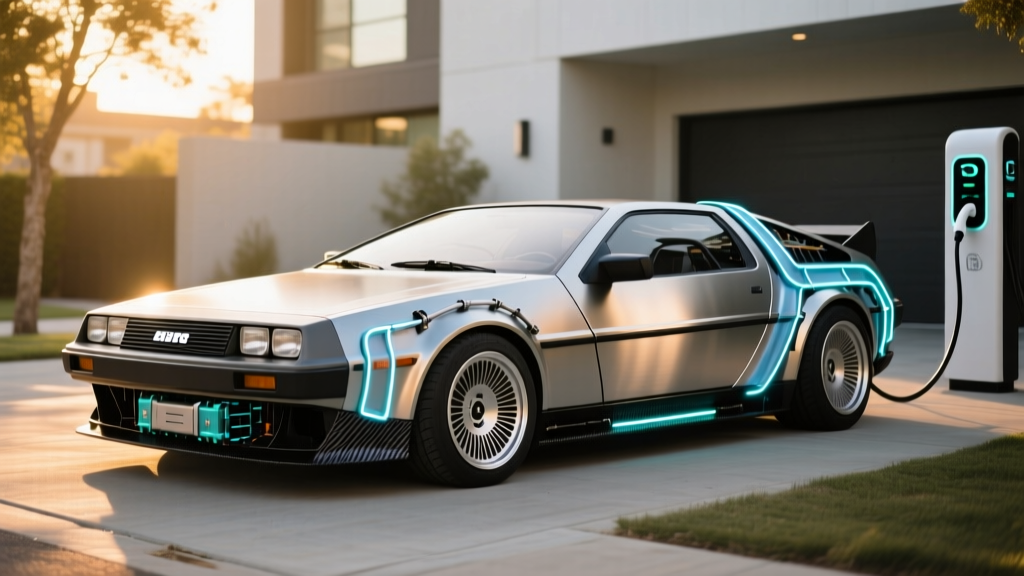
An EV conversion replaces a vehicle's internal combustion engine, fuel tank, and exhaust system with an electric motor, motor controller, and battery pack. The process also requires a charger (onboard or external), a DC-DC converter to power the 12V accessories, a throttle interface, and a battery management system (BMS) to monitor cell health and temperature.
Professional shops like EV West, Zero EV, and Stealth EV have turned this into a semi-standardized service, while companies such as NetGain and Hyper9 supply complete motor-and-controller kits to DIY builders. The core components break down as follows:
| Component | Budget Build | Mid-Range Build | High-End Build |
|---|---|---|---|
| Battery pack (cells + BMS + enclosure) | $4,000–$8,000 (15–30 kWh, salvaged modules) | $10,000–$20,000 (40–60 kWh, new LFP/NMC) | $25,000–$50,000+ (70–100 kWh, custom) |
| Motor + controller | $2,500–$4,000 (NetGain WarP9, Hyper9) | $5,000–$10,000 (Cascade, Revolve) | $12,000–$20,000+ (Tesla drive unit swap) |
| Charger + DC-DC converter | $800–$1,500 | $1,500–$3,000 | $3,000–$5,000 |
| Wiring, adapters, fabrication | $2,000–$4,000 | $4,000–$8,000 | $8,000–$15,000 |
| Labor (if professional) | N/A (DIY) | $8,000–$15,000 | $20,000–$40,000+ |
| Total estimated cost | $9,300–$17,500 | $28,500–$56,000 | $68,000–$130,000+ |
The wide cost range reflects the single biggest variable: battery capacity and chemistry. Salvaged Tesla modules or Chevrolet Bolt packs can be sourced for $100–$150/kWh, while new NMC or LFP cells from reputable suppliers like EVE or CATL run $150–$250/kWh at small quantities. A 50 kWh usable pack — enough for roughly 150 miles in a lightweight classic — represents $5,000–$12,500 in cells alone before the BMS, thermal management, and custom enclosure.
EV Conversion vs. Buying a Used Production EV
The most important comparison for any prospective converter isn't conversion vs. gas — it's conversion vs. a used production EV. Here's how the numbers stack up in 2026:
| Factor | Budget EV Conversion (~$15,000 build) | Used 2022–2024 Production EV (e.g., Leaf, Bolt, Model 3) | Existing Gas Car (no conversion) |
|---|---|---|---|
| Upfront cost | $9,300–$17,500 (DIY) + donor car | $12,000–$22,000 | $0 (already owned) |
| Real-world range | 60–120 miles (15–30 kWh pack) | 149–310 miles (EPA-rated) | 300–450 miles (gas) |
| Charging speed | Level 2 only, 3.3–7.2 kW (4–8 hrs for full charge) | Level 2 + DC fast charge (10–80% in 20–40 min) | 5 minutes at gas station |
| Battery warranty | None (or cell manufacturer warranty only) | Remaining factory warranty or 8yr/100,000 mi | N/A |
| Safety systems | None added; no ABS upgrade, no airbags added, no crash testing | NHTSA/IIHS rated; AEB, lane-keep, etc. | Factory original |
| Federal §30D tax credit | Not eligible | Not eligible (used EV credit §25E may apply — up to $4,000 for vehicles under $25,000, income-capped) | N/A |
| Registration/inspection | Varies by state — may require special inspection, some states restrict registration | Standard registration | Standard registration |
| Resale value | Highly variable; niche market | Establishused EV market with known depreciation | Known ICE depreciation curve |
The data makes a clear case: for pure transportation value, a used production EV wins on range, charging speed, safety, warranty, and potential tax incentives. The IRS §25E used EV credit offers up to $4,000 (30% of sale price, capped at $4,000) on qualifying used EVs priced under $25,000, subject to income limits — a benefit that conversions cannot access.
Real-World Range and Charging: What Converters Actually Experience
Range in a conversion depends on three variables: battery usable capacity (kWh), vehicle weight, and aerodynamic efficiency. Classic cars are heavier and less aerodynamic than purpose-built EVs, so efficiency suffers.
Real-World Conversion Range Expectations
Lightweight roadster (e.g., MG MGB, ~2,200 lbs, 30 kWh usable): Expect 3.5–4.5 miles/kWh → 105–135 miles real-world range.
Mid-size classic (e.g., VW Beetle, Porsche 914, ~2,500 lbs, 40 kWh usable): Expect 3.0–3.8 miles/kWh → 120–150 miles real-world range.
Heavy classic (e.g., 1970s muscle car, ~3,800 lbs, 60 kWh usable): Expect 2.0–2.8 miles/kWh → 120–170 miles real-world range.
Cold-weather caveat: Expect 20–35% range loss in freezing temperatures. Most conversions lack the sophisticated heat pump and battery thermal management systems found in production EVs, meaning cold-weather range drops are more severe and charging is slower without pack preconditioning.
Charging is almost exclusively Level 2 (240V AC). Most conversions use 3.3 kW or 6.6 kW onboard chargers. A 40 kWh pack at 6.6 kW takes roughly 6 hours for a full charge. DC fast charging is rare in conversions — adding CCS or NACS compatibility requires a DC charge controller, additional contactors, and communication protocols that add $2,000–$5,000 and significant complexity. Most converters accept overnight Level 2 charging as a tradeoff.
Registration, Insurance, and Legal Considerations
This is where many first-time converters hit a wall. Registration rules for converted vehicles vary dramatically by state:
- California: Requires a BAR (Bureau of Automotive Repair) inspection and a special "EV conversion" designation. Smog exemption applies once converted.
- New York, Texas, Florida: Generally allow registration with a state inspection verifying the conversion is complete and safe, but processes vary by county.
- Some states: Require a bonded title or rebuilt/specially-constructed vehicle (SPCNS) designation, which can complicate insurance and resale.
Insurance is another friction point. Most mainstream insurers will not write a standard policy on a converted vehicle. Specialty insurers like Hagerty or Grundy American, which already cover classic and modified cars, are typically the best route. Expect premiums 15–30% higher than a comparable unmodified classic, with agreed-value coverage based on the car's collector value rather than the conversion investment.
When an EV Conversion Makes Sense — Decision Framework
Should You Convert or Buy?
Choose an EV conversion if:
- The donor vehicle has significant sentimental, historical, or collector value (e.g., a family heirloom 1965 Mustang, a rare Porsche 912)
- You want a unique vehicle that no production EV can replicate in character
- You have fabrication skills, electrical knowledge, or a trusted conversion shop
- You accept limited range (80–150 mi) and slow charging as acceptable tradeoffs for a weekend/cruiser vehicle
- You understand the investment is unlikely to recoup costs at resale outside the collector market
Choose a used production EV if:
- You need a daily driver with 200+ miles of range and DC fast charging
- You want factory safety systems (AEB, airbags, crumple zones tested to modern standards)
- You want a battery warranty and established service infrastructure
- You want to potentially claim the §25E used EV tax credit (up to $4,000)
- Budget is a primary concern and you want the most transportation per dollar
Common Misconceptions About EV Conversions
| Myth | Fact |
|---|---|
| "Conversions are always cheaper than buying an EV." | A budget DIY conversion starts around $9,300 plus donor car cost. A used 2022 Chevrolet Bolt EV sells for $12,000–$15,000 with 259 miles of EPA range, DC fast charging, and a remaining battery warranty. The Bolt wins on value. |
| "You'll get 200+ miles of range easily." | Achieving 200 miles requires 60–80 kWh of usable battery in a typical classic car, which adds 800–1,200 lbs of battery weight and $15,000–$25,000 in cell cost. Most conversions target 80–150 miles to keep weight and cost manageable. |
| "You can fast-charge a conversion at any Supercharger." | Tesla Superchargers require Tesla communication protocols. NACS connectors alone do not grant access. CCS DC fast charging requires additional hardware ($2,000–$5,000) and is uncommon in conversions. Most converters rely on Level 2 only. |
| "It'll pass inspection anywhere." | Registration and inspection requirements vary by state and even by county. Some jurisdictions require special bonded titles or SPCNS designations. Research your state's DMV requirements before starting a build. |
| "The conversion qualifies for the $7,500 federal tax credit." | The IRS §30D credit applies only to new qualified plug-in electric vehicles from certified manufacturers. Conversions are not eligible for any federal EV tax credit. |
Notable Conversion Kits and Shops in 2026
For those committed to a conversion, the ecosystem has matured considerably. Here's a snapshot of what's available:
- EV West: Offers complete crate kits for popular platforms (VW Beetle, Porsche 914, BMW 2002) starting around $12,000–$18,000 for parts. Full professional builds from $35,000–$80,000+.
- Zero EV (UK-based, ships globally): Modular kits with Hyper9 motors and configurable battery packs. Popular with European classic restomods.
- Stealth EV: High-end custom builds, known for the electric 1949 Mercury and similar show-quality conversions. Builds typically $80,000–$200,000+.
- Lunaz (UK): Ultra-luxury conversions of Rolls-Royce, Bentley, and Jaguar classics. Prices from $400,000+. Collector-grade, not practical transportation.
- DIY community: Forums like DIY Electric Car and open-source BMS projects (e.g., SimpBMS, Thunderstruck) support builders on tight budgets using salvaged cells and NetGain motors.
Frequently Asked Questions
How long does an EV conversion take?
A professional shop typically takes 3–6 months for a complete conversion. A skilled DIY builder working weekends can expect 6–18 months depending on fabrication complexity, parts sourcing, and troubleshooting.
Can I use Tesla battery modules in a conversion?
Yes — salvaged Tesla modules (from Model S, Model 3, or Model Y packs) are among the most popular choices due to their high energy density (~250 Wh/kg at the cell level) and availability in the salvage market. However, they require a compatible BMS, proper thermal management, and careful handling. Expect $100–$150/kWh for salvaged modules in 2026.
Do I need to upgrade the brakes and suspension?
Almost always yes. Battery packs add 500–1,500 lbs depending on capacity. Upgraded springs, shocks, and larger brake rotors/calipers are necessary to handle the added weight safely. Budget $2,000–$5,000 for suspension and brake upgrades.
What's the maintenance cost compared to a gas car?
An EV conversion eliminates oil changes, spark plugs, timing belts, exhaust repairs, and fuel system maintenance. However, you gain new maintenance considerations: coolant system checks (if liquid-cooled), contactor inspection, BMS monitoring, and eventual cell replacement (typically 10–20 years depending on chemistry and usage). Annual maintenance for a conversion is typically $200–$500 — significantly less than a gas classic car's $1,000–$3,000/year.
Is a converted EV safe in a crash?
This is a genuine concern. Classic cars lack modern crumple zones, side-impact beams, and airbag systems. A conversion does not add these protections. High-voltage battery placement also introduces new risks if the enclosure is compromised in a collision. Production EVs undergo NHTSA crash testing and IIHS evaluation; conversions do not. Drive accordingly and understand the safety limitations of the donor chassis.
Can I get a warranty on a conversion?
Professional shops may offer 1–3 year warranties on labor and integration. Individual components (motor, controller, BMS) carry manufacturer warranties, typically 1–2 years. Battery cells may carry a manufacturer warranty, but once integrated into a custom pack, the system-level warranty depends entirely on the builder. There is no equivalent to the 8-year/100,000-mile federal battery warranty mandate that protects production EV buyers.