The Short Answer on EV Conversion Cars
An EV conversion car — replacing a gas powertrain with an electric motor and battery pack — typically costs $8,000 to $30,000+ in parts alone, plus 100–300 hours of labor if you're not doing it yourself. Realistic range for most conversions falls between 40 and 150 miles depending on battery size (20–60 kWh typical). While a conversion can be a rewarding project for classic-car enthusiasts or skilled DIYers, most daily drivers will find a used production EV (like a 2022–2024 Chevrolet Bolt EV at $15,000–$22,000 on the used market) offers better range, safety, charging speed, and warranty coverage for less total investment.
What Exactly Is an EV Conversion Car?
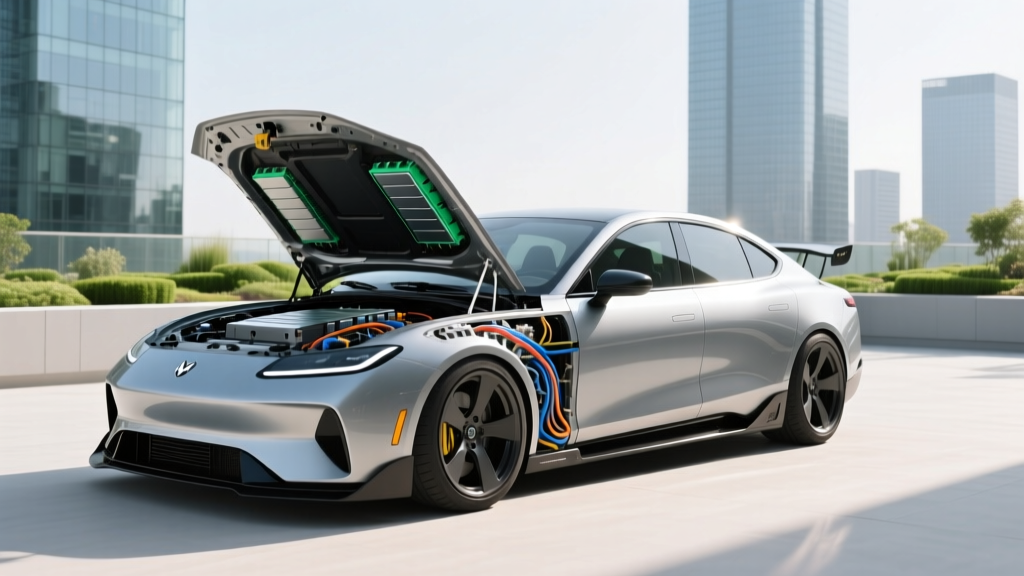
An EV conversion involves removing a vehicle's internal combustion engine, fuel tank, exhaust system, and associated components, then installing an electric motor, motor controller, battery pack, onboard charger, and DC-DC converter. The original transmission is sometimes retained (using an adapter plate to mate the electric motor to the gearbox), though many modern kits use direct-drive setups that eliminate the need for shifting.
Conversion kits in 2026 range from basic DIY setups sourced from companies like EV West and Zero EV to turnkey systems from shops like Electric GT and Stealth EV. The most common donor vehicles are lightweight classics: VW Beetles, air-cooled Porsche 911s, classic Ford Broncos, and 1980s–90s Japanese compact trucks — vehicles where the simplicity of the chassis makes packaging a battery and motor tractable.
The Real Cost of an EV Conversion
Here's where most conversion enthusiasm meets financial reality. Below is a breakdown based on typical 2026 component pricing and shop rates:
| Component | Budget DIY | Mid-Range Kit | Professional Build |
|---|---|---|---|
| Electric motor + controller | $1,500–$3,000 | $3,000–$6,000 | $5,000–$12,000 |
| Battery pack (modules + BMS) | $2,500–$5,000 (used) | $5,000–$10,000 | $8,000–$18,000 |
| Onboard charger + DC-DC | $500–$1,000 | $1,000–$2,000 | $1,500–$3,000 |
| Adapter plate / drivetrain | $300–$800 | $800–$2,000 | $1,500–$4,000 |
| Wiring, gauges, accessories | $500–$1,200 | $1,000–$2,500 | $2,000–$5,000 |
| Labor (if not DIY) | $0 | $3,000–$8,000 | $15,000–$40,000 |
| Total | $5,300–$11,000 | $13,800–$30,500 | $33,000–$82,000 |
For context, a professionally converted 1965 Ford Mustang or 1973 Porsche 911 from a reputable shop in 2026 typically costs $75,000–$150,000+ total including the donor vehicle. These are boutique builds aimed at collectors, not budget transportation.
Range, Charging, and Performance: What to Expect
Range is almost always the biggest disappointment for first-time conversion builders. Here's why:
Battery packaging limits capacity. A classic VW Beetle has very little space for batteries. You might fit 20–25 kWh of lithium modules (often repurposed Tesla or Nissan Leaf modules), which yields roughly 50–70 miles of real-world range in a lightweight car. A larger vehicle like a classic Ford F-100 truck might accommodate 40–60 kWh, yielding 80–130 miles, but the added weight works against efficiency.
Charging is mostly Level 2 — at best. Most conversions use a 3.3 kW or 6.6 kW onboard charger. That means a 40 kWh pack takes 6–12 hours on a 240V Level 2 home charger. DC fast charging is technically possible with the right hardware (such as a CCS-compatible charger module), but it adds $2,000–$5,000 to the build, requires careful battery thermal management, and is rarely included in budget or mid-range conversions.
Performance varies wildly. A basic conversion with a 50–80 kW motor in a light car can feel peppy — 0-60 mph in 8–12 seconds. High-end builds using a Tesla drive unit (200+ kW) can hit 0-60 in under 5 seconds. But the motor is only half the equation: older suspension, brakes, and chassis weren't designed for instant torque, and many conversions need significant chassis upgrades to handle the power safely.
EV Conversion vs. Used Production EV vs. Keeping Your Gas Car
| Factor | EV Conversion (DIY) | Used Production EV (e.g., 2022 Bolt EV) | Existing Gas Car |
|---|---|---|---|
| Total cost | $8,000–$30,000+ | $15,000–$22,000 | $0 (already owned) |
| EPA-rated range | Not EPA-rated; ~40–150 mi | 259 mi (EPA) | 300–450 mi per tank |
| Charging / refuel time | 6–12 hrs (L2 home) | ~7 hrs (L2); 30 min (DC 10–80%) | 5 minutes |
| Warranty | None | Remaining factory / battery warranty | Varies |
| Safety features | Original donor car (often none) | AEB, lane assist, airbags, IIHS-rated | Original |
| Fuel / energy cost per mile | ~$0.03–$0.05/mi | ~$0.03–$0.05/mi | ~$0.12–$0.16/mi |
| Insurance | Specialty / agreed-value; $100–$300/mo | Standard; $100–$180/mo | Standard; $80–$150/mo |
| Resale market | Niche; slow to sell | Broad market | Broad market |
Federal Tax Credits and Registration: The Bureaucratic Reality
Here's a common misconception: you cannot claim the federal §30D EV tax credit on an EV conversion car. The IRS §30D credit applies only to new, qualifying clean vehicles purchased from a manufacturer. A converted classic does not meet the definition of a new qualified plug-in electric vehicle, regardless of how much you spent on the conversion.
Registration requirements for converted vehicles vary significantly by state. Some states (like California) have established procedures for registering a converted vehicle as a zero-emission vehicle, which may qualify for HOV lane access or reduced registration fees. Others require a special inspection, a rebuilt-title process, or may not have clear guidelines at all. Check with your state DMV before starting a build.
Insurance is another hurdle. Standard auto insurers often won't cover a converted vehicle at its build value. You'll likely need a specialty insurer (like Hagerty or Grundy) that offers agreed-value policies for custom and classic vehicles. Expect premiums of $100–$300 per month depending on the vehicle's agreed value and your driving profile.
Common EV Conversion Myths vs. Facts
| Myth | Fact |
|---|---|
| "Converting is way cheaper than buying an EV." | Budget DIY conversions start around $8,000 in parts alone, and most realistic builds cost $15,000–$30,000+. A used 2022 Chevy Bolt EV sells for $15,000–$22,000 with 259 miles of EPA range, DC fast charging, and a warranty. |
| "I'll get 200+ miles of range." | Without the battery packaging and thermal management of a production EV, most conversions achieve 40–150 miles. Fitting 80+ kWh (needed for 200+ mi) into a classic chassis is extremely difficult and expensive. |
| "Any mechanic can do this." | EV conversions require high-voltage electrical knowledge, battery management system (BMS) programming, motor controller tuning, and often custom fabrication. Most general mechanics won't touch them. |
| "It'll be just like driving a Tesla." | Conversions typically lack regenerative braking sophistication, thermal management, navigation-based preconditioning, over-the-air updates, and ADAS features. They drive like electrified classics — which is the point for many builders. |
| "I can DC fast charge it." | DC fast charging requires a compatible CCS or CHAdeMO inlet, a high-power onboard charger or external DC-DC system, and robust battery cooling. This adds significant cost and complexity and is rare outside professional builds. |
Decision Framework: Should You Convert or Buy?
Is an EV Conversion Car Right for You?
Choose an EV conversion if:
- You own a classic or collector car you love and want to drive more often without maintaining an aging engine
- You have electrical/mechanical fabrication skills (or a budget of $30,000–$80,000+ for a professional shop)
- Your driving is primarily local (under 50 miles per day) and you can charge at home
- You value the project experience and uniqueness over practicality, warranty, and resale
- You understand the vehicle will not have modern safety features, ADAS, or DC fast charging in most cases
Choose a used or new production EV if:
- You need reliable daily transportation with 200+ miles of range
- You want DC fast charging for road trips (10–80% in 20–35 minutes on modern EVs)
- You want a warranty on the battery and powertrain (typically 8 years / 100,000 miles on new EVs)
- You need modern safety features (automatic emergency braking, airbags, crash-test ratings)
- You want to potentially qualify for the §30D federal tax credit (up to $7,500 on qualifying new EVs) or the used-EV credit (up to $4,000 on qualifying pre-owned EVs under $25,000)
- You want straightforward insurance, registration, and resale
Keep your gas car (for now) if:
- You can't charge at home or work, and public charging infrastructure in your area is sparse
- You regularly drive 300+ miles in a single day or tow heavy loads
- Your current vehicle is paid off, reliable, and your annual mileage is low (under 8,000 mi/yr — the fuel savings from switching may not justify the cost)
Real-World Ownership Considerations
Home charging access is non-negotiable. Without a 240V Level 2 home charger (installation typically $500–$2,000 depending on panel capacity and run length), owning an EV conversion is impractical. Public Level 2 chargers are too slow to be your primary strategy when your car lacks DC fast-charge capability. If you live in an apartment or park on the street, a conversion is likely not feasible.
Cold weather hits conversions harder. Production EVs use active battery thermal management (liquid heating/cooling) to preserve range and charging speed in cold weather. Most conversions use passively cooled battery packs, which can lose 25–40% of range in freezing temperatures — and charging speeds drop dramatically below 32°F without preconditioning. If you live in the upper Midwest or Northeast, plan for significantly reduced winter usability.
Maintenance is different, not absent. You'll eliminate oil changes, spark plugs, and exhaust repairs. But EV conversions introduce their own maintenance: monitoring battery cell balance, checking high-voltage connections, servicing the coolant system (if equipped), and replacing contactors and fuses. If you're not comfortable working around 400V systems, you'll need a specialist — and there aren't many.
Frequently Asked Questions
How long does an EV conversion take?
A skilled DIY builder working weekends can expect 3–12 months depending on complexity, parts availability, and fabrication needs. Professional shops typically quote 4–8 months for a complete build. First-time builders should budget at least 200–300 hours of work.
What's the best donor car for an EV conversion?
Lightweight, simple vehicles with ample space for batteries work best. Popular choices include the VW Beetle, VW Bus, classic Porsche 911, Ford Ranger (1980s–90s), Chevrolet S-10, and classic Ford Broncos. Lighter vehicles need smaller (cheaper) battery packs to achieve usable range. Avoid heavy luxury cars — they require large, expensive battery packs.
Can I use Tesla battery modules in a conversion?
Yes, salvaged Tesla modules are among the most popular battery sources for conversions due to their energy density and availability. However, they require a compatible Battery Management System (BMS) to monitor cell voltages and temperatures. Improperly managed lithium cells can overheat, swell, or catch fire. Never wire battery modules without a proper BMS.
Is an EV conversion street-legal?
It can be, but the process varies by state. You'll typically need to pass a safety inspection, update the vehicle's title to reflect the powertrain change, and meet your state's emissions requirements (which a conversion usually satisfies by eliminating emissions entirely). Some states require a brake upgrade to handle the added weight of batteries. Check with your local DMV and inspection station before starting.
How does a conversion compare to a production EV like the Tesla Model 3 or Chevy Equinox EV?
A 2026 Chevrolet Equinox EV starts around $33,000 with 319 miles of EPA range, DC fast charging (up to 150 kW, 10–80% in ~30 minutes), a full suite of ADAS features, and an 8-year/100,000-mile battery warranty. A Tesla Model 3 starts around $38,990 with 363 miles of range and access to the Supercharger network. Neither a conversion's cost, range, charging speed, nor safety equipment comes close to these production vehicles — but then, a conversion isn't trying to compete on those metrics. It's about preserving a beloved vehicle while electrifying it.
Will an EV conversion increase my car's value?
For most vehicles, no. The conversion cost rarely translates to resale value, and the buyer pool is extremely narrow. Exceptions exist for high-quality conversions of desirable classics (e.g., a well-executed Porsche 911 or early Bronco conversion by a reputable shop), which can sell for premium prices in the collector market. But for common donor vehicles, expect to recover 20–40% of your conversion investment at resale.
For official information on EV tax credits, visit IRS.gov. For range and efficiency data on production EVs, check fueleconomy.gov.