Quick Answer: Which EV Chevrolet Should You Buy?
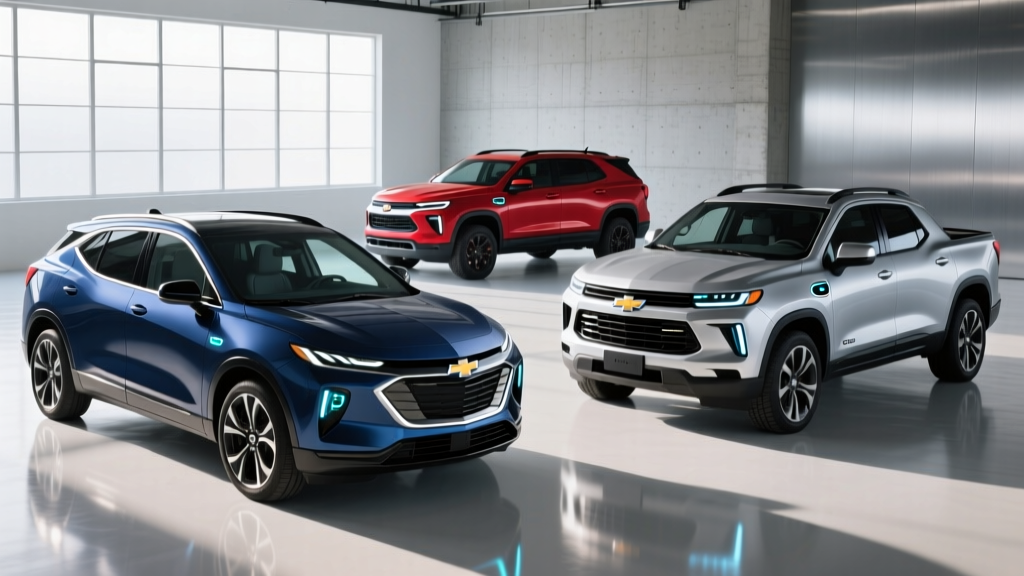
If you're shopping for an EV Chevrolet in 2026, the answer depends on your driving life. The Equinox EV ($33,000 base) is the volume pick — 319 miles of EPA range, affordable, and eligible for up to $7,500 in federal tax credits. The Blazer EV ($43,000+) trades some range for style and performance, while the Silverado EV ($55,000+) serves truck buyers who tow. All three ride on GM's Ultium platform with NMC battery chemistry and CCS/NACS charging. Below, we break down the real numbers, ownership costs, and the traps first-time EV buyers fall into.
The 2026 EV Chevrolet Lineup at a Glance
Chevrolet's electric portfolio has stabilized around three Ultium-based vehicles. Here's how the core specs stack up:
| Spec | Equinox EV | Blazer EV | Silverado EV |
|---|---|---|---|
| Base MSRP | $33,000 | $43,200 | $55,400 |
| EPA Range (max) | 319 mi | 324 mi | 440 mi |
| Battery (usable kWh) | 85 kWh (NMC) | 102 kWh (NMC) | 200+ kWh (NMC) |
| Peak DC Fast Charge | 150 kW | 190 kW | 350 kW |
| 10–80% Charge Time | ~32 min | ~26 min | ~20 min |
| Level 2 Rate (kW) | 11.5 kW | 11.5 kW | 19.2 kW |
| 0–60 mph | ~7.5 sec | ~4.0 sec (SS) | ~4.5 sec (RST) |
| Horsepower | 213 hp | 557 hp (SS) | 664 hp (RST) |
| Battery Warranty | 8 yr / 100,000 mi | 8 yr / 100,000 mi | 8 yr / 100,000 mi |
Sources: EPA fueleconomy.gov, Chevrolet EV official specs.
Range Reality: EPA Stickers vs. What You'll Actually Get
EPA vs. Real-World Range
The Equinox EV's 319-mile EPA rating assumes mixed driving at moderate temperatures. Expect ~260–280 miles on the highway at 70+ mph, and ~220–250 miles in freezing weather with cabin heat running. The Silverado EV's 440-mile figure is impressive, but that's with the largest battery pack and light-load city driving — towing a trailer can cut range by 40–50%.
GM uses NMC (nickel manganese cobalt) chemistry across the Ultium lineup. NMC offers higher energy density than LFP, which is why the Equinox hits 319 miles with a relatively compact 85 kWh pack. The trade-off: NMC batteries benefit from staying between 20–80% state of charge for daily use, unlike LFP packs that tolerate regular 100% charges.
The Blazer EV's 324-mile rating comes from the larger 102 kWh battery, but that extra mass shows up in efficiency. On fueleconomy.gov, the Equinox EV posts higher MPGe numbers because it's simply lighter. If most of your driving is under 50 miles round-trip with home charging, the Equinox's real-world range is more than sufficient — and you'll charge less often.
Charging Speed and Infrastructure: What Chevrolet EV Owners Need
All 2026 EV Chevrolet models ship with the NACS (North American Charging Standard) connector, giving native access to Tesla Supercharger stations — over 20,000 stalls nationwide. This was a significant advantage Chevrolet gained by adopting NACS over CCS1.
| Charging Level | Power (kW) | Miles Added/Hour | Best For |
|---|---|---|---|
| Level 1 (120V outlet) | 1.4 kW | ~4–5 mi/hr | Emergency top-ups |
| Level 2 (240V home) | 11.5 kW | ~34–38 mi/hr | Daily overnight charging |
| DC Fast Charge | 150–350 kW | ~150–300+ mi in 20 min | Road trips |
The charging curve matters more than peak kW. The Equinox EV peaks at 150 kW but only sustains that rate up to ~30% state of charge. From 30–60%, it drops to roughly 110 kW, and above 80% it tapers sharply to under 40 kW. This is why manufacturers quote 10–80% times rather than 0–100%. Plan your road-trip stops around the 10–80% window to minimize wait time.
For home charging, a Level 2 wallbox connected to a 240V/48A circuit will fully replenish an Equinox EV overnight in about 8–9 hours. Installation costs typically run $800–$2,000 depending on your electrical panel's capacity. If your home has a 200-amp panel with spare breaker slots, expect the lower end. Older homes with 100-amp service may need a $2,000–$4,000 panel upgrade — get a licensed electrician to assess before purchasing the vehicle.
Cost Breakdown: EV Chevrolet vs. Gas Equivalent
The purchase price is only half the equation. Here's a 5-year ownership comparison between the Equinox EV (2LT) and a comparably equipped gas-powered Equinox:
| Cost Factor (5 Years) | Equinox EV ($33,000) | Gas Equinox ($31,000) |
|---|---|---|
| Purchase Price | $33,000 | $31,000 |
| Federal Tax Credit (§30D) | −$7,500* | $0 |
| Effective Purchase | $25,500 | $31,000 |
| Fuel / Electricity (75,000 mi) | $3,750** | $8,250*** |
| Maintenance | $1,200 | $3,500 |
| Insurance (avg) | $9,500 | $7,800 |
| 5-Year Total | ~$39,950 | ~$50,550 |
*Tax credit eligibility depends on income caps, battery sourcing, and MSRP limits under IRS §30D rules. Consult a tax professional.
**Assumes $0.15/kWh home charging average.
***Assumes 28 MPG combined, $3.40/gallon.
The Equinox EV pulls ahead significantly once the federal tax credit applies. The point-of-sale transfer option lets you hand the credit directly to the dealer, reducing your out-of-pocket cost immediately rather than waiting until tax filing. However, insurance premiums on EVs tend to run 15–25% higher than gas equivalents — get quotes before committing.
Federal Tax Credit Eligibility for EV Chevrolet Models
§30D Clean Vehicle Credit — 2026 Requirements
- Income caps: $150,000 single / $225,000 head of household / $300,000 joint (modified AGI)
- MSRP caps: $55,000 for SUVs (Equinox EV, Blazer EV) / $80,000 for trucks (Silverado EV)
- Battery sourcing: Critical minerals and battery components must meet phased-in domestic/free-trade-partner thresholds
- Assembly: Vehicle must undergo final assembly in North America
- Credit amount: Up to $7,500 ($3,750 for critical minerals + $3,750 for battery components)
- Transfer: Point-of-sale transfer to dealer available — reduces purchase price directly
All three EV Chevrolet models are assembled in the U.S. (Spring Hill, TN and Factory ZERO, MI). The Equinox EV and Blazer EV have consistently qualified for the full $7,500 credit, but battery-sourcing rules tighten each year. Always verify current eligibility on fueleconomy.gov's tax credit database before purchasing, as component sourcing can shift mid-year.
Common Misconceptions About EV Chevrolet Vehicles
| Myth | Fact |
|---|---|
| "The battery will need replacing in 5 years" | GM warranties the Ultium battery for 8 years/100,000 miles against degradation below 70% capacity. Real-world data from Bolt EV owners shows ~10–12% degradation at 100,000 miles. |
| "You can't charge in the rain or cold" | All EV Chevrolet charge ports and cables are weather-sealed. Charging works in rain, snow, and sub-zero temps — though cold slows charge rates by 20–30% unless you precondition the battery. |
| "Electricity costs the same as gas" | At the national average of $0.16/kWh, the Equinox EV costs roughly $0.05/mile to fuel at home. The gas Equinox at 28 MPG and $3.40/gal costs ~$0.12/mile. Public DC fast charging is more expensive ($0.30–$0.50/kWh) but still usually cheaper than gas per mile. |
| "EVs are worse in winter" | Range drops 20–30% in freezing temps due to cabin heating and battery chemistry. But EVs start instantly in cold (no cranking), and preconditioning while plugged in preserves range. The Equinox EV's heat pump (available on higher trims) reduces winter efficiency loss. |
| "Chevy's EV software is unreliable" | Early Blazer EV launch models had software issues in 2024. GM issued multiple OTA updates through 2025 that resolved most infotainment and charging bugs. Current 2026 models run a more stable software stack. |
Decision Framework: Which EV Chevrolet Fits Your Life?
Choose the Equinox EV if:
- Your budget is under $40,000 and you want maximum federal credit impact
- Your daily commute is under 60 miles round-trip
- You prioritize efficiency and lower running costs over performance
- You want a compact SUV that's easy to park and garage
Choose the Blazer EV if:
- You want a sportier driving experience (557 hp in SS trim, 0–60 in 4.0 sec)
- You need more cargo space than the Equinox but don't need a truck bed
- You regularly take highway road trips and want faster 190 kW DC charging
- Budget is $45,000–$55,000 and you still qualify for the SUV MSRP cap credit
Choose the Silverado EV if:
- You need truck utility — towing (up to 10,000 lbs on select trims), a bed, and work capability
- You want maximum range (440 mi EPA) for long hauls
- You can charge at home with a 19.2 kW Level 2 to handle the massive battery overnight
- Budget is $55,000+ and you're comfortable with the truck MSRP cap ($80,000 for credit eligibility)
Reconsider an EV entirely if:
- You have no access to home or workplace charging AND live in a charging-desert area
- You regularly tow heavy loads in cold weather over long distances (a PHEV like the Colorado ZR2 Bison concept or a diesel may serve you better)
- Your apartment building has no EV charging infrastructure and no plan to install it
What First-Time EV Chevrolet Buyers Should Know
Before you sign, address these five items:
- Get a home charging assessment. A licensed electrician can tell you in 30 minutes whether your panel supports a Level 2 charger. Budget $800–$2,000 for a straightforward install, more if a panel upgrade is needed.
- Test your actual commute distance. Track your weekly mileage for two weeks. If 95% of your driving is under 250 miles, any EV Chevrolet handles it with room to spare on a single charge.
- Pull insurance quotes early. EV insurance is higher. Shop multiple carriers — some offer EV-specific discounts for safe driving data or bundled home charging.
- Download the charging apps before you buy. PlugShare, ChargePoint, EVgo, and the Tesla app (for Supercharger access) will show you exactly what charging looks like in your area. If the map is empty, reconsider your timing.
- Verify tax credit eligibility yourself. Don't rely solely on the dealer. Check IRS.gov and fueleconomy.gov for the specific VIN you're purchasing.
Frequently Asked Questions
Is the Chevrolet Bolt EV still available in 2026?
The original Bolt EV was discontinued after the 2023 model year. GM has announced a next-generation Bolt on the Ultium platform, but as of early 2026, it remains in pre-production. If you see a "new" Bolt listed, it's likely a leftover 2023 or a used model. The Equinox EV effectively replaced the Bolt's market position at a slightly higher price point but with significantly better range and charging speed.
How long does it take to charge a Chevrolet EV at home?
On a 240V Level 2 home charger at 11.5 kW, the Equinox EV (85 kWh battery) takes roughly 8–9 hours from near-empty to full. Most owners plug in overnight and wake up to a full battery every morning — similar to charging a phone. On a standard 120V wall outlet (Level 1), expect 4–5 miles of range per hour of charging, which works only for low-mileage drivers.
Can I use Tesla Superchargers with a Chevrolet EV?
Yes. All 2026 EV Chevrolet models come equipped with the NACS connector natively, meaning you can plug directly into Tesla Supercharger V3 and V4 stalls without an adapter. This gives Chevrolet owners access to the largest and most reliable DC fast-charging network in North America.
What happens if the Ultium battery fails out of warranty?
Full Ultium battery replacement is expensive — estimates range from $12,000 to $20,000+ depending on the model and pack size. However, Ultium packs are modular, meaning individual modules can be replaced rather than the entire pack, potentially reducing costs to $3,000–$6,000 for a partial repair. GM's 8-year/100,000-mile warranty covers capacity loss below 70%, and real-world degradation data suggests most packs retain 85–90% capacity at the 100,000-mile mark.
Do EV Chevrolets qualify for state incentives too?
Many states offer additional rebates or tax credits on top of the federal §30D credit. California's CVRP, Colorado's state EV credit, and New York's Drive Clean Rebate are examples. However, state programs change frequently and have their own income and price caps. Check your state's energy office or DMV website for current programs — and note that some state incentives stack with the federal credit while others don't.