The Quick Answer: What Makes a True EV Challenger in 2026?
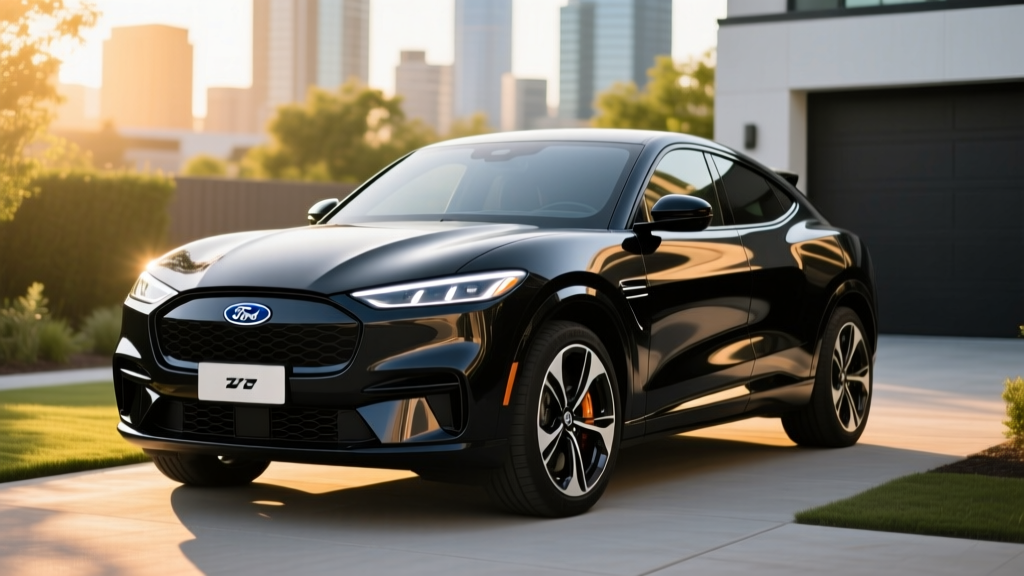
An EV challenger is any battery-electric vehicle that competes head-to-head with a mainstream gas car on price, range, and daily usability — not just on paper, but in real-world ownership. In 2026, the strongest EV challengers include the Tesla Model 3 (EPA 363 mi, $38,990), Hyundai Ioniq 6 (EPA 361 mi, $37,500), Chevrolet Equinox EV (EPA 319 mi, $33,600), and Ford Mustang Mach-E (EPA 320 mi, $39,995). These models deliver 300+ miles of EPA range, DC fast-charge from 10–80% in under 25 minutes, and — after the §30D federal tax credit — can undercut comparably equipped gas sedans and crossovers on total 5-year cost. The catch: you need reliable home or workplace charging, and cold-climate buyers should budget for 20–30% winter range loss.
EV Challenger vs Gas Car: The Numbers That Actually Matter
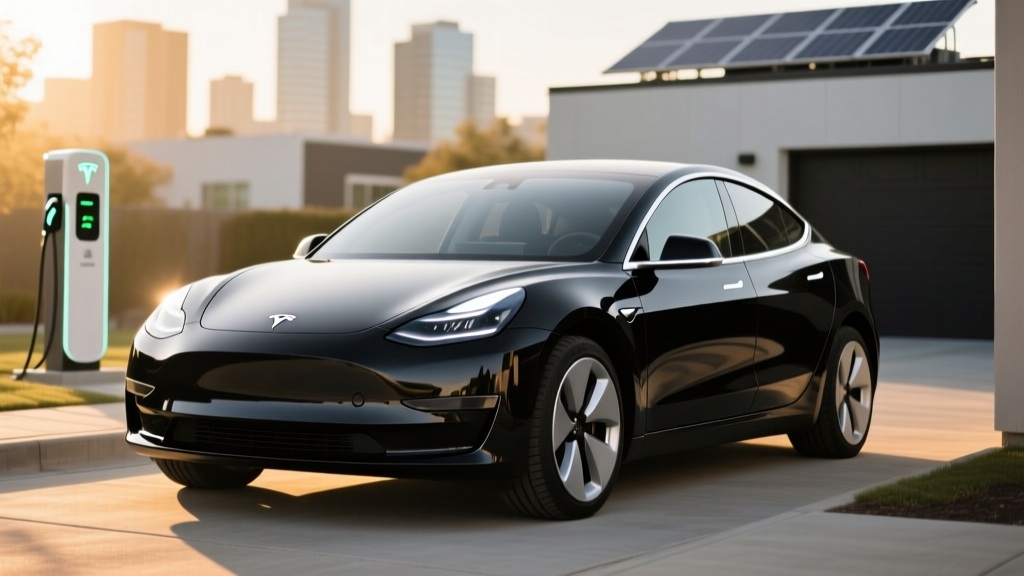
Marketing emphasizes 0–60 times, but ownership economics decide whether an EV challenger makes sense for your garage. Below is a side-by-side comparison of a popular EV challenger (2026 Tesla Model 3 Long Range RWD) against its closest gas rival (2026 Toyota Camry LE) over five years and 75,000 miles.
| Metric | 2026 Tesla Model 3 LR RWD | 2026 Toyota Camry LE (Gas) |
|---|---|---|
| Base MSRP | $38,990 | $29,995 |
| §30D Federal Tax Credit (if eligible) | −$7,500 (point-of-sale) | $0 |
| Effective Purchase Price | $31,490 | $29,995 |
| EPA Efficiency | 132 MPGe (25 kWh/100 mi) | 32 MPG combined |
| Fuel/Energy Cost (75k mi)* | $2,475 (home L2, $0.13/kWh) | $7,031 ($3.00/gal avg) |
| Maintenance (75k mi) | ~$900 | ~$2,800 |
| Insurance (5-yr avg) | ~$9,500 | ~$7,200 |
| 5-Year Total Cost | ~$44,365 | ~$47,026 |
*Energy costs assume 85% home Level 2 charging at the US average residential rate of $0.13/kWh and 15% public DC fast charging at $0.40/kWh. Gas costs use a 5-year $3.00/gallon average. Source: fueleconomy.gov and AAA fuel-price tracking.
The Model 3 Long Range wins on 5-year total cost by roughly $2,600, despite a higher sticker and pricier insurance. The gap widens further if you have access to cheap overnight utility rates (some plans offer $0.06–$0.08/kWh) or if gas prices rise above $3.50/gallon in your area.
Top 2026 EV Challengers: Spec-by-Spec Breakdown
Not every electric car qualifies as a genuine EV challenger. To compete with mass-market gas vehicles, a model needs to clear three bars: under $45,000 MSRP (to stay within §30D sedan/SUV caps), 280+ miles of EPA range, and DC fast charging at 150 kW or higher. Here are the models that meet all three in 2026.
| Model | EPA Range | Battery (kWh, Chemistry) | Peak DC Charge (kW) | 10–80% Time | 0–60 mph | Base MSRP |
|---|---|---|---|---|---|---|
| Tesla Model 3 LR RWD | 363 mi | 79 kWh, NMC | 250 kW | ~18 min | 5.8 s | $38,990 |
| Hyundai Ioniq 6 SEL | 361 mi | 77.4 kWh, NMC | 235 kW | ~18 min | 6.2 s | $37,500 |
| Chevrolet Equinox EV 2LT | 319 mi | 85 kWh, NMC | 190 kW | ~24 min | 7.9 s | $33,600 |
| Ford Mustang Mach-E Select | 320 mi | 75.7 kWh, NMC | 150 kW | ~28 min | 6.3 s | $39,995 |
| Kia EV6 Wind RWD | 310 mi | 77.4 kWh, NMC | 235 kW | ~18 min | 7.2 s | $42,500 |
| Volkswagen ID.4 Pro | 291 mi | 82 kWh, NMC | 175 kW | ~28 min | 7.7 s | $39,995 |
The Real Cost of Owning an EV Challenger: Beyond the Sticker
First-time EV buyers often focus on MSRP and overlook the ownership infrastructure. Here's a full cost breakdown including the items that catch new owners off guard.
| Cost Category | Typical Range | Notes |
|---|---|---|
| Home Level 2 Charger (hardware) | $350–$700 | Wallbox, ChargePoint Home Flex, Tesla Wall Connector |
| Home L2 Installation (electrician) | $800–$2,500 | Depends on panel proximity; 240V/48A circuit. Panel upgrade adds $1,500–$3,500 if needed. |
| Electricity (annual, 12k mi/yr) | $350–$650 | At $0.08–$0.15/kWh; public DC charging costs 2–3× more |
| Tire Replacement (set of 4) | $800–$1,400 | EVs wear tires 20–30% faster due to weight and instant torque |
| Insurance (annual premium) | $1,600–$2,400 | EVs cost 15–25% more to insure vs comparable gas models |
| Battery Warranty Coverage | 8 yr / 100,000 mi | Federal mandate; covers defects and >30% capacity loss |
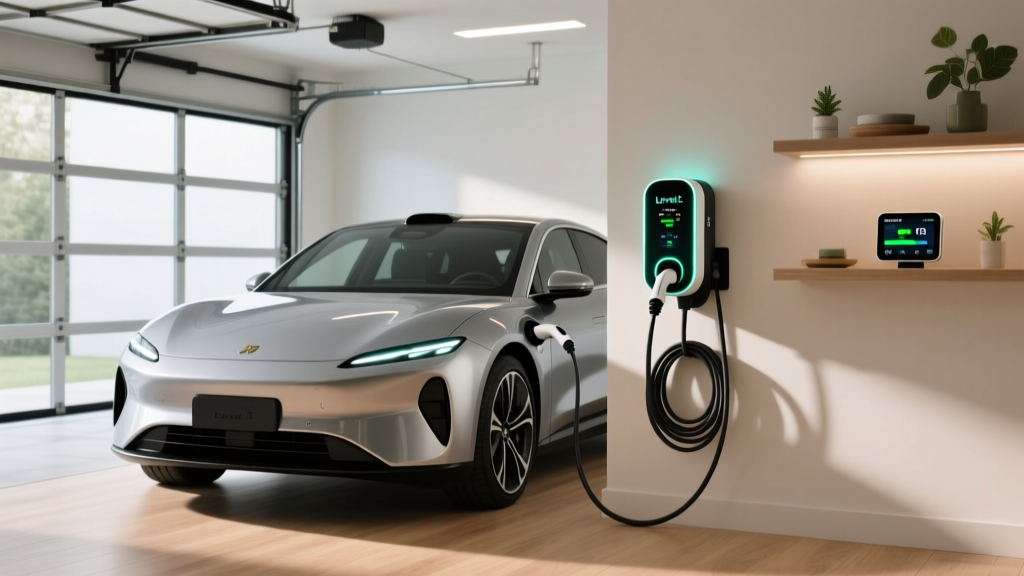
The biggest variable is home charging installation. If your electrical panel is a 200-amp service with spare capacity near your garage, a Level 2 install runs $800–$1,200 total. If you need a panel upgrade to 200A or a long conduit run, costs can reach $3,000–$5,000. Always get a quote from a licensed electrician before purchasing — don't assume your panel can handle a 48-amp continuous load. The IRS §30D credit may also apply to home charging equipment under the separate §30C alternative-fuel infrastructure credit (up to $1,000), though eligibility depends on census-tract requirements.
Common EV Challenger Myths — Fact-Checked with Data
| Myth | Fact |
|---|---|
| "EV batteries need replacing every 5 years." | Data from Tesla's 2025 Impact Report shows average battery degradation of ~12% after 150,000 miles. Most NMC and LFP packs retain 80%+ capacity at 200,000 miles. Replacement is rare and covered under the 8-year/100k-mile warranty if capacity drops below ~70%. |
| "Charging takes too long for road trips." | Top EV challengers on 800V architectures (Hyundai/Kia E-GMP, Tesla) charge 10–80% in 18–25 minutes at a 250–350 kW station. That's a restroom and coffee break. The key is route-planning with apps like A Better Routeplanner to hit chargers that support your car's peak kW. |
| "EVs are worse for the environment because of battery mining." | Lifecycle analyses by the ICCT and Argonne National Lab show that even on coal-heavy US grids, EVs produce 35–60% fewer lifetime emissions than equivalent gas cars. On clean grids (hydro, wind, solar), the advantage exceeds 70%. Battery recycling via Redwood Materials and Li-Cycle recovers 90%+ of critical minerals. |
| "You can't drive an EV in winter." | You can, but plan for reduced range. A 300-mile EPA EV may deliver 210–240 miles in 20°F weather. Preconditioning the battery while plugged in (a feature on every model listed above) recovers some efficiency and improves DC charging speeds in cold weather. |
| "The $7,500 tax credit applies to every EV." | It does not. Under current IRS §30D rules, eligibility depends on MSRP caps ($55,000 sedans, $80,000 SUVs/trucks), buyer income limits ($150k single / $300k joint AGI), and critical-mineral/battery-component sourcing requirements that tighten annually. Some popular models qualify for only $3,750 or nothing at all — always check the IRS list before committing. |
EV Challenger vs Hybrid and PHEV: Which Fits Your Situation?
Not every driver is ready for a battery-electric vehicle. Plug-in hybrids (PHEVs) and conventional hybrids (HEVs) remain strong alternatives. Here's how they stack up.
- Battery-Electric (BEV): Lowest operating cost, zero tailpipe emissions, best performance. Requires home or reliable workplace charging. Ideal for daily commutes under 100 miles round-trip with occasional road trips. Best 5-year value if you can charge at home.
- Plug-in Hybrid (PHEV): 25–45 miles of electric-only range covers most commutes, then a gas engine eliminates range anxiety. No charging infrastructure required (but beneficial). Higher maintenance than a BEV (two powertrains). Good for apartment dwellers or one-car households that road-trip frequently. Example: Toyota RAV4 Prime (42 mi electric, 38 MPG gas, $43,690).
- Conventional Hybrid (HEV): No plug, no range anxiety, 50+ MPG in models like the Prius (57 MPG combined, $28,550). Lowest upfront cost of the three. Still pays for gas but at a dramatically reduced rate. Best for budget-conscious buyers without charging access.
Your EV Challenger Decision Framework
Choose a BEV (full EV challenger) if:
- You have access to Level 2 charging at home or work
- Your daily driving is under 150 miles round-trip
- You qualify for the §30D tax credit (check income and model eligibility)
- You want the lowest cost-per-mile and minimal maintenance
- You take 1–3 road trips per year and can plan DC fast-charging stops
Choose a PHEV if:
- You live in an apartment or lack reliable home charging
- You frequently drive 300+ miles in a single day (rural routes, sales territory)
- You live in a charging-desert region with sparse DC infrastructure
- You want electric commuting but need gas flexibility for towing or long trips
Stick with a gas car or HEV if:
- Your budget is under $28,000 and you need a new vehicle
- You drive less than 8,000 miles/year (fuel savings won't offset EV premium)
- You live in extreme cold (below 0°F regularly) with no garage parking
- Your local electricity rates exceed $0.25/kWh with no off-peak discount
First-Time EV Buyer Checklist: 7 Things to Verify Before You Sign
- Confirm §30D eligibility for the exact trim. The IRS updates qualifying vehicle lists regularly. A model that qualified in January may lose eligibility mid-year if battery sourcing changes. Check fueleconomy.gov's tax credit tool for the latest.
- Get an electrician quote before delivery day. Schedule a panel assessment 4–6 weeks before your EV arrives. You don't want a $40,000 car sitting in your driveway charging on a 120V Level 1 trickle (3–4 miles/hour) because your panel maxed out.
- Test your actual commute round-trip. If your commute is 80 miles and the car's real-world range in your climate is 250 miles, you have plenty of buffer. If your commute is 140 miles in Minnesota winter, a 300-mile EPA car might cut it uncomfortably close.
- Map your public charging options. Use PlugShare or the Tesla app to find DC fast chargers along your common routes. Not all "fast chargers" are equal — a 50 kW CHAdeMO station will take an hour for 10–80%, while a 350 kW CCS or NACS station does it in 20 minutes.
- Understand the charge curve. Peak kW only applies at low state-of-charge. A car rated at 250 kW peak may sustain that for only 5–8 minutes before tapering. The 10–80% time is the more useful real-world metric.
- Factor in insurance. Get quotes before purchasing. EVs typically cost 15–25% more to insure than equivalent gas models due to higher repair costs and battery replacement risk. Some insurers (like Tesla Insurance or progressive EV-specific policies) may offer competitive rates.
- Check the battery chemistry. LFP (lithium iron phosphate) batteries, found in base Tesla Model 3/Y RWD trims, tolerate daily 100% charging and offer longer cycle life but lower energy density (less range per kWh). NMC batteries deliver more range but are best kept between 20–80% for daily use to maximize longevity.
Frequently Asked Questions
Is an EV challenger actually cheaper than a gas car over 5 years?
It depends on your situation, but often yes. When you factor in the §30D tax credit (up to $7,500), lower fuel costs ($0.04–$0.06/mile on electricity vs $0.10–$0.14/mile on gas), and reduced maintenance (no oil changes, fewer brake replacements due to regenerative braking), most EV challengers priced under $40,000 beat their gas equivalents over five years and 75,000 miles. The savings range from $1,500 to $6,000 depending on local electricity rates, driving volume, and whether you qualified for the full credit.
What happens if I can't charge at home?
Exclusive reliance on public DC fast charging is expensive ($0.30–$0.50/kWh, roughly double the cost of gas per mile in some markets) and time-consuming. If you cannot install a Level 2 charger at home or access one at work, a PHEV or conventional hybrid is likely a better fit. Some apartment complexes and workplaces are adding Level 2 stations — check with your property manager or employer before ruling out a BEV.
How long do EV challenger batteries actually last?
Current NMC and LFP battery packs are engineered for 1,500–3,000 full charge cycles before reaching 80% capacity. For a 300-mile-range vehicle, that translates to 450,000–900,000 miles of total throughput — far exceeding the vehicle's structural life. Real-world data from high-mileage Tesla and Hyundai fleets shows ~10–15% degradation at 100,000 miles. The federal warranty mandates 8 years/100,000 miles of coverage against defects and excessive capacity loss (typically below 70% state of health).
Do EV challengers hold their resale value?
EV depreciation has been steeper than gas cars in 2024–2025, driven by aggressive price cuts (particularly from Tesla), rapidly improving new models, and buyer uncertainty about battery longevity. Expect 45–55% depreciation over 3 years for most EV challengers, compared to 35–45% for comparable gas models. This gap is narrowing as the market matures, but it remains a factor — particularly if you plan to sell or trade in within 3 years. Leasing can hedge this risk by locking in a residual value upfront.
Which EV challenger is best for cold climates?
Look for models with a heat pump (standard on Tesla Model 3/Y, Hyundai Ioniq 5/6, Kia EV6/EV9) and battery preconditioning. A heat pump uses 2–3× less energy for cabin heating than resistive elements, directly preserving range. Among 2026 challengers, the Tesla Model 3 LR and Hyundai Ioniq 6 show the smallest cold-weather range penalty in testing — roughly 20% loss at 20°F compared to 28–32% for models without heat pumps. Garage parking and preconditioning while plugged in further reduce winter losses.