Quick Answer: What Is an EV Car Motor?
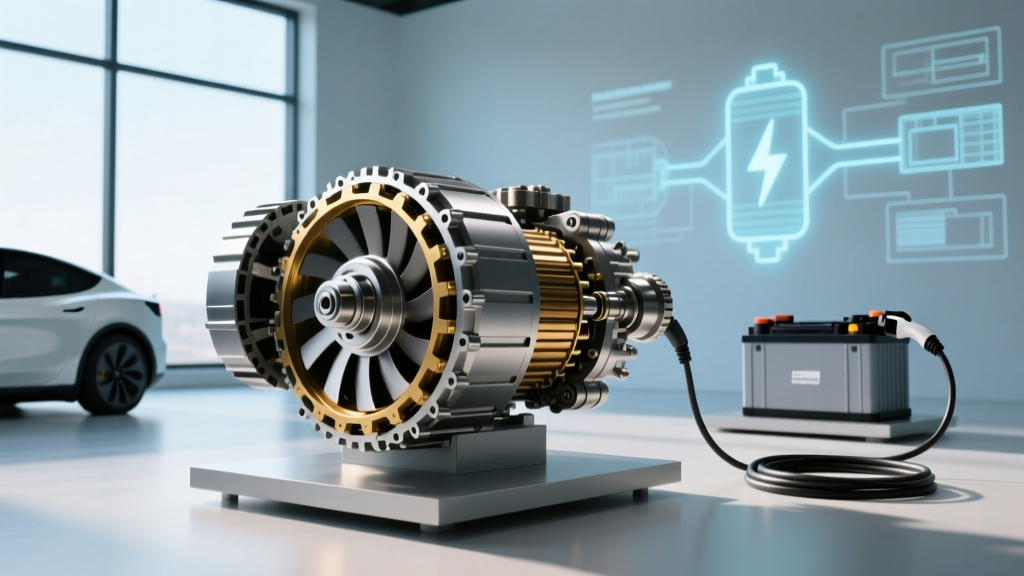
An EV car motor converts electrical energy from the battery into rotational force to drive the wheels. Unlike a gas engine with hundreds of moving parts, an electric motor has essentially one: the rotor spinning inside the stator. Most 2026 EVs use either a permanent magnet synchronous motor (PMSM) for peak efficiency or an AC induction motor for high-speed power and durability. Electric motors deliver instant torque from zero RPM, require no oil changes, and convert 85–95% of electrical energy into motion — compared to roughly 20–35% for a gasoline engine.
The Two Main EV Motor Types in 2026
If you're shopping for an EV, the motor type affects your efficiency, range, and long-term cost. Here's how the two dominant designs compare:
| Attribute | Permanent Magnet (PMSM) | AC Induction |
|---|---|---|
| Efficiency | 93–97% | 85–92% |
| Torque Delivery | Strong at low RPM | Strong at high RPM |
| Rare Earth Magnets | Yes (neodymium) | No |
| Weight | Lighter | Heavier |
| Cost | Higher (magnet materials) | Lower |
| Common In | Tesla Model Y (rear), Hyundai Ioniq 5, Ford Mustang Mach-E | Tesla Model S/X (front), older Audi e-tron |
| Degradation Risk | Magnets can weaken under extreme heat over time | Minimal — no magnets to degrade |
What this means for buyers: PMSM motors dominate 2026 models because their higher efficiency translates directly into more EPA range per kWh of battery. A Hyundai Ioniq 5 with its 77.4 kWh usable battery and PMSM motor achieves an EPA-estimated 305 miles on the Long Range AWD trim. An AC induction motor would sacrifice roughly 10–20 miles of that range from efficiency losses alone.
How EV Motor Efficiency Translates to Real-World Savings
The electric motor's efficiency advantage is the single biggest reason EVs cost less per mile to drive. Here's how the math works out in 2026:
| Metric | EV (e.g., Tesla Model Y LR) | Gas Equivalent (e.g., Toyota RAV4 AWD) |
|---|---|---|
| Motor/Engine Efficiency | ~90% (electrical to mechanical) | ~25–30% (chemical to mechanical) |
| Energy/Fuel Cost per Mile | $0.04–$0.06 (home charging at $0.14/kWh) | $0.13–$0.16 (at $3.40/gal, 28 MPG combined) |
| Annual Fuel/Energy (12,000 mi) | $480–$720 | $1,560–$1,920 |
| Annual Savings | $840–$1,440/year driving on home electricity | |
| Maintenance (annual avg.) | ~$300–$500 | ~$800–$1,200 |
Source: Energy costs based on fueleconomy.gov data and EIA average U.S. residential electricity rates (~$0.14–$0.17/kWh in 2025–2026).
Where the Savings Get Even Bigger
Electric motors eliminate the maintenance items that cost gas-car owners thousands over a vehicle's life:
- No oil changes — saves $150–$300/year
- No spark plugs, timing belts, or catalytic converters
- Regenerative braking extends brake pad life to 100,000+ miles in many cases
- No transmission fluid — most EVs use a single-speed reduction gear with sealed, lifetime lubricant
Over 5 years and 60,000 miles, an EV owner typically saves $3,000–$5,500 in combined fuel and maintenance compared to a comparable gas vehicle.
EV vs Gas vs Hybrid: Motor and Powertrain Comparison
The motor is just one piece of the drivetrain puzzle. Here's how the three main vehicle types stack up for a typical buyer in 2026:
| Factor | Battery EV (BEV) | Plug-in Hybrid (PHEV) | Gas Vehicle (ICE) |
|---|---|---|---|
| Drivetrain Complexity | Motor + single-speed gear | Motor + engine + transmission | Engine + multi-speed transmission |
| Moving Parts (drivetrain) | ~20 | ~200+ | ~200+ |
| EPA Efficiency | 100–130 MPGe | 35–50 MPG (gas), 80–110 MPGe (electric) | 25–35 MPG |
| Electric-Only Range | 240–400+ mi | 25–50 mi | 0 mi |
| Home Charging Needed? | Strongly recommended | Recommended to realize savings | No |
| Federal Tax Credit (§30D) | Up to $7,500 (with sourcing/income rules) | Up to $7,500 (same rules) | $0 |
| Cold-Weather Range Loss | 20–40% at 20°F | 10–25% (electric mode) | 5–10% |
| 5-Year Total Cost of Ownership | Often lowest (fuel + maint. savings) | Middle | Highest (fuel + maint.) |
Tax credit caveat: The IRS §30D credit for 2026 requires the buyer to meet income caps ($150K single / $300K joint), the vehicle to be under MSRP limits ($55K sedans / $80K SUVs/trucks), and the battery to meet critical-mineral and component-sourcing thresholds. Many popular models qualify for only $3,750 (half credit) or none at all depending on the battery's supply chain. Always verify current eligibility on IRS.gov or consult a tax professional.
Real-World Ownership Considerations for Your EV Motor
The motor itself is nearly bulletproof — most manufacturers warranty it for 8 years/100,000 miles, and failures are rare. But your ownership experience depends on factors surrounding the motor's power source: the battery and charging setup.
Home Charging Access
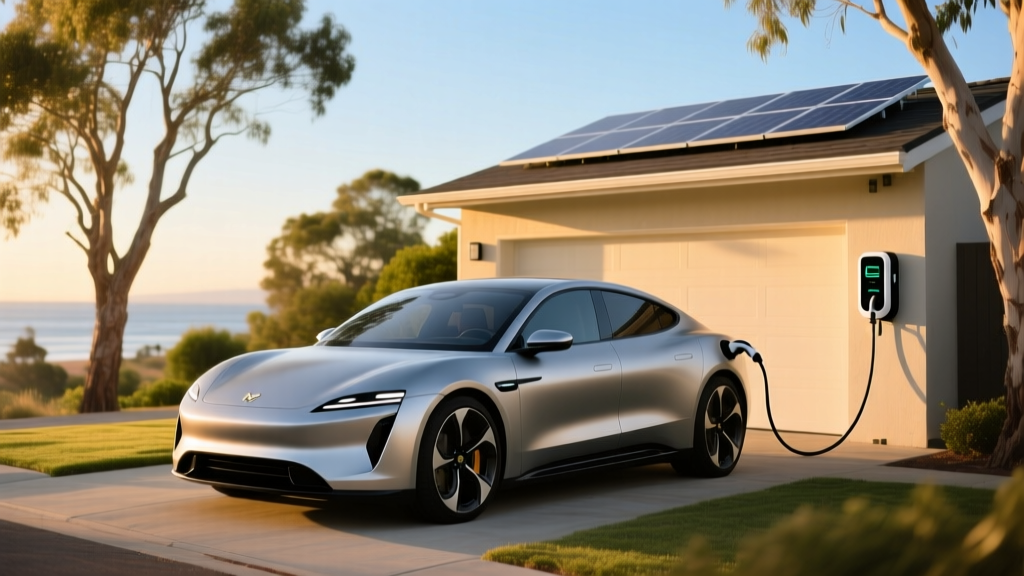
Roughly 75–80% of EV charging happens at home. If you can install a Level 2 charger (240V, 32–48 amps, delivering 7.7–11.5 kW), you'll wake up to a full "tank" every morning. Installation costs vary:
- Simple install (panel nearby, 200A service): $500–$1,200 for equipment + electrician
- Complex install (panel upgrade to 200A, long wire run): $2,000–$4,500
- Level 1 only (standard 120V outlet): $0 install, but adds only 3–5 miles of range per hour — workable if you drive under 40 miles daily
Climate and Motor Efficiency
Electric motors themselves don't lose efficiency in cold weather — it's the battery that struggles. At 20°F, expect:
- 20–40% range reduction due to battery chemistry slowdown and cabin heating demands
- Slower DC fast charging until the battery warms up (preconditioning helps)
- Heat pump equipped EVs (standard on most 2026 Hyundai, Kia, Tesla models) recover 10–15% of that cold-weather loss compared to resistive heating
In hot climates, the motor and battery thermal management system uses energy to keep components cool — typically a 5–10% range hit in sustained 100°F+ weather.
Common EV Motor Misconceptions, Addressed
| Myth | Fact |
|---|---|
| "EV motors wear out like gas engines" | Electric motors have one moving part (the rotor). With sealed bearings, they routinely last 200,000+ miles with zero maintenance. It's the battery, not the motor, that degrades over time. |
| "EVs need transmission fluid changes" | Most EVs use a single-speed reduction gear with sealed, lifetime lubricant. No scheduled fluid changes are required by Tesla, Hyundai, Ford, or GM for their current EV models. |
| "More horsepower means less range" | Not necessarily. Motor efficiency and vehicle aerodynamics matter more. A dual-motor Tesla Model Y Performance (456 HP) still achieves 277 miles EPA — only ~8% less than the Long Range (346 HP, 305 miles) because both use efficient PMSM motors. |
| "EV motors can't handle towing" | Electric motors deliver maximum torque at zero RPM — ideal for towing. The Ford F-150 Lightning tows up to 10,000 lbs. However, towing at highway speeds can cut range by 40–50% due to aerodynamic drag, not motor strain. |
| "Regenerative braking wears out the motor" | Regen actually reduces wear. The motor acts as a generator during deceleration, converting kinetic energy back to the battery. This causes no additional motor wear and saves the friction brakes. |
Decision Framework: Which EV Motor Setup Is Right for You?
Choose a Single-Motor PMSM EV (RWD) If:
- You drive mostly in mild climates and dry conditions
- You prioritize maximum range per dollar (single motor = lighter, more efficient)
- Your daily commute is under 80 miles round-trip
- Example: Tesla Model 3 RWD — 272 mi EPA, ~$38,990 base MSRP, 110 MPGe
Choose a Dual-Motor AWD EV If:
- You live where it snows or rains frequently
- You need towing capacity or regularly carry heavy loads
- You want performance (0–60 in 3–4 seconds) without sacrificing daily usability
- Example: Hyundai Ioniq 5 AWD — 290 mi EPA, ~$50,900 base MSRP, dual PMSM motors, 320 HP
Choose a PHEV Instead If:
- You can't install home charging and rely on street parking
- You frequently drive 300+ miles in rural areas with sparse charging infrastructure
- You want electric-only commuting (25–50 mi) with a gas backup for road trips
- Example: Toyota RAV4 Prime — 42 mi electric-only, 38 MPG combined on gas, ~$43,690 base MSRP
Cost Breakdown: What an EV Motor Means for Your Wallet
| Cost Category (5 Years / 60,000 mi) | EV (Model Y LR AWD) | Gas (RAV4 AWD) |
|---|---|---|
| Purchase Price (MSRP) | $46,630 | $33,500 |
| Federal Tax Credit (§30D) | −$3,750 to −$7,500 (eligibility varies) | $0 |
| Fuel/Energy | $2,400–$3,600 | $7,800–$9,600 |
| Maintenance | $1,500–$2,500 | $4,000–$6,000 |
| Insurance (avg.) | $9,000–$11,000 | $7,000–$8,500 |
| Estimated Depreciation | $18,000–$22,000 | $12,000–$15,000 |
| Approx. 5-Year Total | $54,000–$62,000 | $64,000–$73,000 |
Key takeaway: The EV's higher purchase price is offset by dramatically lower fuel and maintenance costs, plus potential tax credits. The electric motor's simplicity is the primary driver of those maintenance savings. However, EV insurance premiums run 15–25% higher on average, and depreciation remains steeper for some models — factor these in.
Frequently Asked Questions
Do EV motors need any scheduled maintenance?
No. Unlike gas engines, electric motors have no oil, filters, belts, or spark plugs. The only drivetrain maintenance item is checking the coolant level for the motor/battery thermal management system, typically every 4–5 years. Tesla, Hyundai, and Ford specify no routine motor service.
How long does an EV car motor last?
Electric motors routinely outlast the vehicles they're installed in. With sealed bearings and a single moving part, 200,000–300,000+ miles is common. The motor is covered under the federally mandated powertrain warranty of at least 8 years/100,000 miles. In practice, battery degradation — not motor failure — determines an EV's useful lifespan.
What happens if an EV motor fails?
Motor failures are uncommon but typically covered under the 8-year/100,000-mile powertrain warranty. Out-of-warranty replacement costs range from $4,000–$8,000 depending on the model and whether it's a single or dual-motor setup. For context, a gas engine replacement runs $4,000–$10,000 — so the costs are comparable, but motor failures are far less frequent.
Does motor type affect regenerative braking?
Yes, slightly. PMSM motors tend to offer more aggressive and efficient regenerative braking because of their stronger magnetic field at low speeds. This is why many PMSM-equipped EVs (Hyundai Ioniq 5, Tesla Model 3) offer stronger one-pedal driving experiences than older AC induction models.
Can I tow with an EV without damaging the motor?
Absolutely. Electric motors produce peak torque at zero RPM, making them excellent for towing. The motor itself experiences no additional wear from towing. The trade-off is range: towing a 5,000-lb trailer at 65 mph can reduce range by 40–50%. Plan charging stops accordingly on long towing trips.
Are EV motors affected by water or flooding?
EV motors are sealed and rated for water ingress (typically IP67 or higher). Driving through rain or shallow puddles poses no risk. However, like any vehicle, submerging an EV in floodwater can damage electronics, the battery, and bearings. No EV is rated as a boat — avoid driving through standing water deeper than the manufacturer specifies (typically 8–12 inches for most models).