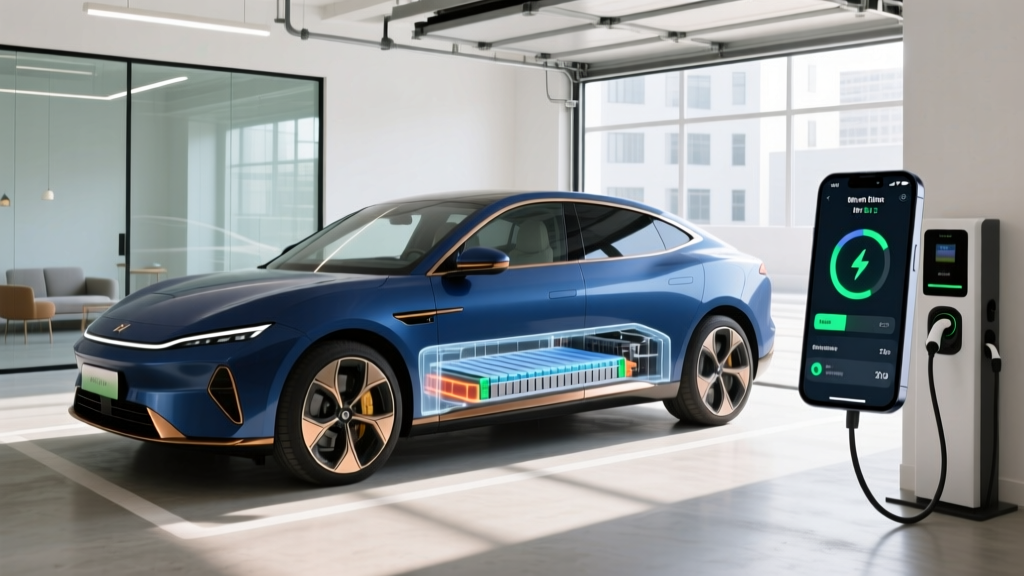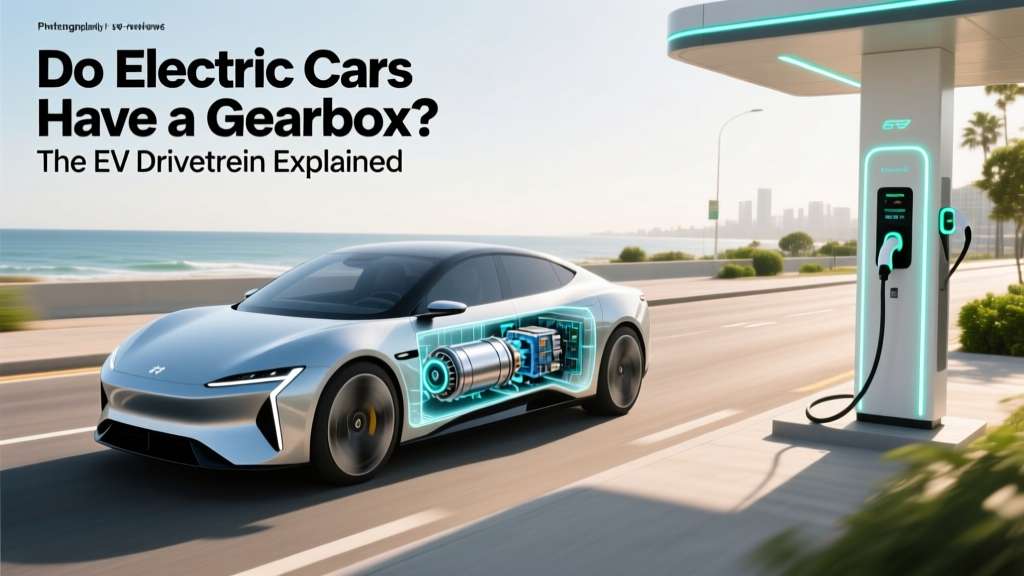
The Short Answer: Do Electric Cars Have a Gearbox?
Most electric vehicles do not have a traditional multi-speed gearbox. Instead, they use a single-speed reduction gear — a fixed-ratio unit (typically between 8:1 and 10:1) that transfers torque from the electric motor to the wheels. Because electric motors produce maximum torque from 0 RPM and can safely rev to 15,000–20,000+ RPM, there is no need for the 6, 8, or 10 gear ratios a combustion engine requires to stay in its narrow power band. A handful of performance EVs — most notably the original Porsche Taycan — use a two-speed transmission on the rear axle, but this is the exception, not the rule.
Why Electric Motors Don't Need Multiple Gears
To understand the EV car gearbox question, you have to look at how electric motors and internal combustion engines (ICE) differ fundamentally in how they deliver power.
A gasoline engine produces usable torque only within a narrow RPM window — typically between 1,500 and 5,500 RPM. Below that range, it lacks pulling force; above it, power falls off and the engine risks damage. A multi-speed transmission exists solely to keep the engine in that sweet spot as vehicle speed changes. Shift from 1st to 2nd to 3rd, and the transmission is re-matching engine RPM to road speed.
An electric motor behaves completely differently:
- Torque from zero: A permanent-magnet or induction motor delivers peak torque the instant it starts spinning. There is no idle, no clutch engagement, no lag.
- Massive RPM range: EV motors routinely spin to 15,000–20,000 RPM (some, like those in the Lucid Air, exceed 19,000 RPM). That single RPM sweep covers the equivalent of a gas car's entire speed range from 0 to 150+ mph.
- Linear power delivery: Power builds predictably with RPM, so there is no narrow "power band" the motor needs to stay within.
The result: one fixed gear ratio is sufficient to multiply motor torque for strong acceleration while allowing the motor to spin fast enough for highway speeds. The reduction gear sits between the motor and the differential in a single integrated unit often called the e-axle.
Single-Speed vs. Two-Speed: Real EV Examples
| Vehicle | Drivetrain Type | Gear Ratio | 0-60 mph | Top Speed | Motor RPM (max) |
|---|---|---|---|---|---|
| Tesla Model Y (2026, Long Range AWD) | Single-speed reduction (front + rear) | ~9.0:1 | 4.8 sec | 135 mph | ~18,000 |
| Hyundai Ioniq 5 (2026, RWD) | Single-speed reduction | ~8.2:1 | 7.2 sec | 115 mph | ~16,000 |
| Porsche Taycan (2026, Turbo S) | Two-speed rear + single-speed front | 1st: ~16:1 / 2nd: ~8:1 | 2.4 sec | 162 mph | ~17,500 |
| BMW iX M60 (2026) | Single-speed reduction (front + rear) | ~9.1:1 | 3.6 sec | 155 mph | ~19,000 |
| Rivian R1T (2026, Dual-Motor) | Single-speed reduction (front + rear) | ~9.6:1 | 4.5 sec | 120 mph | ~17,000 |
The Porsche Taycan's two-speed rear transmission uses a short first gear (~16:1) for explosive launches and a tall second gear (~8:1) for efficient highway cruising. The trade-off is added weight (~30 lbs), complexity, and cost. Most automakers have concluded that the efficiency and performance gains from a second gear are marginal for everyday driving — and not worth the packaging and reliability overhead.
Efficiency and Range: How the Gearbox Affects Your Miles
The reduction gear's ratio directly influences an EV's efficiency profile — the balance between low-speed acceleration punch and high-speed cruising consumption.
A numerically higher ratio (e.g., 10:1) multiplies torque more aggressively, improving acceleration but forcing the motor to spin faster at highway speeds, which increases energy consumption. A lower ratio (e.g., 7:1) does the opposite. Automakers optimize this ratio based on the vehicle's target performance and range.
Real-world efficiency impact: On the highway at 75 mph, most EVs consume 20-30% more energy per mile than their EPA combined rating suggests, largely due to aerodynamic drag — not gearbox inefficiency. For example, a Tesla Model 3 Long Range rated at 27 MPGe combined / 132 MPGe city may see highway efficiency drop to around 110-115 MPGe at sustained 75 mph. The single-speed gearbox is not the limiting factor here; wind resistance is.
According to fueleconomy.gov, EVs convert over 77% of the electrical energy from the grid to power at the wheels. Conventional gasoline vehicles convert only about 12-30%. The simplicity of the single-speed reduction gear — with typical mechanical efficiency above 97% — is a significant contributor to that gap. Every gear shift in a multi-speed automatic transmission introduces a brief interruption in power delivery and frictional losses that an EV's fixed gear simply avoids.
Maintenance and Longevity: What Owners Actually Save
This is where the EV car gearbox question has the most direct impact on your wallet.
| Maintenance Item | Gas Car Cost | EV Cost | Notes |
|---|---|---|---|
| Transmission fluid service | $150-$300 (every 30-60k mi) | $0-$100 (lifetime fill, some models) | Many EV reduction gears use a sealed, lifetime fluid fill; some (e.g., Tesla) recommend inspection at ~100k mi |
| Transmission replacement/rebuild | $3,000-$7,000 (if needed) | $1,500-$3,500 (reduction gear, rare) | EV reduction gears rarely fail; no clutch packs, bands, or torque converters to wear |
| Engine oil changes | $200-$400 (5-7 changes) | $0 | No combustion engine = no oil |
| Brake pads | $300-$600 (1-2 replacements) | $0-$200 (often lasts 100k+ mi) | Regenerative braking reduces pad wear by 50-80% |
| Spark plugs, timing belt/chain | $400-$1,200 | $0 | Not applicable to EVs |
| Total drivetrain-related maintenance | $1,050-$9,500 | $0-$300 | EV drivetrain savings: typically $1,000-$5,000+ over 5 years |
The reduction gear in a modern EV has very few moving parts compared to a multi-speed automatic or dual-clutch transmission. There are no clutch plates to burn out, no bands to snap, no valve body to clog, and no torque converter to fail. The gear set itself — usually a pair of helical gears — is bathed in oil and subject to minimal wear under normal driving conditions.
Most EV powertrains (motor + reduction gear) are covered under the federally mandated 8-year/100,000-mile warranty, with some manufacturers extending to 10 years. According to fueleconomy.gov, this warranty coverage includes the electric motor, power electronics, and the reduction gear assembly.
The Exceptions: When EVs Do Use Multiple Gears
While 95%+ of EVs on the road use a single-speed reduction gear, a few notable exceptions exist:
- Porsche Taycan (all variants): Two-speed transmission on the rear axle. First gear multiplies torque for 0-60 sprints; second gear engages around 45-55 mph for efficient highway cruising. The front motor uses a single-speed unit.
- Audi e-tron GT (platform sibling to Taycan): Shares the same ZF-designed two-speed rear transmission.
- Some commercial/heavy-duty EVs: Electric buses and trucks (e.g., certain configurations of the Tesla Semi) may use two- or four-speed transmissions to handle extreme load ranges and grade requirements.
- Jeep Wrangler 4xe / some PHEVs: Plug-in hybrids retain the multi-speed automatic from their gas counterparts because the ICE still needs it. The electric motor is integrated into or upstream of the existing transmission.
For passenger cars, the industry consensus is clear: the marginal efficiency gain of a second gear (estimated at 1-3% on the highway) does not justify the added cost, weight, and potential failure points. As motor technology improves — particularly with higher-RPM designs like Lucid's 19,000+ RPM units — the case for a single-speed gearbox only strengthens.
Common Misconceptions About EV Gearboxes
| Myth | Fact |
|---|---|
| "EVs have no gears at all" | They have a single-speed reduction gear — usually a ~9:1 ratio — that is always engaged. It's a gear, just not a shifting one. |
| "Without gears, EVs can't go fast" | Most EVs reach 100-155 mph on a single gear. The Lucid Air Sapphire hits 205 mph. Motor RPM range makes this possible. |
| "EV transmissions need regular fluid changes" | Most are sealed with lifetime-fill fluid. Some manufacturers recommend inspection at high mileage, but routine changes are uncommon. |
| "The gearbox is the most expensive part to replace" | The traction battery ($5,000-$20,000+ depending on kWh and chemistry) is far more costly. Reduction gear failures are extremely rare. |
| "Regenerative braking goes through the gearbox" | Regen is handled by the electric motor acting as a generator. The reduction gear transmits the braking torque to the wheels, but the energy conversion happens in the motor and inverter — not the gear. |
Ownership Decision Framework: Does the Drivetrain Matter for Your Purchase?
Choose Based on Your Driving Pattern
- Choose a single-speed EV (most models) if: You drive a mix of city and highway, want minimal maintenance, prioritize range efficiency in stop-and-go traffic, and value smooth, uninterrupted acceleration. This covers the vast majority of buyers. Models like the Tesla Model 3/Y, Hyundai Ioniq 5/6, Chevrolet Equinox EV, and Ford Mustang Mach-E all use proven single-speed reduction gears.
- Choose a two-speed EV (Porsche Taycan/Audi e-tron GT) if: Track-capable launch performance matters to you, you frequently drive at sustained high speeds on unrestricted roads, and you accept a ~$80,000+ starting price for the drivetrain engineering. The two-speed transmission is a performance feature, not an efficiency one.
- Choose a PHEV with a multi-speed automatic if: You need gas-engine range for remote travel without charging infrastructure but want electric-only commuting. The Jeep Wrangler 4xe, Toyota RAV4 Prime, and BMW X5 xDrive50e retain conventional transmissions because the ICE requires them. Expect higher drivetrain maintenance costs than a pure BEV.
What First-Time EV Buyers Should Know About the Drivetrain
If you're transitioning from a gas car, the absence of gear shifts is one of the most immediately noticeable differences. Here's what matters practically:
- No shift shock, no lag: Acceleration is perfectly linear. There is no momentary power interruption as in a gas car's upshift. This makes EVs feel quicker than their 0-60 times suggest in real-world driving.
- One-pedal driving is a motor feature, not a gearbox feature: When you lift off the accelerator, the motor reverses its function and generates electricity, slowing the car. This happens through the same reduction gear, but the "gear" itself doesn't change.
- Cold-weather performance is unaffected by the gearbox: Range loss in cold weather (typically 20-40% at 20°F / -7°C) comes from battery chemistry and cabin heating demands — not from any drivetrain inefficiency. The reduction gear performs identically in hot and cold conditions.
- Towing capacity is gear-limited: The reduction gear ratio is optimized for the vehicle's intended load. If you plan to tow, choose an EV rated for your trailer weight — the Rivian R1T (11,000 lbs tow rating) or Ford F-150 Lightning (10,000 lbs) — rather than expecting a passenger EV to handle heavy loads.
Do electric cars need transmission fluid?
Most EVs use a sealed reduction gear with lifetime-fill oil that does not require scheduled changes. Some manufacturers (Tesla, for example) recommend inspecting the drive unit fluid at specific intervals, but replacement is uncommon before 100,000+ miles. Always consult your owner's manual for model-specific guidance.
Can an EV's reduction gear fail?
It is extremely rare. Unlike multi-speed automatics with dozens of wear-prone components (clutch packs, bands, solenoids, valve bodies), a reduction gear is a simple set of helical gears on bearings. Failure modes are typically related to manufacturing defects (covered under the 8-year/100,000-mile powertrain warranty) or extreme abuse, not normal wear.
Why don't all EVs use two-speed transmissions like the Taycan?
The efficiency benefit of a second gear is marginal — roughly 1-3% improvement at sustained highway speeds — while the cost, weight, packaging complexity, and potential reliability concerns are significant. For most automakers, investing in a higher-RPM motor or a larger battery delivers more value to the buyer than adding a second gear ratio.
Does the gearbox affect regenerative braking strength?
Not directly. Regen braking force is determined by the motor's generator capability, the battery's state of charge (a full battery accepts less regen), and the vehicle's software calibration. The reduction gear transmits the braking torque to the wheels, but it does not modulate or limit regen strength.
How does an EV drivetrain compare to a hybrid's?
Hybrids (HEVs) and plug-in hybrids (PHEVs) are more complex. A Toyota Prius uses a planetary gear set (eCVT) that blends power from the gas engine and electric motor — it's continuously variable, not a traditional automatic. PHEVs like the RAV4 Prime add a clutch to disconnect the engine for EV-only mode. Pure BEVs eliminate all of this complexity with a single fixed gear, which is a major reason EVs have fewer drivetrain-related maintenance costs.