The Quick Answer: Can an EV Set a Cannonball Record?
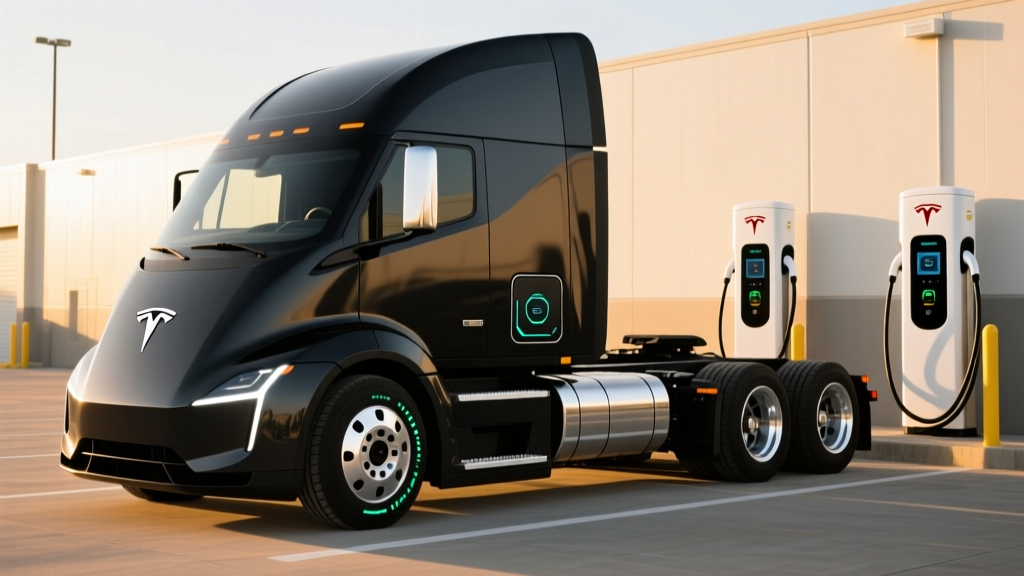
The Cannonball Run challenge — driving from New York City to Los Angeles (~2,800 miles) as fast as possible — has long been a gas-car playground, with top times hovering around 25-26 hours. As of early 2026, the fastest widely documented EV Cannonball record sits at approximately 43 hours and 36 minutes, set by a team driving a Tesla Model S Plaid in 2023 using a mix of Superchargers and third-party DC fast chargers. That's roughly 18 hours longer than the gas-car record, with the gap driven almost entirely by charging stops — not vehicle speed.
For context: the EV team made roughly 15-18 charging stops, each lasting 15-25 minutes. The math is unforgiving. Even with a 250 kW peak charge rate and an 18-minute 10-80% session, you're adding 5+ hours of stationary time over a gas car's 3-4 fuel stops that take 8 minutes each.
Bottom line: EVs can cross the country reliably and comfortably, but the Cannonball Run is a charging-infrastructure problem, not a vehicle-performance problem. For normal road trips (with sleep stops), the gap shrinks to near zero.
Why the EV Cannonball Record Still Trails Gas
The physics of energy transfer explain the gap. A gas pump delivers fuel at roughly 5-10 gallons per minute, which translates to an energy-equivalent rate of approximately 5,000-10,000 kW. Even the fastest DC chargers available in 2026 — Tesla's V4 Superchargers at 350 kW, or Electrify America's 350 kW CCS stalls — are orders of magnitude slower.
| Metric | Gas Pump | 350 kW DC Charger | 250 kW DC Charger |
|---|---|---|---|
| Energy delivery rate | ~5,000-10,000 kW equiv. | 350 kW peak | 250 kW peak |
| Time to add 200 miles of range | ~3-5 minutes | ~15-22 minutes | ~20-30 minutes |
| Stops needed (NYC→LA) | 4-6 | 12-18 | 14-20 |
| Total stop time (NYC→LA) | ~30-45 minutes | ~4-6 hours | ~5.5-8 hours |
There's another factor the spec sheet hides: charge-curve taper. An EV rarely sustains its peak kW rate for the entire session. A vehicle rated for 250 kW peak might only hold that rate between 10-30% State of Charge (SoC), then taper to 150 kW, then 100 kW, and finally trickle below 50 kW above 80%. This is why experienced EV road-trippers charge from 10% to 80% and skip the painfully slow 80-100% top-off — unless they absolutely need the extra range to reach the next charger.
The Real EV Cross-Country Cost Breakdown
Where the EV Cannonball record fails on time, it can succeed on cost. Electricity remains cheaper per mile than gasoline in most of the United States, even on public DC fast-charging networks that charge premium rates.
| Vehicle Type | Efficiency | Energy Cost | Total Trip Cost |
|---|---|---|---|
| Tesla Model 3 Long Range (EV) | 26 kWh/100mi | $0.40/kWh avg (DC fast) | ~$291 |
| Hyundai Ioniq 6 SE (EV) | 24 kWh/100mi | $0.40/kWh avg (DC fast) | ~$269 |
| Toyota Camry LE (Gas, 32 MPG) | 32 MPG combined | $3.35/gal avg | ~$293 |
| BMW 330i (Gas, 30 MPG) | 30 MPG combined | $3.65/gal avg (premium) | ~$340 |
At DC fast-charging rates of $0.35-$0.48/kWh (common on Electrify America, EVgo, and non-Tesla Superchargers in 2026), the EV fuel cost is roughly comparable to a fuel-efficient gas sedan. If you have access to free Tesla Supercharging credits or off-peak utility rates on segments of the route, the EV pulls ahead. But the savings are modest — perhaps $30-70 over 2,800 miles — not the dramatic gap you'd see charging at home at $0.13/kWh.
Common Cannonball EV Myths vs. Reality
| Myth | Fact |
|---|---|
| "EVs can't cross the country." | They can. Multiple teams have done it. The route is covered by DC fast-charging networks coast to coast via I-80, I-40, or I-10 corridors. |
| "Charging takes hours at each stop." | Modern 800V-architecture EVs (Hyundai Ioniq 5, Kia EV6, Porsche Taycan) can charge 10-80% in 18 minutes at a 350 kW stall. That's a bathroom break and a snack. |
| "The EV Cannonball record will match gas within a year." | Unlikely without a fundamental breakthrough in charging power. Even 500 kW chargers (rolling out in limited locations) would only shave ~1 hour off total stop time. |
| "EVs are slower point to point on road trips." | On a normal trip with sleep stops, the difference is 30-60 minutes per day — the time it takes to eat dinner while the car charges. |
What It Takes to Attempt an EV Cannonball Run in 2026
If you're inspired to chase an EV Cannonball record yourself, here's what the top teams optimize for:
Vehicle Selection: Range and Charge Speed Matter Most
The ideal Cannonball EV combines a large usable battery (100+ kWh), high peak charge rate (250+ kW sustained), and low aerodynamic drag. Top contenders in 2026:
- Lucid Air Grand Touring: 516-mile EPA range, 118 kWh usable battery, ~200 kW peak charge rate. Fewer stops needed, but slower charging per stop.
- Tesla Model S Plaid: 396-mile EPA range, 95 kWh usable, 250 kW peak at V3 Superchargers. Benefits from the densest fast-charging network.
- Hyundai Ioniq 5 N: 290-mile EPA range (real-world highway ~240 mi), 84 kWh usable, 240 kW peak on 800V architecture. Charges extremely fast but needs more stops.
- Porsche Taycan Turbo S (2025+): 310-mile EPA range (real-world ~260 mi), 93.4 kWh usable, up to 320 kW peak. One of the fastest-charging production EVs.
Route Planning: Charger Density and Reliability
Top teams use tools like A Better Route Planner (ABRP) to optimize stops, targeting chargers with 4+ stalls to reduce wait risk and spacing stops at 150-200 miles to keep SoC in the 10-80% fast-charging sweet spot. The I-80 corridor (northern route) has denser Supercharger coverage than I-40, but I-10 (southern route) avoids cold-weather range loss in winter months.
Cold weather is a real factor. Lithium-ion batteries charge significantly slower when cold, and cabin heating can reduce range by 20-35% in sub-freezing temperatures. Teams attempting winter Cannonball runs precondition the battery (heating it to optimal charge temperature) before each stop — a feature built into Tesla, Porsche, Hyundai/Kia, and most modern EVs.
The Human Factor: Sleep, Speed, and Legality
Let's be direct: the Cannonball Run is an unsanctioned, illegal speed run on public roads. Gas-car record holders average 100+ mph across the entire route. This article does not endorse speeding or reckless driving. What's relevant for EV ownership is that even at legal highway speeds (70-80 mph), an EV can cross the country in roughly 48-52 hours of total travel time (including charging) — which breaks down to a comfortable 3-day road trip with 8 hours of sleep each night.
Normal Road Trips: Where the EV Gap Disappears
The Cannonball Run is an extreme edge case. For the 99% of road trips Americans actually take, EVs are far more competitive than the record gap suggests.
Decision Framework: Is an EV Right for Your Road-Trip Style?
| If your typical trip looks like... | Then consider... |
|---|---|
| Under 300 miles round-trip, with home Level 2 charging | BEV is ideal. Charge overnight, drive all day, never visit a gas station. A 250+ mile EPA range covers this easily. |
| 300-600 miles, one overnight stay | BEV works well. One 20-minute DC fast-charge stop, arrive at hotel, charge overnight. Total trip time adds ~25 minutes vs. gas. |
| 600+ miles, drive-through in one day | BEV is doable but slower. Expect 2-3 charging stops adding 45-75 minutes total. If time is critical, a PHEV (like the Toyota RAV4 Prime, 42 mi electric + 38 MPG gas) eliminates the gap. |
| Frequent 1,000+ mile trips, tight schedule | Consider a PHEV or keep a gas car as a second vehicle. The charging-time penalty compounds on marathon drives. A PHEV gives electric commuting and gas road-trip freedom. |
| Apartment living, no home charging access | PHEV or HEV may be more practical unless you have reliable workplace or neighborhood DC fast charging. Public-charging dependency adds cost and unpredictability. |
The Infrastructure Trajectory: Will the EV Cannonball Record Fall?
Several developments could narrow the gap over the next few years:
- 500+ kW chargers: Companies like Ionity (Europe) and Pilot/Flying J (US) are testing ultra-high-power chargers. But vehicle-side acceptance rates must also increase — most 2026 EVs max out at 250-350 kW.
- Solid-state batteries: Toyota, Samsung SDI, and QuantumScape have announced solid-state cells promising faster charge acceptance and higher energy density. Production vehicles remain announced/estimated for 2027-2028 and are not yet available.
- Battery swapping: NIO's battery-swap stations (3-minute swaps) could theoretically enable Cannonball-competitive times, but NIO has no US presence as of 2026.
- NACS standardization: With Ford, GM, Rivian, Hyundai/Kia, and others adopting Tesla's North American Charging Standard (NACS) connector in 2025-2026, the Supercharger network is opening to all EVs — dramatically improving cross-country route options for non-Tesla drivers.
According to fueleconomy.gov, the average 2026 EV achieves 3.0-4.0 miles per kWh on the highway. Combine that with 350 kW chargers becoming more common along interstate corridors, and a 10-80% charge adding ~180-200 miles of range in 18 minutes is now achievable. The bottleneck is shifting from "can you find a charger?" to "how fast does your car accept charge?"
Real Ownership Costs: Beyond the Cannonball Sprint
The Cannonball Run is a stunt. Real EV ownership economics play out over years, not hours. Here's what a first-time EV buyer should actually budget for:
| Cost Category | Tesla Model 3 RWD ($38,990 MSRP) | Toyota Camry LE ($29,995 MSRP) |
|---|---|---|
| Purchase price (after §30D credit) | ~$31,490 (if eligible*) | $29,995 |
| Fuel/Energy (5 years) | ~$3,250 (home charging at $0.13/kWh) | ~$11,250 (32 MPG, $3.35/gal) |
| Maintenance (5 years) | ~$1,500 (tires, cabin filter, fluid top-off) | ~$4,500 (oil, filters, brakes, belts) |
| Insurance (5 years avg) | ~$9,500 (EVs typically 15-25% higher) | ~$7,500 |
| Estimated depreciation | ~$14,000 | ~$10,500 |
| Total 5-year cost | ~$59,740 | ~$63,745 |
*Federal §30D tax credit eligibility depends on MSRP caps (sedans ≤$55,000), buyer income limits ($150K single / $300K joint AGI), battery critical-mineral and component sourcing requirements, and is subject to change. Verify current rules at IRS.gov or consult a tax professional. The credit can now be transferred to the dealer at point of sale as an upfront discount.
The EV saves roughly $4,000 over 5 years in this comparison — driven primarily by fuel and maintenance savings that offset the higher insurance and purchase price. The savings widen significantly if you have access to cheap home or workplace charging, and narrow if you rely exclusively on expensive DC fast charging.
Frequently Asked Questions
What is the current EV Cannonball record?
The fastest widely documented EV cross-country run (NYC to LA, ~2,800 miles) is approximately 43 hours and 36 minutes, set in a Tesla Model S Plaid in 2023. This compares to roughly 25-26 hours for the gas-car Cannonball record. The gap is almost entirely due to charging stops — the EV's actual driving speed is competitive or faster.
How many charging stops does a cross-country EV trip require?
For a 2,800-mile NYC-to-LA route in a 300-mile real-world range EV, expect 12-18 DC fast-charging stops. Each stop typically lasts 15-25 minutes (10-80% SoC). Total charging time: roughly 4-7 hours depending on vehicle charge rate and charger availability.
Is an EV practical for long road trips?
Yes, with planning. On a normal 3-day cross-country trip with overnight sleep stops, you'll charge at your hotel or a nearby charger each night and make one 20-minute DC fast-charge stop during the day. The time penalty versus gas is roughly 30-60 minutes per day — less than a sit-down lunch. The NHTSA and IIHS have rated most long-range EVs as Top Safety Picks, so the vehicles themselves are well-suited to highway travel.
Do cold temperatures affect cross-country EV charging?
Significantly. In sub-freezing conditions, expect 20-35% range reduction due to cabin heating demand and battery chemistry limitations. Charging speeds also drop when the battery is cold — preconditioning (heating the battery before arriving at a charger) is essential to hit advertised kW rates. Winter Cannonball attempts on I-80 through Wyoming and Nebraska face materially longer stops than summer runs on I-10 through Arizona.
Will solid-state batteries make EVs competitive in the Cannonball Run?
Potentially, but not soon. Solid-state batteries promise higher energy density (more range per kWh) and faster charge acceptance (possibly 500+ kW). However, production vehicles with solid-state packs remain in the announced/preliminary stage for 2027-2028. Even then, the charging infrastructure must also support those power levels — a chicken-and-egg problem that will take years to resolve at scale.