The Short Answer on the EV Camaro
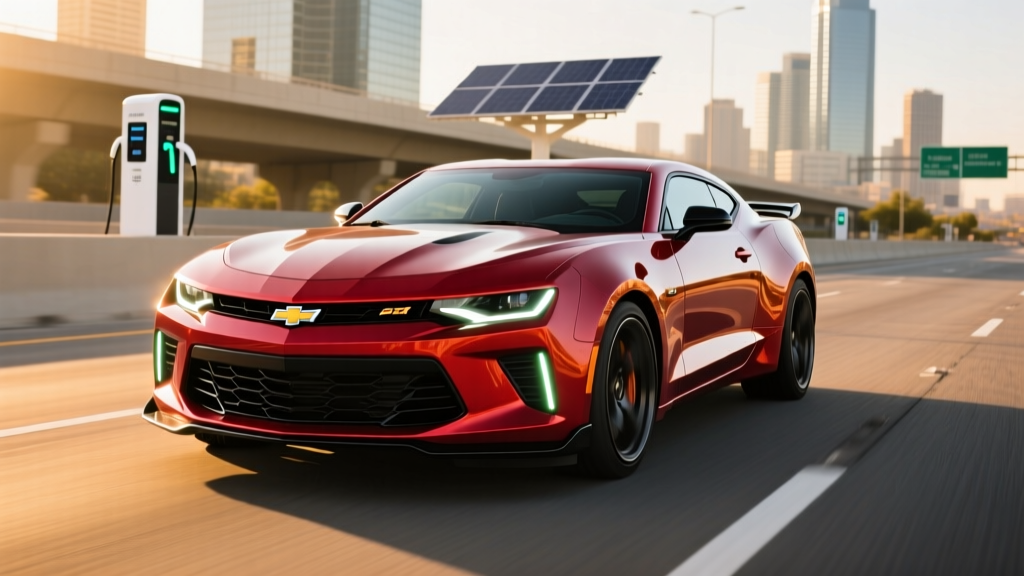
As of early 2026, there is no production EV Camaro available for purchase. Chevrolet discontinued the sixth-generation Camaro after the 2024 model year and has not announced a dedicated electric Camaro successor. However, GM has confirmed that the Camaro nameplate will return, and industry signals strongly suggest it will be electric when it does. If you're searching for an "EV Camaro" today, your realistic options are: (1) wait for an official GM announcement, (2) consider the Chevrolet Blazer EV SS as Chevy's current electric performance crossover, or (3) look at the Ford Mustang Mach-E GT as the closest existing electric muscle-car analog.
Why the Camaro Went Dark — and Why an EV Version Makes Sense
Chevrolet ended Camaro production in January 2024, citing declining sales in a shrinking coupe segment. The sixth-gen Camaro sold roughly 32,000 units in its final full year — a fraction of its peak. But GM executives, including then-President Mark Reuss, publicly stated the Camaro name would return. The question was never "if" but "what form."
GM's Ultium battery platform — which underpins the Silverado EV, Blazer EV, and Cadillac Lyriq — is engineered for performance applications. The platform supports up to 200 kWh battery packs, 800V architecture for ultra-fast charging, and dual-motor AWD configurations producing well over 600 horsepower. An EV Camaro built on a shortened Ultium-derived platform is mechanically feasible and strategically logical for a brand that has committed to an all-electric future by 2035.
That said, GM has not published a timeline, pricing, or specifications for an electric Camaro. Any numbers circulating online are speculative. What we can do is analyze what an EV Camaro would likely look like based on existing Ultium vehicles, and compare the ownership proposition against what's available now.
What an EV Camaro Would Likely Look Like: Educated Projections
Using the Blazer EV SS and Silverado EV Trail Boss as benchmarks, here's what a production EV Camaro could plausibly deliver when it arrives. These are projections, not confirmed specs.
| Attribute | Projected Estimate | Basis / Comparable |
|---|---|---|
| Battery Capacity | 85–102 kWh usable (NMC) | Blazer EV: 102 kWh; Lyriq: 102 kWh |
| EPA Range | 280–330 miles | Blazer EV RS AWD: 279 mi; Lyriq: 314 mi |
| Drivetrain | Dual-motor AWD | Standard on Ultium performance models |
| Horsepower | 500–750+ HP | Blazer EV SS: 615 HP; Silverado EV RST: 754 HP |
| 0–60 mph | 3.0–4.0 seconds | Blazer EV SS: ~4.0 sec; Silverado EV: ~4.5 sec |
| Peak DC Fast Charge | 190–200+ kW | Blazer EV: 190 kW; Silverado EV: 200+ kW |
| 10–80% DC Charge Time | ~24–30 minutes | Typical Ultium charge curve behavior |
| Level 2 Charging | 11.5–19.2 kW (AC) | 19.2 kW on Blazer EV / Silverado EV |
| Starting MSRP (est.) | $55,000–$65,000 | Blazer EV SS: ~$61,400 |
A few critical notes on these projections:
- Real-world range caveat: EPA estimates assume mixed driving. Expect highway-only range to drop 15–20% (roughly 230–270 miles at 75 mph), and cold-weather range (below 30°F) to drop 20–30% without preconditioning. A performance-oriented EV Camaro with wider tires and aggressive aero will likely sit at the lower end.
- Charging curve reality: Ultium vehicles peak at their max kW rate only between roughly 10–40% SoC, then taper significantly. A "190 kW" peak does not mean 190 kW sustained. Plan for an average of ~100–120 kW across the 10–80% session.
- Weight: Ultium-based vehicles are heavy. The Blazer EV SS tips the scales around 5,800 lbs. An EV Camaro would likely be 5,200–5,600 lbs, affecting tire wear, braking distances, and handling feel compared to the ~3,800 lb gas Camaro SS.
EV Camaro vs. Gas Camaro (Final Gen): What Changes for Owners
For buyers who owned or cross-shopped the 2024 Camaro, the ownership shift to electric would be significant. Here's a data-driven comparison using the final gas Camaro SS 1LE against projected EV Camaro figures:
| Factor | 2024 Camaro SS 1LE (Gas) | Projected EV Camaro |
|---|---|---|
| Base MSRP | $49,095 | ~$55,000–$65,000 |
| Horsepower | 455 HP (6.2L V8) | ~500–750 HP (dual motor) |
| 0–60 mph | 4.0 sec | ~3.0–4.0 sec |
| Fuel / Energy Cost (annual, 12k mi) | ~$2,400 (premium gas, 19 MPG combined) | ~$540–$720 (home charging, $0.13–$0.17/kWh) |
| Annual Maintenance | ~$600–$900 (oil, filters, brakes) | ~$150–$300 (cabin filter, tire rotation, wipers) |
| Federal Tax Credit (§30D) | $0 | Up to $7,500 (if eligible — see below) |
| Insurance (annual est.) | ~$2,200 | ~$2,500–$3,000 (EVs typically 15–25% higher) |
| 5-Year Fuel/Energy Savings | — | ~$8,400–$9,300 vs. gas |
The numbers reveal a familiar EV trade-off: higher upfront cost offset by substantially lower running costs. Over five years and 60,000 miles, an EV Camaro owner could save roughly $8,000–$9,000 on energy and maintenance combined, partially recovering the higher purchase price. However, EV insurance premiums and potentially faster tire wear (due to weight and instant torque) eat into those savings.
What's Available Now If You Want Electric Muscle
If waiting for an unannounced EV Camaro isn't practical, here's what the 2026 market offers in the electric performance space:
| Model | EPA Range | Horsepower | 0–60 mph | Peak DC Charge | Base MSRP |
|---|---|---|---|---|---|
| Ford Mustang Mach-E GT | 280 mi | 480 HP | 3.8 sec | 150 kW | ~$59,995 |
| Chevy Blazer EV SS | 279 mi | 615 HP | ~4.0 sec | 190 kW | ~$61,400 |
| Tesla Model 3 Performance | 315 mi | 510 HP | 2.9 sec | 250 kW | ~$54,990 |
| Hyundai Ioniq 5 N | 221 mi | 640 HP (N Grin Boost) | 3.25 sec | 238 kW | ~$67,500 |
| Dodge Charger Daytona EV (announced) | ~300 mi (est.) | 496–670 HP | ~3.3–4.0 sec (est.) | TBD | ~$60,000+ (est.) |
The EPA's fueleconomy.gov database is the best source for verified range and efficiency figures on any of these models. Note that the Dodge Charger Daytona EV is the closest direct analog to an EV Camaro — a two-door electric muscle car from a legacy American brand — but it remains in limited early production as of 2026, with availability constrained.
Federal Tax Credit Reality: Don't Count on the Full $7,500
If and when an EV Camaro launches, federal tax credit eligibility will depend on IRS §30D rules in effect at that time. As of 2026, the key requirements include:
- MSRP cap: The vehicle must have a base MSRP at or below $55,000 for sedans/coupes. A performance EV Camaro priced above this threshold would be ineligible — a significant risk given projected pricing of $55K–$65K+.
- Buyer income limits: Modified adjusted gross income must not exceed $150,000 (single), $225,000 (head of household), or $300,000 (joint).
- Battery sourcing: Increasingly strict critical-mineral and battery-component sourcing requirements must be met. These rules tighten annually and have disqualified several vehicles that previously qualified.
- Point-of-sale transfer: Eligible buyers can apply the credit as an upfront discount at the dealer rather than waiting for tax filing.
- North American assembly: The vehicle must undergo final assembly in North America.
Given that a performance-oriented EV Camaro would likely start above $55,000, buyers should not assume the full $7,500 credit will apply. A base model — if Chevy offers one — might squeeze under the cap, but an SS or ZL1 equivalent almost certainly would not. Consult a tax professional before making purchase decisions based on credit eligibility.
Real-World Ownership Considerations Before You Wait (or Buy Now)
Whether you're holding out for an EV Camaro or considering an available alternative, these ownership factors apply universally:
Home Charging Access
Home Level 2 charging (240V, 11.5–19.2 kW) is where EV ownership economics work best. Expect to add 30–50 miles of range per hour of charging, meaning an overnight session fully replenishes any daily driving. Installation costs typically range from $500–$2,500 for the charger and electrical work, but can reach $4,000+ if your panel needs upgrading to 200A. Without home charging, you'll rely on public DC fast charging, which costs 2–3x more per kWh and adds time inconvenience.
Climate and Range
If you live in a region with sustained sub-freezing winters, plan for 20–30% range loss in cold conditions. Preconditioning the battery while plugged in mitigates this but requires planning. An EV Camaro with a ~300-mile EPA range could realistically deliver 210–240 miles on a cold highway run.
Driving Patterns
Performance driving — hard acceleration, high speeds, aggressive cornering — dramatically increases energy consumption. Track use or frequent highway driving above 80 mph can cut range by 30–40% versus EPA estimates. This applies to every EV, not just a future Camaro.
Insurance Costs
EVs typically carry 15–25% higher insurance premiums than comparable gas vehicles due to higher repair costs, specialized parts, and battery replacement risk. For a $60,000 performance EV, expect annual premiums of $2,500–$3,500 depending on your location, driving record, and coverage levels.
Decision Framework: Should You Wait for the EV Camaro or Buy Now?
Wait for the EV Camaro if:
- You specifically want a two-door Chevy coupe with the Camaro badge and heritage
- You already have a daily driver and can afford to wait 1–3+ years for an announcement and launch
- You have home Level 2 charging installed or can install it
- Your budget is $55,000–$70,000+ and you don't need the federal tax credit
Buy an available electric performance car now if:
- You need a vehicle within the next 6 months
- You're open to a four-door or crossover body style (Mach-E, Ioniq 5 N, Model 3 Performance)
- You want to start saving on fuel and maintenance costs immediately
- You qualify for the §30D tax credit on a currently eligible model (e.g., Model 3 Performance qualifies under certain conditions)
Consider a used gas Camaro instead if:
- You want a V8 coupe now and don't have reliable home charging access
- You drive fewer than 8,000 miles per year (fuel savings from EV won't offset the price premium)
- You value lightweight, analog driving dynamics over instant electric torque
Common EV Camaro Misconceptions — Fact-Checked
| Myth | Fact |
|---|---|
| "The EV Camaro is available to order now." | No production EV Camaro exists as of 2026. GM has not opened orders or published a release date. |
| "An EV Camaro will have 500+ miles of range." | Highly unlikely. Current Ultium vehicles max out around 300–340 miles EPA. A performance coupe with aggressive aero and wide tires would likely land at 280–330 miles. |
| "It will definitely qualify for the $7,500 tax credit." | The §30D MSRP cap for sedans/coupes is $55,000. A performance EV Camaro may exceed this. Battery sourcing rules add further uncertainty. |
| "Electric muscle cars can't be fun to drive." | The Ioniq 5 N, Tesla Model 3 Performance, and Mustang Mach-E GT all deliver sub-4-second 0–60 times and have received strong enthusiast reviews for driving engagement, though they lack the V8 sound and lightweight feel of traditional muscle cars. |
| "EV batteries need replacing every 5 years." | GM's Ultium batteries carry an 8-year/100,000-mile warranty (10 years/150,000 miles in CARB states). Industry data shows modern NMC and LFP batteries retain 85–90%+ capacity at 100,000 miles under normal use. |
Frequently Asked Questions
Has Chevrolet officially confirmed an EV Camaro?
GM executives have stated the Camaro nameplate will return, but no official EV Camaro has been announced with specs, pricing, or a timeline. Any details online are speculative or based on industry reporting.
What is the closest thing to an EV Camaro I can buy today?
The Ford Mustang Mach-E GT, Dodge Charger Daytona EV (limited availability), and Hyundai Ioniq 5 N are the closest electric performance vehicles with muscle-car DNA. The Chevy Blazer EV SS is the closest current Chevy performance EV, though it's a crossover, not a coupe.
How much would an EV Camaro cost?
Based on comparable Ultium vehicles, a base EV Camaro would likely start around $55,000, with performance variants (SS/ZL1 equivalent) reaching $65,000–$75,000+. These are estimates, not confirmed figures.
Would an EV Camaro be heavier than the gas version?
Significantly. The gas Camaro SS weighed approximately 3,800–3,900 lbs. An EV Camaro on the Ultium platform would likely weigh 5,200–5,600 lbs due to the battery pack. This affects handling dynamics, tire wear, and braking performance, even though the low center of gravity helps with body roll.
Can I reserve an EV Camaro?
No. Chevrolet has not opened reservations or a waitlist for any EV Camaro. Be wary of third-party sites claiming to accept deposits — only trust information from Chevrolet's official website or authorized dealers.
Will the EV Camaro have a manual transmission?
EVs don't use multi-speed transmissions in the traditional sense — most use a single-speed reduction gear. Some performance EVs (like the Porsche Taycan) use a two-speed rear axle, but a manual-shift experience would be simulated, not mechanical. GM has not detailed any such feature for a future Camaro.