Quick Answer: Are EV Buses Worth It in 2026?
Electric buses cost roughly $350,000–$450,000 upfront (vs. $100,000–$130,000 for diesel), but save $10,000–$15,000 per year in fuel and maintenance. With EPA ranges now hitting 150–210 miles on 220–440 kWh LFP or NMC battery packs, most school and transit routes can run a full day on a single charge. Federal EPA Clean School Bus grants and IRA §30C commercial credits can cover 30–50% of the purchase premium, pushing payback to 6–9 years for typical fleets.
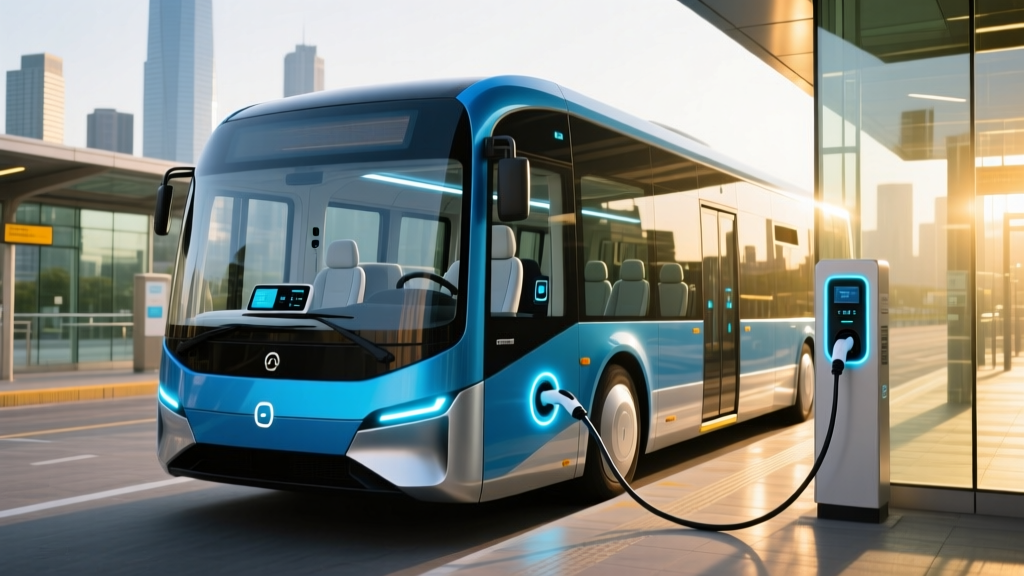
The keyword ev buses covers a broad category: yellow school buses, city transit buses, and shuttle/coach buses. This guide focuses on the two biggest segments — school buses and transit buses — where electrification is accelerating fastest in 2026. We will walk through exact specs, real costs, and a decision framework to determine if your fleet is ready.
2026 EV Bus Specs: Range, Battery & Charging by Model
Unlike passenger EVs, electric buses are spec'd around route duty cycles, not 0-60 times. The critical numbers are usable battery capacity (kWh), EPA or manufacturer-validated range, and depot charging speed (kW). Here is how the major 2026 models stack up:
| Model | Type | Battery (kWh) | Chemistry | EPA / Mfr Range | Max DC Charge (kW) | 10–80% Time | Base MSRP (est.) |
|---|---|---|---|---|---|---|---|
| Thomas Built Saf-T-Liner C2 Jouley | School (Type C) | 226 kWh | NMC | ~150 mi | ~60 kW (CCS) | ~2.5 hr | $350,000 |
| Blue Bird Vision EV (2026) | School (Type C) | 196 kWh | LFP | ~150 mi | ~70 kW (CCS) | ~2.2 hr | $360,000 |
| Lion Electric LionC | School (Type C) | 169–210 kWh | NMC | 110–150 mi | ~50 kW (CCS) | ~2.5–3 hr | $330,000 |
| New Flyer Xcelsior CHARGE NG | Transit (40-ft) | 320–440 kWh | NMC | ~200 mi | 350 kW (CCS) | ~1.5 hr | $1.0–1.2M |
| BYD Type D School Bus | School (Type D) | 282 kWh | LFP | ~180 mi | ~80 kW (CCS) | ~2.5 hr | $400,000 |
| Proterra ZX5 (40-ft Transit) | Transit | 440–660 kWh | NMC | ~250 mi | 350 kW (CCS) | ~1.8 hr | $1.1–1.3M |
Real-world range caveat: EPA range figures for buses are often manufacturer-estimated rather than formally EPA-certified like passenger cars. Expect 15–30% range reduction in cold weather (below 32°F) due to cabin heating loads, and 10–20% reduction on hilly or stop-heavy routes. A 150-mile rated school bus in Minnesota winter may deliver only 105–120 miles — plan routes accordingly.
EV Bus vs. Diesel Bus: Total Cost of Ownership
The upfront price gap is the single biggest barrier to fleet electrification. But the operating-cost math has shifted dramatically in favor of electric by 2026, especially as diesel prices remain volatile and electric utility rates for fleet depot charging stay comparatively stable.
| Cost Category (per bus / 12-year life) | Diesel Bus | Electric Bus | Notes |
|---|---|---|---|
| Purchase Price | $110,000–$130,000 | $350,000–$450,000 | Before grants/credits |
| Fuel / Electricity (annual) | $8,000–$12,000 | $2,500–$5,000 | Diesel at $4/gal; electricity at $0.12/kWh avg |
| Maintenance (annual) | $4,000–$7,000 | $1,500–$3,000 | No oil, filters, DEF, exhaust; fewer brake jobs (regen) |
| Battery Replacement (mid-life) | N/A | $50,000–$90,000 | If needed at year 8–10; many packs last full life |
| Charging Infrastructure (amortized) | N/A | $15,000–$40,000 | Depot Level 2 or DC fast charger per bus |
| Federal Incentives | None | Up to $40,000 (§30C) + EPA grants | Varies by eligibility; see IRS.gov |
| 12-Year Total (net of incentives) | $200,000–$280,000 | $280,000–$420,000 | Gap narrows with grants; breakeven ~yr 6–9 |
The math works best when: (1) your routes are under 120 miles/day, (2) you have depot charging access, (3) you qualify for EPA Clean School Bus Program grants (up to $375,000 for qualifying school districts), and (4) your utility offers commercial EV charging rates with off-peak demand-charge management.
Depot Charging: What Fleet Operators Need to Know
Unlike passenger EVs, buses charge almost exclusively at the depot — typically overnight via Level 2 AC or during layovers via DC fast charging. Here is the charging-level breakdown for fleet planning:
| Charging Level | Power (kW) | Miles Added per Hour | Typical Use Case | Infrastructure Cost per Port |
|---|---|---|---|---|
| Level 2 AC (J1772 / CCS1 AC) | 19.2 kW | ~12–15 mi/hr | Overnight depot (8–10 hr window) | $5,000–$15,000 |
| DC Fast (CCS1) | 50–60 kW | ~35–45 mi/hr | School bus depot (4–5 hr turnaround) | $25,000–$60,000 |
| DC Fast (CCS1 High-Power) | 150–350 kW | ~100–200 mi/hr | Transit bus opportunity charging | $80,000–$200,000+ |
| Pantograph (Overhead) | 150–450 kW | ~120–250 mi/hr | On-route transit top-ups | $200,000–$500,000 |
kW vs kWh reminder: kW (kilowatts) is the rate of power delivery — how fast energy flows into the battery. kWh (kilowatt-hours) is the total energy stored. A 60 kW charger running for 3 hours delivers roughly 180 kWh of energy — enough to fully replenish most school bus batteries. Never confuse the two when sizing depot infrastructure.
Charge-curve reality: Like passenger EVs, bus batteries do not charge at peak kW the entire session. A bus rated for 60 kW DC fast charging may only sustain that rate from 10–60% State of Charge, then taper to 30–40 kW above 80%. Plan depot dwell times around the 10–80% window, not the peak number.
Utility coordination is non-negotiable. A 10-bus depot with 60 kW chargers needs 600 kW of simultaneous power capacity — that is a commercial-grade service upgrade. Engage your utility 12–18 months before bus delivery. Many utilities now offer make-ready programs that cover the cost of wiring, transformers, and switchgear to the depot boundary.
Federal Incentives & Grants for EV Buses
Multiple funding layers can stack to dramatically reduce the net purchase price of an electric bus. Here are the primary programs active in 2026:
- EPA Clean School Bus Program: Up to $375,000 per electric school bus + $20,000 for charging infrastructure. Priority given to high-needs, rural, and Tribal school districts. Funded through the Bipartisan Infrastructure Law. Check eligibility at epa.gov/cleanschoolbus.
- IRA §30C Commercial Clean Vehicle Credit: Up to $40,000 per qualifying commercial EV (buses included). Subject to domestic content and prevailing-wage requirements for the full amount. Consult IRS.gov §30C guidance and a tax professional for eligibility.
- Federal Transit Administration (FTA) Low-No Program: Competitive grants covering up to 80% of capital cost for transit agency bus purchases.
- State & Utility Incentives: Vary widely — California HVIP, New York Truck Voucher, and utility make-ready programs can add $50,000–$200,000 in additional support. Always check your state energy office and local utility.
Common EV Bus Misconceptions — Myth vs. Fact
| Myth | Fact |
|---|---|
| "Electric buses cannot handle cold weather." | Range drops 15–30% in sub-freezing temps, but modern LFP/NMC packs with thermal management still complete most routes under 100 miles. Fleets in Alaska and Canada operate EV buses year-round with route planning. |
| "Battery replacement will bankrupt the fleet." | Most 2026 bus batteries carry 8–12 year warranties at ≥70% capacity retention. LFP chemistry in particular shows <2% annual degradation in fleet data. Mid-life replacement, if needed, is $50,000–$90,000 — not the $200,000+ figure cited in outdated sources. |
| "The grid cannot handle a bus depot." | A 10-bus depot drawing 600 kW is equivalent to a small grocery store. Utilities routinely service this load — but it requires advance planning and possible transformer upgrades. Most depot charging happens overnight during off-peak hours. |
| "EV buses are not reliable enough for daily service." | Fleet data from early-adopter agencies (e.g., Twin Rivers USD, Seattle Metro) shows EV bus availability rates of 90–95%, comparable to or exceeding diesel counterparts. Fewer moving parts means fewer breakdowns. |
| "Diesel is still cheaper overall." | When fuel, maintenance, and grant funding are factored in, EV buses reach cost parity at year 6–9 on a 12-year lifecycle. Beyond that, electric is cheaper per mile operated. |
Battery Chemistry for Buses: LFP vs. NMC
Battery chemistry matters more for fleet vehicles than for passenger cars because cycle life and safety directly affect total cost of ownership and depot risk management.
| Factor | LFP (Lithium Iron Phosphate) | NMC (Nickel Manganese Cobalt) |
|---|---|---|
| Energy Density | Lower (~140–160 Wh/kg) | Higher (~200–250 Wh/kg) |
| Cycle Life | 3,000–6,000 cycles | 1,500–3,000 cycles |
| Thermal Stability | Excellent — very low fire risk | Good — requires active thermal management |
| Cold-Weather Performance | Moderate range loss (20–30%) | Slightly better cold performance (15–25% loss) |
| Cost per kWh | Lower (~$100–$130/kWh pack-level) | Higher (~$130–$160/kWh pack-level) |
| Best For | School buses, shorter routes, depot charging | Long-range transit, opportunity charging |
For school bus fleets running under 120 miles/day with overnight depot charging, LFP is increasingly the smart default — longer cycle life, lower cost, and superior safety offset the weight and range penalty. Transit agencies running 180+ mile routes with mid-day top-ups may still prefer NMC for its energy density.
Decision Framework: Is Your Fleet Ready for EV Buses?
Choose Electric Buses If:
- Your average daily route is under 120 miles (school) or 180 miles (transit)
- You have a depot or yard where buses park for 6+ hours overnight
- Your utility offers commercial EV rates or make-ready infrastructure programs
- You qualify for EPA Clean School Bus grants or FTA Low-No funding
- You plan to keep buses 10–12+ years (to capture full lifecycle savings)
- Your fleet operates in a state with strong EV incentive stacking (CA, NY, CO, WA)
Wait or Consider Hybrid/CNG If:
- Your routes regularly exceed 150 miles with no mid-day charging opportunity
- You lack depot ownership or cannot install charging infrastructure (leased lots, street-parked fleets)
- Your utility has long interconnection queues or cannot deliver power for 2+ years
- You need to replace buses within 12 months and have no grant funding secured
- You operate in extreme cold (below -20°F) on long rural routes without en-route charging
First-time fleet buyer tip: Start with a pilot of 2–5 buses on your shortest, most predictable routes. Use the pilot to validate range in your climate, test depot charging logistics, train maintenance staff, and build a relationship with your utility before scaling to a full-fleet order.
Real-World Ownership Considerations
Fleet managers who have operated EV buses for 3+ years consistently report these practical insights:
- Maintenance savings are real but shift, not disappear. You eliminate oil changes, DEF fluid, DPF filters, and exhaust system repairs. But you add high-voltage system diagnostics, battery thermal management service, and software/firmware updates. Budget for specialized technician training ($5,000–$15,000 per tech).
- Regenerative braking extends brake life significantly. School bus fleets report brake pad replacement intervals stretching from 30,000 miles to 80,000+ miles. This is one of the largest hidden savings.
- Insurance premiums are 10–20% higher initially due to repair-cost uncertainty around high-voltage components. Premiums tend to normalize as claims data matures.
- Driver acceptance is higher than expected. Quiet operation, smooth acceleration, and one-pedal-style regen braking are popular with drivers once trained. However, drivers must be trained on range-aware driving habits — aggressive acceleration and excessive HVAC use eat into range buffers.
- Software and telematics are essential. Fleet management platforms (e.g., Lightning Insights, Fleetio EV modules) that monitor State of Charge, State of Health, and route-level energy consumption are critical for optimizing operations. Budget $500–$1,500/year per bus for telematics.
Frequently Asked Questions
How long does an electric bus battery last?
Most 2026 electric bus batteries are warrantied for 8–12 years or 150,000–300,000 miles at ≥70% capacity retention. LFP packs in particular have demonstrated <2% annual degradation in real-world fleet data, suggesting usable life well beyond the warranty period. A mid-life battery replacement, if needed, costs $50,000–$90,000 depending on pack size and chemistry.
Can an electric school bus handle a full day of routes?
Yes, if the daily mileage is under the bus's real-world range. A typical school bus route is 60–100 miles. A 2026 model with a 150-mile rated range can handle most single-route days even with cold-weather degradation. Split-shift routes (morning + afternoon with mid-day charging) extend this further.
What charging connector do electric buses use?
Nearly all North American electric buses in 2026 use the CCS1 (Combined Charging System) connector for both AC Level 2 and DC fast charging. Some transit agencies also use overhead pantograph chargers (SAE J3105) for on-route opportunity charging. The NACS connector standard is beginning to appear in newer orders but CCS1 remains dominant in the heavy-duty segment.
Do federal tax credits apply to electric buses?
Yes. The IRA's §30C Commercial Clean Vehicle Credit provides up to $40,000 per qualifying electric bus, subject to domestic content, prevailing-wage, and battery-sourcing requirements. This is separate from — and can sometimes stack with — EPA Clean School Bus grants and state incentives. Always verify current eligibility on IRS.gov and consult a tax professional.
What happens if the battery runs out mid-route?
Modern fleet telematics provide real-time SoC monitoring and route-range alerts. Fleet managers can set thresholds (e.g., pull bus from service at 20% SoC). Unlike a diesel bus running out of fuel, an EV bus will progressively limit power output and HVAC to preserve remaining charge. Still, route planning with a 15–20% range buffer is standard practice.
How does V2G (Vehicle-to-Grid) apply to electric buses?
Several 2026 electric bus models (notably from Blue Bird and Lion Electric) offer V2G capability, allowing the bus battery to discharge power back to the grid or building during peak demand. For school buses that sit idle 70% of the day, V2G can generate utility demand-response revenue of $1,000–$3,000 per bus per year — partially offsetting the purchase premium.