The Short Answer: EVs Produce Up to 70% Less Brake Dust
Bottom line: A comprehensive EV brake dust pollution study confirms that electric vehicles emit significantly less brake-wear particulate matter (PM) than internal combustion engine (ICE) vehicles — typically 50% to 70% less over comparable driving cycles. The reason is regenerative braking: EVs use the electric motor to slow down, recapturing energy into the battery instead of relying on friction brake pads. For buyers in 2026, this translates to cleaner air around your vehicle, lower brake maintenance costs (often under $150 for pad replacement every 80,000–120,000 miles), and one more entry in the EV ownership savings column.
But particulate emissions aren't the whole story. Tire wear — which affects both EVs and gas cars — is a growing share of non-exhaust pollution, and heavier EVs can actually produce more tire particulates than lighter gas counterparts. Understanding the full picture is essential before you sign a purchase agreement.
What the Research Actually Shows About EV Brake Wear
Multiple studies over the past several years have converged on the same finding: regenerative braking dramatically reduces friction brake use. The most cited Transport & Environment analyses, alongside research published in journals like Atmospheric Environment, put the brake-wear reduction at roughly two-thirds for typical mixed driving. In city-heavy commutes with frequent stop-and-go traffic — exactly where regenerative braking shines most — the reduction can exceed 80%.
Here's how the mechanism works in practice. When you lift off the accelerator in an EV, the electric motor reverses direction and acts as a generator, converting kinetic energy back into electrical energy stored in the battery pack. This creates a deceleration force — often strong enough to bring the car to a near-stop without touching the brake pedal (a feature called one-pedal driving on models like the Nissan Leaf, Chevrolet Bolt, and Tesla vehicles). The physical friction brake pads and rotors are only engaged for hard stops or when the battery is at very high state of charge (SoC) and can't accept more regenerative energy.
| Myth | Fact (with data) |
|---|---|
| "EVs are heavier, so they pollute more from brakes and tires." | EVs are 10–25% heavier on average, which does increase tire wear by roughly 5–15%. However, regenerative braking reduces brake dust by 50–70%, so the net non-exhaust particulate impact is often lower or roughly equal to a gas car. |
| "Brake dust is the biggest source of vehicle pollution." | Tire wear actually produces more particulate matter than brake wear in most driving scenarios. A U.S. EPA-adjacent study found tire and road wear particles (TRWP) contribute roughly 6 kg per vehicle per year, compared to 1–3 kg for brake wear on ICE vehicles. |
| "EV brakes never need replacing." | EV brake pads last much longer (often 100,000+ miles), but rotors can still corrode from disuse in humid climates. Some owners need rotor resurfacing or replacement around 80,000–100,000 miles. |
| "All EVs have the same brake dust reduction." | The benefit varies. EVs with aggressive regen settings (e.g., Tesla's "Hold" mode, Hyundai Ioniq 5's i-Pedal) maximize the reduction. Models with weaker regen or drivers who ride the brake pedal will see less benefit. |
EV vs. Gas Car: Total Particulate and Cost Comparison
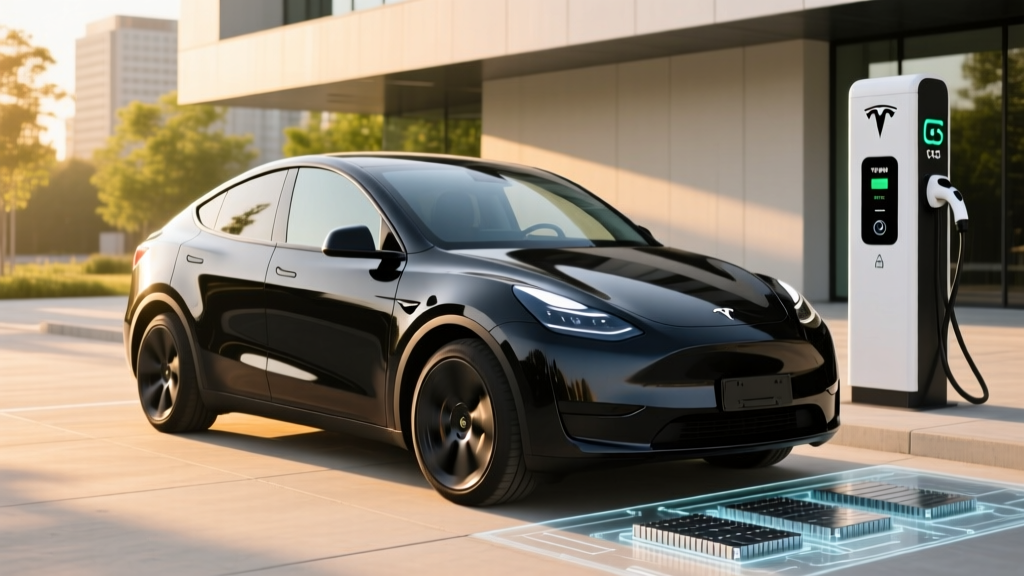
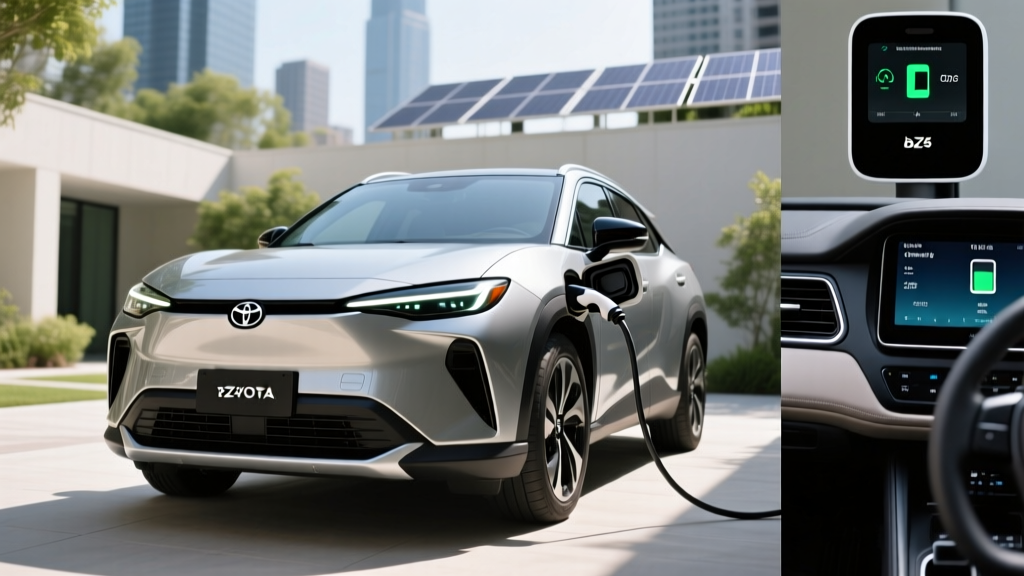
The brake dust reduction is one line item in a broader ownership comparison. Let's look at the numbers side by side using a 2026 Tesla Model Y Long Range (AWD, 81 kWh usable NMC battery, 310 miles EPA range, $44,990 base MSRP) against a comparably equipped 2026 Toyota RAV4 AWD gas model ($33,500 MSRP, 30 MPG combined EPA).
| Metric | 2026 Tesla Model Y LR (EV) | 2026 Toyota RAV4 AWD (Gas) |
|---|---|---|
| Brake pad replacement interval | 100,000–120,000+ miles | 30,000–50,000 miles |
| Brake pad cost per axle (parts + labor) | $120–$200 | $180–$350 |
| Brake dust PM emissions (relative) | ~1 unit (baseline) | ~3 units (3× higher) |
| Tire wear rate (relative) | ~1.1 units (slightly higher due to weight: ~4,400 lbs) | ~1.0 unit (~3,600 lbs) |
| 5-year fuel/energy cost (15,000 mi/yr) | ~$3,200 (at $0.14/kWh avg) | ~$10,500 (at $3.50/gal, 30 MPG) |
| 5-year brake maintenance cost | ~$0–$200 | ~$500–$900 |
| Federal tax credit (§30D) | Up to $7,500 (subject to MSRP/income/sourcing rules) | $0 |
The energy savings alone are massive: roughly $7,300 over five years for the average driver charging primarily at home on a residential rate. Add the brake maintenance savings, and the Model Y's higher purchase price narrows considerably — especially if you qualify for the §30D federal tax credit (currently up to $7,500 for qualifying new EVs under IRS guidelines, with MSRP caps of $55,000 for sedans and $80,000 for SUVs/trucks, buyer income limits, and critical-mineral and battery-component sourcing requirements).
Real Costs and Savings: 5-Year EV Ownership Breakdown
Before you decide, map the full cost picture. Here's a realistic 5-year / 75,000-mile ownership projection for a mid-range EV purchased in 2026, assuming home Level 2 charging and moderate climate driving.
| Cost Category | EV (e.g., Hyundai Ioniq 5 SEL, $45,500 MSRP) | Gas Car (e.g., Honda CR-V EX AWD, $35,500 MSRP) |
|---|---|---|
| Purchase price (after $7,500 credit if eligible) | $38,000 | $35,500 |
| Energy / fuel (75,000 mi total) | $3,200 (home charging at $0.14/kWh, 3.5 mi/kWh) | $8,750 (at $3.50/gal, 30 MPG) |
| Brake maintenance | $0–$150 | $600–$1,000 |
| Oil changes, filters, spark plugs | $0 | $500–$800 |
| Tire replacement (heavier EV wears tires ~10% faster) | $1,400 | $1,200 |
| Insurance (5-year total, EV premium ~10–15%) | $9,200 | $8,000 |
| Depreciation (estimated) | $14,000 | $12,500 |
| 5-year total cost of ownership | ~$65,950 | ~$66,550 |
At rough parity on total cost, the EV pulls ahead if you qualify for the full tax credit, drive more than 15,000 miles per year (amplifying fuel savings), or live in a state with low electricity rates and high gas prices (California, Washington, and the Pacific Northwest are favorable). The brake dust reduction is a bonus you can't easily put a dollar figure on — unless you value cleaner air in your garage, your driveway, and your community.
Real-World Ownership: What First-Time EV Buyers Must Know
The particulate advantage is compelling, but it shouldn't be the sole factor in your purchase decision. Here are the practical realities that determine whether an EV works for your life:
Home charging access is the make-or-break factor. If you can install a Level 2 charger (240V, typically 7.7–11.5 kW, adding 25–44 miles of range per hour), daily EV ownership is effortless — you wake up with a full "tank" every morning. Installation costs range from $500 to $2,500 depending on your electrical panel capacity, run distance, and local permit fees. If your home has a 200-amp panel with spare capacity, expect the lower end. A panel upgrade to 200A can add $1,500–$3,000.
Cold weather reduces range — plan for it. In sub-freezing temperatures, expect a 15–30% reduction in EPA-rated range due to battery chemistry limitations and cabin heating demands. A 310-mile EPA-rated EV may deliver 220–260 real-world miles on a cold highway trip. Models with heat pumps (standard on the Tesla Model Y, Hyundai Ioniq 5/6, and Kia EV6) mitigate this by 5–10 percentage points compared to resistive heating systems.
Public charging is improving but inconsistent. The Tesla Supercharger network (now opening to NACS-equipped non-Tesla EVs) remains the most reliable DC fast-charging option, with typical peak rates of 150–250 kW and 10–80% charging in 15–25 minutes. Electrify America, EVgo, and ChargePoint networks vary widely in uptime and speed. Before buying, check plug-in availability along your most common road-trip routes.
Tire costs are the one area where EVs can cost more. The extra weight of the battery pack (typically 800–1,200 lbs more than a comparable gas car) accelerates tire wear. Budget for tire replacement every 30,000–40,000 miles instead of the 40,000–60,000 miles you might get on a gas car. EV-specific tires (like the Michelin Pilot Sport EV or Hankook iON evo) are engineered for lower rolling resistance and noise reduction but often cost $200–$350 per tire.
Decision Framework: Is an EV the Right Move for You?
Choose an EV if:
- You have (or can install) home Level 2 charging — this eliminates 90% of "range anxiety" and makes daily driving seamless.
- Your daily commute is under 80 miles round-trip — easily covered by any modern EV's 230–350 mile EPA range, even with cold-weather degradation.
- You drive 12,000+ miles per year — higher mileage amplifies the fuel and maintenance savings, and the brake dust reduction becomes more meaningful.
- You qualify for the §30D federal tax credit (income under $150K single / $300K joint; vehicle MSRP under the cap; battery sourcing compliant) — this can save up to $7,500 at point of sale.
- You value lower local particulate emissions — the brake dust pollution study data is clear: EVs are meaningfully cleaner in urban and suburban environments.
Consider a PHEV or hybrid if:
- You can't install home charging (apartment, street parking, HOA restrictions) — a PHEV like the Toyota RAV4 Prime (42 miles electric-only EPA, 94 MPGe combined) gives you electric commuting without total grid dependence.
- You regularly drive 300+ miles in a single day through rural areas with sparse DC fast-charging infrastructure.
- Your budget is under $30,000 and you need immediate purchase — used EVs are an option, but a new hybrid like the Toyota Prius ($28,500 MSRP, 57 MPG combined) offers low upfront cost with strong efficiency.
- You live in an extreme cold climate (regularly below -10°F) and lack a garage — the range penalty is steepest in these conditions, and a hybrid avoids it entirely.
Wait or reconsider if:
- Your next road trip is in two weeks and you haven't researched charging along the route — buy the EV, but plan your first long trip carefully using tools like A Better Routeplanner.
- You're buying purely for the tax credit without confirming eligibility — check IRS §30D requirements and confirm the specific VIN qualifies at fueleconomy.gov before committing.
Frequently Asked Questions
Do EVs still produce any brake dust at all?
Yes, but far less than gas cars. EVs still have friction brake systems for emergency stops, low-speed holding, and situations where the battery is too full to accept regenerative energy. However, because regen handles the majority of deceleration, brake pad wear is typically reduced by 50–70%. Many EV owners report original brake pads at 80,000–100,000 miles with 50%+ life remaining.
Are EVs worse for tire pollution because they're heavier?
Partially true. An EV's extra 800–1,200 lbs of battery mass increases tire wear by roughly 5–15% compared to a similar-size gas car. However, tire wear is a function of driving style, tire compound, and alignment as much as weight. Choosing EV-optimized tires and maintaining proper tire pressure (check monthly) can minimize the difference. The net effect is that an EV's total non-exhaust particulate emissions (brake + tire combined) are generally comparable to or lower than a gas car's.
How much money will I actually save on brake maintenance with an EV?
Over 5 years / 75,000 miles, expect to save $400–$800 on brake maintenance compared to a gas car. A typical gas car needs 1–2 brake pad replacements in that span ($180–$350 per axle), while most EVs won't need any. Some EV owners have gone 120,000+ miles on original pads. The one caveat: in humid or salted-road climates, brake rotors can corrode from disuse, occasionally requiring resurfacing or replacement ($200–$400 per axle).
Does regenerative braking affect driving feel?
Yes, and most owners come to prefer it. Strong regen creates a "one-pedal driving" experience where lifting off the accelerator produces noticeable deceleration — enough to slow for stops and traffic without touching the brake pedal. This feels unusual for the first few days but becomes intuitive quickly. Most EVs let you adjust regen strength (e.g., Tesla offers "Hold" and "Roll" modes; Hyundai/Kia offer three regen levels via paddle shifters).
What does the EV brake dust pollution study data mean for urban air quality?
Brake wear particles are a significant component of urban PM2.5 and PM10 pollution, especially near intersections and high-traffic corridors. Research published in Atmospheric Environment has shown that brake-wear particulates can contain metals like iron, copper, and antimony that are linked to respiratory and cardiovascular issues. Widespread EV adoption could reduce these specific particulates by 50–70% in dense urban areas, a meaningful public health benefit beyond tailpipe emission reductions.