Quick Answer: Is an EV Box Truck Right for Your Business?
An electric box truck (Class 4–6 walk-in or step van) makes strong financial sense for last-mile delivery, food distribution, and utility service routes under 150 miles per day that return to a home base for overnight depot charging. Expect 150–250 miles of real-world range from current models, $0.12–$0.18 per mile in energy costs vs. $0.35–$0.55 per mile for diesel, and dramatically lower maintenance. However, if your routes exceed 200 miles, operate in sustained sub-20°F climates, or lack depot charging infrastructure, a diesel or hybrid step van remains the practical choice in 2026.
What Is an EV Box Truck? Defining the Category
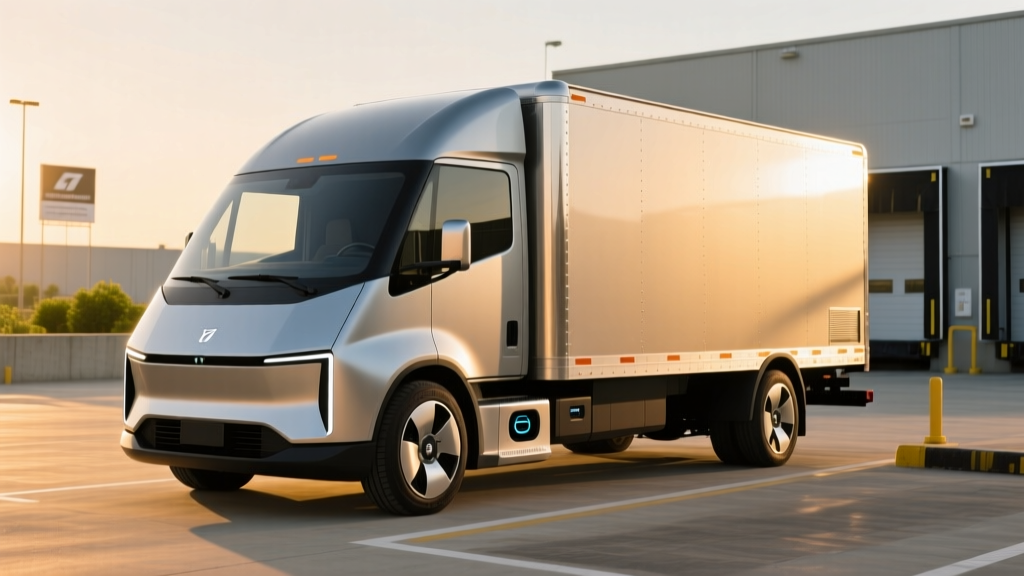
An EV box truck is a battery-electric commercial vehicle with an enclosed cargo body — typically a walk-in step van or straight truck — classified between Class 4 (15,001–16,000 lb GVWR) and Class 6 (19,501–26,000 lb GVWR). Unlike consumer pickups or SUVs, these are purpose-built for urban and suburban delivery routes, mobile service work, and shuttle freight.
The major players in the 2026 model year include:
- BrightDrop Zevo 600 (GM subsidiary) — 250-mile EPA range, 20,000 lb GVWR
- Ford E-Transit — 126-mile EPA range (cutaway/chassis cab upfit), Class 3–4
- Lightning eMotors — upfitted Class 4–6 platforms with 150–200 mile range
- SEA Electric — Hino/Isuzu chassis conversions, 150–175 mile range
- Workhorse E-Gen — walk-in step van, ~150-mile range
These vehicles target the exact duty cycle where electrification shines: predictable daily mileage, frequent stops (maximizing regenerative braking), and depot-based charging.
EV Box Truck Range, Battery & Charging Specs (2026 Models)
Range anxiety hits differently in commercial fleets — a stranded delivery truck means missed customers and angry dispatchers. Here is what current models actually deliver:
| Model | Battery (kWh usable) | EPA Range | Real-World Range* | Peak DC Charge (kW) | 10–80% Time | Level 2 Rate | GVWR | Est. Base Price |
|---|---|---|---|---|---|---|---|---|
| BrightDrop Zevo 600 | 165 kWh (NMC) | 250 mi | 180–210 mi | 120 kW | ~45 min | 11.5 kW | 20,000 lb | $115,000 |
| Ford E-Transit (Chassis Cab) | 68 kWh (NMC) | 126 mi | 90–110 mi | 115 kW | ~35 min | 10.5 kW | 9,500–12,500 lb | $55,000 |
| Lightning eMotors (Class 5) | 120–160 kWh (NMC) | 200 mi | 150–175 mi | 100 kW | ~55 min | 7.2–19.2 kW | 19,500 lb | $135,000 |
| SEA Electric (Hino M5 EV) | 141 kWh (NMC) | 175 mi | 130–155 mi | 80 kW | ~65 min | 19.2 kW | 19,500 lb | $145,000 |
*Real-world range assumes mixed urban/highway driving at 65–70% payload. Expect 15–25% reduction in sustained sub-30°F weather and 10–15% reduction at sustained 65+ mph highway speeds.
Real-World Range Reality Check
EPA Sticker: 250 miles (BrightDrop Zevo 600)
Real-World Expectation: 180–210 miles with 50–75% payload in moderate weather. Drop to 140–170 miles in winter with a full load and heater running. Most urban delivery routes average 60–120 miles/day, meaning the Zevo 600 covers most routes with a comfortable buffer — but a 180-mile route with cold weather is cutting it close.
EV vs. Diesel Box Truck: Total Cost of Ownership
The upfront price of an EV box truck is 2–3× that of a comparable diesel step van. The purchase decision hinges entirely on whether operational savings close that gap over the vehicle's service life (typically 8–12 years or 200,000–300,000 miles in fleet use).
| Cost Category | EV Box Truck (BrightDrop Zevo 600) | Diesel Box Truck (Class 5 Step Van) |
|---|---|---|
| Purchase Price (base) | $115,000 | $65,000 |
| Federal/State Incentives | –$40,000 (IRA §45W + state vouchers) | $0 |
| Net Acquisition Cost | $75,000 | $65,000 |
| Fuel/Energy (5 years, 156,000 mi) | $23,400 (at $0.15/mi) | $70,200 (at $0.45/mi diesel) |
| Maintenance (5 years) | $6,500 | $22,000 |
| Depot Charging Infrastructure | $15,000 (Level 2 charger install) | $0 |
| Insurance (5 years, est.) | $28,000 | $22,000 |
| 5-Year Total | $147,900 | $179,200 |
| Cost per Mile | $0.95 | $1.15 |
The EV box truck saves roughly $31,300 over five years — and the gap widens in years 6–10 as diesel maintenance costs accelerate (DPF filters, turbo replacements, transmission overhauls) while EV drivetrain costs remain flat. The key variable is the IRA §45W Commercial Clean Vehicle Credit, which provides up to $40,000 for qualifying commercial EVs (30% of the cost basis, capped at $40,000 for vehicles over 14,000 lb GVWR). Unlike the consumer §30D credit, §45W has no MSRP cap or buyer income limit — but the vehicle must be used for business and meet domestic-content sourcing rules. Always verify current eligibility with your tax professional.
Charging Infrastructure: What Fleet Buyers Actually Need
You cannot buy an EV box truck without solving charging first. Here is the infrastructure reality for depot-based fleet operations:
| Charging Level | Power (kW) | Miles Added per Hour | Best For | Install Cost (per stall) |
|---|---|---|---|---|
| Level 2 (AC) | 7.2–19.2 kW | 15–40 mi/hr | Overnight depot charging (8–10 hr dwell) | $5,000–$15,000 |
| DC Fast (50 kW) | 50 kW | ~90 mi/hr | Mid-day opportunity charging | $30,000–$55,000 |
| DC Fast (150 kW) | 150 kW | ~200 mi/hr | High-throughput fleet depots | $75,000–$130,000 |
For a 10-vehicle fleet returning to base by 8 PM and departing by 7 AM, Level 2 charging at 19.2 kW is sufficient — you will add 200+ miles during an 11-hour dwell window, covering nearly any route. DC fast chargers are only necessary if you run multi-shift operations or need mid-day top-ups.
Depot Charging Install Cost Breakdown (Per Level 2 Stall)
| Line Item | Low Estimate | High Estimate |
|---|---|---|
| Commercial EVSE hardware (19.2 kW) | $2,500 | $6,000 |
| Electrical panel upgrade / transformer | $1,000 | $5,000 |
| Wiring, conduit, trenching (50–200 ft run) | $1,500 | $4,000 |
| Permitting and utility interconnect | $500 | $2,000 |
| Software / fleet management integration | $300 | $800 |
| Total per stall | $5,800 | $17,800 |
Utility demand charges can add $5–$15/kW/month to your electric bill. For a 10-stall depot at 19.2 kW each, that is 192 kW of demand — budget $1,000–$2,900/month in demand charges alone. Many utilities offer commercial EV rate schedules with reduced demand charges for managed charging; ask your utility about "make-ready" programs that cover infrastructure costs.
Common EV Box Truck Misconceptions — Myth vs. Fact
| Myth | Fact (with data) |
|---|---|
| "EV box trucks can't handle cold weather." | Cold reduces range by 15–25%, but most fleet routes have enough buffer. BrightDrop and Lightning eMotors use active battery thermal management with preconditioning — the battery heats itself while still plugged in, preserving range on departure. A 250-mile EPA truck becomes ~190 miles at 10°F. If your winter routes exceed 170 miles, plan for mid-day charging or oversize your fleet. |
| "Payload capacity is terrible because of battery weight." | Battery weight does reduce payload vs. diesel — typically by 1,500–3,000 lb. A Class 5 EV box truck may offer 7,000–8,500 lb of cargo payload vs. 10,000–12,000 lb for diesel. For last-mile parcel delivery (low weight, high cube), this is rarely a constraint. For dense freight (beverages, building materials), verify payload against your actual loads. |
| "The battery will need replacing and cost a fortune." | Commercial NMC packs are warrantied for 8 years/100,000 miles (some up to 150,000 miles) at 70–80% capacity retention. Fleet data from early Lightning eMotors and Workhorse deployments shows 10–15% degradation at 100,000 miles. Full pack replacement costs $25,000–$55,000 depending on kWh — but most fleets retire trucks before this is necessary. Budget for it in year 10+ projections. |
| "Public charging is unreliable for commercial use." | Correct — and irrelevant. EV box trucks should never rely on public charging. The business model requires depot charging. If your route cannot be served on a single charge returning to base, an EV box truck is not the right tool for that route. Use diesel or hybrid for outlier routes. |
| "EVs are slower and can't keep up on highways." | Electric motors deliver peak torque from 0 RPM. The BrightDrop Zevo 600 produces 300+ HP and hits 60 mph in under 8 seconds — faster than most loaded diesel step vans. Highway merging is a non-issue. Top speed is typically governed to 65–75 mph for efficiency. |
Tax Credits and Incentives for EV Box Trucks (2026)
Federal and state incentives are the single largest factor in making the purchase-price math work. Here is the current landscape:
- IRA §45W Commercial Clean Vehicle Credit: Up to $40,000 (30% of cost basis for vehicles >14,000 lb GVWR). Available to businesses and tax-exempt organizations. Vehicle must be used predominantly in the U.S. and meet battery-component and critical-mineral sourcing requirements. Verify eligibility at IRS.gov.
- IRA §30C Alternative Fuel Vehicle Refueling Property Credit: Up to $100,000 per item of charging equipment (30% of cost, capped at $100,000 for commercial property). Must be placed in service in a qualifying census tract. This can offset 30% of your depot charger install.
- State and utility vouchers: California's HVIP, New York's TVIP, and dozens of utility make-ready programs offer $10,000–$100,000+ per vehicle. These stack with federal credits in many cases but vary enormously by jurisdiction — consult your state's clean-transportation office and your utility's commercial EV programs.
- Depreciation: Commercial EVs may qualify for 100% bonus depreciation (Section 179 / bonus depreciation phase-down schedules apply — consult your CPA for current-year rules).
Note: Incentive programs change frequently. The figures above reflect published rules as of early 2026. Always confirm current eligibility with a tax professional and your state energy office before committing to a purchase.
Decision Framework: Should Your Fleet Go Electric?
Choose an EV Box Truck If:
- Your daily routes are under 150 miles (with a 30-mile buffer for weather/detours)
- Vehicles return to a depot or yard each night for 8+ hours
- You can install Level 2 charging at your depot (or your landlord will permit it)
- Your cargo is cube-limited (parcels, food, light goods) not weight-limited
- Your fleet operates in a state with strong voucher programs (CA, NY, NJ, CO, MA)
- You plan to keep vehicles 7+ years to capture the full TCO advantage
Stick with Diesel or Hybrid If:
- Daily routes regularly exceed 180 miles
- You operate multi-shift with less than 6 hours between shifts
- Your depot lacks electrical capacity and utility upgrades are prohibitively expensive or slow (12–24 month lead times are common)
- You haul dense, heavy freight that requires maximum payload
- Your routes are in rural areas with no roadside DC charging as a safety net
- You replace vehicles every 3–5 years (the TCO advantage hasn't paid back yet)
What First-Time EV Fleet Buyers Must Know
If this is your fleet's first electric vehicle, these are the non-obvious realities that catch buyers off guard:
- Lead times are long. Commercial EV box trucks are built in lower volumes than diesel equivalents. Expect 4–8 month lead times for BrightDrop and Lightning eMotors. Order well ahead of vehicle retirement schedules.
- Utility interconnect takes time. Upgrading your depot's electrical service for even 3–5 Level 2 chargers may require a new transformer from your utility. Start the utility conversation 6–12 months before you need chargers live.
- Drivers need training. Regenerative braking changes driving behavior significantly. One-pedal driving reduces brake wear dramatically (some fleets report 80%+ reduction in brake service) but requires a 1–2 week adjustment period. Plan for it.
- Insurance costs more (for now). Commercial EV insurance premiums run 15–30% higher than diesel equivalents due to higher vehicle values and specialized repair networks. Get quotes before committing.
- Software is part of the vehicle. Fleet management integration (charge scheduling, route optimization, battery health monitoring) is table stakes. BrightDrop, Ford Pro, and Lightning eMotors all offer connected fleet platforms. Evaluate them as part of the purchase — a truck without good software is harder to manage.
- kW ≠ kWh. This is the most common confusion in EV procurement. kW (kilowatts) is the rate of power delivery — think of it as the "speed" of charging. kWh (kilowatt-hours) is the total energy capacity — think of it as the "size of the fuel tank." A 165 kWh battery charged at 19.2 kW takes roughly 8.5 hours from 0–100%. Your charger's kW rating and your truck's kWh capacity together determine your charging window.
Frequently Asked Questions
How long does it take to charge an EV box truck overnight?
At a 19.2 kW Level 2 charger, a 165 kWh battery (BrightDrop Zevo 600) charges from 10% to 100% in roughly 8.5 hours. Most fleet operations only need to replenish 40–60 kWh per day (representing 60–120 miles of driving), which takes 2–3 hours at 19.2 kW. Even a 7.2 kW Level 2 circuit can handle daily replenishment if the truck is parked for 10+ hours.
Can I tow or use a liftgate with an EV box truck?
Yes. Most EV box trucks support standard hydraulic liftgates (2,000–4,000 lb capacity) powered from the traction battery or a dedicated auxiliary system. Towing capacity varies — the Ford E-Transit chassis cab supports up to 7,500 lb towing when properly equipped. Towing reduces range significantly; budget 20–35% range loss when towing at capacity.
What happens if the battery degrades below usable capacity?
Commercial EV battery warranties typically guarantee 70–80% capacity retention at 8 years / 100,000 miles. If the battery falls below the warranty threshold, the manufacturer replaces or refurbishes it at no cost. Out of warranty, a full pack replacement runs $25,000–$55,000 depending on chemistry and capacity. Many fleets plan for this as a year-10 capital expense or retire the vehicle before it becomes necessary.
Do EV box trucks qualify for the $7,500 consumer tax credit?
No. The §30D consumer credit is for personal-use vehicles under 14,000 lb GVWR. Commercial box trucks over 14,000 lb GVWR qualify for the separate §45W Commercial Clean Vehicle Credit, which offers up to $40,000 (30% of cost basis). This credit is claimed by the business, not the driver, and has different sourcing and eligibility rules.
How does regenerative braking affect maintenance costs?
Regenerative braking recaptures kinetic energy to slow the vehicle, reducing friction-brake use by 50–80% in stop-and-go delivery routes. Fleets consistently report brake pad and rotor replacement intervals extending from 30,000–50,000 miles (diesel) to 100,000–150,000+ miles (EV). Combined with the elimination of oil changes, DEF fluid, fuel filters, and exhaust-system maintenance, EV box trucks typically cost 50–70% less to maintain per mile.