The State of EV Battery Technology in 2026
If you bought an EV in the last five years, you probably noticed the sticker on the window said something about an 8-year battery warranty — but what that actually covers, how fast the pack degrades, and what it costs to replace are three of the most searched, least understood topics in electric vehicle ownership. The EV battery technology advancements 2026 bring a genuinely split market: mainstream models now offer a choice between two fundamentally different chemistries (LFP and NMC/NCA), degradation curves are better documented than ever, and next-generation solid-state packs are finally appearing in limited production overseas.
This guide walks through exactly what's changed, what hasn't, and what the numbers actually say about longevity, cost, and care — based on 2026 model-year data, EPA filings, and manufacturer warranty documents.
LFP vs NMC/NCA: The Chemistry Split That Defines 2026 EVs
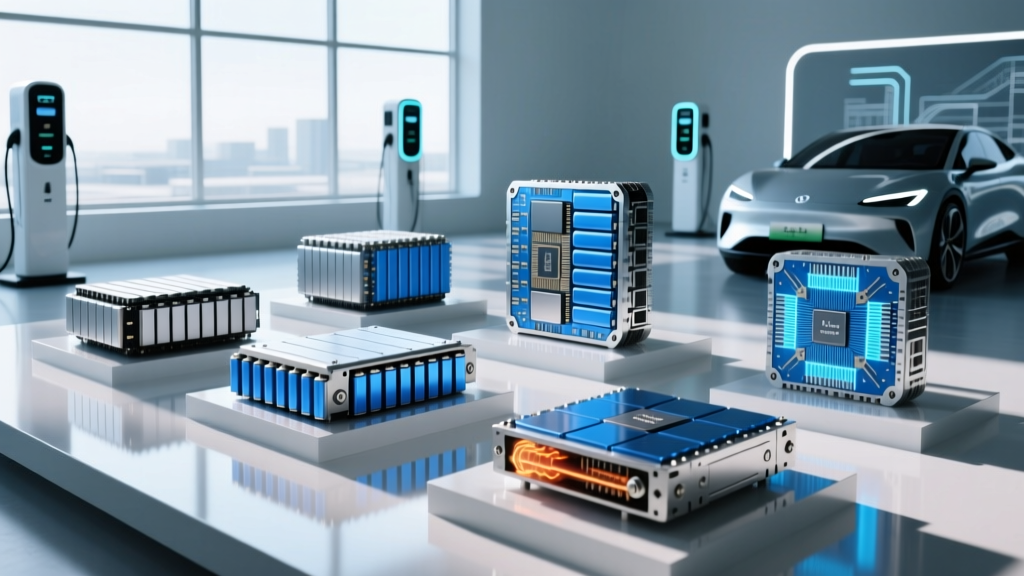
The single biggest shift in battery tech over the last few years isn't a breakthrough — it's a bifurcation. Automakers now offer two distinct chemistries with very different trade-offs, and choosing the right one depends on how you drive.
LFP (Lithium Iron Phosphate) uses an iron-based cathode. It's cheaper to produce, avoids cobalt and nickel entirely, tolerates being held at 100% state of charge without accelerated degradation, and typically delivers 3,000+ full charge cycles before hitting 80% capacity. The trade-off: lower energy density (roughly 160-180 Wh/kg at the cell level vs. 250-300 Wh/kg for high-nickel NMC), meaning LFP packs are heavier for the same range. Cold-weather performance is also weaker — expect 25-35% range loss at 20°F vs. 15-25% for NMC in comparable vehicles.
NMC (Nickel Manganese Cobalt) and NCA (Nickel Cobalt Aluminum) remain the choice for long-range and performance models. Tesla's Model 3 Long Range, Hyundai Ioniq 6, and most 300+ mile EVs use NMC or NCA variants. These packs deliver higher energy density, better cold-weather efficiency, and faster sustained DC charging rates — but they degrade faster when routinely charged to 100% or exposed to high temperatures, and they carry higher material costs tied to nickel and cobalt markets.
| Attribute | LFP (Lithium Iron Phosphate) | NMC / NCA (High-Nickel) |
|---|---|---|
| Energy Density (cell-level) | 160–180 Wh/kg | 250–300 Wh/kg |
| Typical Cycle Life (to 80% SoH) | 3,000–5,000 cycles | 1,500–2,500 cycles |
| Recommended Daily Charge Limit | 100% (no penalty) | 80% (for longevity) |
| Cold-Weather Range Loss (~20°F) | 25–35% | 15–25% |
| Cobalt / Nickel Required | No | Yes |
| Relative Cell Cost (2026) | $80–$100/kWh | $110–$140/kWh |
| Common 2026 Applications | Tesla Model 3 RWD, BYD Seal, Ford Mustang Mach-E Select (LFP option) | Tesla Model 3 LR, Hyundai Ioniq 5/6, Rivian R1T, BMW i4 |
The practical takeaway: if you charge at home nightly, drive under 250 miles a day, and live in a moderate climate, LFP is likely the more durable and cost-effective choice. If you need maximum range, tow frequently, or live in a cold-weather state, NMC/NCA still delivers better real-world utility.
How Long Do EV Batteries Actually Last?
The short answer: in most cases, longer than the car itself. But "battery life" means different things depending on chemistry, climate, and charging habits.
According to data aggregated by Recurrent Auto from over 15,000 vehicles in their fleet-monitoring program, the average EV battery in 2026 retains approximately 90-95% of its original capacity after 5 years / 75,000 miles and 83-90% after 8 years / 120,000 miles. Outliers exist — some Tesla Model 3 NMC packs have shown 92% State of Health (SoH) at 150,000 miles — but degradation is not linear. Most packs lose 3-5% in the first year (initial formation loss), then settle into a slow decline of roughly 1-2% per year thereafter.
| Time / Mileage | Average Capacity Retained (SoH) | Notes |
|---|---|---|
| Year 1 / ~15,000 mi | 95–97% | Initial formation loss; steepest drop |
| Year 3 / ~45,000 mi | 92–94% | Slow, linear decline phase |
| Year 5 / ~75,000 mi | 90–92% | Still well above warranty threshold |
| Year 8 / ~120,000 mi | 85–90% | Approaching warranty coverage boundary |
| Year 10 / ~150,000 mi | 82–88% | Noticeable range reduction; still functional |
| Year 15 / ~225,000 mi | 75–83% | End-of-automotive-life; second-use candidate |
LFP packs tend to show less total degradation over time but may display a less linear curve — holding steady for years, then dropping more sharply once the cell-balancing advantage diminishes. Tesla recommends LFP owners charge to 100% at least weekly to help the Battery Management System (BMS) calibrate accurately; without this, the displayed range estimate can drift significantly from actual capacity.
What Does the Battery Warranty Actually Cover?
Federal law mandates a minimum battery warranty of 8 years / 100,000 miles (whichever comes first) for EVs sold in the US, with California and states that follow CARB standards requiring 10 years / 150,000 miles. But the details matter enormously.
| Manufacturer | Warranty Term | Capacity Threshold | What Triggers a Claim |
|---|---|---|---|
| Tesla (Model 3/Y RWD — LFP) | 8 yr / 100,000 mi | 70% retention | SoH below 70% verified by Tesla diagnostic |
| Tesla (Model 3/Y LR/Performance) | 8 yr / 120,000 mi | 70% retention | SoH below 70% verified by Tesla diagnostic |
| Hyundai / Kia (E-GMP platform) | 10 yr / 100,000 mi | 70% retention | Capacity below 70% per dealer scan tool |
| Ford (Mustang Mach-E, F-150 Lightning) | 8 yr / 100,000 mi | 70% retention | SoH below 70% confirmed via FordPass diagnostic |
| GM (Ultium platform — Cadillac, Chevy) | 8 yr / 100,000 mi | 70% retention (60% for Bolt-era) | Capacity below threshold per OnStar/dealer scan |
| Rivian (R1T, R1S) | 8 yr / 120,000 mi | 70% retention | Verified via Rivian service diagnostic |
| BMW (i4, iX, i7) | 8 yr / 100,000 mi | 70% retention | SoH below 70% confirmed by BMW service |
Key caveats that owners frequently miss:
- The warranty covers capacity loss, not range loss. If your 300-mile EPA-rated EV drops to 210 miles of range because the battery is at 70% SoH, that's a warranty claim. If range drops because of cold weather, tire pressure, or driving style, it's not.
- Warranty claims typically require dealer or manufacturer verification. Third-party scan tools and app-based SoH readings are useful for monitoring but are not accepted as proof for warranty claims.
- Physical damage, flooding, and modifications void coverage. Aftermarket lowering, third-party fast-charging adapters used outside spec, or collision damage to the pack enclosure can all disqualify a claim.
- The 70% threshold is measured against original usable capacity — not total capacity. A 75 kWh usable pack at 70% still holds ~52.5 kWh, which is enough for most daily driving.
EV Battery Replacement Costs: The Real Numbers
This is where fear-mongering runs rampant, so let's be precise. Battery replacement is rarely needed during a vehicle's useful life — but when it is, costs are substantial and vary widely by pack size, chemistry, and labor.
| Vehicle / Platform | Battery Size (kWh usable) | Chemistry | Estimated Replacement Cost |
|---|---|---|---|
| Tesla Model 3 RWD | 57.5 kWh | LFP | $12,000–$16,000 |
| Tesla Model 3 Long Range | 75 kWh | NMC | $16,000–$20,000 |
| Hyundai Ioniq 5 (Std Range) | 58 kWh | NMC | $14,000–$18,000 |
| Hyundai Ioniq 5 (Long Range) | 77.4 kWh | NMC | $18,000–$22,000 |
| Ford Mustang Mach-E (Ext Range) | 91 kWh | NMC | $22,000–$28,000 |
| Ford F-150 Lightning (Ext Range) | 131 kWh | NMC | $30,000–$38,000 |
| Rivian R1T (Max Pack) | 149 kWh | NMC | $35,000–$42,000 |
| Chevrolet Silverado EV (Max Range) | 200 kWh | NMC (Ultium) | $45,000–$55,000 |
Context that matters: according to fueleconomy.gov and manufacturer longevity data, the vast majority of EV batteries never require full replacement during typical ownership. Most degradation-related issues are addressed under warranty, and when packs do fail outside warranty, module-level repair (replacing individual cell groups rather than the full pack) is increasingly available through specialized EV service centers for $3,000–$8,000 depending on the fault.
Full pack replacement typically becomes relevant only at 200,000+ miles, after severe thermal events, or in vehicles used commercially with extreme charge-cycle counts (fleet, rideshare, delivery). For a personal-use vehicle driven 12,000–15,000 miles per year, the battery will almost certainly outlast the body, suspension, and interior.
Factors That Accelerate (or Preserve) Battery Life
Battery degradation is driven by three physical mechanisms: calendar aging (time at temperature and state of charge), cycle aging (charge-discharge wear), and thermal stress (both heat and cold). Here's how each factor plays out in practice:
What Accelerates Degradation
- Frequent DC fast charging above 150 kW — sustained high-C-rate charging generates internal heat that stresses cathode structure. Occasional road-trip fast charging is fine; daily reliance on 250+ kW chargers measurably increases wear.
- Routinely storing at 100% SoC (NMC/NCA only) — high-nickel cells held at full charge experience electrolyte oxidation. LFP cells tolerate this far better.
- Deep discharges below 10% SoC — copper dissolution at very low voltage can cause permanent capacity loss. Avoid letting the pack sit near 0% for extended periods.
- Prolonged exposure to high ambient temperatures — parking in direct sun in Phoenix or Las Vegas for weeks without thermal management active accelerates calendar aging. Most EVs run battery cooling even when parked, but only if plugged in or above a minimum SoC threshold.
- Aggressive driving and frequent high-power regen — sustained high-discharge rates (track use, mountain towing) generate heat that degrades cells faster than highway cruising.
What Preserves Battery Health
- Charge to 80% daily (NMC/NCA) or 100% (LFP) — set the charge limit in your vehicle's app and leave it.
- Use Level 2 home charging as your primary method — 7-11 kW AC charging generates minimal heat compared to DC fast charging.
- Keep the vehicle plugged in during extreme heat — this allows the thermal management system to run battery cooling using grid power rather than pack energy.
- Precondition the battery before DC fast charging — most 2026 models do this automatically when a charger is set as a navigation destination, warming the pack to the optimal 30-40°C for fast charging and reducing lithium plating risk.
- Avoid prolonged storage below 20% or above 90% — if storing the vehicle for weeks, aim for 50-60% SoC.
How to Monitor Your Battery's State of Health (SoH)
State of Health is expressed as a percentage of the battery's current maximum capacity relative to its original capacity when new. A brand-new pack is 100% SoH; a pack that can only hold 90% of its original kWh is at 90% SoH.
In 2026, there are several reliable ways to check this:
- In-vehicle displays: Tesla, Hyundai/Kia, BMW, and Mercedes now include SoH or capacity indicators in the service or battery menu. Tesla's is accessible via the Service menu in Settings; Hyundai's appears in the EV battery information screen on the instrument cluster or infotainment system.
- Manufacturer apps: The Tesla app, FordPass, Hyundai Bluelink, and myChevrolet apps all display estimated range and, in some cases, a health indicator. These readings are derived from BMS data but may lag behind actual capacity by several weeks.
- OBD-II diagnostic tools: Devices like the OBDLink MX+ paired with apps such as EV Health, Scan My Tesla, or Car Scanner can read the BMS-reported SoH directly. These are generally accurate to within ±2% and are useful for tracking degradation over time.
- Third-party monitoring services: Recurrent Auto and Geotab offer fleet and individual monitoring that tracks SoH trends over months, providing early warnings of abnormal degradation.
- Dealer diagnostic scans: For warranty claims or pre-purchase inspections on used EVs, a manufacturer-certified dealer scan is the gold standard. Request a printout showing current usable capacity in kWh and the SoH percentage.
One critical nuance: displayed range is not the same as SoH. Range fluctuates with temperature, tire condition, driving style, and route elevation. SoH is a measure of total energy capacity and changes slowly over months and years. If your displayed range drops 20 miles in January vs. July, that's temperature — not degradation.
Emerging Battery Technologies: What's Realistic for 2026 and Beyond
The battery lab pipeline is full of promising technologies, but the gap between lab demonstration and mass production in vehicles remains 3-7 years for most chemistries. Here's where the most-discussed advancements stand as of 2026:
Solid-State Batteries
Solid-state cells replace the liquid electrolyte with a solid ceramic, polymer, or sulfide material, enabling lithium-metal anodes that could theoretically double energy density while improving safety (no flammable electrolyte). Toyota has announced limited production of solid-state-equipped vehicles for the Japanese market starting in 2027-2028, and Samsung SDI has begun sample production for automotive partners. However, manufacturing yield, cost (currently 3-5x conventional cells), and cycle-life durability at scale remain unsolved for mass-market vehicles. Expect solid-state to appear in premium models from Toyota, Nissan, and potentially BMW by 2028-2030, with mainstream adoption unlikely before 2032.
Silicon Anode Cells
Replacing graphite anodes with silicon (or silicon-carbon composites) increases energy density by 20-40% at the cell level. Sila Nanotechnologies, Group14, and Amprius have begun commercial shipments for consumer electronics and niche automotive applications. GM's partnership with Sila targets Ultium-compatible cells by 2028. The challenge: silicon anodes swell significantly during charging (up to 300% volume expansion), which causes mechanical fatigue and limits cycle life. Current solutions achieve 500-800 cycles — adequate for some applications but below the 1,500+ cycle target for mainstream EVs.
Sodium-Ion Batteries
CATL and BYD have begun producing sodium-ion cells for low-cost, short-range EVs in China, with energy densities around 120-140 Wh/kg. These cells use abundant, inexpensive materials and perform well in cold weather, but their lower energy density limits them to city cars and micro-EVs. No US-market vehicles currently use sodium-ion packs, and none are announced for 2026-2027 US sale.
LFP Improvements
The most impactful near-term advancement is actually incremental: improved LFP formulations from CATL (branded "Shenxing" for fast-charging variants) now support 4C charge rates — meaning a 10-80% charge in under 15 minutes — while maintaining LFP's cost and longevity advantages. These cells are appearing in 2026 Chinese-market vehicles and are expected in European and potentially US models by 2027-2028 as supply chains adapt to IRA critical-mineral sourcing requirements.
Frequently Asked Questions
How long do EV batteries last in years and miles?
Based on 2026 fleet data, most EV batteries retain 85-90% of original capacity at 8 years / 120,000 miles and remain functional well beyond 200,000 miles. LFP packs generally last longer in cycle count than NMC, but both chemistries typically outlive the vehicle's body and drivetrain. Full replacement during normal ownership is uncommon.
How much does an EV battery cost to replace in 2026?
Replacement costs range from approximately $12,000 for a Tesla Model 3 RWD LFP pack to over $45,000 for a Chevrolet Silverado EV Ultium pack, including parts and labor. Most owners never face this cost — warranty coverage handles premature degradation, and module-level repair is increasingly available for $3,000-$8,000 for isolated cell failures.
What does the EV battery warranty cover?
Manufacturer warranties guarantee a minimum capacity retention (typically 70% of original usable capacity) over 8 years / 100,000 miles (10 years / 150,000 miles in CARB states). The warranty covers degradation below the threshold, manufacturing defects, and cell failures. It does not cover range loss from temperature, driving style, or physical damage from collisions or flooding.
How do I check and maximize my EV battery health?
Monitor SoH through your vehicle's service menu, manufacturer app, or an OBD-II diagnostic tool. To maximize longevity: charge to 80% daily (NMC) or 100% (LFP), use Level 2 home charging as your primary method, keep the vehicle plugged in during extreme heat, precondition before fast charging, and avoid prolonged storage below 20% or above 90% SoC.
LFP vs NMC — which battery chemistry is better for me?
LFP is better if you charge at home, drive under 250 miles daily, live in a moderate climate, and want maximum cycle life with the convenience of charging to 100% without degradation concerns. NMC/NCA is better if you need maximum range, tow or haul frequently, drive in cold climates, or rely on DC fast charging for road trips. Neither is universally superior — the right choice depends on your driving pattern.
Will solid-state batteries make current EVs obsolete?
Not in the near term. Solid-state batteries face significant manufacturing and cost challenges and are not expected in mainstream US-market vehicles before 2030-2032. Current LFP and NMC chemistries continue to improve incrementally, and today's EVs will remain practical and supported for well over a decade. Buying an EV now does not mean buying into obsolescence.
Does fast charging damage my EV battery?
Occasional DC fast charging (road trips, 2-3 times per month) has minimal measurable impact on battery health. Daily reliance on 150+ kW fast charging, especially without battery preconditioning, does accelerate degradation. For daily use, Level 2 home charging at 7-11 kW remains the optimal balance of convenience and longevity.
For official federal guidance on EV incentives that may offset battery-related costs, see the IRS Clean Vehicle Credit page. For model-specific efficiency and range data, the EPA's fueleconomy.gov remains the authoritative source for comparing real-world MPGe and kWh/100mi figures across all 2026 EVs.