The Short Answer on EV 2.0 Ownership
The term EV 2.0 describes the current generation of electric vehicles — those built on dedicated EV platforms with 800V architectures, NACS charging ports, improved battery chemistry, and ranges exceeding 300 miles. In 2026, these vehicles cost between $30,000 and $65,000 before incentives, charge from 10–80% in roughly 18–25 minutes at DC fast chargers, and deliver 3–4 miles per kWh of energy. Compared to a gas car, an EV 2.0 typically saves $1,200–$2,500 annually in fuel and maintenance — but only if you have reliable home or workplace charging access. Without it, the economics shift dramatically.
What Defines an EV 2.0 Platform?
First-generation EVs (roughly 2012–2020) were often adapted from gas-car chassis, used low-voltage electrical systems, and topped out around 250 miles of EPA range. The EV 2.0 era — which now encompasses most mainstream models sold in 2026 — is defined by several technical shifts:
- Dedicated EV skateboards: Battery packs integrated into the floor for better weight distribution and interior space (Hyundai E-GMP, GM Ultium, VW MEB).
- 800V electrical architecture: Enables DC fast charging at 250–350 kW peak, cutting 10–80% charge times to under 20 minutes on compatible chargers.
- NACS adoption: As of 2025, most automakers have transitioned to the North American Charging Standard (Tesla's connector), unlocking access to the Supercharger network.
- Improved chemistry: LFP (lithium iron phosphate) packs now offer 10+ year longevity with minimal degradation; NMC (nickel manganese cobalt) packs push energy density past 250 Wh/kg.
- Heat pumps as standard: Cold-weather range loss has dropped from 30–40% to roughly 15–25% in sub-freezing conditions.
Examples of EV 2.0 vehicles available in 2026 include the Hyundai Ioniq 5, Tesla Model Y (Juniper refresh), Ford Mustang Mach-E, Chevrolet Equinox EV, Kia EV6, and BMW iX. These are no longer compliance cars — they are the volume sellers.
Real Costs: EV 2.0 vs. Gas Car vs. Hybrid
The purchase decision hinges on total cost of ownership, not just sticker price. Here's a concrete comparison using representative 2026 models: a Chevrolet Equinox EV 2LT (~$35,000 MSRP), a Toyota RAV4 Hybrid XLE (~$33,500 MSRP), and a Toyota RAV4 LE (gas) (~$30,000 MSRP).
| Cost Factor | Chevy Equinox EV 2LT | RAV4 Hybrid XLE | RAV4 Gas LE |
|---|---|---|---|
| Base MSRP | $35,000 | $33,500 | $30,000 |
| Est. Federal Tax Credit (§30D) | Up to $7,500* | None (not a BEV/PHEV) | None |
| Effective Purchase Price | ~$27,500 | $33,500 | $30,000 |
| Annual Fuel/Energy (15,000 mi) | ~$480 (home charging)** | ~$1,050 (39 MPG combined) | ~$1,500 (30 MPG combined) |
| Annual Maintenance | ~$200 | ~$500 | ~$650 |
| Annual Insurance (avg.) | ~$1,800 | ~$1,400 | ~$1,400 |
| 5-Year Total Cost (purchase + operating) | ~$40,000 | ~$46,250 | ~$45,250 |
*Federal §30D credit eligibility depends on buyer income (≤$150K single / ≤$300K joint), vehicle MSRP caps ($55K cars / $80K trucks/SUVs), and battery critical-mineral sourcing. Verify at IRS.gov. Point-of-sale transfer available at participating dealers.
**Based on $0.14/kWh national average electricity rate and 3.5 mi/kWh efficiency. Public DC fast charging costs 2–3× more.
The EV 2.0 wins on 5-year cost primarily because of the tax credit and dramatically lower fueling expenses. But note the higher insurance premiums — EV claims data shows costlier repairs due to battery-pack involvement in collisions, and insurers have priced this in. If you don't qualify for the federal credit (income too high, vehicle sourcing ineligible), the EV's cost advantage narrows to roughly $2,000 over five years — still positive, but less decisive.
Range, Charging Speed, and Real-World Expectations
Here's where EV 2.0 vehicles genuinely separate from their predecessors. But sticker numbers require context.
| Spec | Hyundai Ioniq 5 (2026) | Tesla Model Y LR (2026) | Chevy Equinox EV (2026) |
|---|---|---|---|
| Battery (usable kWh) | 84 kWh (NMC) | 78 kWh (NMC) | 85 kWh (NMC) |
| EPA Range | 315 mi | 330 mi | 319 mi |
| Real-World Highway (70 mph) | ~260–275 mi | ~275–290 mi | ~260–275 mi |
| Cold-Weather Range (20°F) | ~230–250 mi | ~250–265 mi | ~230–250 mi |
| Peak DC Fast Charge | 240 kW (800V) | 250 kW | 150 kW |
| 10–80% DC Fast Charge | ~18 min | ~25 min | ~35 min |
| Level 2 Home Charge (kW) | 10.9 kW | 11.5 kW | 11.5 kW |
| Level 2 Miles per Hour | ~37 mi/hr | ~40 mi/hr | ~38 mi/hr |
| 0–60 mph | 5.1 sec (RWD) / 3.3 sec (AWD) | 4.8 sec | 7.9 sec (FWD) |
| Efficiency (MPGe) | 114 MPGe combined | 120 MPGe combined | 105 MPGe combined |
Common Misconceptions — Myth vs. Fact
| Myth | Fact |
|---|---|
| "EV batteries need replacing every 5 years" | Modern NMC/LFP packs degrade ~1.5–2% per year. At 10 years, expect 80–88% state of health. Federal warranty mandates 8 yr / 100,000 mi coverage for battery capacity retention (≥70% SoH threshold). |
| "Charging takes too long for road trips" | 800V EV 2.0 platforms add ~150–200 miles in 15 minutes at a 250+ kW charger. A typical road-trip stop is 20–25 minutes — comparable to a gas fill-up + restroom break. |
| "EVs don't work in cold climates" | Range drops 15–25% in sub-freezing temps (with heat pump preconditioning). A 315-mi EPA EV still delivers ~240 mi in 20°F weather — sufficient for most daily driving. Block charging adds ~5 minutes. |
| "The power grid can't handle EVs" | Most EV charging occurs overnight during off-peak hours. A Level 2 home charger draws ~40A (9.6 kW) — similar to a clothes dryer. Utilities are upgrading distribution capacity incrementally. |
| "EVs are worse for the environment due to battery mining" | Lifecycle analyses (including NHTSA and ICCT data) show EVs produce 50–70% fewer lifetime emissions than gas equivalents, even accounting for battery manufacturing and grid electricity mix. |
A critical ownership insight: the charging curve matters more than peak kW. A vehicle rated at 240 kW peak (like the Ioniq 5) only sustains that rate from roughly 10–55% state of charge. From 55–80%, the rate tapers to ~100–130 kW. This is why 10–80% times are a more useful metric than peak kW claims. Above 80%, charging slows dramatically — plan to charge to 80% on road trips and skip the long wait to 100%.
Home Charging: The Make-or-Break Factor
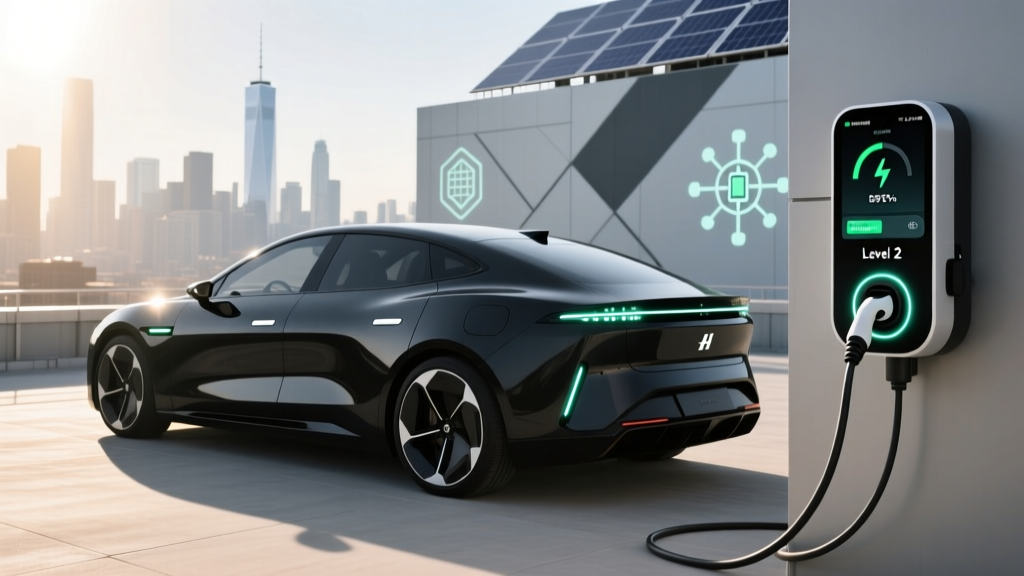
Home Level 2 charging is the backbone of EV 2.0 ownership. Without it, you're dependent on public infrastructure, which remains inconsistent outside major metro corridors.
| Charging Setup | Power | Miles Added per Hour | Estimated Install Cost |
|---|---|---|---|
| Level 1 (standard 120V outlet) | 1.2–1.4 kW | 3–5 mi/hr | $0 (included cord) |
| Level 2 (240V, 40A circuit) | 9.6 kW | 30–35 mi/hr | $800–$2,500 |
| Level 2 (240V, 48A circuit) | 11.5 kW | 37–44 mi/hr | $1,200–$3,500 |
| Panel upgrade (100A → 200A) | — | — | $1,500–$4,000 (if needed) |
For most EV 2.0 owners, a 48A Level 2 charger (hardwired, NACS or J1772 with adapter) is the sweet spot. It fully replenishes a 85 kWh battery overnight in ~8 hours. The national average for equipment + licensed electrician + permit runs $1,500–$2,500 for a straightforward install where the electrical panel has spare capacity and the run from panel to garage is under 50 feet. Longer runs, conduit requirements, or panel upgrades push costs higher.
Apartment and condo dwellers: If you lack dedicated parking with electrical access, an EV 2.0 becomes harder to own. Public Level 2 chargers (ChargePoint, EVgo, Electrify America) cost $0.25–$0.49/kWh, and DC fast charging runs $0.35–$0.65/kWh. At those rates, your per-mile cost approaches or exceeds a fuel-efficient hybrid. Factor this in honestly before purchasing.
Tax Credits and Incentives: What You Actually Qualify For
The federal §30D Clean Vehicle Credit offers up to $7,500 for new EV purchases and up to $4,000 for used EVs — but eligibility is a matrix of requirements, not a guarantee.
- Income caps: Modified AGI ≤$150,000 (single), ≤$225,000 (head of household), ≤$300,000 (joint). Verified at point of sale or on your tax return.
- MSRP caps: Vans, SUVs, and trucks ≤$80,000; sedans and other body styles ≤$55,000.
- Battery sourcing: Increasing percentages of critical minerals and battery components must be sourced from the US or free-trade-agreement countries. This requirement tightens annually — some 2026 models that qualified in 2025 may no longer be eligible. Check the DOE's qualifying vehicle list before purchasing.
- Point-of-sale transfer: You can transfer the credit to the dealer at purchase, reducing your out-of-pocket cost immediately rather than waiting for a tax refund.
- Used EV credit: Up to $4,000 (30% of sale price) on vehicles priced ≤$25,000 from a licensed dealer. Income caps are lower: ≤$75K single / ≤$150K joint.
State and local incentives vary widely — from California's $2,000–$7,000 rebates (CVRP and utility programs) to states with zero additional EV incentives. Always verify current state programs through your state energy office or DMV.
Decision Framework: Should You Buy an EV 2.0?
If-Then Buying Guide
Buy an EV 2.0 if:
- You have access to Level 2 home or workplace charging (the single most important factor).
- Your daily driving is under 150 miles round-trip (covers ~95% of American commutes).
- You qualify for the federal tax credit (check income and vehicle eligibility).
- You drive 12,000+ miles per year (fuel savings compound with mileage).
- You value low running costs and instant torque over lowest-possible purchase price.
Consider a PHEV (plug-in hybrid) instead if:
- You take frequent 400+ mile road trips and don't want to plan charging stops.
- You lack reliable home charging but still want electric commuting (30–50 mi electric range covers most errands).
- You live in a region with sparse DC fast charging infrastructure (rural areas, some mountain corridors).
Stick with a hybrid (HEV) or gas vehicle if:
- You have no home or workplace charging access and rely entirely on street parking.
- Your budget is under $28,000 and you don't qualify for the used EV credit.
- You regularly tow heavy loads (>5,000 lbs) where EV range drops 40–50% under load.
Frequently Asked Questions
How long do EV 2.0 batteries actually last?
Based on current degradation data, modern NMC and LFP packs retain 80–88% capacity after 10 years / 150,000 miles. Federal law mandates an 8-year / 100,000-mile warranty with a minimum 70% state-of-health threshold. Full battery replacement outside warranty costs $8,000–$18,000 depending on pack size, but is rarely needed within the vehicle's normal lifespan.
Is an EV 2.0 cheaper than a gas car over 5 years?
Yes — if you qualify for the $7,500 federal credit and charge primarily at home. The 5-year total cost advantage is typically $3,000–$7,000 over a comparable gas vehicle. Without the credit, the savings narrow to $500–$2,000. Insurance premiums are $200–$500/year higher on average for EVs, partially offsetting fuel savings.
What happens if I need to drive 500 miles in one day?
Plan for 2–3 DC fast charging stops of 20–25 minutes each. With an 800V EV 2.0 platform and access to 250+ kW chargers (Tesla Superchargers, Electrify America), you can add ~180 miles in 15 minutes. Total added travel time for a 500-mile trip: roughly 45–70 minutes versus a gas car.
Do EVs lose value faster than gas cars?
EV depreciation has been higher than gas vehicles historically (some models losing 50–60% in 3 years), driven by rapid tech advancement and price wars. However, 2025–2026 data shows depreciation stabilizing as the market matures. Expect 40–55% depreciation over 3 years for mainstream EVs versus 30–45% for equivalent gas vehicles. This gap is narrowing.
Can I install a Level 2 charger myself?
Technically possible for experienced DIYers, but not recommended. A 240V / 48A circuit requires proper wire gauge (typically 6 AWG copper), a dedicated breaker, and local permitting. Most jurisdictions require a licensed electrician for inspection. A botched install is a fire risk and may void your homeowner's insurance. Budget $1,500–$2,500 for professional installation.