The Quick Answer: European EVs in the US Market
If you're researching electric Europe-manufactured vehicles available in the United States, the core lineup in 2026 includes the BMW i4/iX, Volkswagen ID.4 (Chattanooga-assembled but VW-platform), Mercedes-Benz EQE/EQS, Volvo EX30/EX90, and Polestar 2/4. These models range from roughly $40,000 to over $100,000, offer 240–370 miles of EPA range, and most support DC fast charging between 150–220 kW. However, nearly all have lost eligibility for the full $7,500 federal §30D tax credit due to battery-sourcing requirements that took full effect in 2024–2025. Your real decision comes down to whether European driving dynamics, build quality, and brand prestige justify the typically higher purchase price and reduced incentive access compared to Korean or American rivals.
Which European EVs Are Actually Sold in the US?
Europe produces dozens of EV models, but only a curated selection reaches American dealerships. Here's the 2026 landscape of the most relevant European-origin EVs you can buy stateside:
| Model | Origin | EPA Range | Battery (kWh) | Peak DC kW | 10–80% Time | Base MSRP |
|---|---|---|---|---|---|---|
| BMW i4 eDrive40 | Germany | 307 mi | 81.5 (NMC) | 205 kW | ~31 min | $57,900 |
| BMW iX xDrive50 | Germany | 324 mi | 111.5 (NMC) | 200 kW | ~35 min | |
| Mercedes EQE 350+ | Germany | 305 mi | 90.6 (NMC) | 170 kW | ~32 min | $74,900 |
| Volvo EX30 Single Motor | Belgium/China | 265 mi | 69 (NMC) | 153 kW | ~28 min | $36,350 |
| Polestar 2 LR Dual Motor | China (EU brand) | 276 mi | 82 (NMC) | 205 kW | ~28 min | $53,400 |
| VW ID.4 Pro S | USA (EU platform) | 275 mi | 82 (NMC) | 175 kW | ~30 min | $45,290 |
| Porsche Taycan (base) | Germany | 279 mi | 79.2 (NMC) | 225 kW | ~22 min | $92,250 |
Sources: fueleconomy.gov, manufacturer press sites. Real-world highway range typically runs 10–18% below EPA figures; cold-weather (below 32°F) can reduce range an additional 15–30% depending on heat-pump availability.
Real-World Range Reality Check
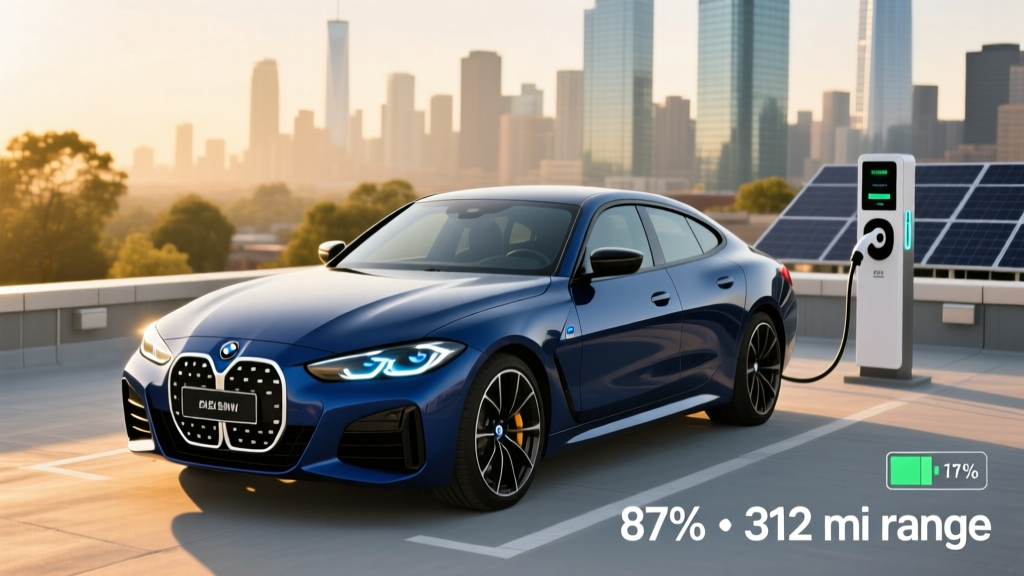
EPA Sticker vs. What You'll Actually Get: A BMW i4 eDrive40 rated at 307 miles EPA will deliver approximately 255–275 miles on a 75°F highway trip at 70 mph. In 20°F winter conditions without a heat pump engaged aggressively, expect closer to 210–230 miles. The Porsche Taycan, despite a lower EPA number, is known for exceeding its rating in moderate conditions due to conservative testing methodology.
European EVs vs. American and Korean Competitors
The core question for most buyers: does a European badge justify the premium over a Hyundai Ioniq 5, Tesla Model Y, or Ford Mustang Mach-E? Let's compare on data, not brand loyalty.
| Attribute | BMW i4 eDrive40 | Hyundai Ioniq 5 Limited AWD | Tesla Model Y LR AWD |
|---|---|---|---|
| Base MSRP | $57,900 | $52,600 | $48,990 |
| EPA Range | 307 mi | 290 mi | 320 mi |
| DC Fast Charge (peak) | 205 kW | 240 kW | 250 kW |
| 10–80% Charge Time | ~31 min | ~18 min | ~20 min |
| Federal Tax Credit (§30D) | $0 (sourcing fail) | $0 (2026 sourcing TBD) | $3,750–$7,500* |
| NACS Connector | Adapter required | Native (2025+) | Native |
| 0–60 mph | 5.5 sec | 5.0 sec | 4.8 sec |
*Tesla Model Y credit eligibility depends on battery-component and critical-minerals sourcing per IRS §30D rules. Verify current eligibility at purchase; rules change frequently.
The data reveals a clear pattern: European EVs typically charge slower (by 5–12 minutes on a 10–80% session), cost more upfront, and often lack native NACS connectors, requiring adapters for Tesla Supercharger access. Where they win is interior material quality, ride refinement, steering feel, and brand cachet. If driving dynamics and cabin luxury are your top priorities, the BMW or Mercedes delivers. If charging speed and value-per-mile matter more, the Korean and American options lead.
The Tax Credit Problem for European EVs
This is the single biggest financial consideration that catches buyers off guard. The federal §30D clean vehicle credit — up to $7,500 — has strict battery-component and critical-minerals sourcing requirements. As of 2025–2026, most vehicles with battery cells manufactured in Europe or containing minerals processed outside US free-trade-agreement partners have lost full or partial eligibility.
§30D Eligibility Checklist (2026 Rules)
- MSRP Cap: Vans/SUVs/pickups ≤ $80,000; sedans ≤ $55,000
- Buyer Income Cap: MAGI ≤ $150K single / $300K joint / $225K head of household
- Battery Components: Must be manufactured in North America (phasing to 100% by 2029)
- Critical Minerals: Must be sourced from US or FTA partners (phasing to 80% by 2027)
- Foreign Entity of Concern (FEOC): No battery components from China/Russia (2024+), no critical minerals from FEOC (2025+)
- Point-of-Sale Transfer: Credit can be applied at purchase to reduce out-of-pocket cost
Source: IRS.gov §30D. Always confirm eligibility at time of purchase — manufacturer sourcing changes throughout the year.
Practically, this means the BMW i4 sedan (MSRP $57,900) exceeds the $55,000 sedan cap even before the sourcing issue. The BMW iX, as an SUV, clears the $80K cap on lower trims but fails the battery-sourcing test. The Volvo EX30 at $36,350 clears both price caps but its Belgian/Chinese battery supply chain has made credit eligibility inconsistent. Always ask the dealer for the current IRS eligibility confirmation before signing.
Real Costs of Ownership: European EV vs. Gas Sedan
Let's ground this in actual dollars. Below is a 5-year total cost of ownership comparison for a European EV (BMW i4) versus a comparable gas luxury sedan (BMW 330i) and a mainstream EV (Tesla Model Y).
| Cost Category | BMW i4 eDrive40 | BMW 330i (Gas) | Tesla Model Y LR |
|---|---|---|---|
| Purchase Price (base) | $57,900 | $44,900 | $48,990 |
| Federal Tax Credit | $0 | $0 | –$7,500* |
| Effective Purchase | $57,900 | $44,900 | $41,490 |
| Fuel/Energy (5 yr, 60K mi) | $5,100 | $9,750 | $4,500 |
| Maintenance (5 yr) | $2,800 | $5,200 | $2,200 |
| Insurance (5 yr avg) | $11,400 | $9,000 | $10,200 |
| Depreciation (est. 5 yr) | $28,950 | $20,200 | $22,500 |
| 5-Year Total Cost | $106,150 | $89,050 | $80,890 |
| Cost Per Mile | $1.77 | $1.48 | $1.35 |
Assumptions: $0.15/kWh home charging, $3.25/gal gas, 12,000 mi/yr. Insurance based on national averages for luxury EVs. Depreciation estimates from industry data. *Tesla credit subject to eligibility confirmation. Source: fueleconomy.gov, insurer aggregates.
The takeaway: a European luxury EV costs meaningfully more to own over five years than both its gas counterpart and a mainstream American EV — driven primarily by higher depreciation, zero federal incentive, and elevated insurance premiums. The fuel savings are real ($4,650 over gas across 60K miles) but don't close the gap.
Charging Realities: What European EV Owners Face
European EVs in 2026 predominantly use the CCS1 connector. With the industry's shift to NACS (Tesla's connector, now the SAE J3400 standard), most European brands have committed to NACS adoption starting with 2025–2026 model years, but many current vehicles still ship with CCS1 and require an adapter for Supercharger access.
| Charging Level | Power (kW) | Miles Added/Hour | Typical Use Case |
|---|---|---|---|
| Level 1 (120V) | 1.4 kW | 3–5 mi/hr | Overnight trickle, emergencies |
| Level 2 (240V, 48A) | 11.5 kW | 30–42 mi/hr | Home daily charging |
| DC Fast (typical EU EV) | 150–225 kW | 500–900 mi/hr (peak) | Road trips, 10–80% sessions |
Charging-curve reality: A BMW iX peaking at 200 kW does not sustain that rate. The charge curve typically holds peak rate from 10–30% SoC, then tapers progressively. By 60% SoC, you're likely at 100–120 kW; above 80%, speeds drop to under 50 kW. This is why manufacturers quote 10–80% times rather than 0–100%. Plan road-trip stops around the 10–80% window for maximum efficiency.
Home charging access remains the defining ownership experience. If you can install a Level 2 home charger (240V, 48A circuit), a European EV with an 80–110 kWh battery will fully replenish overnight in 7–10 hours. Installation costs range from $500 (simple outlet near panel) to $2,500+ (panel upgrade, long conduit runs). Without home charging, relying on public DC fast chargers at $0.35–$0.55/kWh erases most of the fuel-cost advantage over gasoline.
Common Misconceptions About European EVs
| Myth | Fact |
|---|---|
| "European EVs are better built and more reliable" | J.D. Power 2025 data shows European luxury EVs have higher initial-quality complaint rates than Korean EVs, primarily around software and infotainment systems. Build quality of materials is superior; electronic reliability is not consistently better. |
| "All European EVs qualify for the $7,500 tax credit" | Most do not. Battery sourcing rules under §30D have eliminated eligibility for the majority of European-assembled battery packs as of 2025–2026. |
| "I can charge at any US station" | CCS1-equipped European EVs cannot use Tesla Superchargers without a NACS adapter (provided by some manufacturers, sold separately by others). Electrify America, EVgo, and ChargePoint CCS stalls work natively. |
| "European EVs have worse range" | Range is competitive (270–325 mi EPA for most models). However, efficiency (kWh/100mi) tends to be slightly worse than Tesla/Hyundai due to heavier curb weights and less aggressive thermal management. |
| "Battery replacement will cost $20,000+" | Full pack replacement is $15,000–$30,000 depending on model, but module-level repairs are often $2,000–$6,000. All European brands offer 8-year/100,000-mile battery warranties with a 70% capacity-retention threshold. NMC degradation data shows ~10–15% capacity loss at 150,000 miles under normal use. |
Decision Framework: Should You Buy a European EV?
Choose a European EV If:
- You prioritize driving dynamics, steering feedback, and ride quality over charging speed
- Your budget accommodates $55,000–$100,000+ without relying on the federal tax credit
- You have reliable home Level 2 charging and drive under 300 miles daily
- Brand prestige and interior luxury are top-three purchase factors
- You value dealer service networks with loaner-car programs (BMW, Mercedes, Volvo)
Choose an American or Korean EV If:
- You want the lowest total cost of ownership and maximum federal incentive eligibility
- Fast DC charging (sub-20-minute 10–80%) is critical for your road-trip habits
- You need native NACS/Supercharger access without adapters
- Software reliability and OTA update maturity are high priorities
- Your budget is under $50,000 effective after incentives
What First-Time European EV Buyers Must Know
If you're coming from a gas BMW, Mercedes, or Volvo and considering the electric equivalent, here are the practical realities no brochure will emphasize:
- Preconditioning matters: European EVs with heat pumps (standard on most BMW/Mercedes models) will precondition the battery when you navigate to a DC fast charger. Always use the car's built-in navigation for charging stops — arriving with a cold battery can halve your peak charge rate.
- Regenerative braking feel: Most European EVs offer adjustable regen but do not default to true one-pedal driving like a Tesla or Nissan LEAF. BMW's adaptive regen (which uses radar to adjust deceleration based on traffic ahead) is excellent but takes a week to trust.
- Software updates: European brands have improved OTA capabilities, but BMW/Mercedes still require dealer visits for certain firmware updates more often than Tesla or Rivian. Factor in 1–2 dealer visits per year for non-OTA updates.
- Tire costs: European luxury EVs are heavy (4,800–5,800 lbs) and torque-rich. Expect to replace tires every 25,000–35,000 miles at $1,200–$2,200 per set for OEM-spec rubber.
- Insurance premiums: Luxury EVs carry 15–30% higher insurance costs than equivalent gas models. Get quotes before purchasing — the difference can be $600–$1,500/year.
Do any European EVs qualify for the US federal tax credit in 2026?
A small number may qualify depending on battery-sourcing shifts throughout the year. The VW ID.4 (assembled in Chattanooga, TN, with an evolving US battery supply chain) has intermittently qualified for partial or full credit. Always verify current eligibility via the IRS clean vehicle credit lookup or your dealer's point-of-sale confirmation before committing.
Can I use Tesla Superchargers with a BMW or Mercedes EV?
Yes, with a NACS adapter. BMW, Mercedes, and Volvo have all confirmed adapter compatibility with Tesla Supercharger networks. Some manufacturers include the adapter; others charge $200–$400. Charging speeds will be limited by your vehicle's onboard charge rate, not the Supercharger's capacity.
How does cold weather affect a European EV's range?
In sustained 20°F conditions, expect 15–30% range reduction depending on whether the vehicle has a heat pump (most 2026 European EVs do) and whether you precondition the cabin while plugged in. A BMW iX rated at 324 miles EPA will realistically deliver 225–275 miles in winter highway driving. Using seat heaters instead of cabin heat can recover 5–10% of that loss.
Is it cheaper to charge a European EV at home or use public fast chargers?
Home charging at $0.12–$0.18/kWh costs roughly $0.04–$0.06 per mile. Public DC fast charging at $0.35–$0.55/kWh costs $0.11–$0.18 per mile — approaching or exceeding gasoline costs for efficient cars. An 80%+ home-charging habit is essential to realizing EV fuel savings.
What's the battery warranty on European EVs?
All major European brands sold in the US provide a minimum 8-year/100,000-mile high-voltage battery warranty covering defects and capacity loss below 70% of original capacity. BMW, Mercedes, Volvo, and Porsche all use this standard. Some offer slightly better terms — check your specific model year documentation.