Quick Answer: Is a Europe EV Practical in 2026?
Europe's EV market in 2026 is defined by compact, efficient battery-electric vehicles averaging 250–350 km (155–217 miles) of WLTP range, supported by a dense public charging network exceeding 900,000 public charge points across the EU. For US buyers researching the Europe EV landscape — whether considering an import, relocating, or benchmarking against domestic options — the key takeaways are: smaller batteries (50–75 kWh) dominate, Level 2 public charging is ubiquitous in urban areas, and total cost of ownership often undercuts equivalent gas cars within 3–4 years thanks to lower electricity rates and minimal maintenance. However, highway range in cold climates drops 20–30%, and DC fast charging above 80% slows dramatically due to charge-curve taper.
The Europe EV Market in 2026: What's Actually Selling
Unlike the US market, where large SUVs and trucks dominate EV sales, the Europe EV segment is led by compact hatchbacks and crossovers. The Volkswagen ID.3, Renault Mégane E-Tech, Peugeot e-308, and Volvo EX30 account for a significant share of new registrations. Tesla's Model Y, built at Giga Berlin, remains a top seller across multiple European markets, while Chinese brands like BYD (Dolphin, Atto 3) and MG (MG4) have captured meaningful market share with aggressively priced models.
Average new-EV transaction prices in Western Europe sit around €38,000–€45,000 ($41,000–$49,000 USD), though budget options like the Dacia Spring (€22,000 / ~$24,000) and Citroën ë-C3 (€23,500 / ~$25,500) target the sub-€25,000 segment. These figures contrast sharply with the US average EV transaction price, which hovers near $52,000 per Kelley Blue Book data, reflecting the American preference for larger vehicles.
| Model | Battery (kWh) | WLTP Range | Peak DC Charge | 10–80% Time | Base Price (EUR) |
|---|---|---|---|---|---|
| VW ID.3 Pro S | 77 (NMC) | 546 km / 339 mi | 175 kW | ~28 min | €42,000 |
| Renault Mégane E-Tech | 60 (NMC) | 450 km / 280 mi | 130 kW | ~32 min | €39,500 |
| Volvo EX30 Single Motor | 69 (NMC) | 476 km / 296 mi | 153 kW | ~26 min | €40,500 |
| MG4 Extended Range | 77 (LFP) | 520 km / 323 mi | 140 kW | ~35 min | €34,000 |
| Tesla Model Y RWD | 60 (LFP) | 455 km / 283 mi | 170 kW | ~25 min | €44,990 |
Important range note: WLTP testing tends to overestimate range compared to US EPA testing by roughly 10–15%. A VW ID.3 rated at 546 km WLTP would likely carry an EPA sticker around 460–490 km (285–305 miles). Real-world highway driving at 120 km/h (75 mph) in 5°C (41°F) conditions can reduce that further to approximately 350–380 km (217–236 miles).
Charging Infrastructure: Where Europe Leads (and Where It Doesn't)
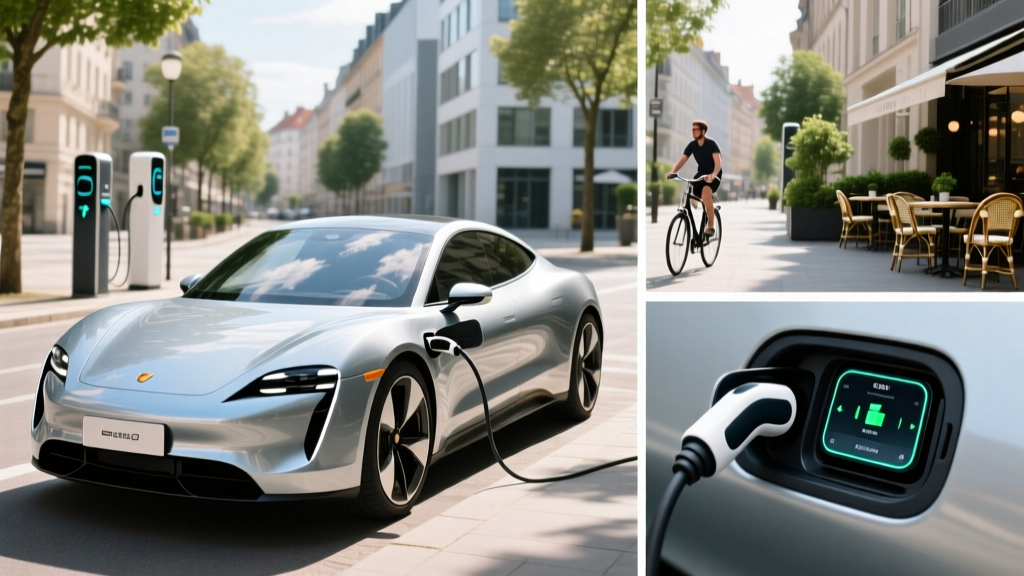
The European charging network is dense in urban centers but uneven across regions. The Netherlands, Germany, and France lead with 100,000+ public charge points each, while Southern and Eastern European countries lag. According to the European Alternative Fuels Observatory (EAFO), the EU surpassed 900,000 public charging points in late 2025, with roughly 12–15% being DC fast chargers (50 kW+).
| Level | Power (kW) | Connector | Miles Added/Hour | Typical Use Case |
|---|---|---|---|---|
| Level 1 (Schuko household) | 2.3 kW | Type 2 / Schuko | ~8 mi/hr | Overnight top-up, PHEVs |
| Level 2 (wallbox / public AC) | 7.4–22 kW | Type 2 (Mennekes) | 25–75 mi/hr | Home, workplace, destination |
| DC Fast (50–150 kW) | 50–150 kW | CCS2 | 150–400 mi/hr | Highway corridors, rapid top-up |
| DC Ultra-Fast (175–400 kW) | 175–400 kW | CCS2 | 400–800+ mi/hr | Ionity, Tesla Supercharger V4 |
kW vs kWh reminder: kW (kilowatts) measures the rate of charging power — how fast energy flows into the battery. kWh (kilowatt-hours) measures total energy capacity — how much the battery holds. A 77 kWh battery charged at 7.4 kW takes roughly 10.4 hours from 0–100%. That same battery at a 150 kW DC fast charger could reach 80% in about 28 minutes, but the charge curve tapers sharply above 80%, meaning the final 20% may take as long as the first 80%.
Europe's standard connector is CCS2 (Combined Charging System Type 2), which is physically different from the CCS1 used on most non-Tesla US EVs and the NACS (North American Charging Standard) adopted by Tesla and now most US automakers. This means a US-spec EV cannot plug directly into a European public charger without an adapter — a practical barrier for anyone considering importing a Europe-market EV to the US or vice versa.
Common Europe EV Misconceptions
| Myth | Fact |
|---|---|
| "European EVs have 400+ miles of real range" | WLTP ratings inflate range. Real-world highway range for most models is 200–280 miles, less in cold weather. |
| "You can charge anywhere for free" | Public DC fast charging in Europe costs €0.39–€0.79/kWh ($0.42–$0.86), comparable to or exceeding US rates. Free AC charging is increasingly rare. |
| "European EVs are all tiny and impractical" | While compacts dominate, the Tesla Model Y, VW ID.4/ID.5, and Skoda Enyaq offer SUV practicality with 500+ liters of cargo space. |
| "Cold weather makes EVs useless in Scandinavia" | Norway has the world's highest per-capita EV adoption. Heat pumps and battery preconditioning mitigate cold-weather range loss to 15–25%. |
Real Costs: Europe EV vs Gas Car Ownership
The total cost of ownership (TCO) calculus in Europe favors EVs more strongly than in the US, primarily because gasoline prices are roughly 2–3× higher. Here's a representative 5-year / 100,000 km (62,000 mile) TCO comparison for a compact family vehicle in Germany:
| Cost Category | VW ID.3 Pro (EV) | VW Golf 1.5 TSI (Gas) |
|---|---|---|
| Purchase Price (after incentives) | €36,500 | €32,000 |
| Fuel / Electricity (100k km) | €3,200 (home + public mix) | €9,600 (avg €1.80/L) |
| Maintenance (5 years) | €1,100 | €3,200 |
| Insurance (5 years) | €5,500 | €4,800 |
| Depreciation (est. residual) | €15,000 retained | €14,000 retained |
| Net 5-Year Cost | ~€25,800 | ~€35,600 |
The EV saves roughly €9,800 over five years, or about €163/month. The savings come overwhelmingly from fuel and maintenance — EVs have no oil changes, no spark plugs, no timing belts, and brake pads last 2–3× longer thanks to regenerative braking. Insurance is typically 10–20% higher for EVs due to higher repair costs for battery-adjacent damage and specialized labor requirements.
Home charging economics: European residential electricity averages €0.28/kWh ($0.30/kWh), though this varies enormously — from €0.10/kWh in parts of Eastern Europe to €0.42/kWh in Germany. At the EU average, charging a 60 kWh battery from 10–80% costs about €11.76 ($12.80) — yielding roughly 240 km (150 miles) of real-world range. That's €0.049/km, compared to €0.096/km for a gas car averaging 6.5 L/100 km at €1.80/L.
What US Buyers Can Learn From the Europe EV Experience
For US-based EV shoppers researching the Europe EV market, several practical lessons apply:
- Smaller batteries can work. European buyers routinely choose 50–65 kWh batteries and make them work for daily commuting plus occasional road trips. The average European drives 35–45 km (22–28 miles) per day. If your commute is under 50 miles round-trip and you have home charging, a 60 kWh battery is sufficient — you don't need to pay the premium for 100 kWh.
- LFP chemistry is gaining ground. Models like the Tesla Model Y RWD (Berlin-built) and MG4 use lithium iron phosphate (LFP) batteries. LFP offers longer cycle life (3,000+ full cycles vs ~1,500 for NMC), better thermal stability, and lower cost — but at the expense of ~15% lower energy density and slightly worse cold-weather performance. LFP is ideal if you can charge to 100% regularly and don't need maximum range.
- Preconditioning matters. European EVs with heat pumps and battery preconditioning (e.g., Tesla, VW ID family, Hyundai/Kia E-GMP models) maintain better charging speeds in cold weather. Without preconditioning, a cold battery at a DC fast charger may accept only 40–50 kW instead of its rated 150+ kW peak.
- Public charging isn't free or always reliable. Despite Europe's dense network, broken chargers, payment-app fragmentation, and peak-time queues at highway rest stops are common complaints — mirroring US public-charging frustrations.
Decision Framework: Should You Look at Europe-Market EVs?
If / Then Guide for US Buyers
- If you're relocating to Europe: Buy locally. US-spec EVs face connector incompatibility (CCS1 vs CCS2), different homologation standards, and limited warranty coverage abroad. The European market offers strong options in every segment.
- If you're considering importing a Europe EV to the US: Generally not practical. Import duties (potentially 27.5% for Chinese-manufactured vehicles), DOT/EPA compliance modifications, and CCS2-to-CCS1/NACS adapter limitations make this cost-prohibitive for most models.
- If you're benchmarking for a US purchase: Look at models sold in both markets — Tesla Model Y, VW ID.4, Hyundai Ioniq 5, Kia EV6, Volvo EX30. US versions often have larger battery options and EPA-rated range, but European pricing reveals the "true" cost before US markups.
- If you want the Europe EV lifestyle in the US: Choose a compact EV (Chevy Equinox EV, Hyundai Kona Electric, Volvo EX30), install a Level 2 home charger (budget $800–$2,000 for equipment + electrician), and rely on DC fast charging only for road trips.
First-Time EV Buyer Essentials
Whether you're buying in the US or Europe, these fundamentals apply:
- Verify home charging access before purchasing. A Level 2 home charger (7–11 kW) is the single most important ownership factor. Without it, you'll rely on public charging, which costs 3–5× more per kWh and adds time and unpredictability to your routine. Installation costs $800–$2,500 in the US depending on panel capacity and run length. A 200-amp electrical panel is typically required; older homes may need a $2,000–$5,000 panel upgrade.
- Understand the charge curve. Advertised peak DC charging rates (e.g., "175 kW") are sustained only between roughly 10–50% state of charge. Above 80%, charging slows dramatically to protect battery health. A "10–80% in 28 minutes" claim is the meaningful metric, not peak kW.
- Budget for cold-weather range loss. If you live where temperatures regularly drop below freezing, expect 20–30% range reduction. A vehicle rated at 280 miles EPA may deliver 195–225 miles in January. A heat pump (standard on most European EVs, optional or absent on some US models) reduces this penalty by roughly half.
- Factor in tax credits and incentives. In the US, the federal §30D tax credit offers up to $7,500 for new EVs meeting battery-sourcing, MSRP cap ($55,000 cars / $80,000 SUVs/trucks), and buyer income limits ($150k single / $300k joint). Per the IRS, point-of-sale transfer is available, effectively reducing the purchase price at the dealer. European incentives vary by country — Germany's environmental bonus ended in 2023, while France maintains a bonus écologique of up to €4,000 for income-qualified buyers.
- Check battery warranty terms. Most manufacturers guarantee 70% capacity retention over 8 years / 160,000 km (100,000 miles). Real-world degradation data from Geotab's fleet analysis shows average annual degradation of ~1.8% for liquid-cooled batteries, meaning a 10-year-old EV should retain roughly 80–85% of original capacity.
Frequently Asked Questions
Can I buy a Europe-spec EV and drive it in the US?
Technically possible but impractical for most buyers. You'll face a 2.5% import duty (or 27.5% for Chinese-built vehicles under current tariffs), DOT/EPA compliance paperwork, and the CCS2 charging connector won't natively fit US CCS1 or NACS infrastructure without an adapter. Warranty coverage will likely be void. Buy a US-spec version of the same model instead.
Why do European EVs seem to have more range than US versions?
They don't — they're tested differently. The WLTP cycle used in Europe produces range estimates 10–15% higher than the US EPA cycle for the same vehicle. A VW ID.4 rated at 520 km (323 mi) WLTP in Europe carries an EPA rating of 275 miles in the US. The real-world range is identical; only the label differs.
How much does it cost to charge an EV in Europe vs the US?
Home charging in Europe averages €0.28/kWh ($0.30/kWh) vs $0.16/kWh in the US — European electricity is nearly twice as expensive at home. However, European gasoline costs roughly $7.00–$8.50/gallon, making the EV fuel savings proportionally much larger. Public DC fast charging costs are similar: €0.39–€0.79/kWh in Europe vs $0.30–$0.60/kWh in the US.
Are Chinese EV brands reliable?
BYD, MG (SAIC-owned), and Nio have gained significant European market share. BYD's Blade Battery (LFP chemistry) has demonstrated strong safety and durability in independent testing. However, long-term reliability data (5+ years) for Chinese brands in European and US markets remains limited compared to legacy automakers. Warranty support and parts availability outside their primary markets are still developing.
What's the best Europe EV for a US buyer to consider as a comparable?
The Volvo EX30, Tesla Model Y (Berlin-built), and Hyundai Ioniq 5 are sold in both markets with minimal differences. The EX30 starts at ~$36,000 in the US with a 69 kWh NMC battery and 265 miles EPA range. The Model Y starts at ~$44,990 US with 310 miles EPA range. The Ioniq 5 starts at ~$42,000 US with up to 303 miles EPA range and 800V architecture enabling 10–80% DC fast charging in ~18 minutes at a 350 kW charger.