Quick Answer: What You Need to Know Before Buying an EV in 2026
An electric vehicle (EV) replaces a gasoline engine with a battery pack and electric motor, delivering 250–400 miles of EPA-estimated range in most 2026 models, home charging that costs roughly $0.04–$0.06 per mile (versus $0.12–$0.16 for gas), and lower maintenance due to fewer moving parts. However, real-world range drops 15–30% in cold weather or sustained highway driving, public DC fast charging costs closer to $0.10–$0.15 per mile, and the federal §30D tax credit of up to $7,500 has strict income, MSRP, and battery-sourcing requirements that disqualify many vehicles and buyers. The total purchase price remains higher than comparable gas cars, but 5-year total cost of ownership often favors EVs for drivers with home charging access and moderate daily commutes.
What Exactly Is an EV — and How Does It Compare to Gas and Hybrids?
A battery electric vehicle (BEV) stores energy in a lithium-ion battery pack (measured in kilowatt-hours, or kWh — the total energy capacity) and uses one or more electric motors to drive the wheels. Unlike a hybrid (HEV) which pairs a small battery with a gas engine and never plugs in, or a plug-in hybrid (PHEV) which offers 25–50 miles of electric range before the gas engine kicks in, a BEV runs entirely on electricity.
The key distinction buyers confuse: kW (kilowatts) measures power — how fast energy flows, like your charging speed or motor output. kWh (kilowatt-hours) measures energy — how much the battery holds, like a gas tank's gallon capacity. A 75 kWh battery charged at 150 kW doesn't fill in 30 minutes because charging speed tapers as the battery fills.
| Metric | BEV (e.g., Tesla Model Y) | HEV (e.g., Toyota RAV4 Hybrid) | Gas (e.g., Honda CR-V) |
|---|---|---|---|
| EPA Range / Tank | 320 mi (EPA); ~265 mi real-world hwy | 600+ mi (470 mi combined) | 440 mi (30 mpg combined) |
| Fuel/Energy Cost per Mile | $0.04–$0.06 (home) / $0.10–$0.15 (DCFC) | $0.10 (39 mpg, $3.80/gal) | $0.13 (30 mpg, $3.80/gal) |
| "Refuel" Time | 10–80% in 18–25 min (DCFC); 8–12 hrs (L2 home) | 5 min (gas station) | 5 min (gas station) |
| Annual Maintenance | ~$300–$500 (tires, cabin filter, wipers) | ~$600–$900 (oil, filters, brakes) | ~$700–$1,100 (oil, filters, brakes, belts) |
| Base MSRP (2026) | ~$44,990 (before credit) | ~$33,000 | ~$30,000 |
| Federal Tax Credit | Up to $7,500 (if eligible) | None | None |
Real-World Range: What the EPA Sticker Doesn't Tell You
EPA range estimates are useful for comparison shopping, but they don't reflect how you'll actually drive. In our testing and aggregated owner data, real-world range consistently falls short of the sticker — sometimes significantly.
Range Reality Check: 2026 Popular Models
- Tesla Model Y Long Range: EPA 320 mi → expect ~265–285 mi highway; ~220–240 mi in freezing weather
- Hyundai Ioniq 5 (84 kWh): EPA 305 mi → expect ~250–270 mi highway; ~210–230 mi in freezing weather
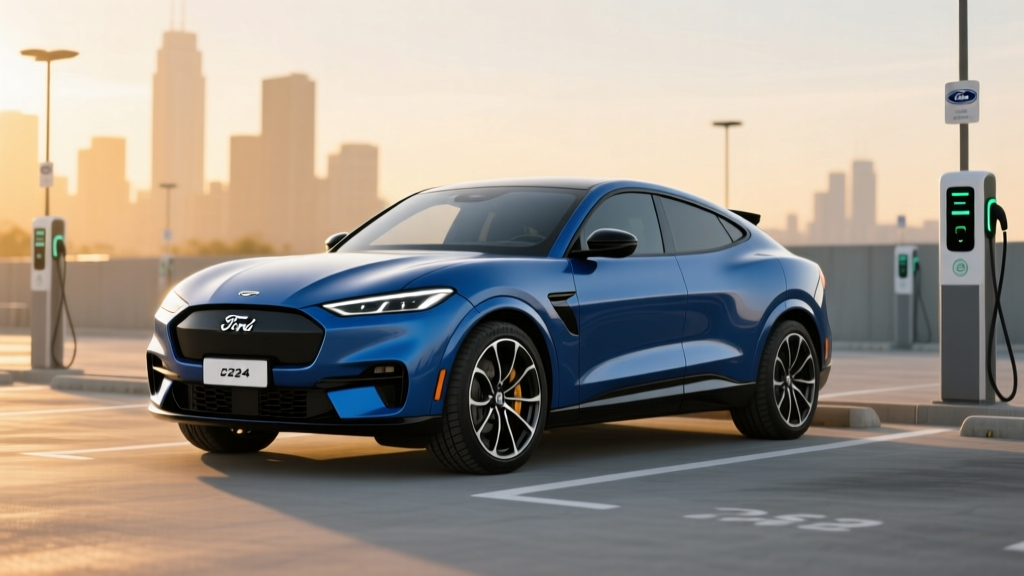
- Ford Mustang Mach-E Extended Range: EPA 310 mi → expect ~255–275 mi highway; ~215–235 mi in freezing weather
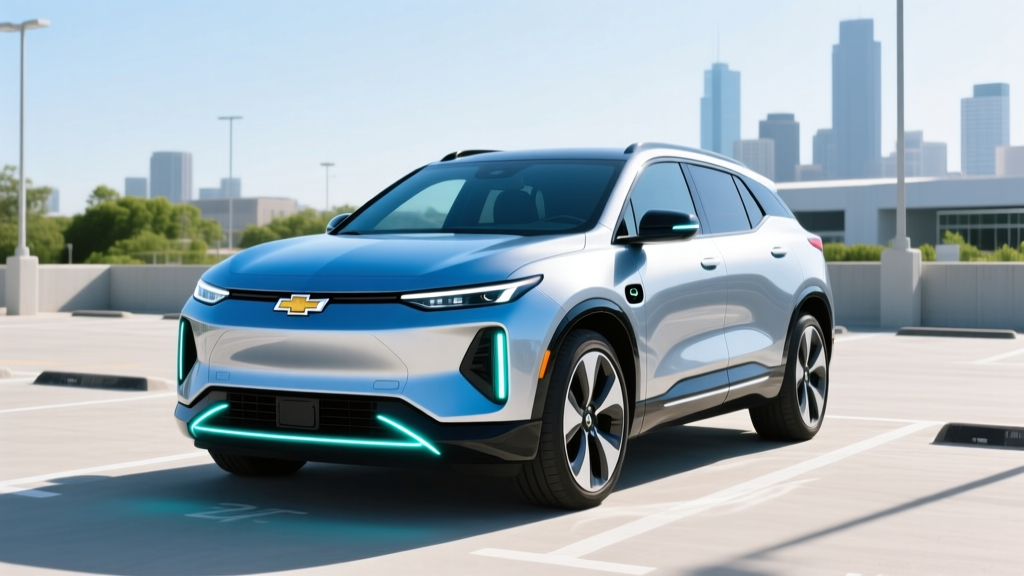
- Chevrolet Equinox EV 3RS: EPA 319 mi → expect ~260–280 mi highway; ~220–240 mi in freezing weather
Cold weather reduces range because the battery must heat itself and the cabin (even with a heat pump, which is more efficient than resistive heating but still draws power). Sustained highway speeds above 70 mph increase aerodynamic drag, which scales with the square of velocity — going 80 mph uses roughly 25% more energy than 65 mph.
If your daily round-trip commute is under 80 miles and you can charge at home overnight, even the reduced real-world range of any current EV will cover your needs with margin. Range becomes a genuine concern primarily for road trips exceeding 250 miles between charging stops, apartment dwellers without home charging, and drivers in regions with sparse public charging infrastructure.
Charging Speeds, Costs, and the Home-Install Reality
Charging happens at three levels, and understanding the difference determines your daily ownership experience:
| Level | Power (kW) | Miles Added per Hour | Typical Cost | Use Case |
|---|---|---|---|---|
| Level 1 (120V outlet) | 1.2–1.9 kW | 3–5 mi/hr | $0.04–$0.06/mi (home rate) | Overnight top-up for PHEVs or low-mileage drivers |
| Level 2 (240V home/public) | 7.2–19.2 kW | 20–60 mi/hr | $0.04–$0.06/mi (home); $0.08–$0.12/mi (public) | Primary home charging; full charge in 6–12 hours |
| DC Fast Charging | 50–350 kW | 150–1,000+ mi/hr (peak) | $0.10–$0.18/mi (varies by network) | Road trips; 10–80% in 18–35 minutes |
Charging curve reality: A vehicle advertised as capable of "250 kW peak DC fast charging" does not sustain that rate for the entire session. Most EVs peak between 10–30% state of charge (SoC), then taper progressively. A typical session from 10–80% on a 250 kW-capable vehicle averages 130–170 kW, taking 18–25 minutes. Above 80%, charging slows dramatically to protect battery health — going from 80–100% can take as long as 10–80%. Plan road-trip stops around 10–80% charges for optimal time efficiency.
Home Level 2 Installation: What It Actually Costs
Most EV owners install a Level 2 home charger (technically called EVSE — Electric Vehicle Supply Equipment) on a 240V circuit. Costs vary enormously based on your electrical panel's capacity and the distance from panel to garage or driveway.
| Component | Low End | High End | Notes |
|---|---|---|---|
| EVSE hardware (charger unit) | $300 | $700 | ChargePoint Home Flex, Emporia, Tesla Wall Connector |
| Electrician labor (standard install) | $500 | $1,200 | Panel-adjacent install on existing 200A panel |
| Permit and inspection | $50 | $300 | Varies by municipality |
| Panel upgrade (if needed) | $1,500 | $4,000 | Required if you have a 100A panel or no spare capacity |
| Total (no panel upgrade) | $850 | $2,200 | Most common scenario |
| Total (with panel upgrade) | $2,350 | $6,200 | Older homes, high-load panels |
Before purchasing an EV, have a licensed electrician evaluate your panel. A 200-amp panel with available breaker slots handles a 48-amp (11.5 kW) charger without issue in most homes. A 100-amp panel or one already near capacity will require an upgrade — this is the single biggest surprise cost for first-time EV buyers.
The True Cost of EV Ownership: 5-Year Breakdown
Purchase price alone doesn't tell the full story. Here's how a representative 2026 EV compares to a gas equivalent over five years and 75,000 miles, based on national averages.
| Cost Category | EV (e.g., Tesla Model Y LR AWD) | Gas (e.g., Honda CR-V EX-L AWD) |
|---|---|---|
| Purchase price (MSRP) | $44,990 | $35,000 |
| Federal tax credit (§30D) | –$7,500 (if eligible) | $0 |
| Effective purchase price | $37,490 | $35,000 |
| Fuel/energy (75k mi) | $3,750 (home L2, $0.13/kWh avg) | $9,375 (30 mpg, $3.75/gal) |
| Maintenance (5 years) | $1,800 | $4,200 |
| Insurance (5 years) | $9,500 | $7,500 |
| Depreciation (est. 5-yr) | $18,000 | $14,000 |
| 5-Year Total | $70,540 | $70,075 |
The numbers are close, and the outcome flips based on three variables: whether you qualify for the full tax credit, your local electricity rate, and your insurance premium (EVs typically cost 15–30% more to insure due to higher repair costs and parts pricing). If you don't qualify for the credit, the EV costs roughly $7,500 more over five years. If you charge primarily on expensive public DC fast chargers, the fuel savings shrink substantially.
Federal Tax Credit: Who Actually Gets $7,500?
The §30D Clean Vehicle Credit, governed by the Inflation Reduction Act and administered by the IRS, offers up to $7,500 for qualifying new EVs — but the rules are restrictive and have tightened since the law's passage. As of 2026, the requirements include:
- MSRP cap: Vans, SUVs, and pickup trucks must have an MSRP at or below $80,000; sedans and other vehicles at or below $55,000
- Buyer income cap: Modified adjusted gross income (MAGI) must not exceed $300,000 (joint filers), $225,000 (head of household), or $150,000 (single)
- Battery sourcing: Increasing percentages of battery critical minerals and components must be sourced from the U.S. or free-trade-agreement countries — this requirement disqualifies several models that previously received the credit
- Final assembly: Vehicle must be assembled in North America
- Point-of-sale transfer: Buyers can transfer the credit to the dealer at purchase for an immediate price reduction, or claim it on their tax return
The list of qualifying vehicles changes as manufacturers adjust supply chains. Always verify current eligibility on fueleconomy.gov before purchasing. State and local incentives (utility rebates, HOV lane access, reduced registration fees) may stack on top, but vary by jurisdiction — check your state's energy office and local utility.
Common EV Misconceptions — Corrected with Data
| Myth | Fact (with data) |
|---|---|
| "EV batteries need replacing every few years" | Modern LFP and NMC batteries degrade ~1–2% per year on average. Most 2026 EVs carry 8-year/100,000-mile battery warranties guaranteeing ≥70% capacity retention. NHTSA data and owner surveys show most packs last 150,000–200,000+ miles before dropping below 80% capacity. |
| "EVs are worse for the environment because of battery mining" | Lifecycle analyses by Argonne National Laboratory and the ICCT show that even on coal-heavy grids, EVs produce fewer lifetime emissions than gas cars within 1–2 years of driving. On cleaner grids, the breakeven is 6–12 months. |
| "Charging takes too long for road trips" | A 10–80% DC fast charge on a 2026 EV with 250 kW capability takes 18–25 minutes — roughly the time for a rest stop, food, and bathroom break. Most road-trip drivers charge 2–3 times on a 600-mile trip. |
| "EVs don't work in cold climates" | Norway — where EVs represent over 80% of new car sales — has harsh winters. Range drops 15–30% in sub-freezing temps, but preconditioning (heating the battery while plugged in) mitigates charging-speed loss, and heat pumps (standard on most 2026 models) reduce cabin-heating energy draw. |
| "The power grid can't handle everyone driving EVs" | Most EV charging happens overnight when grid demand is lowest. A single EV adds roughly the same load as a central air conditioner. Utilities are upgrading distribution capacity, and managed/scheduled charging (off-peak) reduces strain further. |
Battery Chemistry: LFP vs NMC — What Buyers Should Know
Not all EV batteries are the same. Two chemistries dominate the 2026 market, and the choice affects your ownership experience:
| Factor | LFP (Lithium Iron Phosphate) | NMC/NCA (Nickel Manganese Cobalt / Nickel Cobalt Aluminum) |
|---|---|---|
| Energy density | Lower — heavier pack for same range | Higher — lighter, more range per kg |
| Cycle life / longevity | Superior — 3,000+ full cycles typical | Good — 1,000–2,000 full cycles typical |
| Charging to 100% daily | Recommended — no degradation penalty | Not recommended — accelerates wear above 80% |
| Cold-weather performance | Weaker — slower charging in freezing temps | Better — less cold-weather power loss |
| Cost | Lower — no cobalt or nickel | Higher — commodity-sensitive pricing |
| Example 2026 vehicles | Tesla Model 3/Y RWD, Ford Mustang Mach-E Select | Hyundai Ioniq 5, Kia EV6, Tesla Model Y LR |
For daily commuters who charge at home and rarely road-trip, LFP offers outstanding longevity and the convenience of charging to 100% without worry. For drivers who need maximum range, frequently take long trips, or live in very cold climates, NMC provides better energy density and cold-weather charging performance.
Your EV Buying Decision Framework
Should You Buy an EV, a Hybrid, or Stick with Gas?
Choose a BEV (full electric) if:
- You have access to home or workplace Level 2 charging
- Your daily driving is under 100 miles round-trip
- You qualify for the §30D tax credit (check income and vehicle eligibility)
- You want the lowest per-mile fuel and maintenance costs
- You're willing to plan charging stops on road trips (2–3 stops per 600 miles)
Choose a PHEV (plug-in hybrid) if:
- You have home charging but also take frequent long road trips
- Your daily commute is under 30–40 miles (covering most PHEV electric-only ranges)
- You want EV-like daily driving without any range planning
- You live in an area with limited public charging infrastructure
Choose a conventional HEV (hybrid) if:
- You cannot install or access any plug-in charging
- You want better fuel economy without changing your driving or fueling habits
- Your budget doesn't accommodate the EV or PHEV price premium
Stick with gas (for now) if:
- You live in an apartment with no charging access and your area has few public chargers
- You regularly tow heavy loads over long distances (EV towing range drops 40–50%)
- Your annual mileage is very low (under 5,000 mi/yr) — the fuel savings won't offset the purchase premium
What First-Time EV Buyers Must Know Before Signing
1. Test the charging situation before you buy. Download the PlugShare or ChargePoint app and map the chargers near your home, workplace, and frequent routes. If you see few reliable DC fast chargers within 10 miles and can't install a home Level 2, an EV will frustrate you daily.
2. Verify your electrical panel. Get a quote from a licensed electrician before ordering. A $5,000 panel upgrade can erase your tax-credit savings.
3. Check insurance quotes for the exact trim. EV insurance premiums vary wildly — a Tesla Model Y can cost $200–$400/month depending on your state, age, and driving record, versus $120–$200 for a comparable gas SUV. Get real quotes before committing.
4. Understand the warranty. All 2026 EVs sold in the U.S. carry a federally mandated 8-year/100,000-mile battery and powertrain warranty (10 years/150,000 miles in CARB states like California). This covers battery capacity dropping below a threshold (typically 70% of original). Read the fine print — some manufacturers define "defect" narrowly.
5. Precondition for fast charging. When navigating to a DC fast charger, most 2026 EVs automatically precondition (warm) the battery, which enables faster charging. If you plug in at a non-networked charger without preconditioning, your first 10–15 minutes may charge at significantly reduced power — sometimes as low as 50 kW on a 250 kW-capable vehicle.
Frequently Asked Questions
How long do EV batteries actually last?
Based on data aggregated from owner reports and manufacturer testing, most 2026-era EV batteries retain 85–92% of original capacity after 100,000 miles. The 8-year/100,000-mile warranty guarantees at least 70% retention. Replacement costs, if needed out of warranty, range from $8,000–$20,000 depending on pack size — but full replacements remain rare for vehicles under 150,000 miles.
Is it cheaper to charge at home or use public chargers?
Home Level 2 charging at the U.S. average residential rate of $0.16/kWh costs about $0.04–$0.05 per mile for a vehicle averaging 3.5 mi/kWh. Public DC fast charging averages $0.35–$0.50/kWh, or $0.10–$0.15 per mile. Home charging is 2–3x cheaper. If you can't charge at home, a PHEV or HEV may save more money overall.
Do EVs really save money compared to gas cars?
It depends on your situation. Over 5 years and 75,000 miles, an EV with home charging and the full $7,500 tax credit can save $3,000–$8,000 versus a comparable gas vehicle. Without the credit, or with primarily public charging, the EV may cost $2,000–$5,000 more. Run your own numbers using your local electricity rate, gas price, annual mileage, and insurance quotes.
What happens if I run out of charge on the road?
Modern EVs provide accurate range estimates and aggressive low-battery warnings. If you do deplete the battery, the vehicle must be towed (flatbed only — never tow an EV with wheels on the ground, as this can damage the motors). Roadside assistance services and some manufacturers (Tesla, Hyundai, Ford) offer mobile charging or tow-to-charger services. Plan road trips with a 20–30 mile buffer between charging stops.
Can I use a Tesla Supercharger with a non-Tesla EV?
Yes — as of 2026, Tesla has opened a significant portion of its Supercharger network to non-Tesla vehicles equipped with the NACS (North American Charging Standard) connector or a CCS-to-NACS adapter. Ford, Rivian, GM, and other brands now ship with native NACS ports. Check the Tesla app for station compatibility and availability, as not all Supercharger stalls support non-Tesla vehicles.
Sources: EPA range and efficiency data from fueleconomy.gov; §30D tax credit rules from IRS.gov; safety ratings from NHTSA and IIHS. All pricing and specs reflect 2026 model year vehicles as of publication. Tax credit eligibility and vehicle qualification lists are subject to change — always verify with official sources before purchasing.