Why the Escalade IQ and Hummer EV Production Halt Matters
General Motors' decision to temporarily halt production of its flagship Ultium-based electric SUVs and trucks — including the Cadillac Escalade IQ and GMC Hummer EV — has sent shockwaves through the luxury EV market. Whether driven by supply-chain recalibration, battery-cell sourcing adjustments, or demand-management strategy, the production pause raises urgent questions for reservation holders and prospective buyers alike.
This article breaks down everything we know about both vehicles based on their latest confirmed specifications, examines the production halt's practical implications, and provides a data-driven framework for deciding whether to hold your reservation, pivot to a competitor, or wait for production to resume.
Escalade IQ: Specifications, Range, and Real-World Expectations
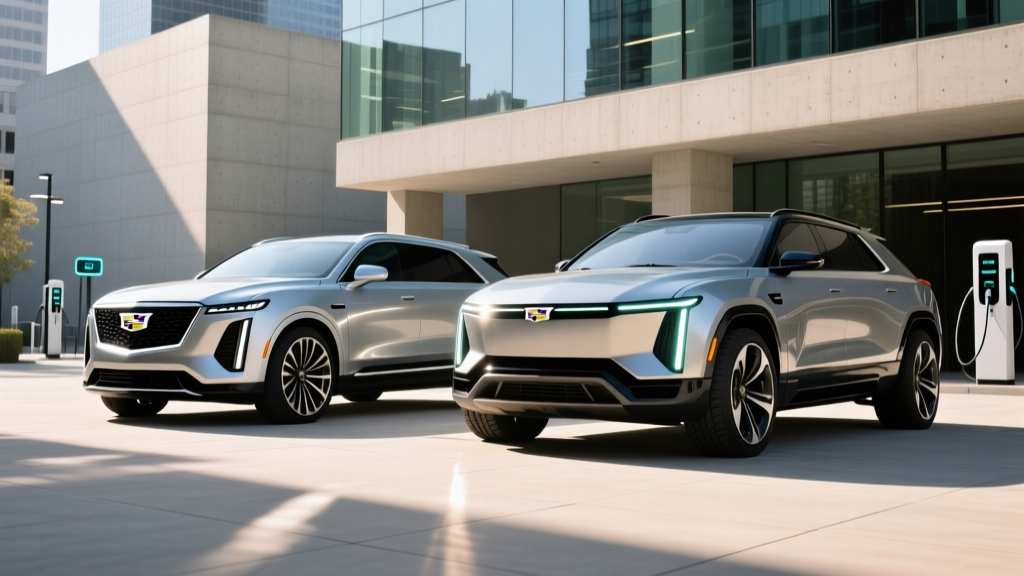
The Cadillac Escalade IQ represents GM's most ambitious luxury EV — a full-size, three-row flagship riding on the Ultium platform with a massive battery and premium positioning to rival the Mercedes EQS SUV and Tesla Model X.
| Spec | Value |
|---|---|
| EPA Estimated Range | ~460 miles (est., based on 200+ kWh Ultium pack) |
| Battery Capacity | ~200 kWh usable (NMC chemistry) |
| Drivetrain | Dual-motor AWD (eAWD) |
| Horsepower | ~680 hp (est.) |
| 0-60 mph | ~5.0 seconds (est.) |
| Max DC Fast Charge | ~350 kW peak (800V architecture) |
| 10-80% DC Charge | ~25-30 minutes (est.) |
| Level 2 Home Charging | 19.2 kW (~52 miles/hr) |
| Seating | 7 passengers (3 rows) |
| Cargo (behind 3rd row) | ~25 cu ft (est.) |
| Base MSRP | ~$130,000 (est.) |
GMC Hummer EV: The Electric Supertruck's Numbers
The GMC Hummer EV — available as both a pickup and SUV variant — was one of the first Ultium vehicles to reach customers and remains one of the most technically ambitious EVs on the road. Its production halt affects both body styles across Edition 1, 3X, and 2X trims.
| Spec | Value |
|---|---|
| EPA Estimated Range | 329 miles (24-module pack, 3X) |
| Battery Capacity | ~212.7 kWh usable (NMC, double-stacked) |
| Drivetrain | Tri-motor AWD (Watts to Freedom mode) |
| Horsepower | 830 hp |
| 0-60 mph | ~3.0 seconds (WTF mode) |
| Max DC Fast Charge | 350 kW peak (800V capable) |
| 10-80% DC Charge | ~35-40 minutes (large pack) |
| Level 2 Home Charging | 11.5 kW (~22 miles/hr) / 19.2 kW option |
| Towing Capacity | 7,500 lbs (est.) |
| Cargo Bed Length | 5 ft (pickup) |
| Curb Weight | ~9,046 lbs |
| Base MSRP (2X) | ~$104,900 |
| 3X / Edition 1 MSRP | ~$119,400 - $130,000+ |
Charging Deep Dive: What the Production Halt Means for Infrastructure
Both vehicles utilize GM's 800V-capable Ultium architecture, enabling peak DC fast-charge rates up to 350 kW. However, peak rate and sustained rate are very different things — a distinction that matters enormously for road-trip planning.
| Metric | Escalade IQ | Hummer EV (3X) |
|---|---|---|
| Architecture | 800V Ultium | 800V Ultium |
| Peak DC Rate | ~350 kW | ~350 kW |
| Sustained Avg (10-80%) | ~200-250 kW (est.) | ~180-220 kW |
| 10-80% Time | ~25-30 min | ~35-40 min |
| Level 2 (240V, 48A) | 19.2 kW / ~52 mi/hr | 11.5 kW / ~22 mi/hr |
| Level 1 (120V) | ~3-4 mi/hr | ~3 mi/hr |
| Connector | CCS1 (NACS adapter avail.) | CCS1 (NACS adapter avail.) |
| Preconditioning | Yes (nav-routed) | Yes (nav-routed) |
Key charging insight: The Hummer EV's double-stacked 212.7 kWh battery is so large that even at 350 kW peak, filling it from 10-80% takes significantly longer than smaller-pack EVs. The charge curve tapers substantially above 60% SoC to protect the NMC cells. For daily driving, Level 2 home charging is essential — Level 1 (120V) adds only about 3 miles per hour, which is essentially useless for a vehicle this size unless you drive under 30 miles per day.
Preconditioning matters: Both vehicles support battery preconditioning when you navigate to a DC fast charger. This warms the pack to optimal temperature for charging, potentially shaving 5-10 minutes off your session. In cold weather, preconditioning is not optional — it's the difference between a 350 kW peak and a 50 kW trickle.
Pricing, Tax Credits, and the §30D Reality Check
Neither the Escalade IQ nor the Hummer EV is likely to qualify for the full IRS §30D federal tax credit of $7,500. Here's why:
- MSRP Cap: §30D limits SUVs/pickups to an $80,000 MSRP cap. Both vehicles far exceed this threshold (Escalade IQ ~$130K+, Hummer EV 3X ~$119K+).
- Income Cap: Even if MSRP qualified, buyer AGI cannot exceed $300,000 (joint) / $225,000 (HoH) / $150,000 (single).
- Battery Sourcing: Critical minerals and battery component requirements must be met per IRS guidance — GM's Ultium cells use LG Energy Solution pouches, and sourcing compliance varies by model year.
- Point-of-Sale Transfer: If eligible, the credit can be transferred to the dealer at purchase for an immediate price reduction — but only if all requirements are satisfied.
| Item | Escalade IQ | Hummer EV 3X |
|---|---|---|
| Base MSRP | ~$130,000 | ~$119,400 |
| As-Tested / Loaded | ~$145,000-$155,000 | ~$135,000-$142,000 |
| §30D Credit Eligible? | No (exceeds $80K MSRP cap) | No (exceeds $80K MSRP cap) |
| Effective Price After Credit | ~$130,000+ | ~$119,400+ |
| Destination Charge | ~$1,995 | ~$1,995 |
Bottom line: At these price points, buyers should not factor the federal tax credit into their purchase decision. Some state-level incentives may still apply (check your state's DMV or energy office), but these vary widely and often have their own income and price caps.
Tech, Interior, and Driver Assistance
Escalade IQ features Cadillac's most advanced digital cockpit: a pillar-to-pillar 55-inch LED display spanning the dashboard, Google Built-In infotainment, Super Cruise hands-free driving on compatible highways (SAE Level 2 — driver must remain attentive), and available Executive Rear Seating with fold-out tables and massaging seats.
Hummer EV offers a more rugged take: 13.4-inch infotainment touchscreen, 12.3-inch driver display, available UltraVision camera system (up to 18 camera views for off-road navigation), CrabWalk four-wheel steering for diagonal movement, and Extract Mode (adaptive air suspension raises the vehicle ~6 inches for extreme obstacles). Super Cruise is also available on the Hummer EV for highway use.
Warranty and Long-Term Ownership
Both vehicles are covered by GM's standard EV warranty package:
- Battery & Powertrain: 8 years / 100,000 miles (whichever comes first), with a capacity retention threshold of ~70% under the warranty terms.
- Bumper-to-Bumper: 3 years / 36,000 miles.
- Corrosion: 6 years / 100,000 miles.
The NMC chemistry in both vehicles offers high energy density but is more susceptible to calendar degradation than LFP. Expect roughly 85-90% capacity retention after 5 years / 75,000 miles under normal use. Avoid frequent DC fast charging above 80% SoC and prolonged storage at 100% to maximize battery longevity.
Production Halt Impact: What Should Buyers Do?
The Escalade IQ and Hummer EV production halt creates a decision crossroads for three buyer profiles:
Choose to HOLD your reservation if:
- You specifically want the Ultium platform's 800V architecture and 350 kW charging
- You need three-row luxury EV seating (Escalade IQ) or off-road capability (Hummer EV)
- Your timeline is flexible and you can wait 6-12 months for production resumption
Choose to PIVOT to a competitor if:
- You need a vehicle within 3-6 months
- You're open to alternatives like the Rivian R1S (three-row SUV), Tesla Model X, Mercedes EQS SUV, or Rivian R1T (truck)
- Charging speed is less critical than immediate availability
Pros and Cons at a Glance
✅ Pros (Both Vehicles)
- Massive Ultium battery packs deliver class-leading range potential
- 800V architecture enables 350 kW peak DC charging
- Super Cruise provides excellent hands-free highway driving
- Hummer EV: CrabWalk, Extract Mode, and tri-motor 830 hp are unmatched
- Escalade IQ: 55-inch display and three-row luxury redefine the EV flagship
- 8-year/100,000-mile battery warranty provides peace of mind
❌ Cons (Both Vehicles)
- Production halt creates major delivery uncertainty
- No federal §30D tax credit eligibility (MSRP far exceeds $80K cap)
- Hummer EV: 9,000+ lb weight destroys real-world highway efficiency
- Hummer EV: Level 2 home charging at 11.5 kW is painfully slow for a 212 kWh pack (~40+ hours from empty)
- Real-world range significantly below EPA estimates at highway speeds
- $120K-$155K pricing puts both in ultra-luxury territory with steep depreciation risk
- NMC chemistry degrades faster than LFP if frequently fast-charged to high SoC
Frequently Asked Questions
What is the real-world range of the Escalade IQ and Hummer EV?
The Escalade IQ is estimated at ~460 miles EPA, but expect ~370-400 miles on highway trips and ~300-340 miles in cold weather. The Hummer EV 3X is EPA-rated at 329 miles, with real-world highway range of ~250-280 miles and cold-weather range of ~210-240 miles. Towing with the Hummer EV cuts range to approximately 150-170 miles.
How fast do these vehicles charge at home and on the road?
Both support up to 350 kW peak DC fast charging via their 800V Ultium architecture. The Escalade IQ charges 10-80% in an estimated 25-30 minutes; the Hummer EV takes ~35-40 minutes due to its larger 212.7 kWh pack. At home on Level 2, the Escalade IQ charges at 19.2 kW (~52 miles/hr), while the Hummer EV charges at 11.5 kW (~22 miles/hr) — meaning a full Hummer EV charge at home takes well over 18 hours.
Does either vehicle qualify for the $7,500 federal EV tax credit?
No. Under current IRS §30D rules, SUVs and pickups must have an MSRP at or below $80,000 to qualify. Both the Escalade IQ (~$130K) and Hummer EV 3X (~$119K) far exceed this cap. Buyer income limits ($300K joint / $150K single) and battery-sourcing requirements are additional barriers, though they're moot at these price points.
Is it worth buying vs. competitors like Rivian, Tesla, or Mercedes?
If you need a vehicle immediately, the production halt makes competitors more practical. The Rivian R1S offers three-row seating with ~350 miles EPA range and starts around $79,900 (potentially tax-credit eligible). The Tesla Model X provides ~335 miles of range, Supercharger access, and faster delivery timelines. The Mercedes EQS SUV delivers comparable luxury with ~305 miles of range. However, none match the Hummer EV's off-road capability or the Escalade IQ's sheer cabin technology.
What caused the Escalade IQ and Hummer EV production halt?
GM has cited production adjustments at Factory ZERO related to supply-chain optimization and manufacturing efficiency improvements. Specific details about battery cell availability, component sourcing, or demand factors have not been fully disclosed. Production timelines remain subject to change, and affected customers should contact their dealer for the latest delivery estimates.
What battery chemistry do these vehicles use, and how long will it last?
Both use NMC (nickel manganese cobalt) lithium-ion cells manufactured by LG Energy Solution in the Ultium pouch format. NMC offers superior energy density compared to LFP, which is critical for achieving 300+ mile range in heavy vehicles. However, NMC is more sensitive to high-SoC storage and frequent DC fast charging. Under GM's warranty, the battery is guaranteed to retain at least ~70% capacity for 8 years or 100,000 miles. Real-world data from earlier Ultium vehicles suggests 85-90% retention at 5 years is typical with moderate charging habits.
Sources: fueleconomy.gov (EPA range/efficiency data), irs.gov (§30D tax credit rules), GMC and Cadillac official specification pages. All specifications reflect the most recent confirmed data prior to the production halt and are subject to change upon production resumption.