Quick Answer: Is the 2026 Escalade EV Worth It?
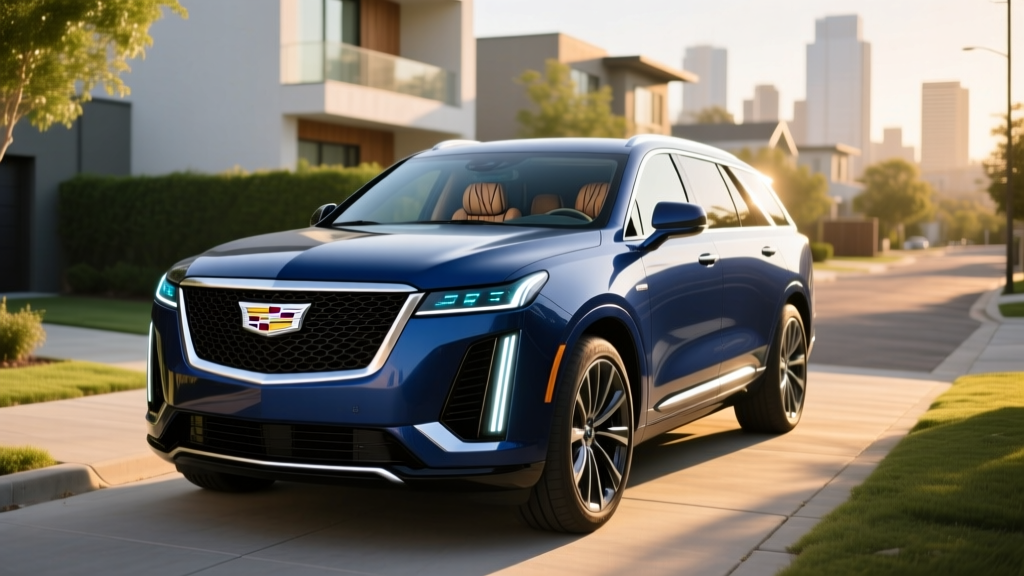
The 2026 Cadillac Escalade IQ (the official name for the Escalade EV) delivers an EPA-estimated 460 miles of range from a massive ~200 kWh Ultium battery, starts around $129,990, and charges at up to 350 kW on DC fast chargers (10–80% in roughly 25 minutes). It replaces the 6.2L V8 gas Escalade's 14 MPG combined with 2.0 kWh/mile efficiency, saving roughly $3,200–$4,100/year in fuel at 15,000 miles driven. However, the six-figure price, 9,000+ lb curb weight, and home-charging infrastructure demands make it viable primarily for buyers with Level 2 home charging and the budget to absorb premium insurance and tire costs.
Escalade EV Range, Battery & Real-World Efficiency
The 2026 Cadillac Escalade IQ rides on GM's BT1 electric platform and packs one of the largest battery packs ever fitted to a production passenger vehicle. Here are the headline numbers:
| Spec | 2026 Escalade IQ |
|---|---|
| EPA Range (est.) | 460 miles (Luxury); ~440 mi (Sport) |
| Battery Capacity | ~200 kWh usable (NMC Ultium, 24 modules) |
| Efficiency | ~2.0 kWh/mile (~50 MPGe combined) |
| Horsepower | 750 hp (AWD, dual motor) |
| 0–60 mph | ~3.5 seconds (Velocity Max mode) |
| Max DC Fast Charge | 350 kW peak (800V architecture) |
| 10–80% DC Charge | ~25 minutes (at 350 kW station) |
| Level 2 Charge Rate | 11.5 kW (onboard charger) |
| Battery/Powertrain Warranty | 8 years / 100,000 miles |
Real-World Range Expectations
The 460-mile EPA figure assumes moderate temperatures and mixed driving. Expect ~370–400 miles on sustained 75 mph highway runs (aerodynamic drag hits hard on a 9,200-lb SUV), and ~300–340 miles in sub-30°F winter conditions due to battery resistance and cabin heating demands. The Escalade IQ's standard heat pump partially mitigates cold-weather loss, but physics still applies to a vehicle this large. Preconditioning the battery while plugged in before a DC fast charge session is essential — a cold 200 kWh pack will charge far below its 350 kW peak.
Charging the Escalade EV: Home, Public & Infrastructure Reality
A 200 kWh battery is both the Escalade IQ's greatest asset and its biggest logistical challenge. Empty-to-full on a standard 120V outlet (Level 1) would take well over 100 hours — effectively impossible for daily use. Here is what charging actually looks like:
| Charging Level | Power (kW) | Miles Added / Hour | 0–100% Time (approx.) |
|---|---|---|---|
| Level 1 (120V) | 1.4 kW | ~3 mi/hr | ~140 hours |
| Level 2 (240V / 48A) | 11.5 kW | ~25 mi/hr | ~18 hours |
| DC Fast (350 kW peak) | 350 kW peak / ~250 kW sustained | ~500+ mi/hr (peak) | 10–80% in ~25 min |
Home charging is essentially mandatory. Most Escalade IQ owners will need a professionally installed 240V / 60-amp circuit with a hardwired Level 2 EVSE (Electric Vehicle Supply Equipment). Expect $1,200–$2,500 for a quality Level 2 charger (such as a ChargePoint Home Flex or Emporia V2) plus $800–$3,000+ for electrician installation, depending on panel proximity and whether your home's electrical panel needs a 200-amp service upgrade (common in older homes, adding $2,000–$4,000).
Overnight on Level 2, you'll recover roughly 200 miles in 8 hours — enough for most daily driving. But if you drain the pack on a road trip, a full 0–100% recharge at home takes roughly 18 hours, so plan accordingly. The Escalade IQ uses the NACS (Tesla-style) connector, giving it native access to Tesla Supercharger V4 stalls (now open to non-Tesla EVs), plus Electrify America, EVgo, and other networks via adapter or native CCS compatibility.
2026 Escalade EV Pricing, Trims & Tax Credit Eligibility
The Escalade IQ launches in two primary trim families, each with standard and extended-content variants:
| Trim | MSRP (est.) | Key Features |
|---|---|---|
| Luxury 1 | $129,990 | Full EV powertrain, Super Cruise, 55" total LED display, air suspension, 7 seats |
| Sport 1 | $130,990 | Blacked-out trim, sport-tuned suspension, same tech suite |
| Luxury 2 / Sport 2 | $145,000–$155,000 | Executive rear seating, 38-speaker AKG audio, massaging seats, premium wheels |
Federal tax credit reality: Under IRS §30D rules, the Escalade IQ faces a significant hurdle — the federal credit caps eligible SUVs at an $80,000 MSRP. At $129,990+, the Escalade IQ does not qualify for the up-to-$7,500 new clean vehicle credit. Buyers should also check their state for any luxury-EV incentives, though most state programs also carry MSRP caps. Consult a tax professional for your specific situation.
Escalade EV vs. Gas Escalade: 5-Year Cost Comparison
The gas-powered 2026 Cadillac Escalade (6.2L V8, 420 hp) starts around $83,000 and returns an EPA-estimated 16 MPG combined. Let's compare total costs over 5 years and 75,000 miles:
| Cost Category (5 yr / 75k mi) | Escalade IQ (EV) | Gas Escalade (V8) |
|---|---|---|
| Purchase Price (base) | $129,990 | $83,000 |
| Federal Tax Credit | $0 (over MSRP cap) | N/A |
| Fuel / Electricity (75k mi) | $5,600 (home L2 @ $0.15/kWh) | $21,100 (premium @ $3.60/gal, 16 MPG) |
| Maintenance (oil, brakes, etc.) | $1,800 | $5,500 |
| Insurance (est. 5-yr total) | $18,000 | $14,500 |
| Home Charger Install | $2,500 | $0 |
| 5-Year Total (excl. depreciation) | $157,890 | $124,100 |
| Fuel Savings (EV vs Gas) | $15,500 saved over 5 years | |
The math is clear: the Escalade IQ saves substantially on fuel and maintenance, but the $47,000 purchase-price gap (plus no federal credit) means fuel savings alone won't close the financial case. The EV makes sense if you value the performance upgrade (750 hp vs. 420 hp), near-silent operation, Super Cruise hands-free driving, and lower emissions — not purely as a cost-saving measure. According to fueleconomy.gov, the gas Escalade's annual fuel cost is approximately $4,200 at 15,000 miles/year, compared to roughly $1,100 for the IQ on residential electricity rates.
Ownership Practicalities: What First-Time EV Buyers Must Know
If the Escalade IQ is your first EV, several realities deserve attention before signing:
- Home charging is non-negotiable. With a 200 kWh battery, relying solely on public DC fast charging is expensive ($0.40–$0.55/kWh = $80–$110 per full charge) and time-consuming. Budget for a professional Level 2 installation before delivery day.
- Tire costs are higher. At 9,200+ lbs with instant torque, expect to replace tires every 25,000–35,000 miles. A set of four 285/45R22 EV-rated tires runs $1,600–$2,400 installed.
- Insurance premiums run 15–25% higher than the gas Escalade due to repair costs, battery replacement risk, and the vehicle's $130k+ value. Get quotes before purchasing.
- Towing range penalty is severe. The Escalade IQ can tow up to 8,000 lbs, but towing a 5,000-lb trailer at highway speeds can cut range by 40–50%, dropping effective range to ~230 miles. Plan road trips accordingly.
- Super Cruise is Level 2, not self-driving. GM's hands-free system requires driver attention and works on ~750,000 miles of mapped roads. You must remain engaged — this is not Level 4 autonomy.
- Depreciation uncertainty. Luxury EVs have seen steeper early depreciation than gas counterparts, though the IQ's scarcity and Ultium platform may moderate this. Factor in a potential 45–55% value loss over 5 years.
ADAS Level Clarification
Super Cruise on the Escalade IQ is an SAE Level 2 driver-assistance system. The driver must supervise at all times and be ready to take over. Do not confuse this with Level 4 robotaxi services like Waymo, which operate without a driver in geofenced areas.
Decision Framework: Should You Buy the Escalade IQ?
Choose the Escalade IQ (EV) if:
- You have reliable Level 2 home charging (garage or driveway with 240V access)
- You drive primarily in urban/suburban settings where regenerative braking maximizes efficiency
- You want 750 hp, 3.5-second 0–60 performance, and near-silent luxury cruising
- You regularly drive under 350 miles per day and can charge overnight
- You value Super Cruise hands-free driving on highway commutes
- Budget is not your primary constraint and you want the latest EV technology
Stick with the Gas Escalade (or consider a hybrid) if:
- You lack home charging access or live in an apartment without EV infrastructure
- You frequently tow heavy trailers over long distances (range loss is brutal)
- You regularly drive in extreme cold (below 10°F) where range drops 30%+
- Upfront budget is a concern — the $47k price gap is substantial
- You live in a charging-desert region with sparse DC fast-charger coverage
- You plan to keep the vehicle 10+ years and want proven long-term powertrain simplicity
Common Escalade EV Misconceptions
| Myth | Fact |
|---|---|
| "The battery will need replacing in 5 years" | GM's Ultium NMC batteries are warranted for 8 years/100,000 miles with a capacity-retention threshold of ~70%. Real-world data from similar Ultium platforms shows <10% degradation at 100k miles with proper charging habits (avoiding sustained 100% SoC). |
| "It qualifies for the $7,500 federal tax credit" | The §30D credit caps SUV eligibility at $80,000 MSRP. The Escalade IQ at $129,990+ does not qualify. Verify current rules at irs.gov. |
| "It charges as fast as a Tesla at any station" | The 350 kW peak requires a compatible V4 Supercharger or Electrify America 350 kW stall. Most public chargers deliver 50–150 kW, meaning typical 10–80% times are 45–70 minutes, not 25. |
| "460 miles means I'll always get 460 miles" | Highway driving at 75+ mph, cold weather, towing, and mountain terrain all reduce range significantly. Plan for 350–400 real-world miles in typical conditions. |
| "Super Cruise drives itself" | Super Cruise is SAE Level 2. The driver must remain attentive and hands may be off the wheel, but eyes must stay on the road. Eye-tracking cameras enforce this. |
Escalade EV FAQ
How long does it take to charge the Escalade IQ at home?
On a 240V Level 2 charger at 11.5 kW, a full 0–100% charge takes approximately 18 hours. In practice, most owners charge from 20–80% overnight (roughly 10–11 hours), which adds about 275 miles of range — sufficient for most daily needs.
Does the Escalade IQ use NACS or CCS?
The 2026 Escalade IQ uses the NACS connector natively, giving it direct access to Tesla's Supercharger network (V3 and V4 stalls now open to non-Tesla EVs via the Cadillac app or plug-and-charge). CCS adapters are available for Electrify America and other legacy networks.
What is the real-world range on the highway?
Expect approximately 370–400 miles at 70–75 mph in mild weather (60–80°F). At 80+ mph or in cold weather (below 32°F), range drops to roughly 300–340 miles. The massive 200 kWh battery provides a buffer that smaller EVs lack, but aerodynamic drag on a 9,200-lb SUV is significant at highway speeds.
Can the Escalade IQ tow, and how does that affect range?
Yes, the Escalade IQ is rated to tow up to 8,000 lbs. However, towing a 5,000-lb camper at highway speeds can reduce range by 40–50%, bringing effective range down to ~230 miles. Plan charging stops accordingly and use the built-in route planner that accounts for trailer load.
Is the Escalade IQ eligible for any tax incentives?
It is not eligible for the federal §30D new clean vehicle credit due to exceeding the $80,000 MSRP cap for SUVs. Some states offer separate incentives that may apply — check your state's energy office or DMV. Always consult a tax professional for your specific situation, as rules change frequently.
How does the Escalade IQ compare to the Rivian R1S or Tesla Model X?
The Escalade IQ is larger, heavier, and more luxurious than the Rivian R1S (~$79,900, 410-mi range, quad-motor) and the Tesla Model X (~$81,630, 348-mi range). The IQ trades agility for sheer size, cabin space, and Cadillac's luxury execution. The R1S is more off-road capable; the Model X is faster to charge on Tesla's network natively. The IQ occupies a unique ultra-luxury, full-size EV niche with no direct rival at its price point.
What happens if the battery fails out of warranty?
A full Ultium battery replacement for a 200 kWh pack is estimated at $25,000–$35,000+ at current pricing, though costs are expected to decline. GM's modular Ultium design allows individual module replacement rather than the entire pack, which can reduce out-of-warranty repair costs to $5,000–$12,000 depending on the number of failed modules. The 8-year/100,000-mile warranty provides substantial coverage.