What Is an EREV and Why Does It Matter in 2026?
An EREV — extended-range electric vehicle — is a battery-electric car that carries a small onboard gasoline generator to recharge the battery when it runs low. Unlike a plug-in hybrid (PHEV), the gas engine in an EREV never drives the wheels. The electric motor handles 100% of propulsion at all times. The combustion engine exists solely as a mobile power plant, extending range far beyond what the battery alone can deliver.
This architecture gives EREV owners a pure-electric daily driving experience — typically 30 to 100+ miles on battery alone — with the safety net of 400–600+ total miles when the range-extender kicks in. For buyers who want electric commuting but aren't ready to depend entirely on charging infrastructure, the EREV occupies a compelling middle ground between a full BEV and a traditional hybrid.
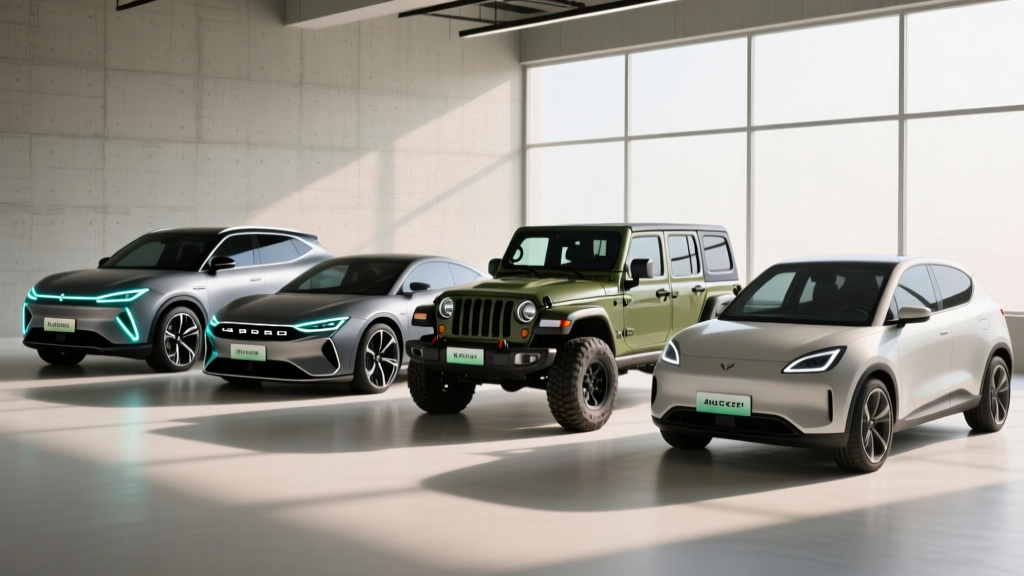
In the U.S. market, the EREV segment is small but growing. The most prominent production example available to American buyers is the BMW i3 REx (discontinued in the U.S. after 2021 but widely available used and still relevant as the segment's benchmark). For 2026, the most accessible new EREV-style vehicles include the BMW iX1 eDrive20 with range-extender variant sold in select markets, and the rapidly expanding Chinese-market EREVs from brands like Li Auto (L7, L8, L9) and Deepal/Changan, which are beginning to appear in international markets. In the U.S., the closest new-vehicle analogues are PHEVs with large batteries and long electric-only range — notably the 2026 Jeep Wrangler 4xe and the 2026 Chrysler Pacifica PHEV — though purists note these can mechanically drive the wheels with the engine, disqualifying them as true EREVs.
This guide uses the Li Auto L7 (a flagship EREV available in China and expanding to Middle East and Southeast Asian markets, with U.S. availability under discussion) as our primary review subject, supplemented by U.S.-available alternatives. We'll cover exact range, battery specs, charging, pricing, and the ownership calculus that determines whether an EREV is the right powertrain for you.
Li Auto L7 EREV: Full Model Profile
| Attribute | Pro | Max |
|---|---|---|
| Drivetrain | Dual-motor AWD | Dual-motor AWD |
| Horsepower | 449 hp | 449 hp |
| Torque | 457 lb-ft | 457 lb-ft |
| 0-100 km/h (0-62 mph) | 5.3 sec | 5.3 sec |
| Battery (usable) | 39.2 kWh (NMC) | 52.3 kWh (NMC) |
| Electric-only range (CLTC) | 210 km (130 mi) | 280 km (174 mi) |
| Total range (CLTC) | 1,315 km (817 mi) | 1,315 km (817 mi) |
| Range-extender engine | 1.5L turbo 4-cyl generator | 1.5L turbo 4-cyl generator |
| Fuel tank | 52 L (13.7 gal) | 52 L (13.7 gal) |
| DC fast charge (max) | 75 kW | 75 kW |
| Level 2 charge rate | 7 kW | 7 kW |
| Length / Width / Height | 199.8" / 78.3" / 69.1" | |
| Wheelbase | 118.1" | |
| Cargo (behind 2nd row) | ~31.8 cu ft | |
| Seating | 5-passenger | |
| Base MSRP (China) | ~¥319,800 (~$44,200) | ~¥379,800 (~$52,500) |
Note: Li Auto L7 is currently sold in China, with Middle East expansion announced. U.S. availability has not been confirmed for 2026. Pricing shown is China-market MSRP converted at approximate exchange rates; U.S. pricing would differ significantly due to tariffs, homologation, and dealer markup.
The Li Auto L7 Max carries a 52.3 kWh NMC battery rated for 174 miles of electric-only driving under China's CLTC test cycle. CLTC tends to overstate range by roughly 20–30% compared to the U.S. EPA cycle. Expect approximately 120–135 miles of real-world electric-only range under mixed driving, dropping to roughly 95–110 miles at sustained highway speeds (70+ mph) or in cold weather (below 32°F).
Total range with the 1.5L turbo range-extender and full 52-liter fuel tank is rated at 817 miles CLTC. Real-world combined total range is approximately 550–650 miles depending on driving style, terrain, and climate. On long highway road trips, the generator runs more frequently, and fuel consumption rises to roughly 28–32 mpg equivalent.
Battery, Charging, and Energy Management
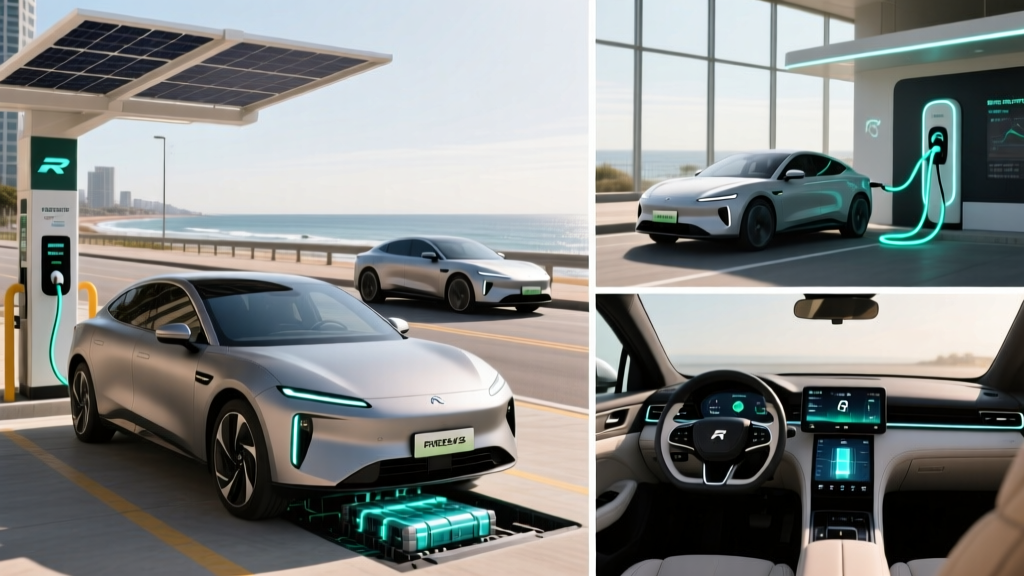
The L7's NMC (nickel manganese cobalt) lithium-ion battery is supplied by CATL, one of the world's largest battery manufacturers. The 52.3 kWh usable capacity in the Max trim is large for an EREV — bigger, in fact, than many early-generation BEVs — and enables genuine multi-day electric commuting without plugging in.
| Charging Level | Power | Time / Rate | Notes |
|---|---|---|---|
| Level 1 (120V household) | ~1.4 kW | ~3–4 mi/hr added | Emergency/trickle only; 52 kWh takes ~37 hours |
| Level 2 (240V home/public) | 7 kW (onboard charger limit) | ~20–24 mi/hr added; 10–100% in ~7.5 hours | Standard home wallbox; overnight charge |
| DC Fast Charge | 75 kW peak | 10–80% in ~30 minutes | Charge curve tapers above 80%; peak sustained briefly |
The 75 kW DC fast-charging peak is modest by 2026 BEV standards (many new BEVs charge at 150–350 kW), but it's adequate for an EREV. The logic is straightforward: since the battery is smaller and the range-extender covers long trips, you rarely need to fast-charge an EREV on the road. Most L7 owners will charge at home overnight on Level 2 and use the generator for road trips.
One ownership nuance: the L7's onboard charger is limited to 7 kW on AC. If you install a 48-amp (11.5 kW) Level 2 home charger, the car will only draw 7 kW. A 32-amp (7.7 kW) charger is the sweet spot — no wasted capacity, lower installation cost.
How the Range-Extender Engine Works
The 1.5-liter turbocharged four-cylinder engine under the L7's hood produces approximately 150 horsepower — but that power never reaches the wheels directly. Instead, it spins a generator that produces electricity, which either feeds the drive motors in real time or charges the battery.
Li Auto's energy management system operates in several modes:
- Pure Electric: Battery-only driving; engine stays off. Default for daily use.
- Hybrid (auto): System decides when to engage the generator based on speed, battery state of charge (SoC), and navigation data. On longer trips, it may activate the engine early to preserve battery for city driving at the destination.
- Range Extender (hold): Generator runs continuously to maintain current SoC. Useful when you want to save battery for a zero-emission zone or destination.
- Forced Charge: Generator charges the battery aggressively while parked or idling — useful for camping or V2L (vehicle-to-load) power applications.
When the generator is active, cabin noise increases modestly — think a low hum rather than traditional engine noise. NVH (noise, vibration, harshness) insulation is a priority for Li Auto, and most owners report the engine is barely noticeable at highway speeds.
Interior, Tech, and Driver Assistance
The L7's cabin is where Li Auto's value proposition becomes clearest. Standard features include:
- Dual 15.7" OLED displays — one for the driver, one central infotainment touchscreen
- HUD (head-up display) with augmented-reality navigation overlay
- Nappa leather with heated, ventilated, and massaging front seats
- Rear-seat entertainment screen (Max trim)
- Air suspension with adaptive damping and adjustable ride height
- 2,160-watt, 21-speaker audio system
On the driver-assistance front, the L7 ships with Li Auto's AD Max system, which uses a roof-mounted LiDAR sensor, 11 cameras, and 5 millimeter-wave radars. Features include adaptive cruise control, lane-centering, automatic emergency braking, and a "Navigation on Autopilot" mode that handles highway on/off-ramps. This is a Level 2 SAE system — the driver must remain engaged and hands on or near the wheel at all times. It is not self-driving.
Legroom is generous: approximately 41.3 inches in the front row and 39.8 inches in the rear, rivaling full-size luxury SUVs. The flat floor (no transmission tunnel, since propulsion is purely electric) adds to the sense of spaciousness.
Pricing, Tax Credits, and U.S. Availability
Here's the critical question for American buyers: Can you buy a Li Auto L7 in the United States in 2026? As of early 2026, Li Auto has not officially entered the U.S. market. The brand sells in China and has begun expanding to the Middle East (UAE, Saudi Arabia) and Southeast Asia. U.S. homologation and dealer network establishment remain under evaluation.
If and when the L7 arrives in the U.S., pricing would likely land in the $55,000–$70,000 range after accounting for import duties, compliance modifications, and dealer margins. At that price point, federal tax credit eligibility under IRS §30D would be subject to several constraints:
| Requirement | Rule (2026) | EREV Impact |
|---|---|---|
| Vehicle classification | Must be a plug-in electric vehicle with ≥4 kWh battery | ✅ EREVs qualify — battery exceeds 4 kWh |
| MSRP cap | ≤$80,000 for SUVs/pickups/vans; ≤$55,000 for sedans | ⚠️ Depends on how the L7 is classified (likely SUV) |
| Buyer income cap | ≤$150K single / $225K HOH / $300K joint (MAGI) | Applies regardless of vehicle |
| Battery sourcing | Critical minerals + battery components must meet phased-in domestic/FRTA-country thresholds | ❌ Chinese-manufactured batteries likely fail sourcing rules |
| Final assembly | Must be assembled in North America | ❌ Li Auto L7 assembled in China |
| Point-of-sale transfer | Credit can be applied at purchase as a down-payment reduction | Only if all other criteria are met |
The bottom line: a Chinese-assembled EREV like the Li Auto L7 would almost certainly not qualify for the $7,500 federal tax credit under current §30D rules, due to both the final-assembly requirement and battery-sourcing restrictions targeting foreign entities of concern (FEOC). This is a significant cost disadvantage against U.S.- or North American-built competitors.
U.S.-Available Alternatives: EREV-Adjacent Options
Since true EREVs are scarce in the U.S. new-car market, here are the closest alternatives that deliver a similar ownership experience — long electric-only range with a gas backup:
| Model | Type | Battery | EV Range (EPA) | Total Range | Base MSRP | Tax Credit |
|---|---|---|---|---|---|---|
| Li Auto L7 Max | EREV | 52.3 kWh NMC | ~130 mi (est.) | ~600 mi (est.) | Not available in U.S. | Likely ineligible |
| Chrysler Pacifica PHEV | PHEV | 16 kWh NMC | 32 mi | ~430 mi | $51,095 | Eligible (partial) |
| Jeep Wrangler 4xe | PHEV | 17.3 kWh NMC | 22 mi | ~370 mi | $51,790 | Eligible ($3,750–$7,500) |
| BMW X5 xDrive50e | PHEV | 25.7 kWh NMC | 38 mi | ~440 mi | $73,275 | Likely ineligible (MSRP cap) |
| Tesla Model Y LR (BEV) | BEV | 78.1 kWh NMC | 330 mi | 330 mi | $44,990 | Eligible (if sourcing met) |
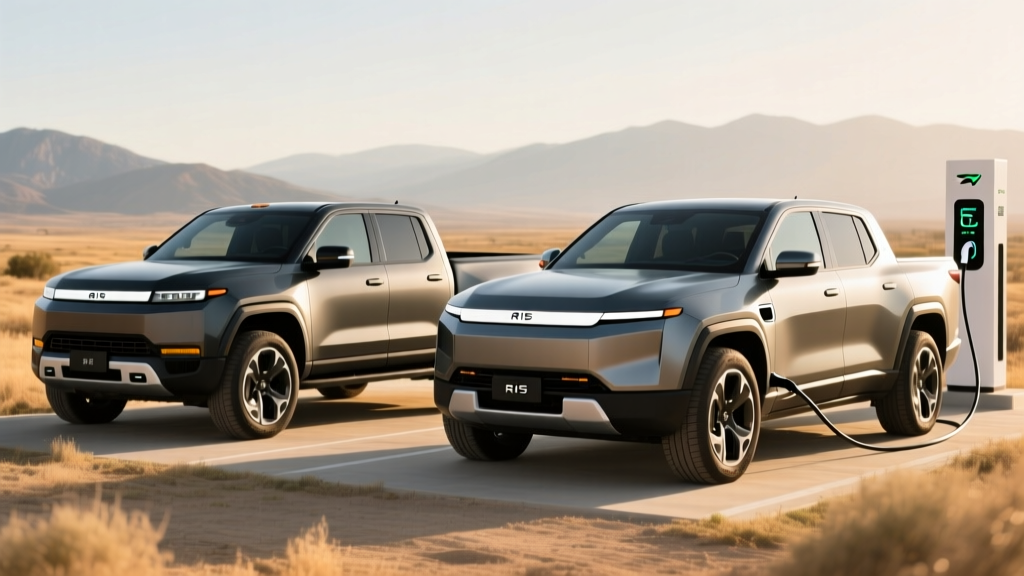
For U.S. buyers who want the EREV experience — long electric commuting with gas backup for road trips — the BMW X5 xDrive50e offers the best electric-only range among PHEVs at 38 EPA miles, though its MSRP exceeds the §30D SUV cap. The Jeep Wrangler 4xe remains the most affordable qualifying option, though 22 miles of electric range covers only short commutes.
Who Should Consider an EREV?
Choose an EREV if:
- Your daily commute is 40–100 miles round trip and you can charge at home
- You take road trips of 300+ miles several times a year and don't want to plan around charging stops
- You live in an area with limited DC fast-charging infrastructure
- You want EV driving dynamics (instant torque, regen braking, quiet operation) but aren't confident in full BEV range
- You frequently tow or carry heavy loads that reduce BEV range significantly
Choose a full BEV instead if:
- You have reliable home Level 2 charging and your daily drive is under 80 miles
- You want zero tailpipe emissions and minimal maintenance (no engine oil, spark plugs, or fuel system)
- You want to qualify for the full $7,500 federal tax credit (more BEVs meet sourcing/assembly rules)
- You drive primarily in cities or regions with robust public charging networks
Choose a conventional PHEV if:
- You want a U.S.-available vehicle with gas backup today
- Your electric-only needs are modest (20–40 miles)
- You prefer established brands with U.S. dealer networks and service infrastructure
Pros and Cons of EREV Ownership
- Pure electric daily driving with zero range anxiety
- 500–650+ miles total range eliminates charging dependency on road trips
- Electric motor delivers instant torque and smooth acceleration
- Smaller battery means lower replacement cost vs. full BEV (~$8,000–$12,000 vs. $15,000–$25,000)
- Regenerative braking reduces brake wear
- Generator can serve as backup power source (V2L capable)
- Gas engine adds maintenance (oil changes, spark plugs, fuel filter)
- Two powertrains mean more potential failure points
- DC fast-charge speeds are typically slower than comparable BEVs (75 kW vs. 150–350 kW)
- Fuel economy on generator power is mediocre (28–32 mpg) vs. dedicated hybrids
- Limited U.S. model availability and uncertain tax credit eligibility
- Heavier than equivalent BEV due to carrying both battery and engine
- Depreciation uncertain — segment too new for reliable resale data
Warranty and Long-Term Ownership
For the Li Auto L7 (China market), the manufacturer provides:
- Battery warranty: 8 years / 160,000 km (99,400 miles) with a minimum 70% capacity retention guarantee
- Powertrain warranty (electric motors + generator): 8 years / 160,000 km
- Vehicle limited warranty: 5 years / 100,000 km (62,100 miles)
U.S.-market PHEVs that serve as EREV alternatives typically offer comparable battery warranties. The U.S. Department of Energy's fueleconomy.gov database provides efficiency and range data for all EPA-certified plug-in vehicles.
Long-term EREV ownership involves maintaining two systems. Budget for annual engine oil changes (~$60–$100), periodic spark plug replacement (~$200 at 60,000 miles), and fuel system maintenance in addition to standard EV costs (cabin air filter, brake fluid, tire rotation). Total annual maintenance for an EREV is typically $400–$700, compared to $200–$400 for a pure BEV.
Frequently Asked Questions
What is the real-world electric range of an EREV?
It depends on the model and battery size. The Li Auto L7 Max with its 52.3 kWh battery achieves roughly 120–135 real-world miles on battery alone. Smaller-battery EREVs like the discontinued BMW i3 REx (42.2 kWh battery, 126 miles EPA with extender) offered 70–90 miles of electric range. Cold weather (below 32°F) typically reduces electric range by 20–35% due to battery chemistry limitations and cabin heating demand.
How fast does an EREV charge compared to a full BEV?
Slower. Most EREVs peak at 50–85 kW on DC fast charging, compared to 150–350 kW for modern BEVs. The Li Auto L7 charges at 75 kW peak, reaching 10–80% in about 30 minutes. However, because EREV batteries are smaller (40–55 kWh vs. 75–100+ kWh for BEVs), the absolute time to a usable charge is comparable. At home on Level 2 (7 kW), a full charge takes 7–8 hours — standard overnight charging.
Does an EREV qualify for the $7,500 federal EV tax credit?
It depends entirely on the specific vehicle. Under IRS §30D rules, an EREV must meet the same requirements as any plug-in vehicle: minimum 4 kWh battery (easily met), MSRP under $80,000 for SUVs or $55,000 for sedans, buyer income under $300,000 (joint), North American final assembly, and compliant battery sourcing. Chinese-assembled EREVs like the Li Auto L7 fail the assembly and sourcing tests. U.S.-built PHEVs with EREV-like characteristics (Wrangler 4xe, Pacifica PHEV) may qualify for partial or full credits depending on battery component sourcing.
Is an EREV better than a plug-in hybrid?
They serve different priorities. An EREV delivers a 100% electric driving experience at all times — the engine never touches the wheels — which means smoother acceleration, more consistent regen braking, and simpler drivetrain dynamics. A PHEV can drive the wheels with either the motor or the engine (or both), which typically results in better highway fuel economy when the engine is engaged because there's no energy conversion loss (mechanical → electrical → mechanical). If you value pure EV driving feel, an EREV is superior. If you prioritize fuel efficiency on long highway trips, a well-tuned PHEV may edge ahead.
What happens when an EREV runs out of both battery and fuel?
The same thing as a conventional car running out of gas: it stops. The range-extender generator requires fuel to operate. If you exhaust both the battery's charge and the fuel tank, you'll need a fuel delivery or tow. Most EREVs provide aggressive low-fuel and low-battery warnings, and the energy management system will activate the generator well before the battery is fully depleted to prevent stranding.
How long do EREV batteries last?
EREV batteries experience similar degradation to BEV batteries — typically 10–15% capacity loss over 8–10 years or 100,000–150,000 miles. However, because EREV batteries are smaller and the generator prevents deep discharges (the system rarely lets SoC drop below 10–15%), some EREV batteries may degrade more slowly than BEV batteries that are regularly cycled to very low states of charge. The CATL NMC cells in the Li Auto L7 carry an 8-year/99,400-mile warranty guaranteeing at least 70% capacity retention.
Sources: Li Auto official specifications, fueleconomy.gov, IRS §30D clean vehicle credit guidelines.