The Equinox EV Lease Question: What Are You Actually Signing Up For?
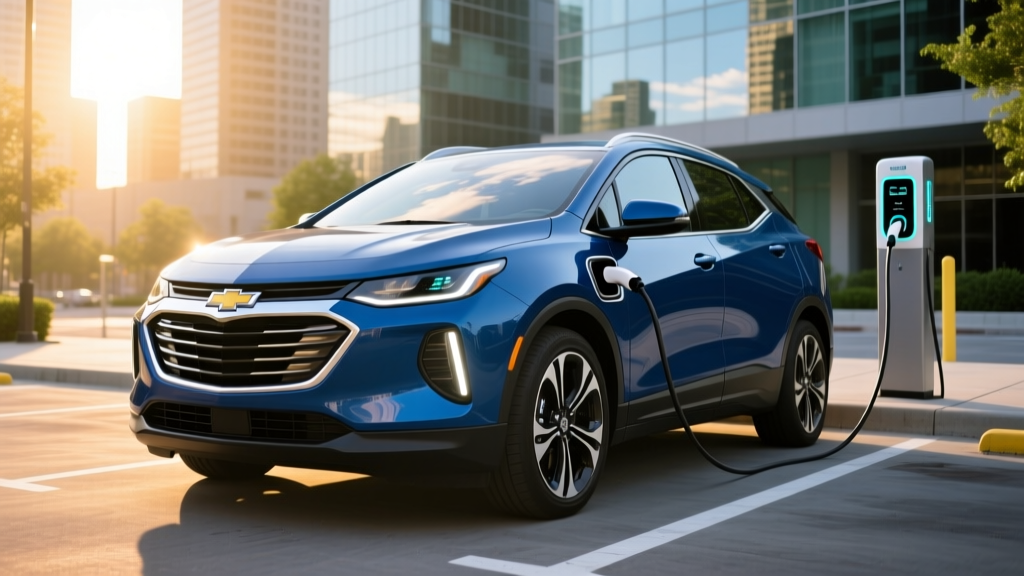
The Chevrolet Equinox EV has positioned itself as the affordable gateway to mainstream electric ownership, with a starting MSRP around $33,600 for the 2LT FWD trim and an EPA-estimated 319 miles of range. For many shoppers, the decision comes down to lease versus buy — and whether the numbers actually pencil out over a typical ownership horizon. An Equinox EV lease can unlock immediate savings through the federal tax credit transferred as a lease incentive, but the long-term economics depend on your driving habits, electricity rates, and how the EV market values used battery-electric crossovers.
This analysis uses the 2026 Equinox EV 2LT FWD (the volume trim) as the baseline. We'll walk through five-year total cost of ownership, federal and state incentive eligibility, fuel and maintenance savings, insurance realities, and depreciation trends — all with concrete numbers so you can build your own spreadsheet.
| Spec | Value |
|---|---|
| Starting MSRP | $33,600 |
| EPA Range | 319 miles |
| Battery (usable) | 85 kWh, NMC chemistry |
| Efficiency | 114 MPGe combined (29 kWh/100 mi) |
| DC Fast Charge (peak) | 150 kW; 10–80% in ~30 min |
| Level 2 Charge Rate | 11.5 kW (~37 mi/hr) |
| Horsepower | 213 hp (FWD) |
| 0–60 mph | ~7.8 sec |
| Battery/Powertrain Warranty | 8 yr / 100,000 mi |
5-Year Total Cost of Ownership Breakdown
Below is a realistic five-year / 60,000-mile ownership model for the Equinox EV 2LT FWD. We assume purchase (not lease) for the baseline, then address the lease-specific math afterward. Electricity is priced at the US residential average of $0.16/kWh; a comparable gas crossover (28 MPG combined) is modeled at $3.40/gallon.
| Cost Category | Equinox EV 2LT FWD | Gas Crossover (28 MPG) |
|---|---|---|
| Purchase Price (MSRP) | $33,600 | $29,500 |
| Federal Tax Credit (§30D) | –$7,500 (if eligible) | $0 |
| Net Effective Purchase | $26,100 | $29,500 |
| Fuel / Electricity (60k mi) | $2,784 | $7,286 |
| Maintenance (5 yr) | $1,200 | $3,400 |
| Insurance (5 yr avg) | $9,750 | $7,500 |
| Estimated Depreciation | $11,500 | $10,200 |
| Total 5-Year Cost | $51,334 | $57,886 |
The Equinox EV wins on net cost primarily because the $7,500 federal credit collapses the effective purchase price below the gas alternative, and the fuel savings (~$4,500 over five years) are substantial. The offsets are higher insurance premiums and steeper depreciation — both discussed in detail below.
What Changes With a Lease?
When you lease an Equinox EV, the §30D credit does not go to you directly as a tax refund. Instead, the leasing company (GM Financial) claims the commercial clean vehicle credit and typically passes it through as a lease cash incentive — effectively a capitalized cost reduction of up to $7,500. This means your monthly payment drops significantly, sometimes by $150–$200/month on a 36-month term. The tradeoff: you don't own the vehicle at the end, and you're subject to mileage limits (usually 10,000–12,000 mi/yr) and disposition fees.
Federal Tax Credit: Do You Qualify Under §30D?
The federal EV tax credit remains one of the most misunderstood incentives in automotive purchasing. For 2026, the credit is still up to $7,500, but eligibility hinges on a stack of requirements that disqualify many buyers. Here's the full checklist based on current IRS §30D rules:
- MSRP Cap: Vehicle must have an MSRP at or below $55,000 for SUVs/crossovers. The Equinox EV (starting ~$33,600, topping out ~$43,400 for RS AWD) clears this easily.
- Buyer Income Cap (Modified AGI): $150,000 single / $225,000 head of household / $300,000 married filing jointly. If your AGI exceeds these thresholds in the purchase year or the prior year, you do not qualify.
- Battery Component Sourcing: A percentage of battery components must be manufactured or assembled in North America. The Equinox EV's Ultium battery is built in the US (Lansing, MI and Spring Hill, TN plants), which currently satisfies this requirement.
- Critical Minerals: A percentage of critical minerals must be sourced from the US or a free-trade-agreement country. GM has been building compliant supply chains; the Equinox EV has qualified for the full $7,500 in recent model years.
- Point-of-Sale Transfer: As of 2024, you can transfer the credit to the dealer at purchase, receiving it as an immediate price reduction rather than waiting for a tax refund. This applies to purchases only — not leases.
- One Vehicle Per Taxpayer Per Year: You cannot claim the credit more than once per calendar year.
Charging vs. Gas: The Per-Mile Cost Reality
The Equinox EV consumes approximately 29 kWh per 100 miles (EPA combined). At the US average residential electricity rate of $0.16/kWh, that works out to roughly $0.046 per mile for home charging. A comparable gas crossover getting 28 MPG at $3.40/gallon costs $0.121 per mile. Over 12,000 miles per year, that's $557 in electricity versus $1,457 in gasoline — a savings of about $900 annually.
| Scenario | Equinox EV | Gas Crossover (28 MPG) |
|---|---|---|
| Home Charging ($0.16/kWh) | $0.046/mi | — |
| Public DC Fast Charging ($0.40/kWh avg) | $0.116/mi | — |
| Gasoline ($3.40/gal) | — | $0.121/mi |
| Annual Cost (12,000 mi, home) | $557 | $1,457 |
| Annual Cost (12,000 mi, 50% DCFC) | $970 | $1,457 |
The savings narrow considerably if you rely heavily on public DC fast charging. Networks like Electrify America and EVgo typically charge $0.35–$0.48/kWh, which erodes the EV's per-mile advantage. If more than 60% of your charging happens on public DCFC, the fuel cost gap nearly closes. Home Level 2 charging is where the economics work best — and if your utility offers off-peak/TOU rates as low as $0.08–$0.10/kWh, your cost drops to $0.025–$0.029 per mile.
Maintenance Savings: Where EVs Quietly Win
EVs eliminate the most common recurring maintenance items on internal combustion vehicles. No oil changes, no spark plugs, no transmission fluid, no exhaust system repairs. Regenerative braking significantly extends brake pad life — many EV owners report original brake pads at 80,000+ miles.
| Service Item | Equinox EV | Gas Crossover |
|---|---|---|
| Oil Changes (6 @ $50) | $0 | $300 |
| Brake Pads (1 set @ $350) | $0 (regen extends life) | $350 |
| Transmission Fluid | $0 | $150 |
| Engine Air Filter | $0 | $100 |
| Coolant / Spark Plugs | $0 | $300 |
| Tire Rotation / Replacement | $800 (EVs wear tires faster) | $600 |
| Cabin Air Filter / Wipers / Misc | $400 | $400 |
| Total 5-Year Maintenance | $1,200 | $3,400 |
The net maintenance savings over five years is approximately $2,200. The one area where EVs cost more is tires — the instant torque and heavier curb weight (the Equinox EV weighs ~4,600 lbs) accelerate tread wear. Budget for tire replacement around 35,000–45,000 miles rather than the 55,000+ miles typical for lighter gas crossovers.
Insurance: The Cost EV Owners Often Overlook
EV insurance premiums run 15–30% higher than equivalent gas vehicles, and the Equinox EV is no exception. Based on national averages, expect to pay roughly $1,950/year for full coverage on an Equinox EV versus ~$1,500/year for a comparably priced gas crossover. Over five years, that's an additional $2,250 in insurance costs.
The reasons are structural, not arbitrary:
- Higher repair costs: EV-specific components (battery pack, power electronics, thermal management) are expensive to replace after collision damage.
- Specialized labor: High-voltage system repairs require certified technicians, and fewer shops have that certification.
- Total-loss thresholds: Insurers are more likely to declare an EV a total loss if the battery sustains any damage, because battery replacement costs ($15,000–$25,000 for the Ultium pack) can exceed the vehicle's residual value.
- Vehicle weight: Heavier vehicles cause more damage in multi-vehicle accidents, raising liability premiums.
Some insurers (Geico, Progressive, State Farm) now offer specific EV discounts or have recalibrated their models. It's worth getting quotes from at least three carriers before signing a lease or purchase agreement. The premium gap may narrow as EV repair infrastructure matures.
Depreciation and Resale Value: The Uncomfortable Truth
EV depreciation has been steeper than the broader market over the 2023–2025 period. Several factors converged: aggressive price cuts by Tesla (which dragged down used values across the segment), rapid improvements in new EV range and charging speed (making 2–3-year-old models feel dated), and consumer uncertainty about long-term battery health.
For the Equinox EV specifically, the vehicle is still relatively new to market (introduced for 2024), so long-term resale data is limited. Based on current trends for mainstream EV crossovers, expect 45–55% depreciation over five years — meaning a $33,600 Equinox EV might be worth $15,000–$18,500 at the five-year mark. A comparable gas crossover (Toyota RAV4, Honda CR-V) typically retains 55–65% of its value over the same period.
However, this picture changes if you factor in the tax credit. If you paid an effective $26,100 after the §30D credit and the vehicle is worth $17,000 in five years, your actual dollar depreciation is ~$9,100 — competitive with a gas crossover bought at $29,500 and sold for $18,000 ($11,500 depreciation). The credit absorbs a significant portion of the EV's steeper depreciation curve.
Leasing sidesteps the depreciation risk entirely — you return the vehicle and walk away. If you're risk-averse about future EV resale values, a lease is the more predictable option.
Is an Equinox EV Lease the Right Move? A Decision Framework
Choose a lease if:
- You want the lowest monthly payment with the $7,500 lease cash incentive applied
- You drive under 12,000 miles per year
- You want to avoid depreciation risk in a volatile EV resale market
- You plan to upgrade to a newer EV in 3 years as charging and battery tech improves
Choose to purchase if:
- You drive more than 12,000 miles per year (lease overage penalties add up fast)
- You qualify for the §30D credit and can use the point-of-sale transfer
- You plan to keep the vehicle 7+ years (the 8yr/100k mi battery warranty provides coverage)
- You want to build equity and avoid perpetual car payments
Frequently Asked Questions
How much does a 2026 Equinox EV lease cost per month?
Lease pricing varies by dealer, region, credit tier, and current GM incentives. As of early 2026, advertised lease deals for the Equinox EV 2LT FWD have appeared in the $250–$350/month range on a 36-month term with $2,500–$3,999 due at signing — reflecting the $7,500 lease cash incentive baked into the cap cost. Always verify the money factor, residual value, and whether the advertised deal includes all applicable incentives.
Can I get the $7,500 tax credit if I lease?
Not directly. Under §30D, the credit goes to the vehicle owner. In a lease, the leasing company (GM Financial) is the legal owner and claims the commercial clean vehicle credit under §45W. However, GM typically passes this through as a lease incentive (cap cost reduction), so you effectively benefit from the same $7,500 — just as a lower monthly payment rather than a tax refund. This structure actually removes the income cap restriction, since the credit is claimed by the lessor, not you.
What's the real-world range of the Equinox EV in winter?
In temperatures below freezing, expect a 20–30% range reduction. The 319-mile EPA figure drops to approximately 220–255 miles in cold weather. Using the Equinox EV's heat pump (standard on 2025+ models) helps mitigate cabin heating losses, but battery chemistry inherently loses efficiency in cold. Preconditioning the battery while plugged in before departure recovers some of this loss.
How long does the Equinox EV battery last?
GM warrants the Ultium battery pack for 8 years or 100,000 miles against defects and capacity loss below 70% of original capacity. Based on industry data for NMC lithium-ion packs with active thermal management, most EV batteries retain 85–92% of original capacity at 100,000 miles. Complete battery replacement (if needed out of warranty) would cost an estimated $15,000–$22,000, but catastrophic failures are rare.
Does the Equinox EV qualify for HOV lane access?
In many states, yes. California's Clean Air Vehicle decal program, for example, grants solo HOV lane access to qualifying zero-emission vehicles through at least 2027. Check your state's DMV for current program status, as some states have capped or sunset these programs.
What home charging setup do I need for the Equinox EV?
The Equinox EV accepts up to 11.5 kW on Level 2 (240V, 48A). For optimal home charging, you'll need a NACS connector (standard on 2025+ GM EVs) and a 60A circuit with a hardwired Level 2 charger. A full charge from empty takes roughly 9.5 hours on Level 2. Installation costs typically range from $500–$2,000 depending on panel capacity and wiring distance. If your electrical panel is at capacity, a panel upgrade ($1,500–$3,000) may be required.
Sources: EPA fuel economy data via fueleconomy.gov; IRS clean vehicle credit rules via irs.gov; Chevrolet Equinox EV specifications via chevrolet.com.