The Real Cost of Owning a 2026 Chevy Equinox EV
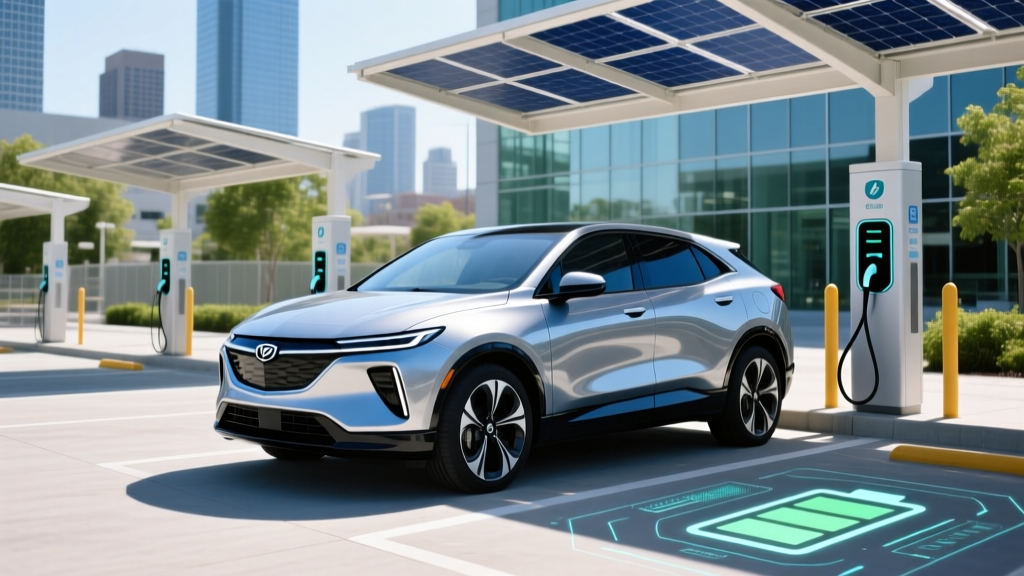
The Chevrolet Equinox EV has positioned itself as the mainstream electric crossover that undercuts competitors on price while delivering competitive range. The 2026 model year carries a starting MSRP of $33,600 for the LT trim, climbing to $43,400 for the fully loaded RS Launch Edition. With an EPA-estimated 315 miles of range on the FWD configuration and an 85 kWh usable Ultium battery (NMC chemistry), it's a compelling package — but the sticker price is only the beginning of the ownership equation.
This guide breaks down every dollar: the Equinox EV incentives you can actually claim in 2026, what you'll spend on charging versus gasoline, how insurance and maintenance factor in, and what happens to resale value. We'll use real numbers, not marketing promises.
| Specification | LT FWD | RS AWD |
|---|---|---|
| Base MSRP | $33,600 | $43,400 |
| EPA Range | 315 miles | 285 miles |
| Battery (usable) | 85 kWh (NMC) | 85 kWh (NMC) |
| Peak DC Fast Charge | 150 kW | 150 kW |
| 10–80% DC Charge Time | ~32 minutes | ~32 minutes |
| Level 2 Charge Rate | 11.5 kW | 11.5 kW |
| Horsepower | 213 hp | 288 hp |
| 0–60 mph | ~8.2 sec | ~6.4 sec |
| MPGe (combined) | 98 MPGe | 90 MPGe |
| Battery Warranty | 8 yr / 100,000 mi | 8 yr / 100,000 mi |
Real-World Range Note: The EPA 315-mile figure assumes a mix of city and highway driving at moderate temperatures. Expect approximately 260–280 miles on sustained highway trips at 70+ mph, and as low as 220–240 miles in sub-freezing conditions where battery heating and cabin climate draw significant energy. The AWD RS trims reduce range further due to the second motor's parasitic load.
Federal Tax Credit: Does the Equinox EV Qualify for $7,500?
The federal EV tax credit under IRS §30D remains the single largest incentive for EV buyers, but qualifying in 2026 requires threading several needles. The Equinox EV is assembled at GM's Spring Hill, Tennessee plant, which satisfies the North American final assembly requirement. However, the critical-mineral and battery-component sourcing rules have tightened significantly since the credit was restructured under the Inflation Reduction Act.
§30D Federal Tax Credit Eligibility Checklist (2026):
- MSRP Cap: Vehicle must have an MSRP at or below $55,000 for SUVs/crossovers. All Equinox EV trims qualify (max $43,400).
- Buyer Income Cap: Adjusted gross income must not exceed $150,000 (single), $225,000 (head of household), or $300,000 (married filing jointly).
- Critical Minerals Requirement ($3,750): A specified percentage of critical minerals must be sourced from the U.S. or a free-trade-agreement country. GM has been progressively securing compliant supply chains for Ultium batteries.
- Battery Components Requirement ($3,750): A specified percentage of battery components must be manufactured or assembled in North America. The Equinox EV's U.S. assembly supports this, but foreign-sourced cell components can disqualify this half.
- North American Final Assembly: Must be assembled in the U.S., Canada, or Mexico. Spring Hill, TN assembly qualifies.
- Point-of-Sale Transfer: As of 2024, buyers can transfer the credit to the dealer at purchase, receiving the amount as a down-payment reduction rather than waiting for a tax refund. The dealer must be IRS-registered.
For the 2026 model year, GM has indicated that Equinox EV trims with domestically sourced Ultium cells qualify for the full $7,500 credit. However, supply-chain shifts can change eligibility mid-year. Always verify the current status on the IRS's eligible vehicle list before signing a purchase agreement.
State, Local & Utility Incentives: Beyond the federal credit, many states and utilities offer additional rebates. California's CVRP has been restructured but some local air-district incentives persist. Colorado offers a state tax credit up to $5,000 for qualifying EVs. Utilities like Xcel Energy, PG&E, and ConEdison periodically offer $500–$1,500 rebates for EV purchases or home charger installations. These vary significantly by ZIP code and change frequently — check your state energy office and local utility for current programs. The federal credit is consistent nationwide (if you qualify), but stacking state and utility incentives can reduce your net cost by an additional $1,000–$6,000 depending on location.
5-Year Total Cost of Ownership: Equinox EV vs. Gas Equinox
To understand whether the Equinox EV actually saves money, we need to model five years of ownership against the gasoline Equinox (1.5L turbo, FWD, ~$28,600 MSRP). This comparison assumes 12,000 miles per year (60,000 total), home Level 2 charging for the EV, and national-average fuel and electricity prices.
| Cost Category | Equinox EV LT ($7,500 credit applied) | Gas Equinox LT |
|---|---|---|
| Purchase Price (after credit) | $26,100 | $28,600 |
| Fuel / Electricity (60k mi) | $3,456 | $7,200 |
| Maintenance | $1,200 | $3,600 |
| Insurance (5 years) | $9,750 | $7,500 |
| Depreciation (est.) | $11,745 | $12,870 |
| Total 5-Year Cost | $52,251 | $59,770 |
| Net Savings (EV) | $7,519 | |
The Equinox EV comes out ahead by approximately $7,500 over five years — but the savings distribution matters. The tax credit essentially eliminates the EV's price premium upfront. Fuel and maintenance savings accumulate steadily. Insurance costs more. Depreciation is a wildcard that we'll examine below.
Charging Cost vs. Gasoline: The Per-Mile Math
Electricity cost is where EV ownership delivers its most predictable advantage, but the savings depend heavily on how and where you charge.
| Scenario | Cost Per Mile | Annual Cost (12k mi) |
|---|---|---|
| Equinox EV — Home Level 2 ($0.16/kWh avg) | $0.046 | $552 |
| Equinox EV — Public DC Fast ($0.45/kWh avg) | $0.129 | $1,548 |
| Equinox EV — Blended (70% home / 30% public) | $0.071 | $852 |
| Gas Equinox (28 MPG combined, $3.50/gal) | $0.125 | $1,500 |
At the 2026 Equinox EV's efficiency of roughly 34 kWh/100mi (combined, per fueleconomy.gov), home charging at the national average of $0.16/kWh yields a cost of approximately $0.055/mile. Even with a blended charging profile that includes public DC fast charging, the EV costs roughly half what the gas Equinox costs per mile.
The critical caveat: if you rely exclusively on public DC fast charging at $0.40–$0.50/kWh, your per-mile cost approaches or exceeds gasoline. Home charging access is the economic linchpin of EV ownership. A Level 2 home charger installation typically costs $800–$2,000 depending on panel proximity and electrical requirements (240V, 48A circuit for the Equinox EV's 11.5 kW onboard charger).
Maintenance Savings: Fewer Parts, Less Wear
EVs eliminate the maintenance items that plague internal-combustion vehicles over time. The Equinox EV has no engine oil, no transmission fluid, no spark plugs, no exhaust system, and no timing belt. Regenerative braking significantly extends brake pad life — many EV owners report original brake pads at 60,000+ miles.
| Service Item | Equinox EV | Gas Equinox |
|---|---|---|
| Oil Changes (every 5k–7.5k mi) | $0 | $720 (8–12 changes) |
| Transmission Fluid | $0 | $150 |
| Brake Pads (front & rear) | $0–$200 | $600–$900 |
| Engine Air Filter | $0 | $120 |
| Coolant Service | $100 | $200 |
| Tire Rotation & Replacement | $900 (EV-specific tires) | $750 |
| Cabin Air Filter / Wipers / Misc. | $300 | $300 |
| Total (estimated) | $1,300–$1,500 | $2,840–$3,140 |
The net maintenance savings over five years is approximately $1,500–$1,800. One area where EVs can cost more: tires. The Equinox EV's heavier curb weight (~4,500 lbs vs. ~3,500 lbs for the gas model) and instant torque accelerate tire wear. Budget for EV-rated tires at replacement time, which typically cost 15–25% more than standard all-season tires.
Insurance Reality: Expect to Pay More
EV insurance premiums are typically 15–30% higher than equivalent gas vehicles, and the Equinox EV is no exception. Several factors drive this:
- Higher repair costs: Battery pack damage from collision can result in total-loss declarations. Specialized EV repair training and parts availability increase claim costs.
- Vehicle price premium: Even after incentives, insurers base premiums on the pre-credit MSRP and replacement cost.
- Tech-heavy builds: ADAS sensors, cameras, and the large infotainment display increase repair complexity after even minor front-end impacts.
For the Equinox EV, expect annual premiums of approximately $1,800–$2,100 depending on your driving record, ZIP code, and coverage level — compared to $1,400–$1,600 for the gas Equinox. Over five years, that's an additional $2,000–$2,500 in insurance costs that partially offsets fuel and maintenance savings.
Shop quotes from multiple insurers before purchase. Companies like Geico, Progressive, and Tesla Insurance (where available) have become more competitive on EV premiums. Some insurers now offer specific EV discounts or battery-coverage riders.
Depreciation and Resale Value: The Wildcard
EV depreciation has been volatile. In 2023–2024, aggressive price cuts by Tesla and others caused used EV values to plummet, with some models losing 40–50% of value in two years. By 2026, the market has stabilized somewhat, but EVs still generally depreciate faster than popular gas vehicles in the first three years.
For the Equinox EV, we estimate 5-year depreciation at approximately 45–50% of purchase price, compared to 40–45% for the gas Equinox. Several factors influence this:
- Battery health concerns: Used buyers worry about long-term battery degradation. GM's 8-year/100,000-mile battery warranty (covering capacity below 70% of original) provides some reassurance, but it's transferable only for the remaining term.
- Technology obsolescence: Newer EVs with faster charging, better range, and updated ADAS make older models feel dated quickly.
- Incentive distortion: When federal and state credits reduce new-EV prices, used EVs must compete with those artificially lowered benchmarks.
On a $26,100 effective purchase price (after $7,500 credit), 45% depreciation means losing approximately $11,745 over five years. For the gas Equinox at $28,600, 45% depreciation means $12,870. The EV's lower effective purchase price actually helps here — you're depreciating from a smaller base.
Decision Framework: Who Should Buy the Equinox EV?
Choose the Equinox EV if:
- You qualify for the full $7,500 federal tax credit (income below caps, MSRP compliant)
- You have reliable home Level 2 charging access
- Your daily commute is under 150 miles round-trip
- You plan to keep the vehicle 5+ years to maximize fuel/maintenance savings
- Your state or utility offers additional rebates that stack with the federal credit
Choose the gas Equinox if:
- You exceed the §30D income caps and cannot claim the credit
- You live in an apartment or lack home charging access
- You frequently tow (Equinox EV towing is limited to 1,500 lbs vs. 1,500 lbs gas — comparable, but EV range drops sharply under load)
- You drive in extreme cold regularly where range loss of 25–30% is unacceptable
- You prefer predictable, established resale value patterns
Frequently Asked Questions
How much does it really cost to own an Equinox EV over 5 years?
With the $7,500 federal tax credit applied, our model shows a 5-year total cost of approximately $52,251 for 60,000 miles of driving — about $7,500 less than the gas Equinox. This assumes home charging, moderate insurance rates, and typical maintenance. Your actual cost will vary based on local electricity rates, insurance premiums, and whether you qualify for the full tax credit.
Do I qualify for the federal tax credit on the Equinox EV?
You likely qualify if your adjusted gross income is below $150,000 (single) or $300,000 (married filing jointly), and the vehicle's battery sourcing meets 2026 critical-mineral and component requirements. All Equinox EV trims fall under the $55,000 SUV MSRP cap. Verify current eligibility on the IRS eligible vehicle list and consult a tax professional for your specific situation. The credit can be transferred to the dealer at point of sale for an immediate price reduction.
How much do I save on fuel and maintenance?
With predominantly home charging, expect to save approximately $3,700–$4,000 on fuel over 60,000 miles and $1,500–$1,800 on maintenance. Combined, that's $5,200–$5,800 in operating savings. These savings are realized gradually over years of ownership, not upfront.
Are EVs more expensive to insure?
Yes, typically 15–30% more than comparable gas vehicles. For the Equinox EV, expect an additional $400–$500 per year compared to the gas model. Higher repair costs, battery replacement risk, and the vehicle's pre-credit MSRP all contribute. Shop multiple insurers and ask about EV-specific discounts.
How well does the Equinox EV hold its value?
EV depreciation has been steeper than gas vehicles, with estimated 5-year depreciation of 45–50% for the Equinox EV. However, because the tax credit lowers your effective purchase price, the dollar amount lost to depreciation can be comparable or even less than the gas Equinox. Battery warranty transferability and improving consumer confidence in used EVs may help stabilize values going forward.
Can I stack the federal credit with state and utility incentives?
Yes, in most cases. The federal §30D credit is independent of state programs. States like Colorado, California, Massachusetts, and others offer additional credits or rebates that stack on top. Utility rebates for home charger installation ($300–$1,000) are also typically additive. Check your state energy office and utility provider for current programs in your area.