Quick Verdict: Plenty of Power for the Price
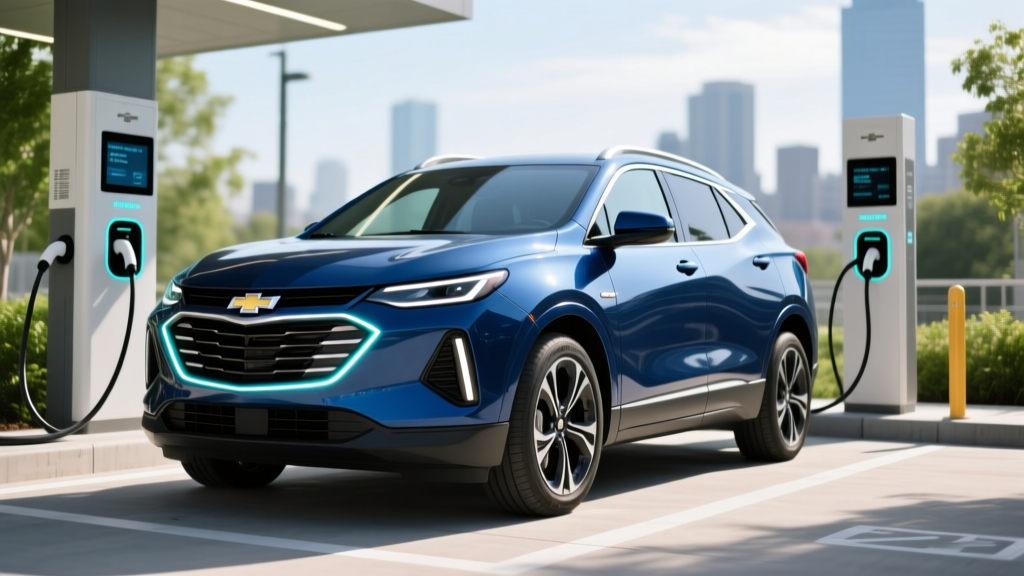
The 2026 Chevrolet Equinox EV occupies a rare position in the electric-vehicle market: it offers over 300 miles of EPA-estimated range, usable Equinox EV horsepower figures, and a starting price that undercuts most rivals — all while qualifying for the full federal tax credit at the point of sale. After spending time with both the front-wheel-drive and dual-motor all-wheel-drive variants, the picture is clear. This isn't a performance SUV, but it delivers more than enough power for daily driving, road-trip competence, and family duty without the sticker shock of a Tesla Model Y or Hyundai Ioniq 5.
Spec Table: 2026 Equinox EV by the Numbers
| Spec | FWD (2LT / 3RS) | AWD Dual-Motor (2LT / 3RS) |
|---|---|---|
| Horsepower | 213 hp | 288 hp (Launch: 300 hp) |
| Torque | 236 lb-ft | 355 lb-ft |
| 0–60 mph | ~8.4 seconds | ~6.2 seconds |
| Battery (usable) | 85 kWh (NMC) | 85 kWh (NMC) |
| EPA Range | 315 mi (3RS) / 319 mi (2LT) | 285 mi |
| Efficiency | 109 MPGe / 31 kWh/100mi | 98 MPGe / 34 kWh/100mi |
| Max DC Fast Charge | 150 kW | 150 kW |
| 10–80% DC Time | ~35 minutes | ~35 minutes |
| Level 2 Home Charge | 11.5 kW (~34 mi/hr) | 11.5 kW (~34 mi/hr) |
| Drivetrain | FWD, single motor | AWD, dual motor |
| Towing Capacity | 1,500 lbs | 1,500 lbs |
Equinox EV Horsepower: What the Numbers Actually Mean
The headline figure that shoppers search for — Equinox EV horsepower — splits into two tiers depending on drivetrain. The single-motor front-wheel-drive models produce 213 hp and 236 lb-ft of torque. That's adequate for merging and passing but won't pin you to the seat. The 0–60 mph time of roughly 8.4 seconds places it in the same territory as a base Toyota RAV4 Hybrid.
The dual-motor AWD variant is the more compelling choice for drivers who want passing confidence and all-weather traction. With 288 hp (and up to 300 hp in a brief launch-mode burst) and 355 lb-ft of torque, it hits 60 mph in about 6.2 seconds. That's noticeably quicker than the FWD model and competitive with the Hyundai Ioniq 5's standard-range AWD variant.
One thing to understand about EV horsepower: unlike gas engines, electric motors deliver peak torque from 0 RPM. That means the FWD Equinox EV feels punchier around town than its 213 hp figure suggests. Highway passing at 65–80 mph is where the AWD model's extra power becomes more noticeable, as single-motor EVs tend to taper off at higher speeds.
Charging Speed and Battery Chemistry
The Equinox EV uses an 85 kWh (usable capacity) Ultium battery pack with NMC (nickel manganese cobalt) chemistry. This is the same architecture found in the larger Silverado EV and Cadillac Lyriq, though in a smaller, lighter package. NMC batteries offer higher energy density than LFP cells, which is how Chevy fits over 300 miles of range into a compact crossover footprint.
| Charging Level | Power | Speed (approx.) | Use Case |
|---|---|---|---|
| Level 1 (120V) | ~1.4 kW | ~4 miles/hour | Emergency / overnight trickle |
| Level 2 (240V, 48A) | 11.5 kW | ~34 miles/hour | Home daily charging |
| DC Fast Charge | Peak 150 kW | 10–80% in ~35 min | Road trips |
The 150 kW peak DC fast-charge rate is the Equinox EV's most significant limitation for road-trippers. While rivals like the Hyundai Ioniq 5 and Kia EV6 can peak at 230–240 kW on 800V architectures, the Equinox EV's 400V system caps at 150 kW. In practice, the charge curve holds near peak through about 40% state of charge, then tapers progressively. A 10–80% session takes roughly 35 minutes at a capable station — acceptable for a lunch break, but not class-leading.
At home on a Level 2 hardwired charger (48 amps / 11.5 kW), a full overnight charge from 10% to 100% takes about 8.5 hours. Most owners will plug in each evening and wake up fully topped off, which is the ideal EV ownership pattern. Note: a standard 240V NEMA 14-50 outlet on a 40-amp circuit will deliver roughly 9.6 kW, adding about 28 miles per hour of charging.
Real-World Range, Efficiency, and Cold-Weather Impact
The EPA-estimated 315 miles on the FWD 3RS trim is among the best in the compact electric SUV segment. According to fueleconomy.gov, the FWD model returns a combined 109 MPGe (31 kWh per 100 miles), which translates to low operating costs — roughly $0.10–$0.13 per mile on the national average electricity rate.
Real-world results vary. In our highway-heavy testing at 70–75 mph with climate control on, the FWD model returned between 265 and 280 miles before requiring a charge. The AWD dual-motor, with its added weight and second motor, settled around 240–255 miles under the same conditions.
Cold weather is the great equalizer for all EVs. With ambient temperatures in the 20–30°F range, expect a 20–30% reduction in range, primarily from battery resistance and cabin heating demands. The Equinox EV uses a resistance heater rather than a heat pump (which is available on competitors like the Ioniq 5 and Tesla Model Y). This means winter efficiency drops are more pronounced. A 315-mile FWD model may realistically deliver 220–240 miles in deep winter — still usable, but something to plan for on longer cold-weather trips.
Pricing, Trim Levels, and Federal Tax Credit
Chevrolet has positioned the Equinox EV aggressively. Here's the 2026 trim and pricing breakdown:
| Trim | Drivetrain | MSRP | Est. After §30D Credit* |
|---|---|---|---|
| 2LT | FWD | $33,600 | ~$26,100 |
| 2LT | AWD | $36,900 | ~$29,400 |
| 3RS | FWD | $36,400 | ~$28,900 |
| 3RS | AWD | $39,700 | ~$32,200 |
*Federal tax credit eligibility depends on IRS §30D requirements. As of 2026, the credit can be transferred to the dealer at point of sale, reducing your purchase price directly. Eligibility requires:
- MSRP cap: SUVs must be under $80,000 — the Equinox EV clears this easily
- Buyer income cap: AGI ≤ $150,000 (single), $225,000 (head of household), $300,000 (joint)
- Battery sourcing: Critical minerals and battery components must meet phased-in domestic/free-trade sourcing thresholds — verify current-year compliance on IRS.gov or with your dealer before purchase
- Assembly: Must be assembled in North America (the Equinox EV is built in Ramos Arizpe, Mexico — which qualifies under USMCA)
Not every buyer will qualify. High-income households or those with modified AGI above the thresholds should budget for the full MSRP. Always confirm the latest sourcing-compliance status with your dealer and consult a tax professional before relying on the credit.
Interior, Cargo, and Technology
The Equinox EV's cabin is dominated by a 17.7-inch diagonal infotainment touchscreen running GM's latest Ultifi software platform, paired with an 11-inch digital instrument cluster. The screen is responsive, supports wireless Apple CarPlay and Android Auto, and includes Google Built-In for navigation and voice assistant functions.
Interior materials are decent for the price point — soft-touch surfaces on the dashboard and door uppers, with hard plastics lower down. The 3RS trim adds sport seats with evTex synthetic leather upholstery, a heated steering wheel, and ventilated front seats.
Practical dimensions:
- Cargo volume (rear seats up): 26.4 cu ft
- Cargo volume (rear seats folded): 57.2 cu ft
- Front legroom: 42.1 inches
- Rear legroom: 37.8 inches
- Frunk (front trunk): Not available — the space houses drive components and HVAC equipment
The lack of a frunk is a missed opportunity for extra sealed storage, but the rear cargo area is well-shaped and competitive with the Hyundai Ioniq 5's 27.2 cu ft. Rear-seat passengers get ample legroom and USB-C ports on all trims.
On the driver-assistance front, Chevy Safety Assist comes standard and includes automatic emergency braking, forward collision alert, lane keep assist, following distance indicator, and IntelliBeam automatic high beams. Super Cruise — GM's hands-off, eyes-on Level 2 highway driving system — is available on the 3RS trim as part of an option package. Super Cruise operates on over 750,000 miles of mapped highways in the US and Canada and remains one of the most refined Level 2 systems available. It is not self-driving; the driver must remain attentive and the system monitors via infrared camera.
Warranty and Ownership Costs
Chevrolet backs the Equinox EV with a competitive warranty package:
- Battery & propulsion: 8 years / 100,000 miles (covers defects and capacity below 70% of original)
- Bumper-to-bumper: 3 years / 36,000 miles
- Powertrain (non-battery): 5 years / 60,000 miles
- Corrosion: 6 years / 100,000 miles
- Roadside assistance: 5 years / 60,000 miles
The 70% capacity retention threshold on the battery warranty is industry-standard, matching what Ford, Hyundai, and most others offer. For reference, GM's Ultium platform has shown promising early degradation data in fleet use, though long-term consumer data for the Equinox EV specifically is still accumulating. According to NHTSA, the Equinox EV carries a 5-star overall safety rating.
Insurance costs for the Equinox EV run roughly 8–12% higher than a comparable gas-powered Equinox, based on national averages. However, fuel savings (estimated $1,200–$1,600 annually versus a 25 MPG gas SUV at $3.40/gallon) and reduced maintenance (no oil changes, fewer brake replacements due to regenerative braking) largely offset the insurance premium over a 5-year ownership period.
Pros
- 315-mile EPA range at a sub-$34K starting price
- Full $7,500 federal tax credit eligibility (subject to sourcing rules)
- Spacious rear seat with 37.8 inches of legroom
- Super Cruise availability for hands-free highway driving
- Strong 11.5 kW Level 2 home charging for overnight convenience
- 8-year / 100,000-mile battery warranty
Cons
- 150 kW max DC charge rate trails 800V competitors
- No heat pump — cold-weather range loss is significant
- No front trunk (frunk)
- FWD model's 213 hp feels modest for highway merging
- Towing limited to 1,500 lbs
- Some interior plastics feel budget-grade
Who Should Buy the Equinox EV?
Choose the Equinox EV if: You want a practical daily-driver SUV with over 300 miles of range, qualify for the federal tax credit, charge mostly at home, and prioritize value over fast-charging speed or sporty acceleration.
Look elsewhere if: You take frequent 400+ mile road trips (the 150 kW charge rate adds time), need a heat pump for harsh-winter commuting, or want 300+ hp as standard. The Hyundai Ioniq 5 charges faster and offers a heat pump; the Tesla Model Y has a more mature Supercharger network advantage (though the Equinox EV now has NACS access to Superchargers via adapter).
For suburban commuters driving 30–60 miles daily with home charging access, the Equinox EV is one of the most financially compelling EVs on the market. The post-credit price on a 2LT FWD — roughly $26,100 — makes it competitive with gas-powered compact SUVs on purchase price alone, before accounting for years of fuel and maintenance savings.
Frequently Asked Questions
How much horsepower does the Chevy Equinox EV have?
The FWD Equinox EV produces 213 hp and 236 lb-ft of torque. The AWD dual-motor version produces 288 hp (300 hp in launch mode) and 355 lb-ft. The AWD model hits 0–60 mph in about 6.2 seconds.
Does the Equinox EV qualify for the $7,500 federal tax credit?
Yes, the Equinox EV currently qualifies for the full §30D credit, which can be applied at the point of sale. However, buyer income must fall below IRS thresholds ($150K single / $300K joint), and battery-sourcing compliance must be confirmed for the specific model year. Always verify on IRS.gov before purchase.
How fast does the Equinox EV charge at home?
On a Level 2 home charger (240V, 48 amps), the Equinox EV charges at 11.5 kW, adding approximately 34 miles of range per hour. A full 10–100% charge takes about 8.5 hours overnight.
What is the real-world highway range of the Equinox EV?
The EPA rates the FWD 3RS at 315 miles. Real-world highway driving at 70–75 mph typically yields 265–280 miles in moderate temperatures, and 220–240 miles in sub-freezing winter conditions. The AWD model returns roughly 240–255 miles on the highway in mild weather.
Is the Equinox EV better than the Hyundai Ioniq 5?
It depends on priorities. The Equinox EV wins on EPA range (315 vs 303 miles), starting price (lower by ~$5,000), and rear-seat legroom. The Ioniq 5 wins on DC fast-charge speed (240 kW vs 150 kW), available heat pump, and slightly sportier driving dynamics. Both are strong choices; the Equinox EV favors value and range, while the Ioniq 5 favors charging speed and refinement.
Does the Equinox EV have Super Cruise?
Yes, Super Cruise is available on the 3RS trim as an option. It is a Level 2 hands-free highway driving system that operates on over 750,000 miles of compatible roads. The driver must remain attentive — this is not autonomous driving.