The Short Answer on EV Energy Efficiency
The energy efficiency of electric cars typically ranges from 2.5 to 4.0 miles per kWh, which translates to roughly 84–135 MPGe (miles per gallon equivalent). The most efficient EVs on the market today, like the Lucid Air Pure and Tesla Model 3 Highland, achieve over 4.0 mi/kWh (130+ MPGe), while heavier trucks like the Ford F-150 Lightning sit closer to 2.0–2.5 mi/kWh (70–85 MPGe). By comparison, a typical gas sedan gets 28–35 MPG combined. Because electric motors convert 85–90% of battery energy into motion (versus 20–30% for internal combustion engines), EVs use roughly one-third to one-quarter the raw energy to travel the same distance. In practical terms, most EV owners spend $0.03–$0.05 per mile on electricity at home versus $0.12–$0.16 per mile on gasoline.
Understanding MPGe and kWh/100mi: The Efficiency Metrics That Matter
If you're shopping for an EV, you'll encounter two efficiency metrics on the EPA's fueleconomy.gov window sticker: MPGe and kWh/100 miles. Here's how to read them.
MPGe (Miles Per Gallon Equivalent) converts the electrical energy an EV uses into the energy-equivalent of a gallon of gasoline (33.7 kWh). A rating of 112 MPGe means the vehicle uses 33.7 kWh of electricity to travel 112 miles. It's useful for cross-shopping against gas cars, but it can obscure the actual electricity cost.
kWh/100 miles is the more practical metric — it tells you exactly how much electricity you'll consume over distance, similar to how liters-per-100km works in metric markets. Lower is better. A car rated at 25 kWh/100mi uses 25 kWh to drive 100 miles. At the US average residential electricity rate of roughly $0.17/kWh (as of early 2026), that's $4.25 per 100 miles, or $0.0425 per mile.
| Vehicle | Type | MPGe (Combined) | kWh/100mi | Cost/Mile (Home) | Cost/Mile (Gas Eq.) |
|---|---|---|---|---|---|
| Tesla Model 3 LR AWD | BEV | 132 MPGe | 25 kWh | $0.043 | — |
| Toyota Camry LE (2.5L) | Gas | — | — | — | $0.122 (32 MPG) |
| Hyundai Ioniq 6 SEL | BEV | 140 MPGe | 24 kWh | $0.041 | — |
| Honda Accord 1.5T | Gas | — | — | — | $0.113 (33 MPG) |
| Ford F-150 Lightning XLT | BEV | 78 MPGe | 43 kWh | $0.073 | — |
| Ford F-150 3.5L EcoBoost | Gas | — | — | — | $0.175 (20 MPG) |
| BMW i4 eDrive40 | BEV | 109 MPGe | 31 kWh | $0.053 | — |
| BMW 330i | Gas | — | — | — | $0.125 (28 MPG) |
Gas cost based on $3.50/gal national average (early 2026). EV cost based on $0.17/kWh US residential average. Source: fueleconomy.gov
Why Electric Cars Are Fundamentally More Efficient
The efficiency gap between EVs and gas cars isn't a marginal engineering advantage — it's a physics advantage rooted in how each powertrain converts stored energy into forward motion.
Electric motors: Modern AC induction and permanent-magnet synchronous motors convert 85–93% of electrical energy from the battery into mechanical energy at the wheels. Regenerative braking recaptures 15–30% of kinetic energy during deceleration, feeding it back into the battery. There's no idle energy waste — when you're stopped, the motor consumes essentially zero energy.
Internal combustion engines: Even the most advanced gasoline engines achieve only 30–40% thermal efficiency under ideal laboratory conditions. In real-world driving — with idling, accessory loads, transmission losses, and part-throttle operation — effective efficiency drops to 20–25%. Roughly 60–70% of the energy in every gallon of gasoline is lost as heat, friction, and pumping losses.
This is why a 300-hp EV and a 300-hp gas car have radically different energy bills despite producing similar power. The EV wastes far less energy doing the same work.
Real-World Efficiency: What Changes the Numbers
EPA efficiency ratings, like EPA range estimates, represent controlled laboratory tests. Your real-world energy efficiency will vary based on several factors — some within your control, some not.
Speed and Highway Driving
EVs are less efficient at sustained highway speeds than in city driving — the opposite of gas cars. Aerodynamic drag increases with the square of velocity, so driving at 80 mph consumes significantly more energy than 65 mph. In our experience, most EVs lose 10–20% of their rated efficiency at 75+ mph highway cruising. A Tesla Model 3 rated at 25 kWh/100mi combined may consume 29–31 kWh/100mi at 75 mph on the interstate.
Cold Weather Impact
Cold temperatures affect EV efficiency through two mechanisms: battery chemistry slows (increasing internal resistance), and cabin heating draws substantial energy. Unlike gas cars, which can use waste engine heat for cabin warming, EVs must generate heat electrically — typically via a heat pump (2–4 kW draw) or resistive heater (4–7 kW draw). In sub-freezing conditions (20°F / -7°C), expect a 15–30% efficiency penalty. Vehicles equipped with heat pumps (standard on most 2024+ Tesla, Hyundai, and Kia models) fare better than those with resistive heaters.
Tire Selection and Weight
EV-specific low-rolling-resistance tires can improve efficiency by 5–10% over standard all-season or all-terrain tires. Heavier vehicles require more energy to accelerate and climb grades — which is why the 6,000-lb Rivian R1T consumes roughly 48 kWh/100mi while the 3,900-lb Tesla Model 3 uses just 25 kWh/100mi.
Terrain and Climate Control
Mountain driving with sustained climbs can temporarily push consumption to 50–60+ kWh/100mi, though regenerative braking on descents recovers some energy. Running cabin HVAC at maximum in extreme heat or cold adds 2–5 kWh/100mi to consumption depending on conditions and whether the vehicle uses a heat pump.
Common EV Efficiency Misconceptions — Myth vs Fact
| Myth | Fact |
|---|---|
| "EVs just shift emissions to the power plant" | Even on coal-heavy grids, EVs produce fewer lifecycle emissions per mile than gas cars because large power plants are 40–60% thermally efficient vs a car engine's 20–25%. On the average US grid, an EV emits roughly 60% less CO₂ per mile (source: Union of Concerned Scientists). |
| "EVs lose all their range in winter" | Cold weather reduces range by 15–30%, not 50%+. A 300-mile EV still delivers 210–255 miles in freezing temps. Preconditioning while plugged in mitigates this significantly. |
| "MPGe numbers mean I'll spend less than gas" | MPGe measures energy equivalence, not cost. Savings depend on your electricity rate. At $0.17/kWh home charging, most EVs cost 50–70% less per mile than gas. At $0.50/kWh public DC fast charging, costs can approach or exceed gasoline. |
| "Bigger battery = more efficient" | Larger batteries add weight, which reduces efficiency. A 60 kWh pack in a lighter vehicle may deliver more real-world miles per kWh than an 85 kWh pack in a heavier one. Efficiency is about mi/kWh, not just total capacity. |
| "All EVs are equally efficient" | Efficiency varies by 2:1 across the market. A Hyundai Ioniq 6 (140 MPGe) uses nearly half the energy per mile of a GMC Hummer EV (47 MPGe). Vehicle weight, aero, and motor design matter enormously. |
The Real Cost Picture: EV Efficiency in Your Wallet
Energy efficiency only matters financially when translated into actual dollars. Here's a five-year cost comparison for a typical driver covering 12,000 miles per year, comparing an efficient EV (Tesla Model 3 Long Range) against a comparable gas sedan (Toyota Camry LE).
| Cost Category | Tesla Model 3 LR AWD | Toyota Camry LE |
|---|---|---|
| Base MSRP (2025) | $47,240 | $28,400 |
| Federal Tax Credit (§30D)* | −$7,500 (if eligible) | $0 |
| Effective Purchase Price | $39,740 | $28,400 |
| Energy/Fuel (60k mi) | $2,550 (home @ $0.17/kWh) | $6,560 (@ $3.50/gal, 32 MPG) |
| Maintenance (5 yr) | ~$1,200 | ~$2,800 |
| Insurance (5 yr avg) | ~$9,500 | ~$7,200 |
| 5-Year Total (purchase + energy + maint + insurance) | $52,990 | $44,960 |
| Energy Savings Over 5 Years | $4,010 in EV's favor | |
| Maintenance Savings Over 5 Years | $1,600 in EV's favor | |
*Federal §30D tax credit eligibility requires meeting income caps ($150k single / $300k joint), MSRP caps ($55k sedans), battery sourcing requirements, and point-of-sale transfer. Verify current rules at irs.gov. Insurance premiums vary widely by driver, state, and insurer.
The energy savings are real — roughly $4,000 over five years for a typical driver charging at home. But notice that higher insurance costs (a common EV ownership reality) partially offset those savings. The total cost gap narrows further when you factor in depreciation, which varies by model and market conditions.
When Public Charging Changes the Math
If you rely primarily on DC fast charging networks (Electrify America, EVgo, Tesla Superchargers) at rates of $0.35–$0.55/kWh, your per-mile cost jumps to $0.09–$0.14 — approaching or matching gasoline costs for efficient gas cars. The efficiency advantage of EVs translates to maximum financial benefit only when paired with affordable home or workplace charging.
Home Charging Access: The Make-or-Break Factor
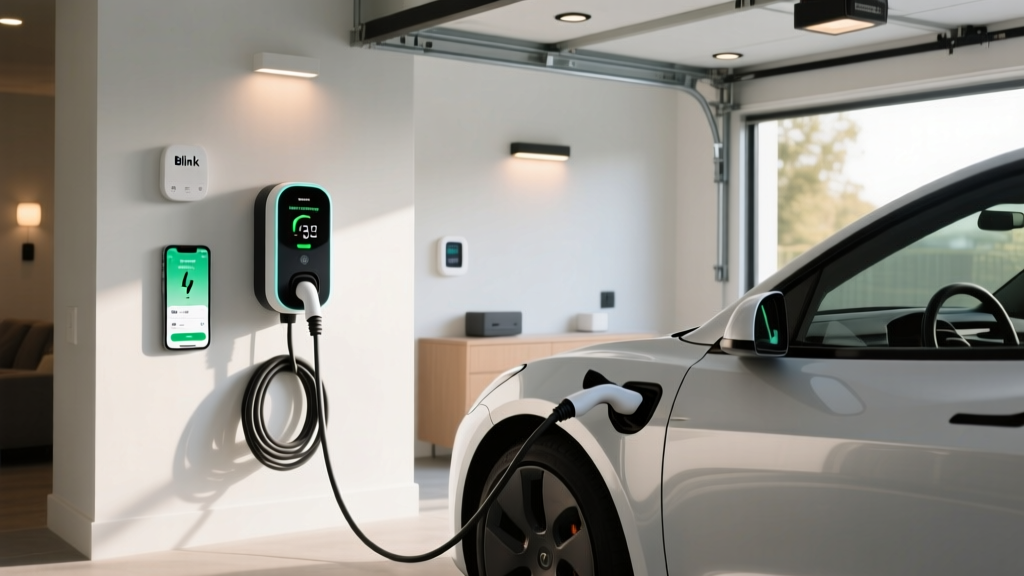
The energy efficiency of electric cars delivers the greatest financial return when you can charge at home. Here's what that requires:
Level 1 (120V standard outlet): Adds 3–5 miles of range per hour. Sufficient if you drive under 40 miles daily and can plug in overnight. No installation cost beyond a dedicated circuit. Slow, but functional for low-mileage drivers.
Level 2 (240V, 32–48A): Adds 25–44 miles of range per hour. Fully recharges most EVs overnight. Requires a 240V circuit (like a dryer outlet) installed by a licensed electrician. Typical installation cost: $800–$2,500 depending on panel capacity, conduit run length, and local permit fees. A quality Level 2 charger (ChargePoint Home Flex, Emporia Level 2, Tesla Wall Connector) costs $350–$700.
Panel upgrade: If your home has a 100A electrical panel with limited spare capacity, you may need a panel upgrade to 200A, adding $1,500–$3,500 to the installation cost. Some utilities offer managed-charging programs that avoid this requirement by limiting charge rate during peak demand.
If you live in an apartment or condo without dedicated parking and charging access, your efficiency savings will be captured at public charger rates — reducing the financial benefit substantially. This is a real limitation that EV buyers without home charging should weigh carefully.
Decision Framework: Is an EV's Efficiency Advantage Worth It for You?
Choose a Battery EV (BEV) If:
- You have reliable home or workplace Level 2 charging access
- Your daily driving is under 200 miles (well within single-charge range of modern EVs)
- Your electricity rate is under $0.25/kWh (making per-mile cost $0.04–$0.06)
- You want to minimize ongoing fuel and maintenance costs
- You qualify for the §30D federal tax credit or state incentives that close the upfront price gap
- You drive primarily in stop-and-go city conditions where EV efficiency peaks
Choose a Plug-In Hybrid (PHEV) If:
- You lack consistent home charging but want some electric-only driving (20–40 mi range)
- You frequently take long road trips beyond comfortable EV charging infrastructure
- You want EV-like efficiency for commutes without range concerns
- Your budget favors a lower upfront purchase price
Stick With a Gas or Traditional Hybrid (HEV) If:
- You have zero access to home or workplace charging and public charging is sparse or expensive in your area
- You regularly tow heavy loads (where EV efficiency drops dramatically — often below 2.0 mi/kWh)
- You live in an extremely cold climate (frequent sub-0°F temps) where range loss compounds
- Your annual mileage is very low (under 6,000 mi/yr), making fuel savings too small to offset higher EV purchase price
Maximizing Your EV's Energy Efficiency: Practical Tips
If you're committed to an EV purchase, these practices will help you extract the most miles per kWh:
- Precondition while plugged in. Warming or cooling the cabin and battery while connected to shore power draws from the grid, not the battery. This preserves range and improves charging speed.
- Use seat heaters over cabin heat. Heated seats and steering wheels consume 100–200W versus 2,000–5,000W for full cabin heating. In mild cold (35–50°F), this alone can save 5–10% of energy.
- Maintain 65–70 mph on highways. Every 5 mph above 70 costs roughly 10% more energy per mile. Adaptive cruise control helps maintain steady speed.
- Keep tires properly inflated. Under-inflated tires increase rolling resistance. Check monthly — EVs' extra weight makes proper inflation even more critical.
- Use regen braking settings wisely. Standard or high regenerative braking recaptures more energy in stop-and-go traffic. In steady highway cruising, coasting (low regen) can be marginally more efficient.
- Reduce unnecessary weight and drag. Remove roof racks when not in use — at highway speeds, a loaded roof box can reduce efficiency by 15–20%.
Frequently Asked Questions
What's the most energy-efficient EV available in 2025–2026?
The Lucid Air Pure RWD leads at approximately 146 MPGe combined (23 kWh/100mi), followed closely by the Hyundai Ioniq 6 SE at 140 MPGe (24 kWh/100mi) and the Tesla Model 3 Long Range at 132 MPGe (25 kWh/100mi). These figures are EPA-rated; real-world efficiency will vary with driving conditions.
Does energy efficiency affect how fast an EV charges?
Indirectly, yes. A more efficient vehicle needs fewer kWh to add the same miles of range. If two EVs are charging at the same 150 kW rate, the one rated at 25 kWh/100mi gains roughly 6 miles per minute, while one rated at 40 kWh/100mi gains about 3.75 miles per minute. Efficiency determines how far each kWh takes you, which is why it matters as much as peak charge rate.
How does EV efficiency compare to hydrogen fuel cell vehicles?
Hydrogen fuel cell vehicles (like the Toyota Mirai) achieve roughly 70–80 MPGe, significantly less efficient than battery EVs. This is because producing, compressing, transporting, and converting hydrogen back to electricity involves substantial energy losses at each step. The well-to-wheel efficiency of a battery EV is roughly 2–3x that of a hydrogen fuel cell vehicle.
Will my EV's efficiency degrade as the battery ages?
Battery degradation primarily reduces total range (capacity), not efficiency (mi/kWh). A battery at 90% State of Health still delivers the same miles per kWh — it just holds fewer total kWh. You may see minor efficiency changes as internal resistance increases, but this is typically a 2–5% effect over the battery's useful life. Most manufacturers warrant 70–80% capacity retention for 8 years / 100,000 miles.
Do I need solar panels to make an EV truly efficient and clean?
No. Even on grids powered partially by fossil fuels, EVs produce fewer emissions per mile than gas cars due to their superior energy conversion efficiency. Solar panels reduce your charging cost to near-zero and eliminate upstream emissions, but they're not required for the EV to deliver its efficiency and environmental advantages. The average US grid has been getting cleaner each year, amplifying the EV's advantage over time.
How does towing affect EV energy efficiency?
Dramatically. Towing a 3,000–5,000 lb trailer typically doubles or triples energy consumption, pushing efficiency down to 1.0–1.8 mi/kWh (50–100+ kWh/100mi). This can cut an EV's range by 50–65%. If you tow frequently, prioritize battery capacity and charging speed over efficiency ratings, and plan routes around reliable DC fast chargers.